 how-to
How to Budget for Commercial Parking Lot Repairs
Table of Contents
- Assess Your Parking Lot's Current Condition
- Calculate Parking Lot Repair Cost Per Square Foot
- Develop a Parking Lot Maintenance Schedule
- Plan Parking Lot Capital Expenditure and Budget Allocation
- Prioritize Repairs and Build a Contingency Fund
- Use Technology and Inspections to Control Costs
- Frequently Asked Questions
Last Updated: September 24, 2026
Assess Your Parking Lot's Current Condition
The first step in learning how to budget for commercial parking lot repairs is understanding what you're actually dealing with. A professional pavement condition index evaluation reveals the true state of your asphalt and gives you concrete data to work from.
Conduct a Professional Pavement Condition Index Evaluation
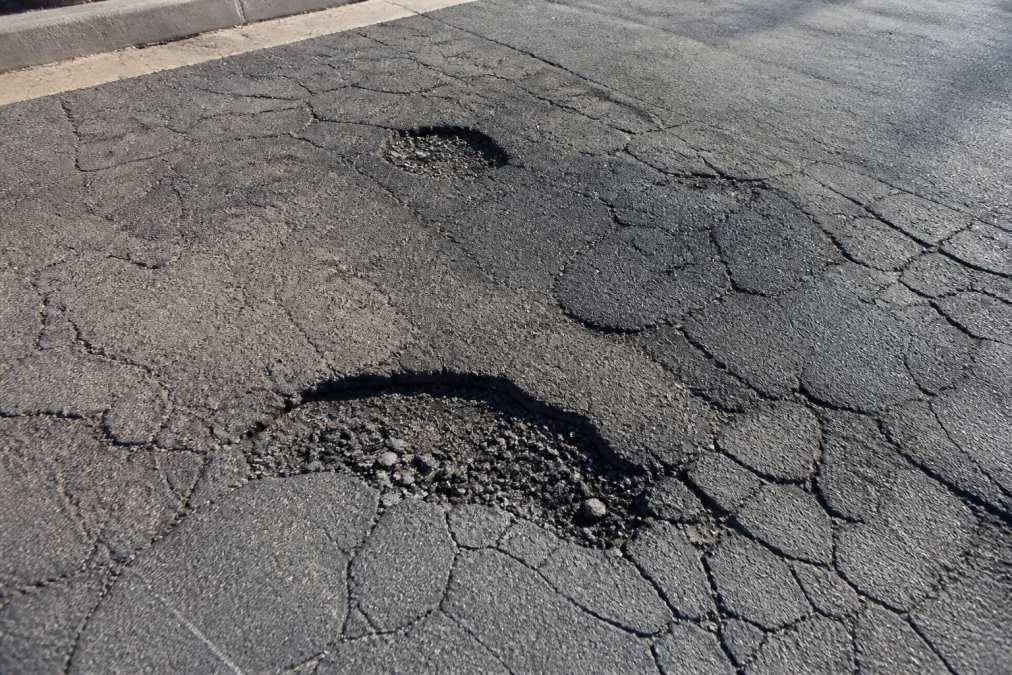
The pavement condition index (PCI) is a standardized rating system that scores asphalt from 0 to 100. A score below 40 indicates serious structural problems and becomes the foundation for your entire repair budget.
Identify Drainage Issues and Structural Problems
Poor drainage causes water to pool, seep under the surface, and destroy the subgrade beneath, leading to repeated cracking in the same spots.
Look for these drainage red flags:
- Standing water after rain
- Areas where the surface slopes toward buildings instead of away
- Soft or spongy spots in the pavement
- Alligator cracking (small interconnected cracks forming a pattern)
Calculate Parking Lot Repair Cost Per Square Foot
Understanding cost per square foot helps you compare quotes and plan budgets across different lot sizes, as the number varies by repair type.
Breaking Down Cost Factors by Repair Type
Different repairs have different price points. Here's the breakdown:
- Crack filling: Addresses surface-level cracks before they spread
- Sealcoating: Protective layer that extends pavement life by 2-3 years
- Pothole repair: Patching individual failed areas
- Resurfacing (overlay): New asphalt layer over existing base
- Mill and pave: Remove top layer, replace with new asphalt
- Full reconstruction: Remove everything, rebuild subgrade, base, and surface
The key is matching the repair to the actual problem. Sealcoating a lot that needs resurfacing wastes money; doing a full mill and pave when sealcoating would work is overkill.
Comparing Repair Versus Replacement Decisions
| Scenario | Best Option | Why |
|---|---|---|
| PCI above 70, minor cracks | Sealcoat | Extends life cheaply; pavement still has years left |
| PCI 50-70, moderate cracking | Resurfacing | Adds 10-15 years; base is still sound |
| PCI below 40, alligator cracking | Mill and pave or full rebuild | Base is failing; surface repair won't hold |
| Widespread potholes, soft spots | Full reconstruction | Subgrade damage requires complete rebuild |
A professional from Houston Pavement Repair LLC can help you evaluate which option makes financial sense.
Develop a Parking Lot Maintenance Schedule
Preventative maintenance is the cheapest insurance you can buy. A lot that gets regular care costs far less over its lifetime than one neglected until crisis mode.
Routine Maintenance Tasks and Timing
Routine maintenance keeps small problems from becoming big ones:
- Sealcoating: Every 2-3 years ($0.15-$0.25/sq ft) protects surface from oxidation and water penetration.
- Crack filling: Twice yearly ($0.50-$2.00/linear ft) stops cracks from spreading into potholes.
- Striping and marking: Every 1-2 years ($0.05-$0.15/sq ft).
- Sweeping and debris removal: Monthly to prevent drainage clogging.
- Pothole patching: As needed ($100-$300 temporary, $500-$1,500 permanent).
Preventative Maintenance and Lifecycle Planning
Lifecycle planning means budgeting for different repair levels at different stages to extend pavement life while minimizing total cost of ownership.
Years 0-5 (PCI 85-100): Preservation Phase
- Primary work: Sealcoating every 2-3 years, crack filling twice yearly, routine sweeping
- Estimated annual cost: Pricing depends on quantity, dates, and delivery.
- Goal: Protect the new or recently resurfaced surface from oxidation and water infiltration
Years 5-15 (PCI 70-85): Maintenance Phase
- Primary work: Sealcoating continues, crack filling increases to address new cracks, localized pothole patching
- Estimated annual cost: Pricing depends on quantity, dates, and delivery.
- Goal: Address emerging distress before it spreads; extend pavement life by 5-10 additional years
Years 15-20 (PCI 50-70): Rehabilitation Phase
- Primary work: Resurfacing (overlay) of 1.5-2 inches of new asphalt, or mill and pave in high-traffic areas
- Estimated cost: Pricing depends on quantity, dates, and delivery.
- Goal: Restore structural integrity and extend life another 10-15 years
Years 20-30 (PCI below 50): Reconstruction Phase
- Primary work: Full mill and pave or complete reconstruction if subgrade is compromised
- Estimated cost: Pricing depends on quantity, dates, and delivery.
- Goal: Replace pavement at end of useful life
Calculating Total Lifecycle Cost and Annual Reserve Targets
To build an accurate reserve fund, calculate your lot's total lifecycle cost across all phases. Here's the framework:
- Determine lot size in square feet (measure or obtain from property records).
- Estimate costs per phase using the ranges above, adjusted for your region and traffic type.
- Sum all costs across the 20-30 year lifecycle.
- Divide by years to get annual reserve target.
Example: A 50,000 square foot lot in a moderate climate with mixed passenger and light commercial traffic:
- Years 0-5: $0.15/sq ft/year × 50,000 sq ft × 5 years = $37,500
- Years 5-15: $0.25/sq ft/year × 50,000 sq ft × 10 years = $125,000
- Years 15-20: $2.00/sq ft (one-time resurfacing) × 50,000 sq ft = $100,000
- Years 20-30: $4.00/sq ft (one-time reconstruction) × 50,000 sq ft = $200,000
- Total lifecycle cost: $462,500 over 30 years
- Annual reserve target: $15,417 per year
The ROI of Preventative Maintenance
Research from the American Society of Civil Engineers (ASCE) and the Asphalt Pavement Association shows that every dollar spent on preventative maintenance saves in future repair costs. A well-maintained lot can extend its useful life compared to a neglected one.
Plan Parking Lot Capital Expenditure and Budget Allocation
Capital expenditure (CapEx) is money spent on long-term assets that extend the life of your property. Repairs that restore the lot to its original condition are operating expenses (OpEx). Understanding the difference matters for tax deductions and financial reporting.
CapEx Versus OpEx: Tax and Accounting Implications
Operating Expenses (OpEx) are deductible immediately in the year incurred. These restore the lot to its original condition without extending its useful life:
- Pothole patching (temporary or permanent repair of a single defect)
- Crack filling (sealing surface cracks to prevent water infiltration)
- Routine sealcoating (protective coating that extends pavement life by 2-3 years)
- Sweeping, debris removal, and routine maintenance
- Emergency repairs to address safety hazards
Capital Expenditures (CapEx) are depreciated over time. These substantially extend the life of the asset or improve its condition beyond its original state:
- Full mill and pave (removal and replacement of asphalt surface)
- Resurfacing or overlay (adding a new layer of asphalt over the existing base)
- Subgrade reconstruction or base layer replacement
- Drainage system installation or major upgrades
- Complete parking lot reconstruction
The IRS looks at whether the work restores the property to its prior condition (OpEx) or improves it beyond that condition or extends useful life by more than one year (CapEx). Patching a single pothole is OpEx; repaving the entire lot is CapEx.
Building Your Multi-Year Repair and Replacement Reserve
A reserve fund smooths out the lumpy nature of major repairs and ensures you have capital available when needed. Instead of scrambling for $100,000 when your lot needs resurfacing, you've been setting aside funds systematically.
Step 4: Separate OpEx and CapEx Reserves
- OpEx Reserve: Fund routine maintenance (sealcoating, crack filling, patching). This is typically smaller and replenished annually.
- CapEx Reserve: Fund major repairs (resurfacing, mill and pave, reconstruction). This is larger and may take 5-15 years to accumulate.
Linking Budget Allocation to Risk Management and Insurance
A well-funded repair budget is also a risk management tool. Property managers and owners often overlook the connection between pavement condition and liability exposure.
Documentation Requirements To claim these discounts and build a liability defense, maintain:
- Annual or semi-annual PCI inspection reports with photos and dates
- Work orders and invoices for all repairs, with completion dates
- A maintenance log showing when sealcoating, crack filling, and sweeping were performed
- Correspondence with contractors and inspectors
Prioritize Repairs and Build a Contingency Fund
Not all repairs are equally urgent. A systematic approach to prioritization prevents you from overspending on low-priority items while ignoring critical safety issues.
Creating a Repair Priority Matrix
A repair priority matrix ranks work by urgency and impact. Rank each repair on two axes: Safety impact (High = liability, Medium = functional, Low = cosmetic) and Cost of delay (High = structural failure, Medium = worsens, Low = minor). Repairs ranking high on both axes get done first.
Setting Aside Contingency Reserves
Contingency reserves cover unexpected problems that surface during repair work. When crews remove the top layer of asphalt, they sometimes find subgrade damage that wasn't visible before.
Use Technology and Inspections to Control Costs
Modern tools make it easier to track lot condition over time and catch problems early. Data-driven maintenance costs less than reactive repairs.
Tracking Maintenance and Condition Over Time
Digital inspection tools document lot condition with photos, GPS coordinates, and condition ratings, creating a visual history that shows problem development patterns and helps predict when major work will be needed.
Risk Management and Liability Budgeting
A well-maintained parking lot is a liability defense. Documented maintenance shows you took reasonable care if someone is injured. Regular inspections, prompt repairs, and good documentation are your best insurance.
Frequently Asked Questions
What factors influence the cost of commercial asphalt repair?
Repair costs depend on damage severity, parking lot size, and repair type. Pothole filling costs less than resurfacing. Traffic volume, weather exposure, existing drainage issues, and subgrade condition all affect pricing. Larger lots may qualify for better per-square-foot rates. Obtain multiple quotes to understand local pricing for your specific damage pattern and site conditions.
Are parking lot repairs typically expensed or capitalized for tax purposes?
Routine maintenance like sealcoating and crack filling are operating expenses (OpEx) and deductible immediately. Major repairs that extend the lot's useful life or add value, such as mill and pave resurfacing, are capital expenditures (CapEx) and depreciated over years. The IRS generally treats parking lot improvements as 15-year property. Consult your accountant to classify your specific repairs correctly for tax reporting.
How often should a commercial parking lot be resurfaced?
Most asphalt parking lots need resurfacing every 15-20 years, depending on traffic volume, climate, and maintenance history. Heavy-traffic lots may require resurfacing every 10-15 years. Regular sealcoating every 2-3 years and prompt pothole repair extend the interval. A pavement condition index assessment reveals when your lot is approaching failure and resurfacing becomes necessary to prevent structural deterioration.
How much should I set aside annually for parking lot maintenance and repairs?
Budget a portion of your total property operating costs for parking lot upkeep. This covers sealcoating, crack filling, striping, and minor pothole repairs. In addition, establish a separate capital reserve annually to fund major resurfacing or overlay work. The exact amount depends on your lot's age, traffic volume, and current condition. A professional site assessment provides a clearer target for your budget.
Budgeting for commercial parking lot repairs isn't about guessing. It's about understanding your lot's condition, planning repairs systematically, and setting aside money before crisis hits. Start with a professional evaluation from Houston Pavement Repair LLC. Get a PCI score. Identify drainage problems. Then build a multi-year maintenance plan that keeps your lot safe and extends its life. Call now to schedule your free estimate and let our team show you exactly what your lot needs.