 how-to
Why Your Driveway Keeps Cracking: 7 Root Causes
Table of Contents
- Understanding Driveway Cracking: When It Starts and Why
- Soil Movement and Foundation Issues
- Freeze-Thaw Cycles and Temperature Stress
- Poor Drainage: The Hidden Culprit Behind Repeated Cracking
- Signs of Driveway Base Failure and What They Mean
- How to Fix Driveway Cracks: Repair vs. Replacement
- Asphalt Driveway Repair Cost and Long-Term Prevention
- Preventing Future Cracks: A Climate-Specific Maintenance Schedule
- Frequently Asked Questions
Last Updated: August 17, 2026
Understanding Driveway Cracking: When It Starts and Why
Driveway cracking isn't random wear, it's a symptom of something breaking down beneath the surface. Understanding why your driveway keeps cracking is the first step toward a real fix. At Houston Pavement Repair LLC, we've identified the root causes that drive most driveway failures, and many are preventable with proper maintenance.
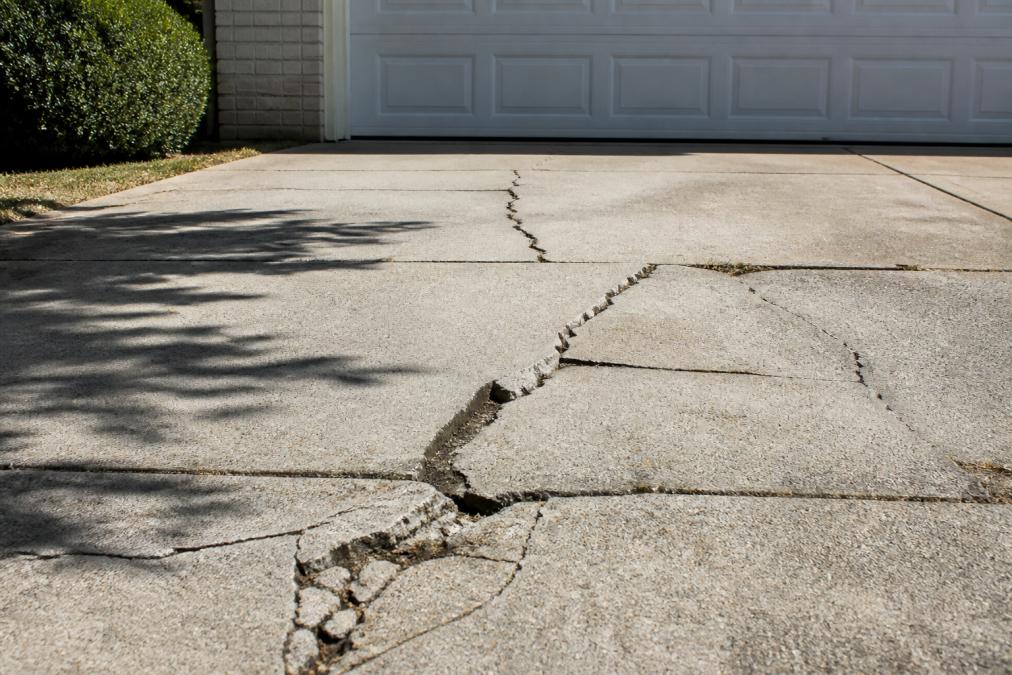
Cracks develop from soil movement, temperature extremes, poor drainage, or a weak sub-base. The crack type reveals what's happening underneath: hairline cracks from corners suggest foundation settlement, alligator cracking (interconnected web) points to base layer failure, and wide cracks after freeze-thaw cycles indicate moisture damage. Your driveway keeps cracking in the same spots because the underlying cause was never addressed. Patching the surface without fixing what's beneath is like putting a bandage on a broken bone, the crack returns because the structural problem persists.
Soil Movement and Foundation Issues
Soil movement is one of the most common culprits behind persistent driveway cracking. Your driveway sits on a foundation of compacted soil and gravel (the sub-base), and when that soil shifts, the pavement above follows.
Soil expansion occurs when moisture saturates the ground beneath your driveway. Clay-heavy soils are particularly prone to this, they absorb water and swell, pushing the pavement upward. When the soil dries out, it shrinks, leaving voids underneath and causing uneven settlement and stress cracks.
Settlement happens when the sub-base wasn't properly compacted during installation or when soil has shifted over time due to erosion or poor drainage. A driveway built on poorly compacted fill will settle continuously for years, creating low spots and stress cracks. Tree roots can accelerate this by destabilizing soil as they grow and absorb moisture.
If cracks keep appearing in the same location, the soil beneath likely has a structural weakness. The fix depends on severity: minor settlement can be managed with proper drainage and sealcoating, while significant settlement usually requires concrete leveling (mudjacking) or full replacement of the affected section.
Freeze-Thaw Cycles and Temperature Stress
Freeze-thaw cycles are brutal on driveways. Water seeps into small cracks, and when temperatures drop below freezing, that water expands as it turns to ice, forcing the pavement apart. When it thaws, the crack widens. Repeat this cycle dozens of times over a winter, and significant damage results.
The damage accelerates if your driveway already has existing cracks. Once water gets into the base layer, it weakens the entire system. The aggregate in the sub-base becomes saturated, losing its load-bearing capacity, and the pavement develops more cracks in a worsening cycle.
Thermal expansion and contraction also stress the pavement. Asphalt expands in summer heat and contracts in winter cold. If expansion joints weren't properly installed or maintained, stress builds until cracks form. Concrete driveways are even more susceptible because concrete is less flexible than asphalt.
The best defense is prevention: seal cracks before winter, ensure your driveway slopes away from your home so water doesn't pool, and keep gutters and downspouts clear. If you live in a freeze-thaw climate, sealcoating every 2-3 years significantly extends your driveway's life.
Poor Drainage: The Hidden Culprit Behind Repeated Cracking
Water is the enemy of durable pavement. Poor drainage is often the hidden reason your driveway keeps cracking, because water damage happens slowly and invisibly until the pavement suddenly fails. Water that pools on your driveway or drains toward your foundation actively destroys the sub-base.
When water accumulates beneath the pavement, it softens the soil and reduces the load-bearing capacity of the sub-base. The pavement flexes under vehicle weight, creating stress cracks that widen over time, allowing more water to penetrate deeper in a repeating cycle.
Improper grading is a common cause. If your driveway was installed level instead of with a slight slope, water collects rather than drains. Even a 1-2% slope makes a significant difference. Clogged gutters and downspouts compound the problem by directing roof water onto your driveway instead of away from it.
The fix requires addressing drainage comprehensively: regrading the driveway to improve slope, installing a French drain or swale to redirect water, or extending downspouts further from the foundation. Houston Pavement Repair LLC evaluates drainage during inspections and recommends solutions tailored to your property's specific water flow patterns.
Signs of Driveway Base Failure and What They Mean
Base failure occurs when the sub-base loses its ability to support the surface. Once the base fails, surface patches won't help, you're looking at more significant repair or replacement.
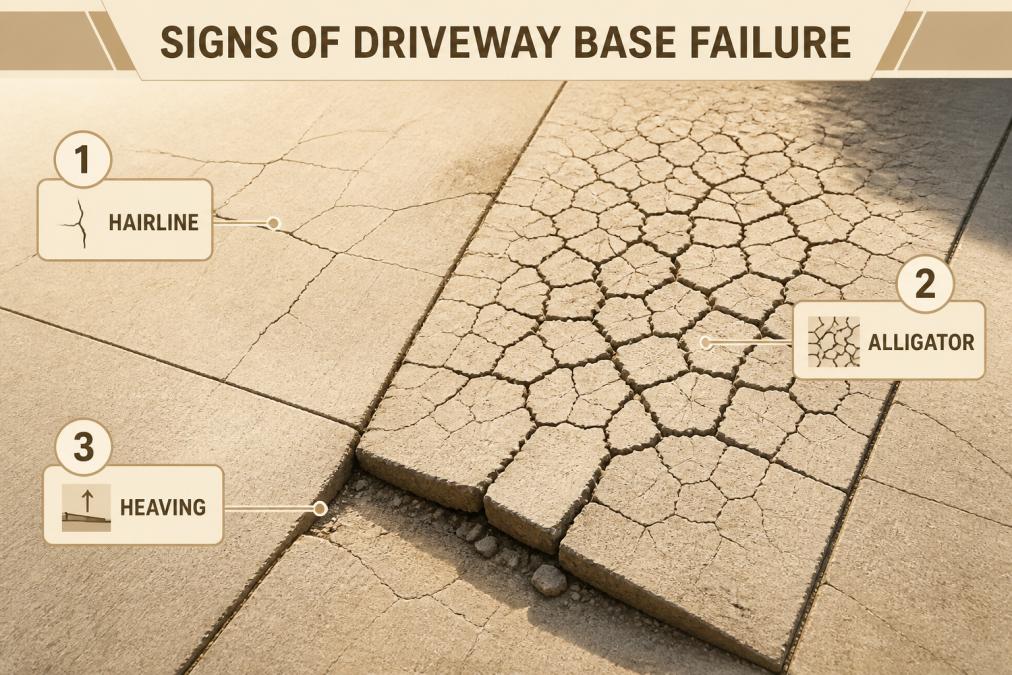
Alligator cracking is the classic sign of base failure. The pavement develops a web of interconnected cracks resembling alligator skin, indicating the sub-base has lost structural integrity and the pavement is flexing under load. Alligator cracks spread quickly, once visible, the problem has usually been developing for months or years.
Heaving or buckling is another red flag. Sections of the driveway rise above the surrounding area, creating a noticeable bump. This happens when soil beneath expands (usually from frost heave or water saturation) and pushes the pavement upward, particularly common at driveway edges or near trees.
Potholes indicate advanced base failure. They form when water-saturated sub-base material loses strength and the pavement above collapses under vehicle weight. Soft spots or areas where the pavement flexes under foot pressure suggest the sub-base is deteriorating and repairs are needed before damage spreads.
Drainage problems often precede base failure. If your driveway floods or retains water after rain, water is saturating the sub-base and weakening the soil. Addressing drainage immediately can prevent base failure from developing.
Call now to schedule your free estimate →
How to Fix Driveway Cracks: Repair vs. Replacement
The decision between repair and replacement depends on the extent of damage, the age of your driveway, and the underlying cause. Small cracks caught early can be sealed for a few hundred dollars, while widespread damage or base failure usually requires resurfacing or full replacement.
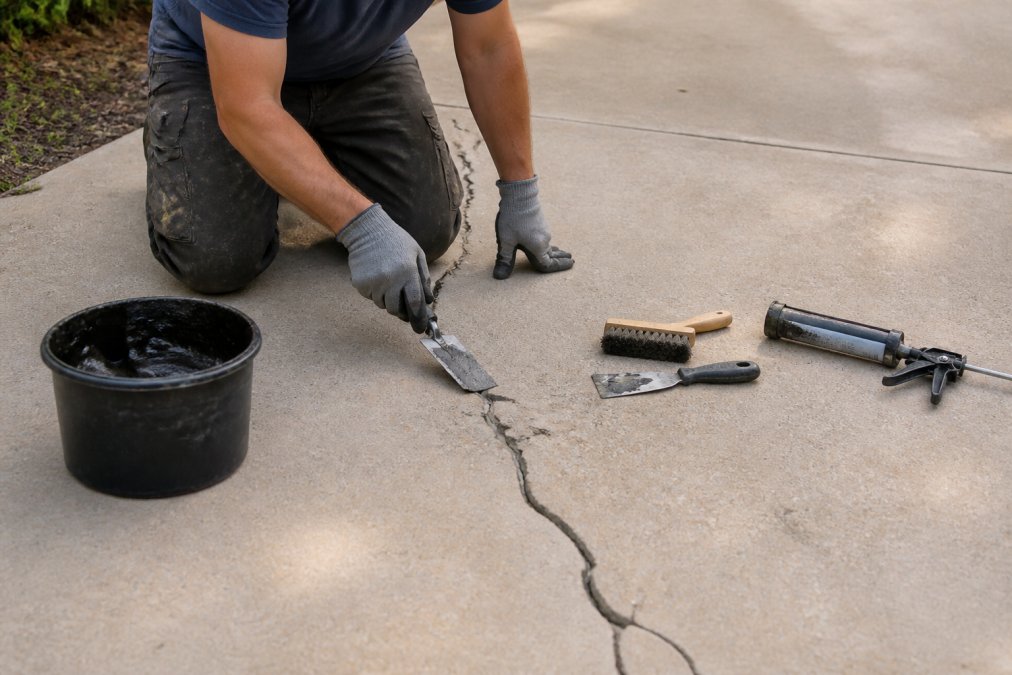
For hairline and small surface cracks, crack filler or sealant is appropriate. The process involves cleaning the crack, applying flexible filler material, and sealing it to prevent water intrusion. This stops the crack from spreading and extends driveway life by several years. Crack filler works best on cracks under 1/4 inch wide.
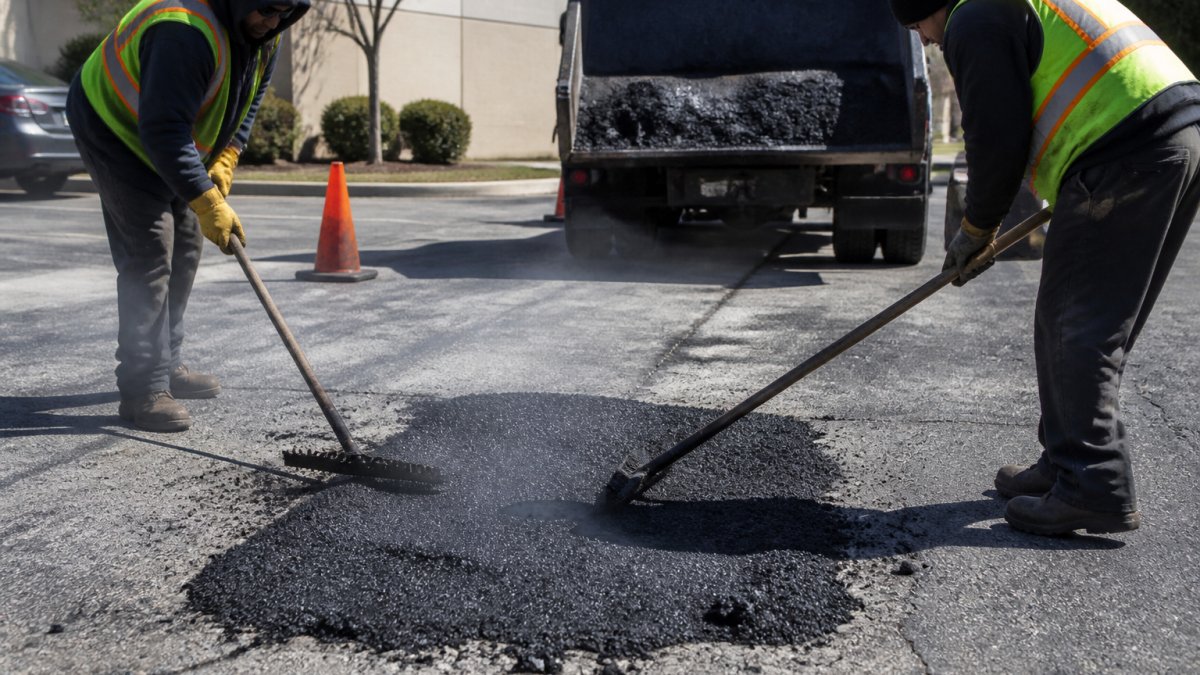
Wider cracks (1/4 inch to 1 inch) require patching. The damaged area is cleaned, a patching compound is applied, and the surface is sealed. Patching is more durable than crack filler but still temporary if the underlying cause isn't addressed.
Resurfacing is appropriate when alligator cracking or multiple cracks cover significant portions but the sub-base is sound. A new layer of asphalt or concrete is applied over existing pavement, giving 10-15 additional years of life at a fraction of full replacement cost. However, if the base has failed, resurfacing won't solve the problem, cracks will return within a year.
Full replacement is necessary when the sub-base has failed, the driveway is 20+ years old, or damage is extensive. This involves removing old pavement, evaluating and repairing the sub-base, and installing new asphalt or concrete. It's the most expensive option but provides a long-term solution with a typical 10-15 year warranty.
The key question is: what caused the cracking? If it's poor drainage, that must be fixed regardless of repair option. If it's base failure, resurfacing alone will fail. Houston Pavement Repair LLC diagnoses the root cause before recommending a repair strategy, ensuring you're not paying for a temporary fix when a permanent solution is needed.
Asphalt Driveway Repair Cost and Long-Term Prevention
Understanding repair costs helps you make an informed decision about whether to fix now or wait until damage worsens. For specific pricing on your driveway, contact Houston Pavement Repair LLC for a free estimate.
Preventative maintenance is the most cost-effective approach. Sealcoating your driveway every 2-3 years protects the surface from UV degradation, water infiltration, and oxidation. A single sealcoating application costs far less than patching or resurfacing and extends driveway life by 5-10 years.
Filling cracks promptly prevents them from spreading. A hairline crack sealed today won't become an alligator crack in two years if addressed early. Regular inspections, at least twice yearly, catch problems before they become expensive.
Proper drainage maintenance prevents base failure. Clean gutters and downspouts regularly, ensure water flows away from your driveway, and address pooling water immediately. Asphalt driveways typically last 15-20 years with proper maintenance, while concrete lasts 25-30 years. The difference between a 15-year and 25-year driveway is usually just consistent sealcoating and drainage maintenance.
Preventing Future Cracks: A Climate-Specific Maintenance Schedule
Your maintenance schedule should account for your local climate. Freeze-thaw regions need different care than hot, dry climates.
| Season | Action | Frequency | Why It Matters |
|---|---|---|---|
| Spring | Inspect for winter damage; clean debris | Once per year | Freeze-thaw cycles cause damage that worsens if not sealed |
| Summer | Seal cracks; apply sealcoat if needed | Every 2-3 years | UV rays degrade asphalt; sealing protects against summer heat |
| Fall | Clean gutters; ensure proper drainage | Once per year | Prevents water from pooling before winter freeze-thaw cycles |
| Winter | Monitor for new cracks; avoid salt buildup | Monthly checks | Salt accelerates deterioration; early detection prevents spread |
In freeze-thaw climates, prioritize sealing cracks before winter. Spring inspections reveal winter damage and allow you to plan repairs before summer heat arrives. In hot, dry climates, UV degradation is the main threat, sealcoating protects asphalt from sun damage and keeps the surface flexible. In humid climates, drainage is critical year-round.
Regardless of climate, establish a maintenance routine: inspect your driveway twice per year, seal cracks as soon as you notice them, apply sealcoat every 2-3 years, clean debris and ensure proper drainage, and address drainage issues immediately. Houston Pavement Repair LLC can assess your driveway's condition and recommend a maintenance plan specific to your property and local climate.
Repeated driveway cracking is frustrating, but it's rarely a mystery once you understand what's happening beneath the surface. Soil movement, freeze-thaw damage, poor drainage, and base failure each leave distinct signs. The real problem occurs when the underlying cause isn't addressed, you'll keep patching the same cracks indefinitely.
Houston Pavement Repair LLC specializes in identifying root causes and implementing solutions that actually stick. Our team provides comprehensive inspections, professional repairs, and expert guidance on preventing future damage. Whether your driveway needs crack sealing, resurfacing, or full replacement, we deliver reliable pavement solutions backed by a free estimate. Contact us today to schedule your inspection and stop the cycle of recurring cracks.
Frequently Asked Questions
How do I stop my driveway from cracking?
Prevent driveway cracking by addressing moisture control, maintaining proper drainage, and sealing your surface every 2-3 years. Fill expansion joints with flexible sealant, remove debris that traps water, and ensure water slopes away from the driveway. Regular sealcoating protects against UV degradation and moisture penetration. If your sub-base is compacted properly and drainage is clear, most preventative maintenance stops recurring cracks before they start.
What is the difference between surface cracks and structural cracks?
Surface cracks (hairline cracks) are shallow and cosmetic; they don't affect load-bearing capacity and can be sealed. Structural cracks are wider, deeper, and often indicate base layer failure, soil settlement, or heaving. Structural cracks grow over time and compromise your driveway's integrity. If you see alligator cracking or sections that move when driven on, you have a structural problem requiring professional assessment, not just a quick patch.
Does poor drainage cause driveway cracking?
Yes. Water trapped beneath your driveway increases hydrostatic pressure, weakens the sub-base, and accelerates freeze-thaw damage in cold months. Poor drainage also causes soil expansion and settlement, which destabilize the foundation. Even small drainage problems compound over time. If your driveway floods or water pools nearby, addressing drainage is as important as the repair itself, otherwise cracks will return within months.
How expensive is it to fix a cracked driveway?
Asphalt driveway repair cost depends on crack width, depth, and whether the sub-base is intact. Small surface cracks cost less to seal; structural damage or base failure may require resurfacing or full replacement. Get a professional inspection to identify root causes, fixing only the visible crack without addressing soil movement or drainage leads to repeat failures and higher total costs later. Contact us for a free estimate tailored to your specific situation.
This article was written using GrandRanker