 how-to
Emergency Asphalt Repair for Businesses: Fast Solutions
Table of Contents
- What Counts as an Emergency Asphalt Repair
- Emergency Pothole Repair: When and How to Act
- Same-Day Asphalt Repair: What's Possible and What Isn't
- Parking Lot Safety During Repairs
- Understanding Parking Lot Pothole Repair Costs
- Choosing the Right Repair Approach for Your Business
- Prevention and Post-Repair Maintenance
- Frequently Asked Questions
Last Updated: October 16, 2026
What Counts as an Emergency Asphalt Repair
An emergency asphalt repair is any damage that threatens safety, disrupts operations, or poses immediate liability. Not every crack qualifies, emergencies demand rapid response; routine maintenance can wait.
Emergency asphalt repair is defined by urgency and consequence, not size: a small pothole in a high-traffic lot is an emergency; a surface crack in a low-traffic area is not.
Safety hazards that require immediate attention
Potholes create trip hazards, deep failures expose utilities, and uneven surfaces damage vehicles.
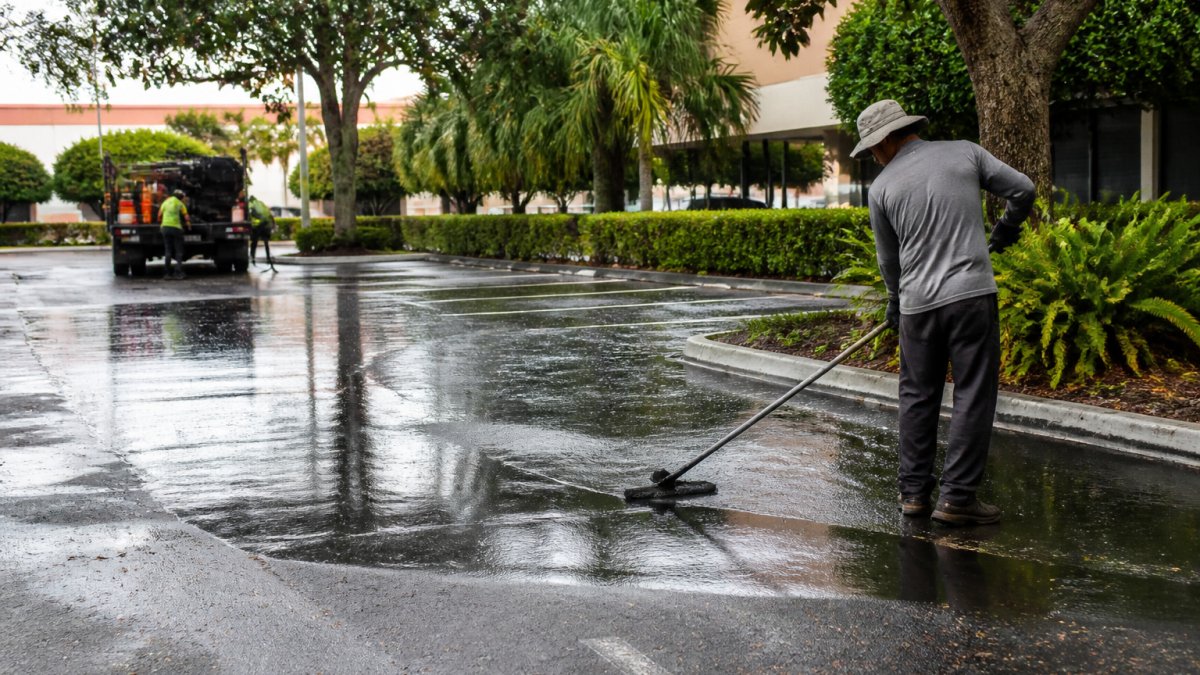
Water pooling signals drainage failure, accelerates deterioration, and creates slip hazards, a documented safety issue the moment it's reported.
Crumbling edges expand daily: a 6-inch hole becomes 12 inches within a week, and repair costs double or triple as the failure spreads.
Business operations impact
A pothole in your main lot drives customers away, they'll park elsewhere or avoid your business, directly impacting foot traffic and revenue.
Tenant complaints escalate quickly, and unaddressed safety concerns become documented liability. Delayed emergency asphalt repair creates a paper trail that hurts you in litigation.
Emergency Pothole Repair: When and How to Act
Potholes grow exponentially. The first 48 hours are critical: water enters the crack, expands with temperature changes, and breaks apart more asphalt. A 3-inch pothole becomes a 12-inch crater in two weeks without intervention.
Identifying potholes before they worsen
Early-stage potholes show as dark, wet depressions after rain and are cheaper to repair.
A single pothole complaint from a tenant, customer, or driver should trigger an inspection within 24 hours.
Visible spalling, missing chunks of asphalt, indicates advanced deterioration requiring emergency pothole repair to prevent the failure from spreading.
Immediate steps to protect your property
Cordon off the damaged area immediately with cones, tape, or barriers to reduce liability and stop the damage spreading.
Document the damage with photos and timestamps, size, location, injuries, vehicle damage, to protect yourself if claims arise later.
Contact a contractor the same day; emergency pothole repair often completes within 24-48 hours. Delays compound the problem and increase costs.
Same-Day Asphalt Repair: What's Possible and What Isn't
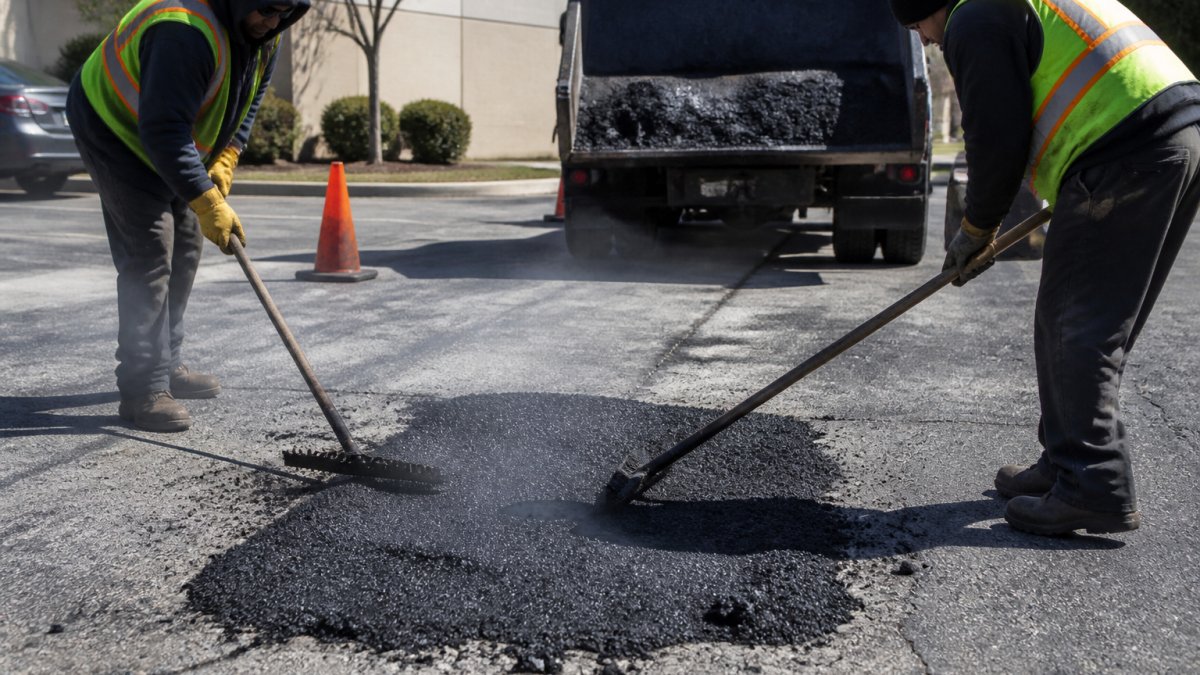
Same-day emergency asphalt repair is possible for pothole patching and temporary stabilization; full resurfacing or permanent repairs take longer. Knowing the difference helps you make realistic decisions.
Temporary stabilization versus permanent repair
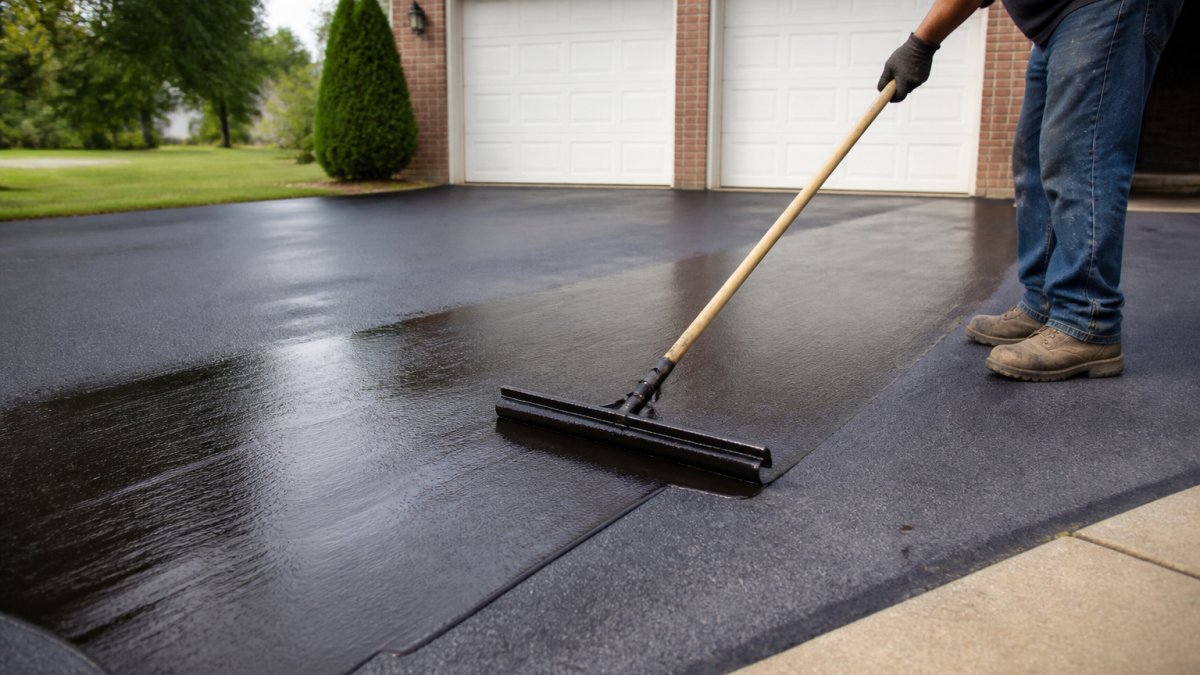
Temporary stabilization fills the pothole, prevents water entry, and makes the surface safe.
Permanent repair removes damaged asphalt to the base, inspects the foundation, and replaces the failed section.
Most emergencies call for temporary stabilization first, getting your lot operational while you plan a permanent solution. Rushing permanent repair before understanding the root cause often leads to repeat failures.
How rapid response saves business continuity
A pothole that closes part of your lot costs revenue immediately, every inaccessible day is lost business.
For commercial property, operational continuity outweighs the cost difference. Get the lot functional, then schedule permanent work during a slower period.
Same-day response also prevents litigation: a documented rapid response demonstrates due diligence, while delays create liability exposure.
Parking Lot Safety During Repairs
Safety during emergency asphalt repair protects your business and workers, preventing injuries, vehicle damage, and liability claims.
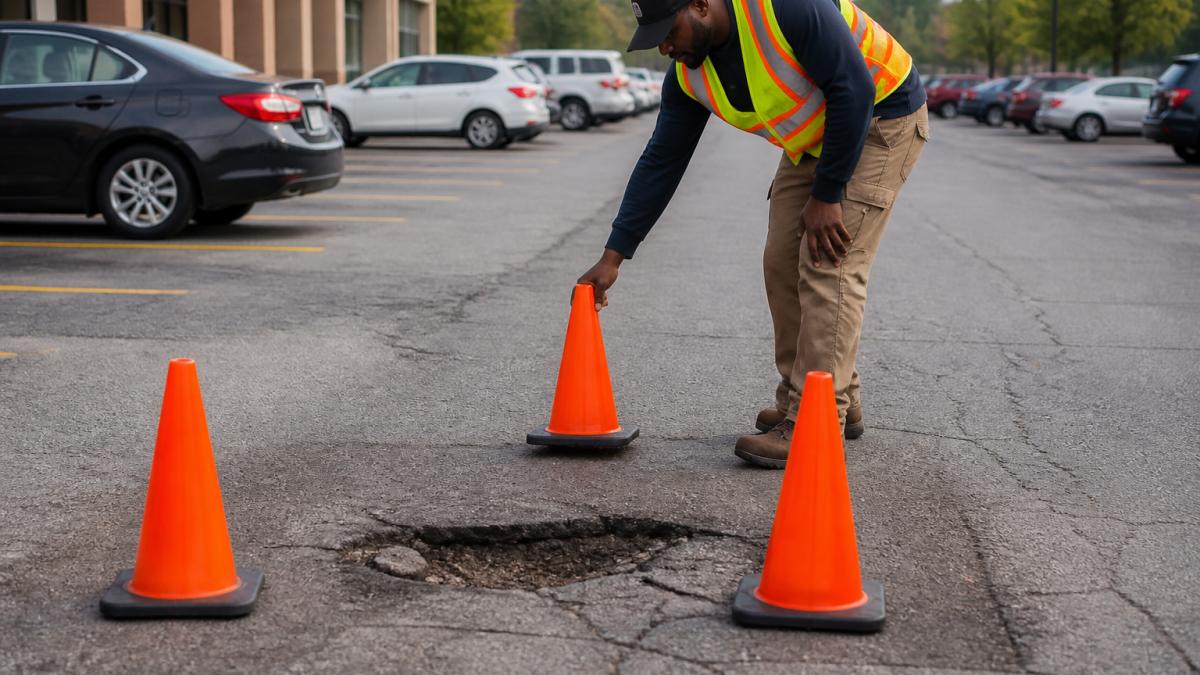
Traffic control and hazard prevention
Cones, barricades, and signage must redirect traffic away from the work zone, which should be clearly marked and visible from multiple angles. At night, reflective markers and lighting are essential.
Workers need hard hats, high-visibility vests, and proper equipment.
Temporary patches can be slippery when wet. Post warning signs in pedestrian areas and allow adequate curing time before opening to full traffic load.
Keeping customers and employees safe
Notify tenants and customers about the repair timeline. A brief message prevents surprise and reduces complaints.
Ensure the work zone is impossible to miss, poor visibility causes accidents, and even a corner repair needs prominent marking.
If the repair closes parking spaces, post notices early, customers appreciate advance notice more than discovering closed spaces on arrival.
Understanding Parking Lot Pothole Repair Costs
Repair costs depend on damage severity, area size, and whether the base is compromised. Since pricing varies by region, season, and contractor, the most useful skill is knowing how to read a quote and compare bids on equal terms.
What drives repair expenses
Pothole depth determines whether temporary or permanent repair is needed. A shallow pothole can be patched. A deep crater that exposes the base layer requires full-depth removal and replacement.
Repair area size scales costs roughly with square footage, but not linearly, mobilization, traffic control, and equipment setup are fixed costs, so a very small repair carries a disproportionately high per-square-foot price.
Base layer damage is the biggest cost driver.
How to read a repair quote line by line
A credible quote separates the work into distinct line items. Ask for these categories explicitly:
- Mobilization and traffic control, equipment delivery, cones, barricades, signage, and any after-hours labor premium.
- Demolition and removal, saw-cutting, breaking out failed asphalt, and hauling away debris.
- Base repair, excavation depth, base material type and quantity, and compaction method. If this line is missing, ask whether the base was inspected.
- Patching material, temporary cold patch versus hot-mix asphalt versus full-depth hot-mix. Material choice drives both cost and lifespan.
- Compaction and finishing, roller or plate compactor passes, edge sealing, and cleanup.
- Curing and reopening, expected time before the area can take full traffic load.
A single lump sum with no breakdown makes comparison impossible and often hides skipped steps. Ask the contractor to itemize before you sign.
Evaluating and comparing estimates
Request an on-site inspection before accepting an estimate. Phone quotes are guesses.
Call now to schedule your free estimate →
Normalize bids against the same scope: quotes are only comparable if they cover the same area, depth, and material.
Ask the contractor to explain what they are repairing and why. A good estimate includes the repair method, expected lifespan, and permanent-repair recommendations.
Red flags in an emergency repair quote
- No on-site inspection before pricing.
- No mention of base condition or drainage.
- Pressure to approve permanent work during the emergency visit without a written scope.
- No stated curing or reopening time.
- No warranty or callback policy on the patch.
A written scope, an itemized price, and a stated lifespan are the three things that let you compare emergency repair bids fairly, and they cost you nothing to ask for.
Choosing the Right Repair Approach for Your Business
The right repair balances cost, durability, and timeline. For most businesses, temporary stabilization first, then permanent repair later, is smart, but not universal. Use these criteria to decide which approach fits the failure in front of you.
A decision framework for temporary versus permanent repair
Work through these questions in order.
1. Is the base layer exposed or soft? If you can see gravel, soil, or a spongy surface under the pothole, the base has failed.
2. Is water pooling in or near the damage? Standing water signals a drainage problem; patching without correcting it guarantees repeat failure.
**3.
**4.
**5.
**6.
**7.
Assessing damage severity and scope
Walk the entire lot and document all problem areas.
Check for water pooling, soft spots, and crumbling edges. These indicate ongoing deterioration. A contractor can assess whether the damage is localized or widespread.
Ask whether the pothole is likely to recur in the same spot. If the root cause, poor drainage, weak base, or heavy traffic, isn't addressed, the patch fails quickly.
Long-term durability versus quick fixes
Calculate the true cost of repeated temporary repairs: three patches over three years often cost more than one permanent repair, which also eliminates the disruption of repeated emergency calls.
Compare total cost of ownership: add the temporary patch price, expected repeat patches over the lot's remaining life, and the disruption of each closure.
Matching the approach to business continuity
Choose the approach that keeps your business operating while you address the root cause.
Document the decision: record inspection findings, the criteria behind your choice, and the contractor's recommendation.
Assessing your pavement's overall condition before committing to any repair, a comprehensive inspection identifies hidden damage and prevents surprises.
Use the seven-question framework above to decide between temporary stabilization and permanent repair. When in doubt, stabilize the hazard first, document the inspection, and schedule permanent work based on the base condition, drainage, and traffic load, not on price alone.
Prevention and Post-Repair Maintenance
Preventing damage is cheaper than repairing it, and post-repair maintenance extends the life of permanent repairs.
Stopping recurring damage before it starts
Drainage is the primary culprit in pothole formation. If water pools on your lot, fix drainage before patching, otherwise the patch fails within months.
Seal cracks before they become potholes. A sealed crack costs a fraction of a pothole repair. Many contractors offer crack-sealing as a preventive service.
Regular sweeping and cleaning remove debris that traps water, extending pavement life significantly.
Drainage solutions for water-damaged pavement
Standing water accelerates deterioration.
A contractor can identify drainage problems during an inspection; water pooling in the same spot every rain indicates drainage failure, not just a pothole.
After permanent repair, ensure the repaired section drains properly. If drainage wasn't addressed, the new repair will fail like the old one.
Emergency asphalt repair for businesses is about speed, safety, and choosing the right solution for your situation.
We provide both temporary and permanent emergency asphalt repair solutions with rapid response and expert assessment. Our team inspects damage on-site to recommend the method that solves the problem without unnecessary cost. Contact us today to schedule your free estimate and protect your property from further deterioration.
| Repair Type | Timeline | Cost Level | Best For |
|---|---|---|---|
| Temporary patch | Same-day to 24 hours | Low | Quick operational restoration |
| Permanent repair | 2-5 days | Higher | Long-term durability |
| Base replacement | 3-7 days | Highest | Systemic failures |
| Preventive sealing | 1-2 days | Low | Damage prevention |
Frequently Asked Questions
What counts as an asphalt repair emergency for a business?
An emergency asphalt repair is needed when pavement damage creates immediate safety hazards, blocks customer or employee access, or threatens to worsen rapidly. Potholes deep enough to damage vehicles, surface failures that trap water, and cracks spreading across parking lots all qualify. Flooding or drainage emergencies that damage asphalt require urgent attention to prevent operational shutdown and liability exposure. If the damage prevents safe parking lot access or threatens your business continuity, it's time to call for same-day assessment.
Can emergency pothole repair be completed the same day?
Yes, emergency pothole repair can often be completed the same day, but the approach depends on damage severity. Temporary stabilization using rapid-set patching materials can restore basic functionality within hours, allowing your parking lot to reopen quickly. Permanent repair, which addresses root causes like drainage or base failure, typically requires more time and planning. A professional contractor can assess your specific damage on-site and explain whether same-day temporary stabilization or a scheduled permanent fix makes sense for your property.
How much does emergency asphalt repair typically cost?
Emergency asphalt repair costs depend on several factors: the size and depth of the damage, the repair method chosen (temporary patch versus permanent resurfacing), site conditions, and whether drainage work is needed. Smaller pothole patches cost less than full-section repairs or pavement replacement. Weather conditions and the urgency of the response also affect pricing. Rather than guessing, contact a contractor for an on-site inspection and quote, most offer free estimates so you can budget accurately before committing to work.
How can businesses keep customers and employees safe around damaged pavement?
Immediately mark hazardous areas with traffic control cones, warning signs, or temporary barriers to prevent trips, falls, and vehicle damage. Rope off potholes or severely cracked sections so pedestrians and vehicles avoid them. If the damage blocks primary access, mark an alternate route clearly. Inform customers and staff of the hazard and repair timeline. Once a contractor arrives, they'll implement professional traffic control during the repair. Don't delay, visible pavement damage creates liability risk and signals operational neglect to customers and tenants.