 how-to
How to Extend the Lifespan of Asphalt Pavement
Table of Contents
- Why Asphalt Pavement Fails and What Actually Extends Its Life
- Asphalt Pavement Maintenance: The Habits That Add Years
- Asphalt Crack Repair: Seal Cracks Before They Spread
- Asphalt Sealcoating and Protective Surface Treatments
- Drainage, Grading, and Water Damage Prevention
- Asphalt Maintenance Schedule: Timing Treatments Right
- Understanding Costs and Long-Term Return on Pavement Maintenance
- Frequently Asked Questions
Last Updated: October 13, 2026
Why Asphalt Pavement Fails and What Actually Extends Its Life
Asphalt pavement is a mix of stone, sand, and asphalt binder that hardens into a flexible driving surface, and its service life depends on how well you protect it from sun, water, and heavy loads. Most driveways and parking lots in our area give 15 to 20 years when maintained, and far less when ignored. We see the same story on repeat: a surface that looked fine two summers ago is now cracked, rutted, and holding water.
The Role of Oxidation, Traffic Loads, and Freeze-Thaw Cycles
Three forces do most of the damage. Oxidation dries out the binder and turns the surface gray and brittle. Traffic loads, especially from heavy vehicles, flex the pavement until it fatigues and cracks. Freeze-thaw cycles push water into those cracks, where it expands overnight and pries them wider. Water is the real enemy: every crack is a channel that lets moisture reach the base layer, and once the base softens, the surface above it sinks and breaks apart.
Reading Pavement Condition Before You Spend a Dollar
Walk your pavement once a season and grade it honestly. Excellent-to-good means no cracks wider than a pencil line and no standing water after rain. Fair means visible cracking and faded color. Poor means alligator cracking, potholes, or ruts deeper than half an inch. That grade decides your next move: preservation pays off early, and once the base fails you are paying for replacement, not maintenance.
Asphalt Pavement Maintenance: The Habits That Add Years
Asphalt pavement maintenance is the routine work that keeps a surface in good shape: cleaning it, sealing small cracks, and managing water before damage spreads. These habits are cheap and they compound, skip them for two years and the repair bill multiplies. Match the treatment to what you actually see, not to a generic calendar.
Cleaning, Sweeping, and Debris Removal
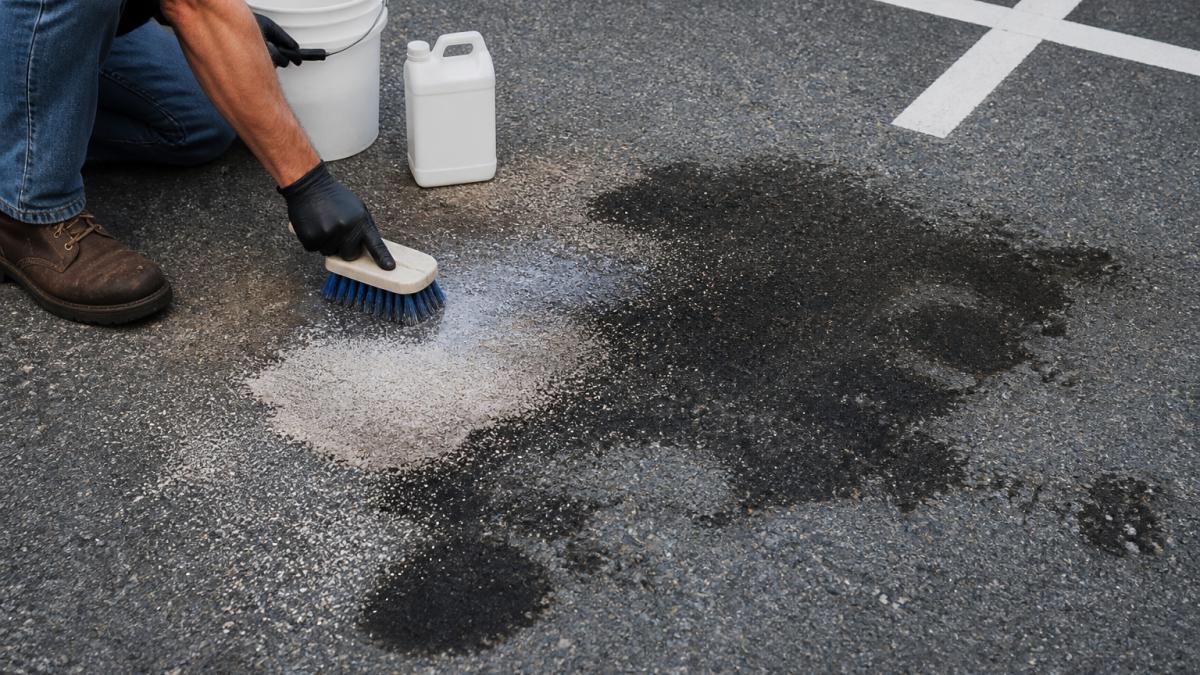
Debris removal is the easiest win and the one most property owners skip. Dirt, leaves, and sand hold moisture against the surface and feed weed growth in cracks. Sweep or blow off driveways and parking lots every few weeks.
- Remove leaves and grass clippings before they mat down
- Clear sand and gravel from gutters and drainage channels
- Pull weeds by the root, never just the top
A clean surface also lets you spot new cracks early, when they are still cheap to fix.
Condition-Based Maintenance Decision Guide
Walk the pavement once a season and look for the symptoms below.
Symptom: hairline cracks (narrower than a pencil line), no spalling, dark uniform color. This is a healthy surface.
Symptom: alligator cracking (interconnected cracks that look like reptile scales). This is base failure, not a surface problem.
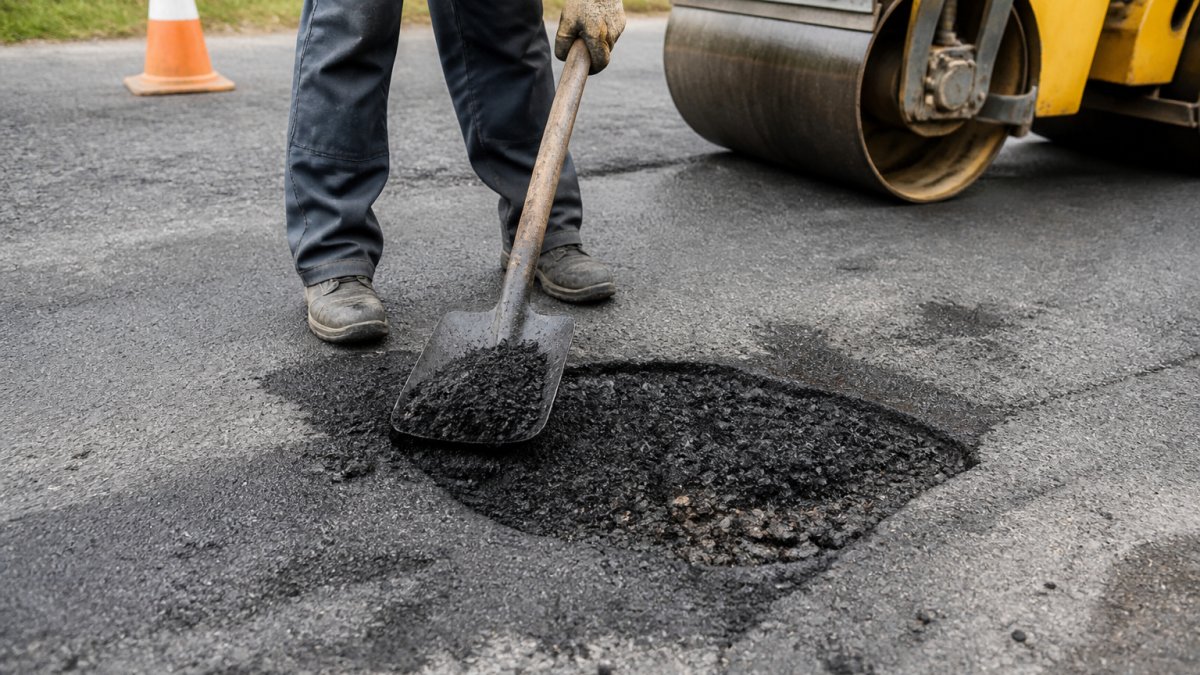
Symptom: potholes, ruts deeper than half an inch, or soft spots that flex underfoot. These are structural failures.
Why This Beats a Fixed Schedule
A fixed "sealcoat every two years" rule over-treats healthy pavement and under-treats failing pavement. Condition-based decisions put money where the pavement actually needs it, and owners who inspect seasonally and match treatments to symptoms get more years per dollar than owners who follow a calendar. Keep a simple written record, date, what you saw, what you did, and after two or three seasons you will see your surface's deterioration rate and can predict the next treatment instead of reacting to it.
Asphalt Crack Repair: Seal Cracks Before They Spread
Asphalt crack repair is the highest-return maintenance task on any paved surface.
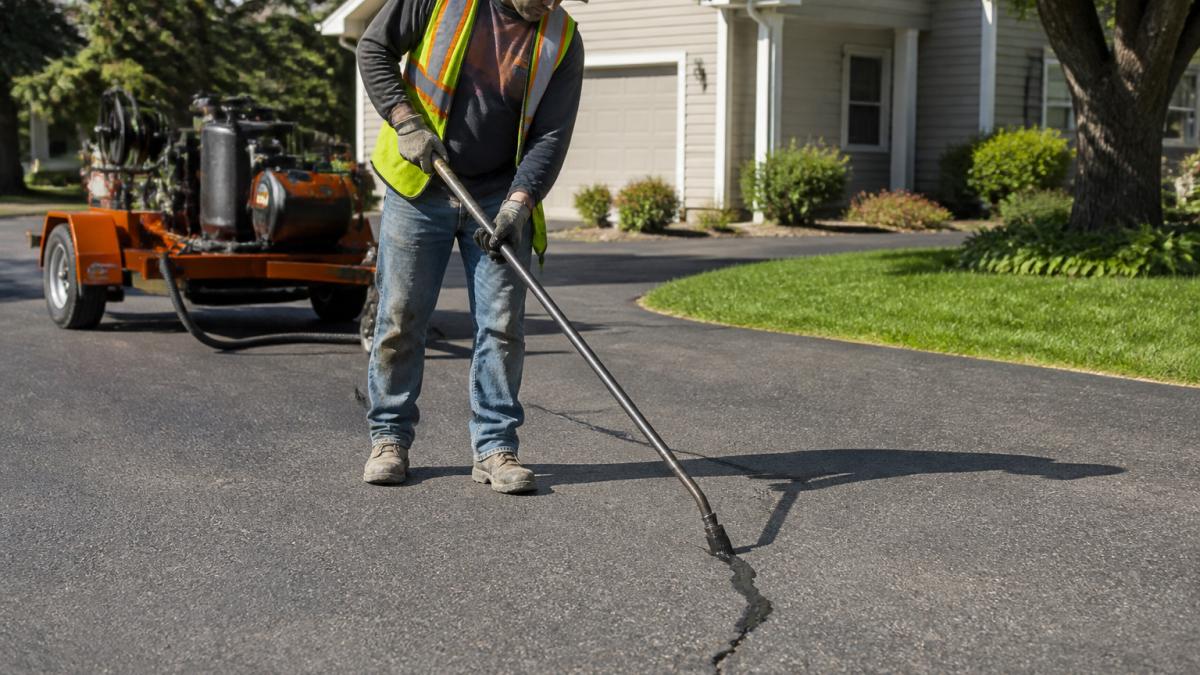
Crack propagation is fast. A hairline crack lets in water, freeze-thaw cycles widen it, and traffic flexes the edges until it becomes a pothole.
- Clean the crack with a wire brush or compressed air
- Remove all loose debris and vegetation
- Fill with a hot-pour sealant or cold-pour filler rated for your climate
Crack sealing works best on dry pavement above 50°F. A common mistake is sealing over a wet crack. The filler will not bond, and it pops out within a season.
Asphalt Sealcoating and Protective Surface Treatments
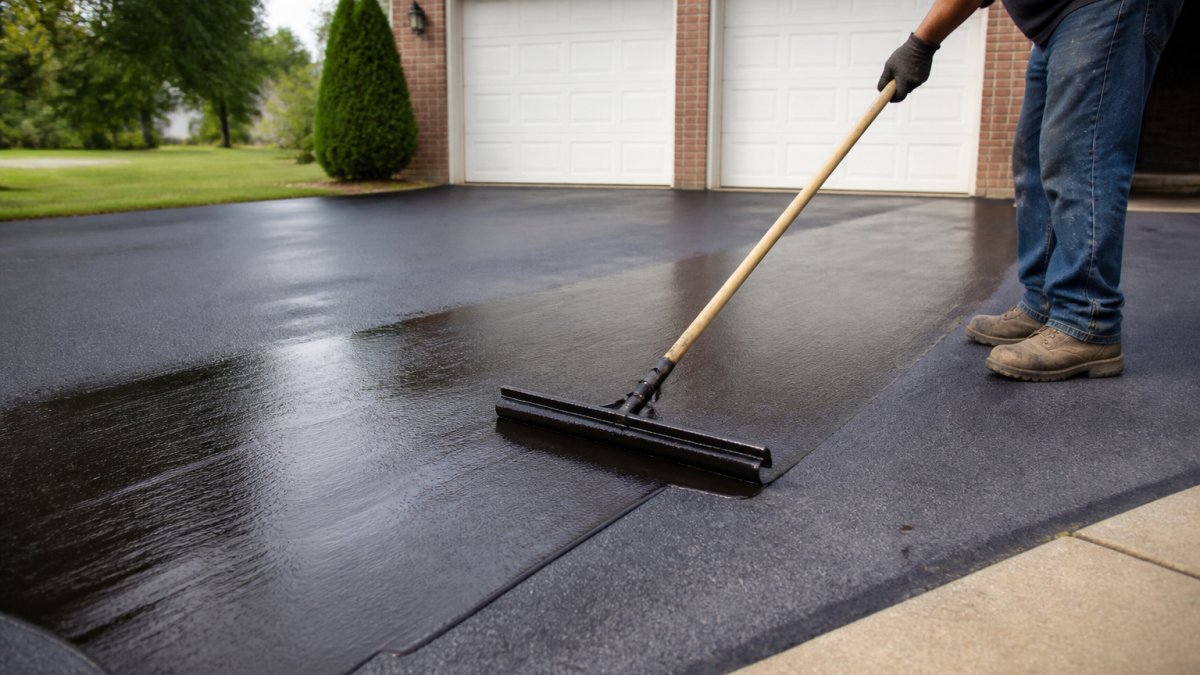
Asphalt sealcoating is a protective coating that shields the surface from oxidation, water, and chemical spills. A quality sealcoat restores the dark color, fills minor surface voids, and slows aging, and most driveways and lots need a new coat every two to three years.
Some surfaces benefit from a fog seal, a thin spray of diluted asphalt emulsion that refreshes an aging surface without the cost of a full sealcoat.
Drainage, Grading, and Water Damage Prevention
Water damage prevention starts with proper drainage. Pavement should slope away from buildings at a steady grade so runoff reaches gutters, drainage channels, or a designed low point.
Check these spots after every heavy rain:
- Low spots where puddles linger more than a day
- Edges where soil has settled against the pavement
- Gutters and channels clogged with debris
Regrading the soil along the edges and clearing channels often solves the problem without touching the asphalt. If standing water keeps returning to the same spot, the base layer under that area likely needs repair.
Call now to schedule your free estimate →
Asphalt Maintenance Schedule: Timing Treatments Right
An asphalt maintenance schedule turns guesswork into a plan. The right treatment interval depends on pavement condition, traffic loads, and weather exposure, not a fixed calendar. Base your schedule on what you see each season, then time each treatment to the weather window that lets it cure properly.
A simple annual routine works for most driveways and small lots:
| Season | Task | Why It Matters |
|---|---|---|
| Spring | Inspect for cracks and potholes | Catch damage before summer heat widens it |
| Spring | Clean gutters and channels | Restore runoff before storm season |
| Summer | Seal cracks | Dry, warm conditions give the best bond |
| Fall | Sweep and clear debris | Prevent moisture from sitting all winter |
| Every 2-3 years | Sealcoat | Slow oxidation and surface deterioration |
| As needed | Pothole and surface repairs | Stop small failures from spreading |
Weather and Application Conditions That Decide Success
Timing decides whether a treatment lasts or fails. The windows below are what most contractors work within. Treat them as guidance, not absolutes, and always follow the manufacturer's written instructions.
Crack sealing (hot-pour sealant):
- Pavement surface temperature: 50°F and rising is the common minimum; many sealants specify a higher floor, so check the label.
- Air temperature: above 50°F, with no rain in the forecast for at least 24 hours.
- Pavement must be dry. Sealing over a wet crack is the single most common reason filler pops out within a season.
Crack sealing (cold-pour filler):
- More forgiving of cooler temperatures than hot-pour, but still requires dry pavement.
- Curing time is longer, so avoid application when rain is expected within 24 to 48 hours.
- Cold-pour is a reasonable choice for small driveway jobs where renting hot-pour equipment is not practical.
Sealcoating:
- Air temperature: 50°F and rising, with no rain for at least 24 hours after application. Many manufacturers specify a minimum of 55°F and rising.
- Pavement must be clean, dry, and free of loose material.
- Do not apply to a brand-new surface. Fresh asphalt needs a full curing season to release its oils, or the sealant traps them and stays tacky.
- Best window: late spring through late summer, so the coating has warm days to cure before cold nights arrive.
Patching:
- Most cold-patch products can be applied in cooler weather, which makes them useful for temporary winter repairs.
- Permanent hot-mix patches need warm, dry conditions and are best scheduled for the same window as crack sealing.
The Freeze-Thaw Window
In climates with cold snaps, late-fall sealing is risky. If the temperature drops before the filler or sealcoat cures, it will not bond, and you will pay to redo the work in spring. Watch the overnight forecast, not just the daytime high, a 60°F afternoon followed by a 35°F night can ruin a sealcoat that looked fine when it went down.
Plan crack sealing and sealcoating for late spring through early fall. Use late fall and winter for inspection, debris removal, and temporary patching only.
Seasonal Timing by Treatment
- Inspection: any season, but spring and fall give the clearest picture because you can see how the surface handled the previous season's weather.
- Crack sealing: late spring through early fall, dry pavement, warm air.
- Sealcoating: late spring through late summer, dry pavement, warm air, no rain for 24 hours.
- Patching: permanent patches in the warm season; temporary cold-patch any time.
Documenting Condition Each Season
A schedule is only useful if you track what you see. Keep a simple log with the date, the symptoms you observed (crack widths, potholes, standing water), and the treatment applied. After two or three seasons you will see your pavement's deterioration rate and can predict the next treatment instead of reacting to it. This record also helps when you get quotes, because you can show a contractor exactly what has changed and when.
Understanding Costs and Long-Term Return on Pavement Maintenance
Preventive maintenance versus waiting for major repairs is the real cost decision. A crack sealing and sealcoating program costs a fraction of an asphalt overlay or full replacement, and it pushes replacement years into the future.
Pricing depends on the size of the surface, the extent of damage, and the treatments needed. A small driveway with a few cracks is a very different job than a parking lot with failed drainage and alligator cracking.
The math favors acting early. Seal cracks now and you protect the base layer, the expensive part to rebuild. Let water in and you pay for base repair, overlay, and possibly full replacement.
A few habits protect your investment year after year:
- Inspect on a schedule, not when something looks wrong
- Fix cracks while they are still narrow
- Keep water moving off the surface
- Repair potholes before they grow
Frequently Asked Questions
Can an asphalt driveway last 50 years?
A well-built asphalt driveway can reach 30 to 50 years with consistent asphalt pavement maintenance. The key is pavement thickness, proper drainage, and timely treatments. Driveways kept in excellent-to-good condition through crack sealing and sealcoating every few years typically outlast neglected surfaces by a decade or more. Once oxidation and water infiltration take hold, service life drops fast regardless of original construction quality.
How often should asphalt pavement be sealcoated?
Most asphalt sealcoating schedules call for a fresh coat every 2 to 4 years, depending on traffic loads and weather exposure. Driveways with light use may stretch to 4 years, while parking lots handling heavy vehicles often need it sooner. Watch for fading color, surface raveling, or a chalky texture. Sealcoating too often wastes money; waiting too long lets oxidation reach the asphalt mix and shortens pavement lifespan.
When should cracks in asphalt pavement be repaired?
Seal cracks as soon as they reach roughly a quarter inch wide, or before water can sit in them through a freeze-thaw cycle. Small cracks filled early with crack sealing stop water infiltration and prevent crack propagation into potholes. If you wait until cracks connect and edges crumble, you move from asphalt crack repair into full-depth patching, which costs far more and rarely restores the original service-life extension.
What maintenance helps asphalt last longer?
The highest-value steps are keeping water off the surface, sealing cracks early, and staying on a written asphalt maintenance schedule. That means clearing debris from gutters and drainage channels, correcting grading so runoff leaves the pavement, sealcoating on a 2 to 4 year cycle, and repairing potholes before they spread. Skipping these lets water damage and oxidation compound, turning a small repair into an asphalt overlay or full replacement.
Asphalt pavement rarely fails overnight. It fails slowly, through cracks you did not seal and water you did not move. Houston Pavement Repair LLC handles asphalt and concrete paving and repair for homes and businesses, and we build every job around fixing the root cause, not just the visible damage. We start with a free estimate, so you know what your pavement needs before you spend a dollar. Call now to schedule your free estimate.