 how-to
Paving Subcontractor Disputes: 6 Common Issues and How to Resolve Them
Table of Contents
- Common Types of Paving Subcontractor Disputes
- Construction Subcontractor Payment Disputes: Prevention and Resolution
- Paving Subcontractor Contract Scope of Work: Setting Clear Expectations
- Construction Dispute Documentation Checklist: Build Your Evidence
- Step-by-Step Dispute Resolution Process
- Construction Mediation Process: When Negotiation Fails
- Legal Remedies and Lien Rights for Unpaid Work
- How to Prevent Disputes Before They Start
- Frequently Asked Questions
Last Updated: October 10, 2026
Common Types of Paving Subcontractor Disputes
Paving subcontractor disputes arise when expectations don't match reality on job sites. Understanding the most common issues helps you spot problems early and resolve them before they escalate.
Payment Delays and Retainage Disputes
Payment delays are the leading cause of friction between general contractors and paving subcontractors. A subcontractor completes work on schedule, submits an invoice, and waits weeks for payment. Meanwhile, bills pile up and cash flow tightens.
General contractors often hold back 5-10% of payment as retainage until final project completion, creating cash flow gaps that threaten operations.
The dispute typically starts when subcontract terms don't specify when retainage is released, 30 days after completion, after inspection, or after the general contractor gets paid by the property owner. Without clear language, subcontractors chase payment indefinitely.
Scope-of-Work Misalignment
Two parties can read the same contract and walk away with completely different understandings. One thinks the subcontractor is patching three potholes; the other thinks it's resurfacing the entire lot.
This happens because scope-of-work language is vague. Phrases like "repair as needed" or "standard paving work" mean different things to different people and different specialties.
Scope creep follows naturally when the general contractor requests extra square footage, different materials, or faster timelines. The subcontractor either absorbs the cost or refuses, creating conflict.
Defective or Incomplete Workmanship
Quality disputes emerge when finished paving doesn't meet expectations, asphalt cracks within months, surfaces are uneven, or drainage still pools water.
The subcontractor claims the work meets industry standards. The general contractor or property owner says it falls short. Without clear quality specifications in the contract, both sides believe they're right.
Incomplete work creates similar tension when a subcontractor leaves the job unfinished due to scheduling or payment issues, forcing the general contractor to hire another crew and driving costs up.
Project Delays and Schedule Conflicts
A paving job depends on weather, material delivery, and crew availability. When any slip, the entire project timeline shifts and downstream trades lose their window.
The subcontractor claims weather delays are beyond their control while the general contractor argues the subcontractor should have planned for seasonal conditions.
Schedule disputes often involve shared responsibility. The general contractor didn't deliver the site on time. The material supplier shipped late. The subcontractor underestimated crew capacity. Untangling who caused the delay requires detailed project records.
Construction Subcontractor Payment Disputes: Prevention and Resolution
Start with a written subcontract that specifies:
- Total project cost and payment schedule
- Retainage amount and release conditions
- Progress payment milestones (e.g., 25% complete, 50% complete, 100% complete)
- Invoice submission requirements and payment due dates
- Late payment penalties or interest charges
- Conditions that trigger payment holds
Submit invoices on time with documentation (photos, measurements, material receipts). If payment is late, send a written notice within 5 days referencing the contract terms.
Track all communications in writing, text messages, emails, and job site notes become evidence if the dispute reaches mediation or litigation.
Paving Subcontractor Contract Scope of Work: Setting Clear Expectations
A strong scope-of-work section is your insurance policy against disputes.
Write your scope in specific, measurable terms. Instead of "repair the driveway," write "patch three potholes (each 2-3 feet wide) with hot-mix asphalt and compact to 95% density per ASTM D1559."
Include these details:
- Square footage or linear footage of work
- Specific materials and product names
- Surface preparation steps (removal, cleaning, priming)
- Quality standards (finish smoothness, compaction levels, color match)
- Excluded work (what you're NOT responsible for)
- Site conditions you expect to find
- Who provides equipment, materials, labor
List items the general contractor must provide: site access, utility locations, existing pavement removal, drainage work, and traffic control responsibility.
If the scope changes, document it in a written change order specifying what's being added or removed, the new cost, and completion date. Both parties sign before work resumes.
Construction Dispute Documentation Checklist: Build Your Evidence
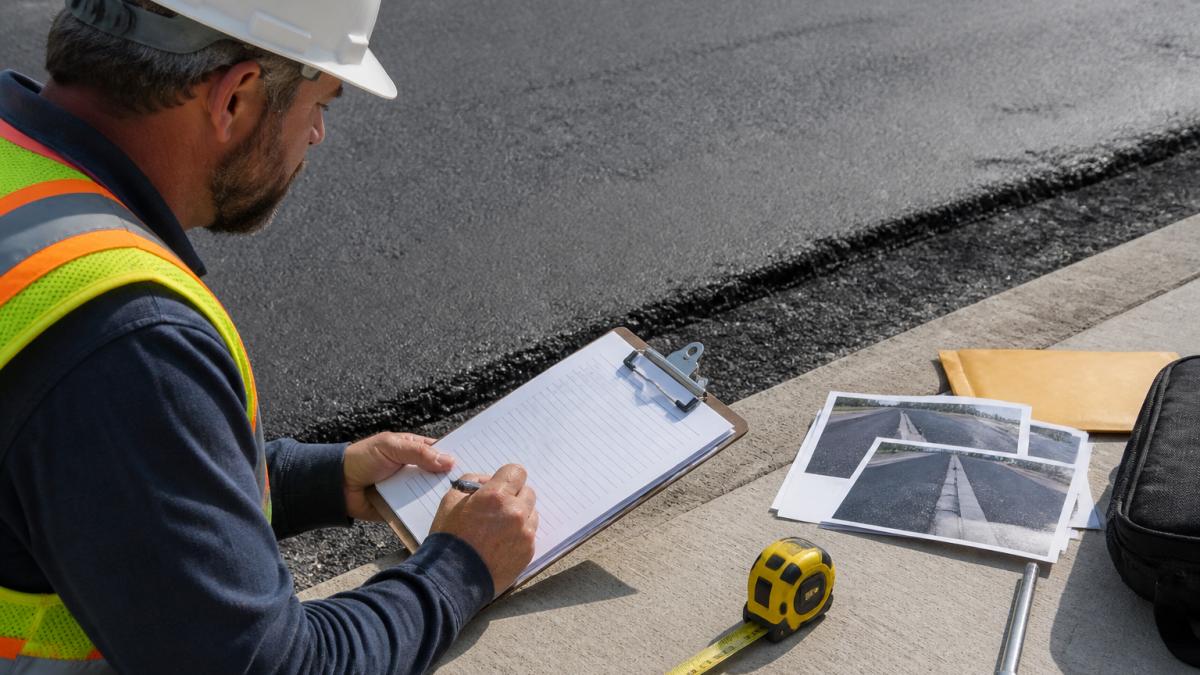
Start a project file for every job including: signed subcontract and amendments, scope-of-work details, change orders, email chains, daily job site photos (dated and timestamped), weather records, material receipts, crew timesheets, inspection reports, and payment records.
Take photos before work starts, during each phase, and after completion. Photograph defects, drainage issues, or quality problems with a measuring tape or coin for scale.
This documentation proves what the contract promised, what work was completed, when delays occurred, whether quality met standards, and whether payment was made on time. Without it, disputes become "he said, she said." Maintaining a comprehensive paper trail serves as the primary defense when managing construction project delays and prevents minor disagreements from escalating into costly litigation.
Step-by-Step Dispute Resolution Process
Most disputes can be resolved without lawyers if you follow a clear process. Start early and escalate only when necessary.
Step 1: Communicate in Writing
Document problems in writing immediately. Send an email describing the issue, what you expected, and what you need. Keep the tone professional and factual, state the problem, reference the contract, and ask for a specific action.
Their response will reveal whether the issue is a simple oversight, a cash flow problem, or a legitimate quality concern.
Step 2: Review Contract Terms and Liability
Review your subcontract to confirm what it actually says. Check whether the contract addresses the issue, what it says about liability and payment timing, any protective clauses, and whether it includes a dispute resolution process.
If the contract is silent or ambiguous, seek legal advice. If you're in the right according to the contract, reference it directly in your communication.
Step 3: Request Formal Inspection or Remediation
If the dispute involves quality or completeness, request a formal inspection with the general contractor and a neutral third party if possible. Document findings with photos, measurements, and notes.
Call now to schedule your free estimate →
If defects are found, agree on remediation steps and timeline in writing. If the inspection shows your work met specifications, use that as evidence. If it shows defects, address them promptly.
Step 4: Attempt Direct Negotiation
Sit down with the general contractor to negotiate a resolution. Come prepared with copies of the subcontract, organized documentation, a clear outcome goal, and willingness to compromise on minor issues.
Listen to their perspective, a payment delay might stem from the property owner not paying them, or a quality dispute might reflect a misunderstanding about specifications. Many disputes settle at this stage with a simple agreement.
Document the resolution in writing with an email confirming what was agreed and requesting confirmation.
Construction Mediation Process: When Negotiation Fails
If direct negotiation stalls, mediation is the next step. A neutral third party facilitates discussion, clarifies interests, and proposes solutions. Many disputes that seem intractable resolve quickly with a skilled mediator.
Mediation is faster and cheaper than arbitration or litigation. To initiate, propose it in writing, agree on a mediator (your state bar association can provide referrals), schedule a session within 2-4 weeks, and bring documentation and decision-makers.
During mediation, you'll have a chance to explain your perspective and hear theirs. The mediator will identify common interests and propose compromises.
If mediation succeeds, you'll sign a settlement agreement. If it fails, you retain the right to pursue arbitration or litigation.
Legal Remedies and Lien Rights for Unpaid Work
If a general contractor refuses to pay for completed work, you have legal remedies. The strongest is a mechanic's lien.
A mechanic's lien gives you a claim against the property itself. If the general contractor doesn't pay, you can force a sale of the property to satisfy the debt. This is powerful use.
To file a lien:
- Provide written notice to the property owner within a required timeframe (typically 30 days of last work)
- File a lien claim with the county recorder's office
- Follow specific formatting and documentation requirements
- Comply with any notice or deadline requirements in your state
Lien laws vary by state. Some states require preliminary notice before you start work. Others have strict deadlines for filing. Missing a deadline can forfeit your lien rights.
If you're owed money, consult a construction attorney before the deadline passes. They'll ensure you file correctly and preserve your rights.
Other remedies include:
- Small claims court for disputes under a certain amount
- Civil litigation for larger disputes
- Arbitration if your contract includes an arbitration clause
Each option has different costs, timelines, and outcomes. An attorney can advise which fits your situation.
How to Prevent Disputes Before They Start
Prevention is always better than resolution. Build these practices into every project.
Use a detailed written subcontract. A one-page agreement is not enough.
Get everything in writing. No verbal agreements. No handshakes. If it's not in writing, it didn't happen.
Take daily photos. Document the site before, during, and after each phase. Photos prove what was done and when.
Communicate in writing. Email, text, or written notes. Avoid phone-only conversations.
Track time and materials carefully. Keep timesheets, material receipts, and equipment logs. This documentation supports invoices and protects you if payment is disputed.
Submit invoices on time. Don't let invoices pile up. Submit them promptly with supporting documentation. The sooner the general contractor processes payment, the sooner you get paid.
Clarify expectations upfront. Before work starts, walk the site with the general contractor. Discuss what you'll do, what they'll provide, and what success looks like.
Know your rights. Understand lien laws, contract requirements, and dispute resolution options in your state. Ignorance costs money.
Your subcontract is not just a legal document. It's a roadmap that keeps everyone aligned.
Paving subcontractor disputes drain time and money that could go toward growing your business.
Frequently Asked Questions
What are the most common causes of paving subcontractor disputes?
Payment delays, scope-of-work misalignment, defective workmanship, and schedule conflicts account for most disputes. Payment disputes arise when retainage is withheld without clear justification or progress payments are delayed. Scope conflicts occur when the subcontract doesn't specify materials, thickness, or finish standards. Workmanship issues emerge when quality standards aren't documented upfront. Schedule conflicts happen when weather, material delays, or coordination problems push completion dates. Clear contracts and written communication prevent most of these problems.
How should you document a construction dispute with a paving subcontractor?
Document everything in writing from day one. Take dated photographs of work conditions, defects, and progress. Keep copies of all emails, text messages, and written notices. Record inspection dates, inspector names, and findings. Maintain a log of delays with reasons and impact on the schedule. Save all invoices, payment records, and change orders. If workmanship is defective, hire a third-party inspector to create an objective report. This documentation supports your position if mediation or litigation becomes necessary.
What should a paving subcontractor agreement include to prevent disputes?
A solid subcontract must specify scope of work in detail: materials, thickness, finish type, and quality standards. Include payment terms, retainage percentage, and progress-payment schedule. Define the completion date and consequences for delays. Outline change-order procedures and who approves extra work. Clarify insurance and liability requirements. State how disputes will be resolved (negotiation, mediation, arbitration). Include a lien-waiver clause and notice requirements. Require written notice of defects within a specified timeframe. The more specific the contract, the fewer disputes arise.
When should you pursue mediation instead of litigation for a paving subcontractor dispute?
Mediation is faster, cheaper, and less adversarial than litigation. Pursue it when direct negotiation stalls but both parties want to resolve the issue. Mediation works well for payment disputes, scope disagreements, and quality concerns where facts are disputed but the relationship isn't completely broken. If the subcontractor has disappeared, refuses all contact, or owes significant money with no assets, litigation or lien filing may be necessary. Mediation typically costs a few hundred dollars and takes weeks; litigation can take months and cost thousands.