 how-to
How to Choose Commercial Asphalt Contractors
Table of Contents
- Step 1: Assess Commercial Paving Experience and Track Record
- Step 2: Verify Licenses, Certifications, and Professional Memberships
- Step 3: Confirm Insurance Coverage and Liability Protection
- Step 4: Evaluate Equipment, Crew Capacity, and Operational Resources
- Key Asphalt Contractor Questions to Ask Before Hiring
- Understanding Your Asphalt Paving Estimate and Bid Comparison
- Commercial Paving Warranty, Timeline, and Quality Assurance
- Matching Contractor Capabilities to Your Project Requirements
- Frequently Asked Questions
Last Updated: October 9, 2026
Step 1: Assess Commercial Paving Experience and Track Record
Commercial paving experience is the foundation of your contractor selection. A contractor's track record tells you whether they can handle projects like yours.
Ask for a portfolio of recent projects. Request references from property managers or facilities directors who hired them for parking lots, loading zones, or industrial yards. Call those references directly. Don't just look at photos on their website.
A proven track record means the contractor has managed high-volume traffic areas, navigated drainage challenges, and delivered durability that lasts. Most contractors will show you their best work. The real question is whether they've handled situations that match your specific needs.
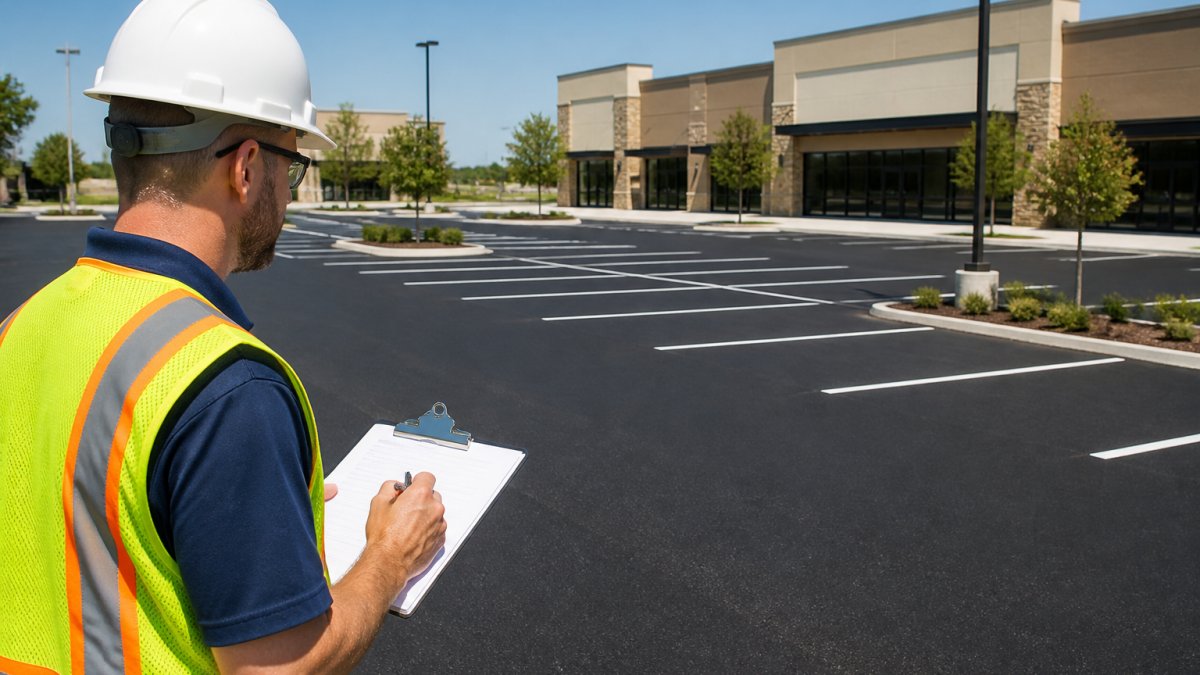
When evaluating experience, ask these specific questions:
- How many commercial paving projects have you completed in the last three years?
- Can you provide references from similar property types (retail, industrial, apartment complexes)?
- Have you worked on parking lots with heavy vehicle traffic or equipment movement?
- What's your experience with site preparation and drainage solutions?
At Houston Pavement Repair LLC, our team understands the demands of high-traffic commercial environments and knows how to deliver surfaces that hold up under real-world conditions.
Step 2: Verify Licenses, Certifications, and Professional Memberships
Licenses and certifications prove your contractor operates legally and maintains professional standards. This protects you and ensures the work meets code requirements.
Check that your commercial asphalt contractors hold a valid contractor's license in your state. Verify the license through your state's licensing board. A legitimate contractor won't hesitate to provide this information.
Look for professional certifications related to asphalt paving. The National Asphalt Pavement Association (NAPA) and the Asphalt Recycling and Reclaiming Association (ARRA) offer certifications that signal commitment to quality and industry standards.
Professional memberships matter too. Contractors who belong to industry organizations stay current on best practices and new techniques. They invest in their professional development.
Ask your potential contractor:
- What state contractor's license number do you hold?
- Are you a member of any professional paving associations?
- Do your crew members hold any asphalt-specific certifications?
- Have you completed any recent training or continuing education?
Step 3: Confirm Insurance Coverage and Liability Protection
Insurance protects you from financial exposure if something goes wrong during the project. Never hire a commercial asphalt contractor without verifying their insurance coverage.
Your contractor needs two types of insurance: general liability and workers' compensation. General liability covers property damage or injuries that occur during the work. Workers' compensation covers injuries to the contractor's employees.
Request a Certificate of Insurance before work begins. This document proves coverage is active. Call the insurance company to verify the certificate is legitimate. Don't rely on the contractor's word alone.
The coverage amounts matter. For commercial projects, general liability should be at least one million dollars. This ensures you're protected if something goes seriously wrong.
Ask these questions:
- What is your general liability coverage limit?
- Can you provide a Certificate of Insurance before we sign the contract?
- Are your workers covered by workers' compensation insurance?
- What happens if someone is injured on my property during your work?
Step 4: Evaluate Equipment, Crew Capacity, and Operational Resources
The right equipment and crew size determine whether your project stays on schedule and meets quality standards. A contractor with limited resources may cut corners or delay your work to handle other jobs.
Ask what equipment your commercial asphalt contractors own or have access to. Asphalt paving requires specific machinery: pavers, compactors, rollers, and milling equipment. Contractors who own their equipment can start work faster and maintain better quality control. Those who rent equipment may face delays if rentals aren't available.
Crew capacity matters for project timeline. A small crew takes longer. For a large parking lot or industrial yard, you need enough crew members to complete the work efficiently without disrupting your operations for weeks.
Ask about their operational resources:
- What asphalt paving equipment do you own versus rent?
- How many crew members can you assign to my project?
- What is your typical project timeline for a parking lot of [your size]?
- Can you work around our business hours or traffic patterns?
For commercial properties, scheduling often means working early morning, evening, or in phases to minimize business disruption. A contractor with adequate crew and equipment can accommodate these requirements.
Key Asphalt Contractor Questions to Ask Before Hiring
Before you commit to any commercial asphalt contractors, get answers to these essential questions. This conversation reveals whether the contractor understands your needs and can deliver reliable results.
Project Understanding:
- Have you completed projects similar to mine in scope and complexity?
- What challenges do you anticipate with my specific site?
- How would you approach the site preparation and drainage?
Quality and Process:
- What asphalt materials do you recommend and why?
- How do you ensure quality control during installation?
- What warranty do you offer on the finished work?
Timeline and Disruption:
- What's your proposed project schedule?
- How will you minimize disruption to my business operations?
- What happens if weather delays the work?
Cost and Contracts:
- Will you provide a detailed written estimate?
- What does your estimate include and exclude?
- How do you handle change orders if the scope changes?
Communication and Reliability:
- How will you keep me informed during the project?
- What's your process if issues arise during construction?
- Can you provide recent references I can contact directly?
Understanding Your Asphalt Paving Estimate and Bid Comparison
A clear estimate protects both you and your contractor. It sets expectations and prevents disputes later. When you receive bids from multiple commercial asphalt contractors, compare them carefully.
Call now to schedule your free estimate →
A professional estimate includes:
- Detailed scope of work (site preparation, removal, new asphalt, striping, etc.)
- Square footage and depth of asphalt
- Type and grade of asphalt material
- Labor and equipment costs
- Timeline and project schedule
- Warranty terms
- Any exclusions or assumptions
Compare line-by-line, not just the bottom number. Two contractors may quote different prices because they're proposing different approaches. Lower isn't always better if it means lower quality materials or rushed work.
Watch for vague estimates that lack detail. "Parking lot paving: $X" tells you nothing about what's included. A legitimate contractor breaks down every component.
| Estimate Element | What to Look For | Red Flag |
|---|---|---|
| Scope of Work | Detailed list of all work included | Vague or incomplete description |
| Materials Specified | Type and grade of asphalt named | Just says "asphalt" with no details |
| Site Prep Included | Removal, base prep, drainage addressed | Unclear whether prep is included |
| Labor and Equipment | Broken down separately | Lumped into one unclear number |
| Timeline | Specific start and end dates | "When we get to it" or no timeline |
| Warranty | Coverage period and what's covered | No warranty mentioned |
Ask each contractor to explain their estimate. If one bid is significantly lower than others, ask why. Is it different scope, lower-quality materials, or unrealistic pricing that suggests the contractor will cut corners or abandon the project?
Commercial Paving Warranty, Timeline, and Quality Assurance
Your warranty protects your investment long after the contractor leaves. A strong warranty reflects confidence in the work. Timeline and quality standards determine whether your project disrupts operations or runs smoothly.
What Warranty Coverage Should Include
A solid asphalt paving warranty covers defects in materials and workmanship. It protects you if the surface cracks, settles, or fails prematurely.
Standard warranty periods typically range from one to five years, depending on the contractor and scope. The warranty should cover:
- Surface cracks or potholes from defective asphalt
- Settlement or unevenness from poor base preparation
- Sealing failures or coating problems
- Workmanship defects
Ask what the warranty does NOT cover. Most warranties exclude damage from extreme weather, improper maintenance, or use beyond the design specifications. A contractor should explain these limits clearly.
Get the warranty in writing as part of your contract. Don't accept verbal promises. Written warranties are enforceable if problems arise.
Project Timeline and Construction Planning
A realistic timeline shows the contractor has thought through your project. Vague timelines suggest they haven't planned carefully or may delay your work for other jobs.
For commercial properties, phasing matters. If your parking lot must stay partially open during work, the contractor needs to plan phases that keep traffic flowing. A contractor who hasn't considered this will cause unnecessary disruption.
Ask about:
- How long will the full project take?
- Will work happen in phases or all at once?
- What happens if weather delays the schedule?
- How will you manage traffic and access during construction?
Timeline delays cost you money and customer disruption. A contractor with realistic timelines and contingency planning prevents these problems.
Quality Control and Workmanship Standards
Quality control during construction prevents expensive problems later. Ask how your contractor ensures the asphalt meets specifications and industry standards.
Quality control includes:
- Testing asphalt mix design before delivery
- Monitoring temperature during placement
- Compaction verification to ensure proper density
- Surface smoothness testing
- Proper drainage slope confirmation
A contractor who explains their quality control process is demonstrating professionalism. Ask to see documentation of testing and inspection during your project.
Matching Contractor Capabilities to Your Project Requirements
The best contractor for your project is the one whose capabilities align with your specific needs. A contractor excellent at large industrial yards may struggle with a small retail parking lot.
Define your project requirements first:
- Parking lot size and traffic volume
- Site conditions (drainage, slope, existing surface condition)
- Budget constraints
- Timeline requirements
- Phasing needs to minimize business disruption
- Special requirements (ADA compliance, specific materials, etc.)
Then evaluate each contractor against these criteria. Does their experience match? Can their crew and equipment handle the project? Can they work within your timeline and budget?
At Houston Pavement Repair LLC, we assess every project individually. We understand that a commercial parking lot for a retail center has different demands than an industrial yard. We match our approach to what your specific property needs.
A contractor who takes time to understand your requirements and explains how they'll meet them is showing you they're serious about delivering results. This is the contractor worth hiring.
Choosing the right commercial asphalt contractors requires careful evaluation of experience, qualifications, insurance, and resources. The time you invest in this process pays off through quality work, reliable timelines, and surfaces that last. When you're ready to move forward, Houston Pavement Repair LLC is here to help.
Frequently Asked Questions
What questions should you ask a commercial asphalt contractor?
Ask about their experience with projects similar to yours, licensing and insurance status, equipment capabilities, crew size, project timeline, warranty terms, and how they handle site preparation and drainage. Request references from recent commercial clients and clarify their approach to quality control, traffic management during construction, and how they address the root causes of pavement failure, not just surface patches.
How can you compare commercial asphalt paving estimates?
Request written estimates from multiple contractors that detail the scope of work, materials, labor, site preparation, drainage solutions, timeline, and warranty. Compare not just the total price but the breakdown: asphalt thickness, subgrade preparation, equipment used, and crew size. Ask why estimates differ, lower bids may indicate shortcuts in preparation or materials, while higher bids might reflect better site planning or longer-lasting solutions.
What should a commercial paving warranty cover?
A strong warranty should cover material defects, workmanship, and durability against cracking, rutting, and premature failure for a specified period. It should address root causes like drainage issues, not just surface wear. Verify the warranty is in writing, includes specific conditions, and clarifies what is and isn't covered, such as traffic damage, maintenance requirements, and seasonal movement.
How long does a commercial asphalt paving project typically take?
Project timeline depends on scope, weather, and site conditions. Ask contractors for a detailed schedule that accounts for weather delays, curing time between layers, and traffic management. Verify they can coordinate with your business operations to minimize disruption and confirm their reliability in meeting deadlines.