 how-to
How to Choose the Right Parking Lot Striping Paint
Table of Contents
- Start With the Surface: Parking Lot Surface Preparation Before You Buy Paint
- Water-Based vs. Oil-Based Parking Lot Striping Paint: Which Holds Up
- Match Paint Type to Traffic Volume, Climate, and Surface
- Parking Lot Striping Paint Coverage: How Much You Actually Need
- Parking Lot Paint Drying Time and Application Temperature
- Reflective Beads, Accessibility Markings, and Nighttime Visibility
- Lifecycle Cost: Budgeting for Restriping and Maintenance
- Frequently Asked Questions
Last Updated: October 4, 2026
Start With the Surface: Parking Lot Surface Preparation Before You Buy Paint
The right parking lot striping paint starts with the surface under it, not the can. If you want to know how to choose the right parking lot striping paint, test adhesion and prep the pavement first.
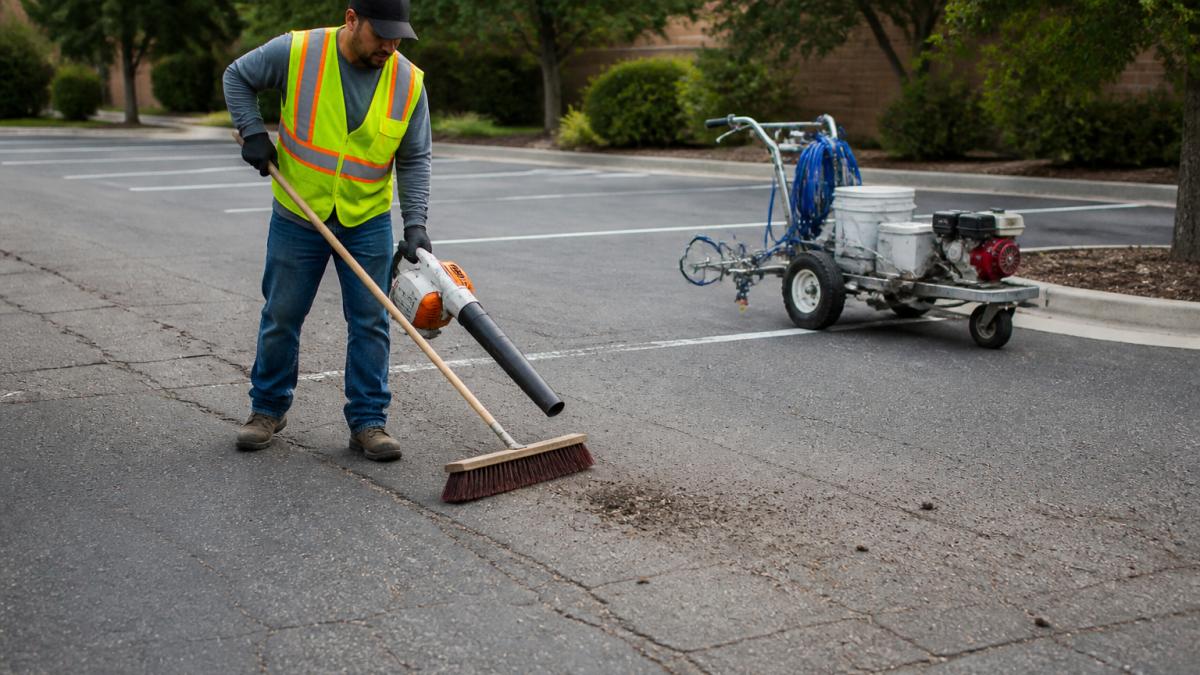
Asphalt and concrete behave differently. Asphalt is porous and moves with heat. Concrete is harder and often smoother. Paint that grips one may peel off the other.
Adhesion Testing and Compatibility With Existing Markings
Old paint is the number one reason new paint fails. Test before you buy:
- Scrape a small patch of old marking with a putty knife
- Check if it lifts in flakes or powders
- Wipe the area with a clean rag
- Apply a test strip of your new paint
- Wait the full cure time, then try to peel it
If old paint lifts, remove it first. If it powders, seal or prime the surface. Never paint over loose markings and expect them to hold.
Water-Based vs. Oil-Based Parking Lot Striping Paint: Which Holds Up
Water-based acrylic paint dries fast and has low odor. Solvent-based paint, often made with an alkyd or chlorinated rubber resin, cures harder and resists tire scuffing and fuel drips better in heavy traffic. Most property managers pick based on drying time and durability needs, but the label tells you more than the category does.
Here is how the two families typically compare:
| Feature | Water-Based Acrylic | Solvent-Based (Alkyd) |
|---|---|---|
| Drying time | 30-60 minutes | 2-6 hours |
| Durability | Moderate | High |
| Best for | Light traffic, quick jobs | High-traffic lots |
| VOC level | Low | Higher |
| Cost | Lower | Higher |
Water-based paint works well for parking stalls in mild use. Solvent-based paint holds up better on drive lanes and high-traffic areas where vehicle wear is constant.
How to Compare Two Cans Apples-to-Apples
The category on the front of the can is marketing. The product data sheet and the label panel are the specification. Pull both before you buy, and line up these five numbers side by side:
- Solids content by volume. This is the percentage of the can that stays on the pavement after the carrier evaporates. A 50% solids paint leaves twice the film of a 25% solids paint at the same wet thickness. Higher solids usually means better hide and fewer coats.
- Recommended dry film thickness (DFT). Measured in mils (1 mil = 0.001 inch). Traffic marking paints commonly specify a DFT range, and the mid-point is what the manufacturer expects for warranty-grade performance. If the sheet does not list a DFT, ask the supplier for it in writing.
- Coverage at the recommended DFT. Coverage and film thickness are linked. A can that claims 400 square feet per gallon at a thin film will not hit that number at the thicker film the sheet recommends. Compare coverage only at the same DFT.
- Application temperature range. Most water-based markings apply between 50°F and 90°F surface temperature. Solvent-based products often allow a wider low end. Match the range to the season you actually plan to stripe.
- Recoat and full-cure windows. Recoat too soon and the solvent in the second coat lifts the first. Recoat too late and the surface may need scuffing for adhesion. The sheet gives both a minimum and a maximum recoat time.
VOC Requirements and Environmental Regulations to Check
VOC rules limit how much solvent can be in paint. Many states and local air districts cap VOC content for pavement marking, and the caps differ by category, a water-based acrylic and a solvent-based alkyd are usually regulated at different limits. The EPA information on volatile organic compounds explains why these limits exist and how they affect air quality.
A practical pattern: if your lot is in a nonattainment area for ozone, expect tighter VOC caps and fewer solvent-based options on the shelf. In those areas, water-based acrylics and low-VOC hybrids often become the default, and the durability gap narrows when the surface is prepped well.
Match Paint Type to Traffic Volume, Climate, and Surface
Traffic volume, weather, and surface type decide which paint wins. There is no single best option for every lot.
- Low traffic (under 50 cars a day): water-based acrylic is fine
- Medium traffic: water-based with a topcoat, or solvent-based
- High traffic (constant flow): solvent-based or epoxy
- Asphalt: needs a flexible paint that moves with the surface
- Concrete: needs a paint that bonds to a hard, smooth finish
Climate matters too. Hot summers and heavy rain break down paint faster. In humid areas, solvent-based paint can trap moisture if the surface is not fully dry.
Parking Lot Striping Paint Coverage: How Much You Actually Need
Coverage rate tells you how far one gallon spreads at a stated film thickness. Most paints list coverage per gallon on the label, often around 300 to 400 square feet for a single coat at the manufacturer's recommended dry film thickness.
Rough asphalt soaks up more paint than smooth concrete. A porous surface can cut coverage by a third. Two thin coats often beat one thick coat for durability, but two coats also consume roughly twice the material, so the estimate has to reflect the number of coats you actually plan to apply.
Estimate by Stripe Geometry, Not by Lot Size
Striping is linear work, so estimate in linear feet, not square feet of pavement. Use this sequence:
- Measure total linear feet of striping, broken out by stripe type (stall lines, drive lanes, hatched areas, arrows, crosswalks).
- Multiply each run by its stripe width in feet. Standard stall lines are commonly 4 inches wide; drive lanes and crosswalks are often wider.
- Convert to square feet (linear feet × width in feet).
- Divide by the label's coverage rate at the recommended film thickness, not at a generic rate.
- Multiply by the number of coats.
- Add 10 percent for waste, overspray, and touch-ups.
A 4-inch stripe is one-third of a foot wide. A 1,000-foot run of 4-inch stall lines is about 333 square feet of painted area. At 350 square feet per gallon per coat, that is roughly one gallon per coat before waste. Run the same math for every stripe type and add the totals.
Call now to schedule your free estimate →
Read the Label Like a Spec Sheet
Before you trust a coverage number, confirm four things on the product data sheet:
- The film thickness the coverage is based on. If the sheet does not state it, the coverage number is not comparable to another product.
- The solids content by volume. Higher solids generally means more film per gallon and fewer coats to reach the target thickness.
- The recommended number of coats. Some products are single-coat at full hide; others need two. The coverage number usually reflects one coat.
- The substrate the coverage assumes. Coverage on smooth concrete and coverage on rough, oxidized asphalt are different numbers. Ask for both if the sheet only lists one.
Check the product data sheets from paint manufacturers for exact coverage numbers and the film thickness they assume. If the sheet is missing, call the manufacturer's technical line and ask for the coverage at the recommended DFT on your substrate. That one number prevents both short buys and overbuys.
A Quick Sanity Check Before You Order
Multiply your total painted square feet by the number of coats, divide by coverage at the recommended DFT, and add 10 percent. If the result is far below what the can size suggests, recheck your stripe widths and coat count, the most common estimating error is forgetting that hatched areas and crosswalks consume far more paint per linear foot than a standard stall line.
Parking Lot Paint Drying Time and Application Temperature
Drying time depends on paint type, temperature, and humidity. Water-based paint can dry to the touch in under an hour. Solvent-based paint may need several hours before traffic returns.
Application temperature matters just as much. Most paints need surface temps above 50°F to cure properly. Cold pavement slows curing and weakens the bond. Hot pavement can skin over before the paint sets.
Watch the weather. Rain within the first few hours after application can wash fresh paint away. Humidity above 85 percent slows drying and traps solvent.
| Condition | Effect on Paint |
|---|---|
| Below 50°F | Poor cure, weak bond |
| 50-90°F | Ideal range |
| Above 90°F | Fast skin, uneven finish |
| High humidity | Slow dry, trapped moisture |
| Rain within 4 hours | Wash-off risk |
Reflective Beads, Accessibility Markings, and Nighttime Visibility
Reflective beads make markings visible at night and in rain. These tiny glass beads sit on top of wet paint and bounce light back to headlights. Drop them while the paint is still wet, or use pre-beaded paint.
Accessibility markings follow federal and state rules. Accessible parking stalls, aisles, and signage must meet specific standards. The ADA Standards for Accessible Design covers stall size, access aisles, and sign height. Get these wrong and you risk fines and blocked access.
- Blue and white markings for accessible stalls
- Hatched access aisles next to each stall
- Clear signage at the right height
- Van-accessible stalls with extra width
Lifecycle Cost: Budgeting for Restriping and Maintenance
The cheapest paint is rarely the cheapest choice. A low-cost paint that fades in a year costs more than a durable paint that lasts three. Budget for restriping as a repeating cost, not a one-time job.
Factor in:
- Paint and material cost
- Labor cost for prep and application
- Equipment rental or contractor fees
- Downtime while paint cures
- Restriping interval based on wear
High-traffic lots may need restriping every one to two years. Low-traffic lots can stretch to three or more. Plan the schedule around your busiest seasons so downtime does not hurt tenants or customers.
Frequently Asked Questions
What type of paint is best for striping a parking lot?
The best type depends on your surface, traffic, and climate. Water-based acrylic paint works well for low-traffic lots and dries fast, while solvent-based or oil-based paint (often made with alkyd resin) lasts longer under heavy vehicle wear. For asphalt or concrete in hot, humid conditions, a fast-drying water-based paint with good adhesion is often the practical choice. Always check the product label for surface compatibility and coverage rate before buying.
Is water-based or oil-based paint better for parking lot striping?
Water-based paint is easier to clean up, has lower VOC emissions, and dries quickly, which helps you reopen the lot sooner. Oil-based or solvent-based paint typically provides better durability and color retention in high-traffic areas, but it takes longer to cure and requires more careful handling. Choose water-based for light traffic and tight schedules; choose oil-based for heavy vehicle wear and longer maintenance intervals.
How long does parking lot striping paint take to dry?
Drying time varies by paint type and weather. Water-based acrylic paint can dry to the touch in 30 to 60 minutes under ideal conditions (70°F, low humidity), while oil-based paint may need several hours. Cooler temperatures, high humidity, or thick coats extend drying time. Always follow the manufacturer's application temperature and recoat window, and keep traffic off the lines until they are fully cured.
Can you apply parking lot striping paint over old lines?
Yes, but only after proper parking lot surface preparation. Old lines must be clean, dry, and free of loose paint or dirt. If the existing markings are in good condition and compatible with the new paint, you can stripe over them. Otherwise, remove or prime them first. Always do a small adhesion test to confirm the new paint will bond to the old surface and prevent peeling.
Choosing the right parking lot striping paint comes down to surface, traffic, and climate, and getting any of those wrong means repainting sooner than you should. Houston Pavement Repair LLC handles surface prep, adhesion testing, and full striping for commercial and residential lots, with reliable pavement solutions and a free estimate on every job. Call now to schedule your free estimate and get markings that hold up to real traffic.