 How-to
How to Prevent Parking Lot Slip and Fall Accidents
Last Updated: November 6, 2026
Quick Summary
Most parking lot slip and fall accidents come from slick surfaces, uneven pavement, or poor visibility. Prevent them by inspecting the lot on a fixed schedule, repairing cracks and potholes early, keeping drains clear, and lighting walkways well.
- Oil drips, spilled fluids and wet pavement can be as dangerous as ice and snow.
- Walk the lot in a fixed order every time so no zone gets skipped.
- Grade each finding as Good, Monitor, or Action needed rather than just checking a box.
- Repair open holes, large ice patches, and blocked curb ramps the same day.
- Recurring water problems usually signal a drainage failure rather than normal wear.
Table of Contents
- Why Parking Lot Slip and Fall Accidents Happen
- Build a Parking Lot Hazard Inspection Checklist
- Set Inspection Frequency, Documentation, and Response Timelines
- Fix Potholes and Uneven Pavement Before They Cause Falls
- Control Water and Ice With Effective Parking Lot Drainage Solutions
- Improve Parking Lot Lighting and Pedestrian Safety
- Schedule Your Parking Lot Safety Review With Houston Pavement Repair
- Frequently Asked Questions
Why Parking Lot Slip and Fall Accidents Happen
Parking lot slip and fall accidents are common, and most of them are preventable. Property owners and managers who understand the causes can prevent most of these injuries before they happen.
A slip and fall usually comes down to one of three things: a slick surface, an uneven surface, or poor visibility. Each one can turn a routine walk to a car into a serious injury.
Ice, snow, and slick surface contaminants
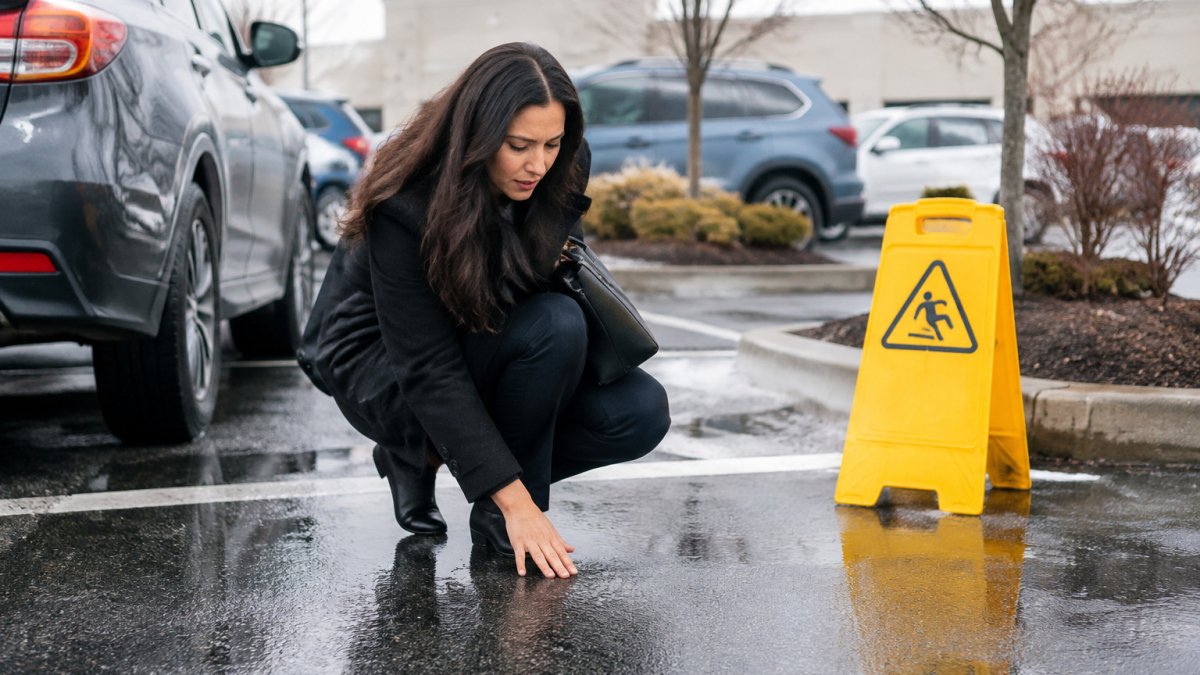
Ice and snow get most of the attention, but they are not the only slick surfaces in a lot. Oil drips, spilled fluids and wet pavement can be just as dangerous, especially in areas where cars idle or park for long periods.
- Oil and fluid leaks create slick spots near parking stalls
- Standing water freezes quickly when temperatures drop
- Wet pavement loses traction during rain, even without ice
Cracked pavement, potholes, and broken curbs
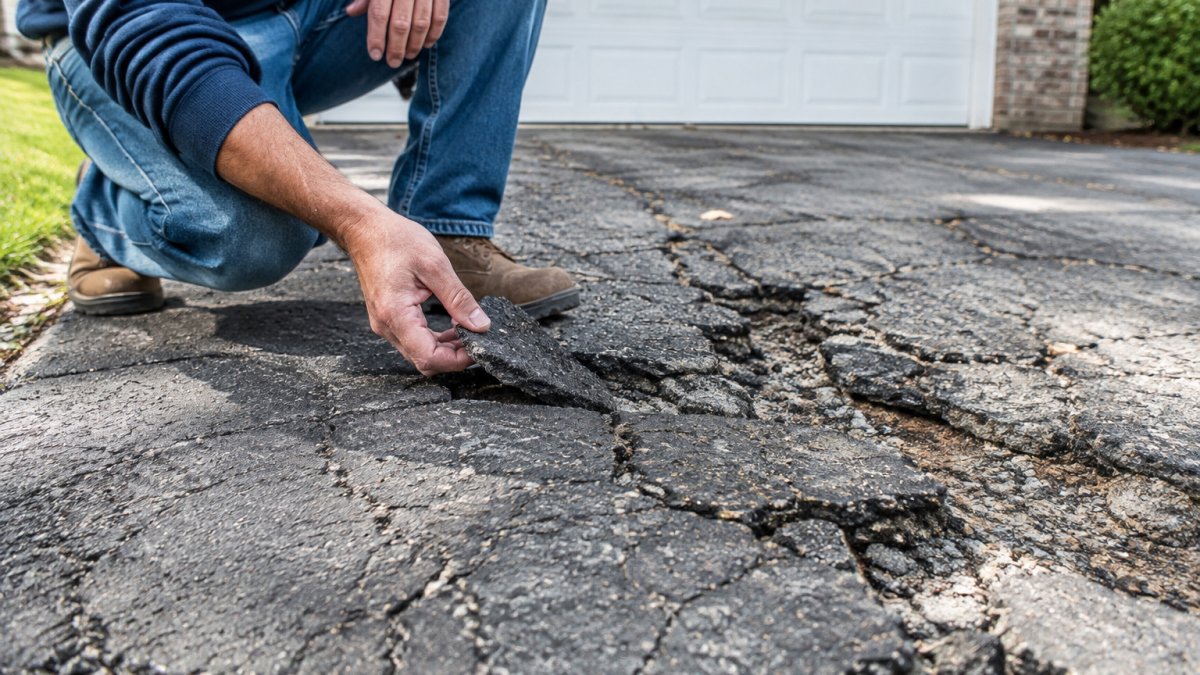
Uneven surfaces trip people who are not watching their feet. Cracks, potholes and broken curb edges are the most common trip hazards in a parking lot. Pedestrians often step down from a curb without noticing a broken edge, and that can twist an ankle or cause a fall.
Build a Parking Lot Hazard Inspection Checklist
A checklist only prevents falls when it is tied to a repeatable walk, a named owner, and a record that survives staff turnover.
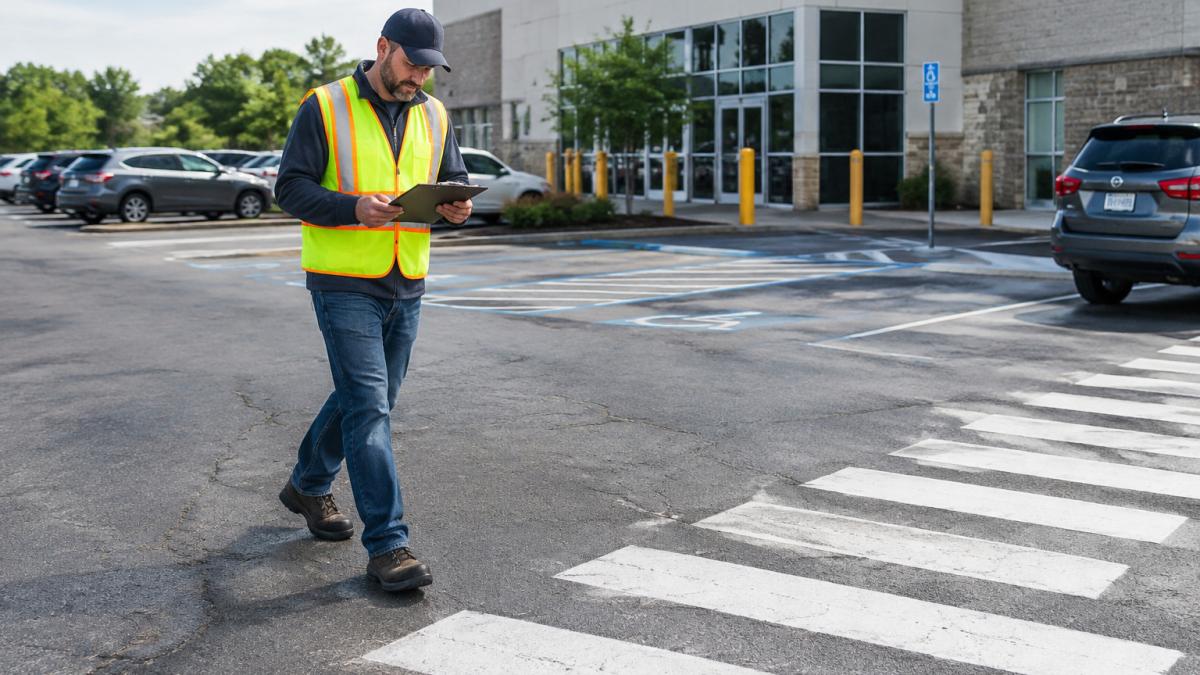
Assign a named owner and a backup
Every inspection needs one accountable person and one backup. In a small lot, that may be the property manager and the maintenance lead. In a larger retail or multifamily lot, split the walk into zones and assign a zone owner to each. Write the names and phone numbers into the checklist header so a substitute can run the walk without guessing.
Walk the lot in a fixed order
Walking the same route every time is what keeps items from being skipped. A practical order is:
- Building entrances and vestibules
- Sidewalks and curb ramps along the building
- Marked crosswalks and pedestrian aisles
- Parking rows and wheel stops
- Drive aisles and fire lanes
- Catch basins, drains, and low spots
- Trash enclosures and cart corrals
- Perimeter sidewalks and connections to the public right-of-way
Use a checklist with condition grades, not just checkboxes
A checkbox tells you an item was looked at; a condition grade tells you whether it needs action. Grade each item as Good, Monitor, or Action needed, and note the location by zone and nearest stall number or landmark.
- Cracks wider than a quarter inch or raised edges at seams, grade and measure
- Potholes, sinkholes, or sunken areas near walkways, grade and photograph
- Broken or missing curb edges and wheel stops, grade and photograph
- Standing water or ice in low spots, note depth and whether it drains within an hour of rain
- Oil stains or other slick spots near parking stalls, note size and location
- Working lights over walkways, entrances, and curb ramps, test after dark, note any dark zones
- Faded or missing crosswalk and pedestrian markings, note visibility from a driver's seat
- Vegetation growing through pavement or blocking sight lines, note height and location
Photo protocol
Take two photos per finding: one wide shot that shows the location in context, and one close-up that shows the defect. Name the files with the date, zone, and item (for example, 2026-11-06_Zone3_WheelStop). Store them in a shared folder, not on a single phone, so the record survives a lost device or a departing employee.
Sample inspection log fields
A one-page log per walk is enough. Capture:
- Date and time of inspection
- Inspector name and backup name
- Weather and temperature at the time of the walk
- Zone and item checked
- Condition grade (Good / Monitor / Action needed)
- Description of the finding
- Photo file names
- Assigned to (who will fix it)
- Target completion date
Escalation process
When a finding is graded Action needed, the inspector notifies the assigned owner the same day and cones, blocks, or signs the area until it is repaired.
Watch out: A checklist that is filled out but never reviewed by a manager becomes a paperwork exercise; schedule a short weekly review of open items so nothing sits in "Action needed" indefinitely.
Set Inspection Frequency, Documentation, and Response Timelines
Frequency should follow risk, not habit. A busy retail lot in a hot, rainy climate with freeze-thaw winters needs more checks than a small, lightly used lot, and the schedule should shift with the season rather than stay fixed all year. Keeping dated inspection logs and noting how weather or traffic changes affect hazards can help prove liability when a fall occurs.
A year-round inspection calendar
- Spring: Full walk after the last freeze to catch heave, cracked pavement, and drainage problems exposed by winter. Inspect curb ramps and detectable warnings for damage from plowing and shoveling.
- Summer: Weekly high-traffic walks; check for oil and fluid buildup, faded markings, and vegetation growth. Schedule sealcoating and crack sealing before fall rain.
- Fall: Clear catch basins and drains before the rainy season; verify lighting before darker evenings; pre-treat high-traffic walkways before the first forecast freeze.
- Winter: Walk high-traffic walkways and entrances daily during freeze-thaw cycles; inspect after every snow or ice event; document salt and de-icer application.
Documentation cadence
Keep a dated log for every walk and a photo file for every finding. Retain logs and photos for at least the current year plus the prior year so a pattern of recurring hazards, or a pattern of prompt repair, is visible. A short monthly summary of open and closed items gives managers a one-page view of the program.
Response timelines by hazard level
- Immediate (same day): Open holes, large ice patches, broken curbs at walkways, standing water on a pedestrian route, and blocked curb ramps. Cone, sign, or block the area right away and schedule repair.
- Within 72 hours: Developing cracks, faded crosswalk markings, burned-out walkway lights, and damaged wheel stops.
- Within two weeks: Minor surface wear that does not affect walking paths, vegetation trimming, and cosmetic marking refresh.
- Next scheduled maintenance: Items graded Monitor that have not worsened since the prior walk.
Write these timelines into the maintenance plan and name the person authorized to approve each level of repair, so a hazard is not delayed waiting for sign-off.
Measurable safety indicators
Track a small set of numbers so the program can be judged on results rather than activity:
- Inspection completion rate, walks completed versus walks scheduled
- Repair response time, average days from finding to closing photo
- Repeat-hazard frequency, how often the same location shows up in "Action needed" across walks
- Open-item age, how many findings have been open longer than their response timeline
- Light outage count, fixtures out at each after-dark check
A rising repeat-hazard frequency at one location usually points to an underlying drainage or base failure rather than a surface problem, and it is the signal to schedule a professional assessment instead of another patch.
Watch out: Shortening inspection intervals without adding repair capacity just produces a longer open-item list; match the schedule to the crew and budget that can actually close findings.
The article sets out response timelines by hazard level, which can be scanned at a glance:
| Hazard level | Response time | Examples |
|---|---|---|
| Immediate | Same day | Open holes, large ice patches, broken curbs at walkways, standing water on pedestrian routes, blocked curb ramps |
| Within 72 hours | 72 hours | Developing cracks, faded crosswalk markings, burned-out walkway lights, damaged wheel stops |
| Within two weeks | Two weeks | Minor surface wear not affecting walking paths, vegetation trimming, cosmetic marking refresh |
| Next scheduled maintenance | Next scheduled visit | Items graded Monitor that have not worsened since the prior walk |
Fix Potholes and Uneven Pavement Before They Cause Falls
Repairing a pothole early is far cheaper and safer than waiting until it becomes a trip hazard. Small cracks grow when water gets underneath them, so seal them before they spread.
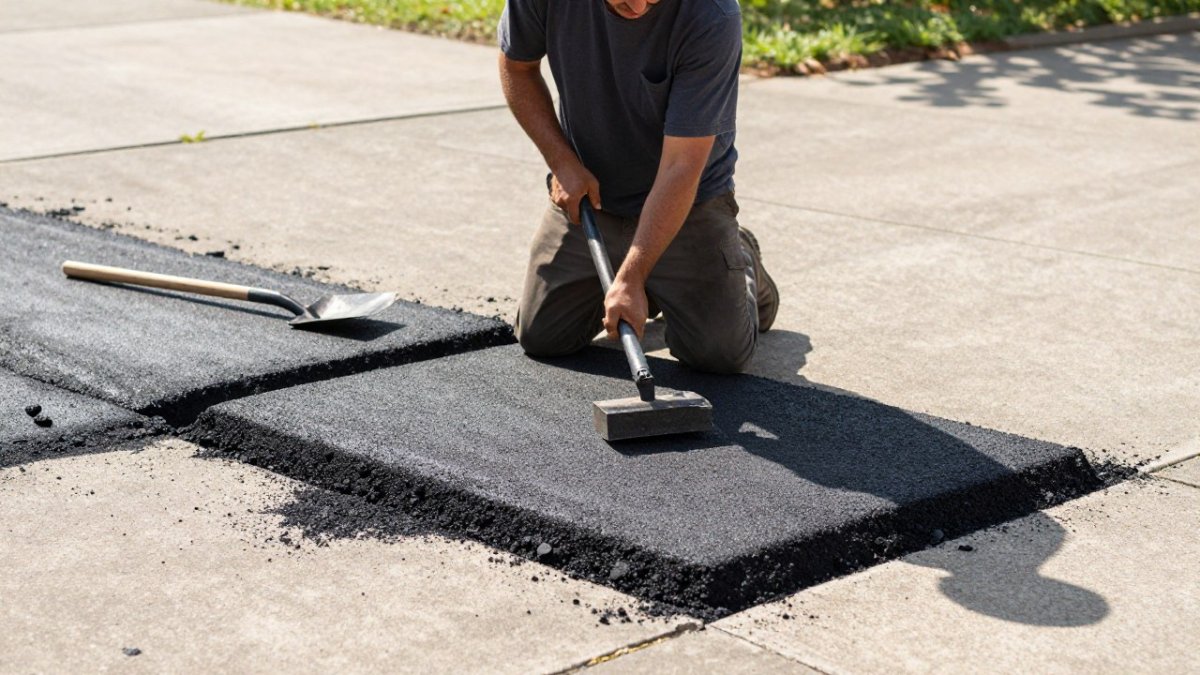
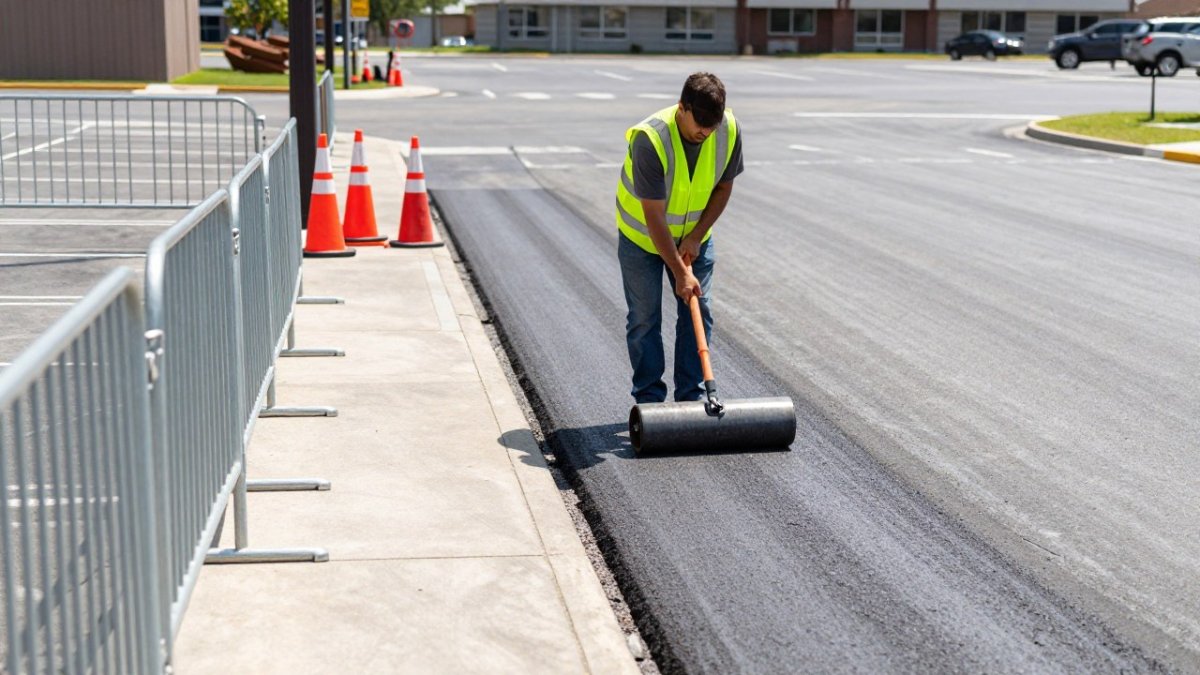
Pothole repair involves cutting out damaged asphalt, cleaning the area, and filling it with hot-mix asphalt that is compacted flat. Learn more in our guide on Asphalt Pothole Repair: Steps for Effective Fixes.
For driveways and smaller lots, a good sealer helps slow cracking and water damage. Best Concrete Driveway Sealers for Local Weather explains what to look for.
Control Water and Ice With Effective Parking Lot Drainage Solutions
Water that pools on the surface freezes, reflects glare and makes pavement slick. Good drainage keeps water moving off the lot instead of sitting in low spots.
Recurring water problems often point to a drainage failure rather than normal wear. 7 Drainage Problems That Destroy Commercial Pavement covers the common causes to look for during inspection.
Drainage plans work best when they account for traffic patterns.
Improve Parking Lot Lighting and Pedestrian Safety
Poor lighting hides the very hazards you are trying to find. Walkways, entrances, stairs and curb ramps should be well lit at night.
Pedestrians need clear, separate routes. Use painted crosswalks, raised walkways and wheel stops to keep people on foot away from moving cars.
For a broader look at protecting customers in your lot, see 7 Parking Lot Safety Upgrades That Cut Business Liability.
Schedule Your Parking Lot Safety Review With Houston Pavement Repair
A professional look at your lot can catch hazards that a routine walk-through misses. Houston Pavement Repair LLC provides asphalt and concrete paving and repair for residential and commercial clients in Houston and Katy, Texas. Call now to schedule your free estimate.
Frequently Asked Questions
Can you sue a company if you slip and fall in their parking lot?
Property owners can be held liable when a slip and fall happens because of a hazard they knew about or should have found through reasonable inspection. Liability generally depends on whether the owner or manager had notice of the condition, how long it existed, and whether they responded in a reasonable time. Rules vary by state, and the injured person usually must show the hazard was unsafe and the owner failed to address it. Documented inspections and prompt repairs are the strongest defense and the best prevention. A licensed attorney in your state can explain how these standards apply to a specific incident.
How often should a parking lot be inspected for safety hazards?
Most property teams should walk the parking lot at least weekly and after any heavy rain, snow, or freeze event. High-traffic commercial lots, apartment complexes with many residents coming and going at night, and sites with recurring drainage problems may need daily checks during bad weather. Each inspection should look for cracks, potholes, raised edges at curbs, standing water, debris, faded markings, and lights that are out. Record the date, the person who walked the lot, what was found, and what was done about it. Consistent records show the property was actively maintained.
What should a business do after someone reports a parking lot hazard?
Respond quickly. Barricade or cone off the hazard if it cannot be fixed right away, and post a visible warning sign. Photograph the condition and note the time and location. Schedule a permanent repair and set a target completion date, then record each step in the maintenance log. If someone was injured, provide first aid or call for medical help, and keep witness information and incident reports on file. Avoid discussing fault with the injured person; report the facts to your insurer and follow its claim process.
Is it worth suing for a slip and fall?
Whether a claim is worth pursuing depends on the severity of the injury, the medical costs and lost income involved, and whether the evidence shows the property owner knew or should have known about the hazard. Minor injuries with no lasting effects are often resolved through the property's insurance without litigation. Serious injuries, fractures, or long-term disability usually justify a consultation with a personal injury attorney, who typically reviews cases on a contingency basis. Keep all medical records, photographs of the scene, and maintenance logs when evaluating your options.