 comparison
Best Concrete Driveway Sealers for Local Weather
Table of Contents
- Why Concrete Driveway Sealers Matter in Local Climate
- Penetrating Concrete Sealer for Driveways vs. Film-Forming Options
- Top Concrete Sealer Products for Durability
- Concrete Sealer Application Temperature and Timing
- How Long Concrete Sealer Takes to Dry and Cure
- How Often to Seal a Concrete Driveway
- Water Repellency, Stain Protection, and Finish Options
- Choosing the Right Sealer for Concrete Condition and Drainage
- Frequently Asked Questions
Last Updated: October 14, 2026
Why Concrete Driveway Sealers Matter in Local Climate
The difference between a driveway that lasts 10 years and one that cracks within 3 comes down to one decision: using concrete driveway sealers.
Local weather creates specific challenges. Rain exposure happens year-round. Humidity sits high. When water enters unsealed concrete, it expands during temperature shifts and contracts again. Over months, this cycle cracks the surface. Oil from vehicles seeps in and stains concrete permanently.
The choice between penetrating and film-forming sealers determines how your driveway performs. One soaks into concrete; the other sits on top. One breathes; the other doesn't. One lasts 2-3 years; the other lasts 5-7.
Penetrating Concrete Sealer for Driveways vs. Film-Forming Options
The two sealer categories work fundamentally differently, and choosing the wrong one for your situation wastes money and time.
How Penetrating Sealers Work
Penetrating sealers soak into concrete, traveling down 1-2 inches into the pores. They chemically bond with the concrete itself rather than creating a layer on top. This means the concrete still breathes, moisture can evaporate normally.
The advantage: they're nearly invisible. Your driveway looks like sealed concrete, not plastic-coated. They don't trap moisture underneath, which prevents bubbling or peeling. They work well on older, weathered concrete that's already slightly porous.
The downside: they don't create a glossy finish. They won't hide surface damage or stains as effectively as film-forming options. They require more frequent resealing because the barrier wears away faster.
Film-Forming Sealer Characteristics
Film-forming sealers sit on the concrete surface and harden into a protective layer, think of it like clear nail polish on concrete. They're usually acrylic-based and create a visible coating.
Film-forming sealers deliver visible results. Your driveway looks darker, richer, sometimes glossy. They hide minor surface imperfections. They last 5-7 years, cutting resealing frequency in half. They're the choice when appearance matters as much as protection.
The catch: they trap moisture. If your concrete is already wet or your drainage is poor, moisture gets trapped underneath and eventually causes the sealer to peel or bubble. They can be slippery when wet.
Top Concrete Sealer Products for Durability
There are several products known for their performance in local conditions and proven results for concrete driveways.
Foundation Armor SX5000WB
Foundation Armor SX5000WB is a water-based penetrating sealer designed for concrete and masonry. It uses virgin, non-recycled resins, which means fewer fillers and better performance consistency.
This sealer works well for homeowners who want invisible protection. It won't darken your driveway or create a plastic look. It allows concrete to breathe, which matters if you have any moisture concerns.
The realistic limitation: you'll need to reseal every 2-3 years. Water-based penetrating sealers generally don't last as long as solvent-based alternatives.
Best for: Homeowners wanting natural-looking protection without gloss or shine.
PROSOCO SurePRO and GuardEXT
PROSOCO offers two film-forming options in their driveway sealer lineup. SurePRO and GuardEXT both create a protective coating on the concrete surface.
Film-forming sealers from PROSOCO deliver a visible protective layer. Your driveway will look sealed, darker and richer than bare concrete. This category prioritizes longevity over invisibility.
The tradeoff is appearance preference. If you want your concrete to look natural, a film-forming sealer isn't the choice.
Best for: Homeowners prioritizing durability and willing to accept a visible sealed appearance.
PROSOCO SL100 Water Repellent
PROSOCO SL100 is explicitly formulated as a water repellent, which means its primary job is blocking moisture. SL100 prevents water from entering the concrete while still allowing the surface to breathe.
This product targets the root cause of concrete failure: water infiltration. When water can't enter, freeze-thaw damage stops.
Water repellents in this category are typically penetrating, so expect an invisible finish. The protection is real, but you won't see obvious visual change. Resealing every 2-3 years keeps protection active.
Best for: Properties with drainage challenges or frequent rain exposure where moisture prevention is the priority.
Concrete Sealer Application Temperature and Timing
Temperature during application determines whether your sealer bonds properly. Apply penetrating sealers when the concrete temperature is between 50°F and 85°F. Below 50°F, the sealer won't penetrate effectively. Above 85°F, it dries too fast and doesn't cure properly.
For Houston, spring and fall offer the best windows. Summer heat can cause too-rapid evaporation. Winter is rarely a concern here, but early morning application in summer lets you work before peak heat arrives.
Film-forming sealers have similar temperature requirements. Stay within the 50-85°F range. Film-formers are slightly more forgiving of humidity because they're less dependent on penetration, but you still want dry conditions.
Call now to schedule your free estimate →
How Long Concrete Sealer Takes to Dry and Cure
Drying time and cure time are different. Drying means the surface feels dry to the touch. Curing means the sealer has fully hardened and developed its protective properties.
Most penetrating sealers dry to the touch within 1-2 hours. Full cure takes 24-48 hours. During this window, avoid foot traffic and vehicle traffic. The sealer is vulnerable while curing.
Film-forming sealers typically dry faster, 30 minutes to 1 hour. But they need 48-72 hours for a full cure before heavy use.
Plan your sealing project when you can keep the driveway clear for at least 48 hours.
How Often to Seal a Concrete Driveway
Penetrating sealers need reapplication every 2-3 years. Film-forming sealers last 5-7 years. The difference comes down to how the sealer works. Penetrating sealers wear away gradually as water and traffic expose fresh concrete.
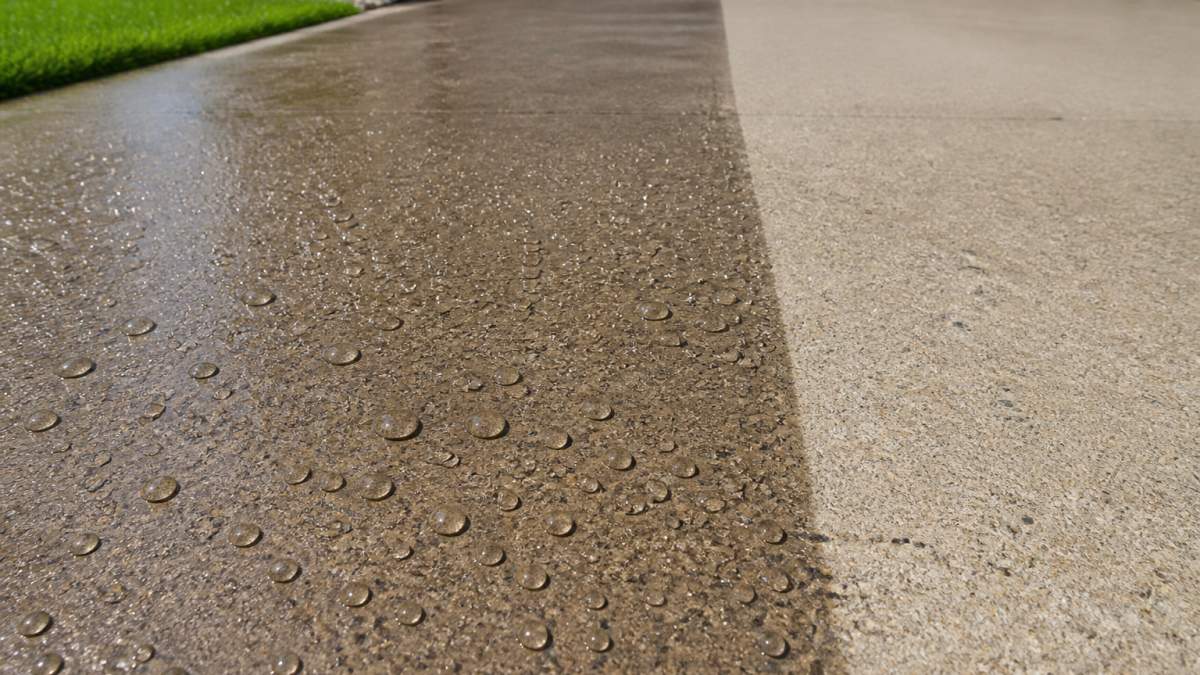
You'll know it's time to reseal when water no longer beads on the surface. Pour a small amount of water on the driveway, if it soaks in instead of forming droplets, the sealer has failed. That's your signal to reapply.
In Houston's climate, with regular rain and UV exposure, staying on the lower end of the range makes sense. Reseal penetrating sealers every 2 years and film-formers every 5 years to maintain consistent protection.
| Sealer Type | Resealing Interval | Signs It's Time | Best Climate Fit |
|---|---|---|---|
| Penetrating | 2-3 years | Water absorbs instead of beading | High humidity, drainage issues |
| Film-Forming | 5-7 years | Peeling, flaking, or dull appearance | Stable conditions, cosmetic priority |
| Water Repellent | 2-3 years | Water no longer repels | Rain exposure, moisture concerns |
Water Repellency, Stain Protection, and Finish Options
Water repellency is the core function of any sealer. It prevents water from entering the concrete. Stain protection is secondary, it comes from blocking oil and dirt from settling into the surface. The finish you choose determines how your driveway looks while providing these protections.
Matte vs. Wet-Look vs. High-Gloss Finishes
Matte finishes are natural-looking. The concrete appears sealed but not shiny. Matte sealers are typically penetrating products or low-gloss film-formers. They're popular with homeowners who want protection without obvious visual change.
Wet-look finishes darken the concrete and add subtle shine, like concrete that's just been rained on. This finish is popular because it enhances the concrete's color without being obviously glossy. It's the middle ground between natural and dramatic.
High-gloss finishes are unmistakably sealed. The driveway looks shiny and reflective. This finish is striking but can be slippery when wet, which matters if you have kids or pets. High-gloss is the most dramatic cosmetic choice.
Oil and Stain Resistance
Oil resistance depends on sealer type more than finish. Penetrating sealers repel oil better than you might expect because they seal the pores that oil would otherwise fill.
For maximum oil resistance, a film-forming sealer is superior. For moderate oil exposure, a quality penetrating sealer handles it well. The key is cleaning spills quickly, no sealer is permanent against oil if you leave it sitting for weeks.
Stain protection works the same way. A sealed surface resists staining because dirt and liquids sit on top rather than settling into pores. Regular cleaning removes stains before they set.
Choosing the Right Sealer for Concrete Condition and Drainage
Your concrete's current condition determines which sealer will work best. New concrete (less than 1 year old) is still curing and releasing moisture.
Older concrete with visible surface damage benefits from film-forming sealers. The coating hides minor cracks and wear. Penetrating sealers won't improve appearance on damaged surfaces.
Drainage is critical. If your driveway has low spots where water pools, avoid film-forming sealers. Trapped moisture will eventually cause peeling.
Check your driveway's slope. Water should run off toward the edges, not pool in the center. If drainage is poor, address that before sealing. Fill low spots with concrete resurfacer or plan for eventual replacement.
At Houston Pavement Repair LLC, we evaluate each driveway individually because concrete condition and drainage determine success. What works perfectly for one property might fail for another based on these factors alone. If you're uncertain about your specific situation, a free estimate helps identify the right approach before you invest in sealer.
The best concrete driveway sealer for your property depends on three factors: climate exposure, current concrete condition, and how much appearance matters to you. Houston Pavement Repair LLC can evaluate your driveway and handle professional application. Contact us for a free estimate and get expert guidance on protecting your investment.
Frequently Asked Questions
What is the best rated concrete driveway sealer?
The best sealer depends on your specific needs. Foundation Armor SX5000WB and PROSOCO products (SurePRO, GuardEXT, SL100) are professional-grade options. Foundation Armor uses virgin resins. PROSOCO offers multiple formulations: SurePRO for general driveway protection, GuardEXT for extended durability, and SL100 for water repellency. Your choice should match your concrete condition, desired finish (matte, wet-look, or high-gloss), and local weather exposure. Professional installation ensures optimal performance.
Is a penetrating or film-forming sealer better for a concrete driveway?
Both types serve different purposes. Penetrating concrete sealer for driveways absorbs into the concrete, offering breathability and allowing moisture to escape; it protects from water and stains without changing appearance. Film-forming sealers create a protective layer on the surface, providing a visible finish (matte, wet-look, or gloss) and enhanced stain resistance, but they can trap moisture if applied over wet concrete. Penetrating sealers work best on driveways with drainage issues; film-forming sealers excel when you want color enhancement and glossy appearance. Local humidity and freeze-thaw cycles favor penetrating options that allow the concrete to breathe.
How long should concrete sealer dry before rain?
Most concrete sealer products require 24 to 48 hours of dry time before exposure to rain or moisture. However, this varies by product type and temperature. Solvent-based sealers typically cure faster (24 hours) than water-based formulations (48 hours or longer). Temperature, humidity, and concrete porosity affect drying time. Check the manufacturer's instructions for your specific product. Applying sealer during dry weather forecasts and avoiding rain within 48 hours ensures proper curing and maximum protection. If rain occurs before full cure, the sealer may not bond correctly, reducing its effectiveness.
How often should you reseal a concrete driveway?
How often to seal a concrete driveway depends on sealer type, climate, and traffic. Penetrating sealers typically last 1 to 3 years before reapplication is needed. Film-forming sealers may last 2 to 5 years. High-traffic driveways, freeze-thaw exposure, and heavy rain require more frequent resealing. Signs you need resealing include water no longer beading on the surface, visible staining, or fading color. Professional inspection helps determine the right resealing schedule. Routine maintenance and timely resealing extend driveway lifespan and prevent costly repairs from moisture infiltration and freeze-thaw damage.
Can you apply concrete sealer in hot, humid weather?
Concrete sealer application temperature matters significantly. Most sealers require 50-85°F for proper curing. Hot, humid weather can accelerate evaporation and trap moisture under the sealer, causing poor adhesion and cloudy appearance. High humidity prevents the concrete from drying fully before sealing, reducing sealer effectiveness. Ideal application conditions are mild temperatures, low humidity, and no rain forecast for at least 48 hours. Solvent-based sealers are more forgiving in humidity than water-based options. Apply sealer in early morning or late afternoon when temperatures are moderate, and avoid application during extreme heat or heavy humidity.