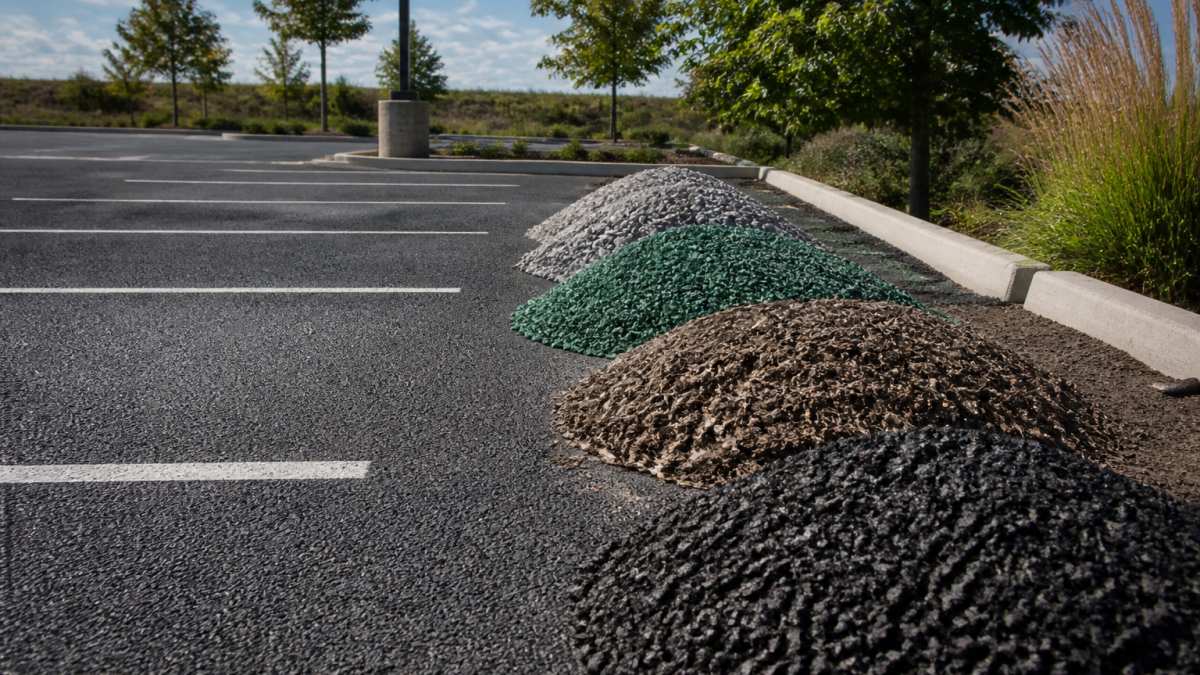
 comparison
Sustainable Asphalt Alternatives for Parking Lots
Table of Contents
- Why Sustainable Asphalt Alternatives Matter for Parking Lots
- Permeable Pavers vs. Traditional Asphalt: Drainage and Performance
- Permeable Paver Installation Costs and Long-Term Value
- Benefits of Permeable Pavement for Stormwater Management
- Recycled Asphalt Pavement and Other Eco-Friendly Options
- Eco-Friendly Parking Lot Design Best Practices
- Choosing the Right Sustainable Alternative for Your Property
- Frequently Asked Questions
Last Updated: October 1, 2026
Why Sustainable Asphalt Alternatives Matter for Parking Lots
Parking lots face relentless pressure from weather, heavy vehicles, and stormwater runoff. Traditional asphalt cracks, deteriorates, and contributes to environmental problems that most property owners never consider until repair bills arrive. At Houston Pavement Repair LLC, we've watched the market shift toward sustainable asphalt alternatives that solve multiple problems at once.
The real problem isn't that asphalt is bad. It's that asphalt alone can't handle modern demands. A typical parking lot sheds millions of gallons of stormwater annually, overwhelming drainage systems and accelerating pavement failure. Sustainable asphalt alternatives flip this dynamic by letting water drain through the surface instead of pooling on top.
This matters because it changes the entire cost equation. A parking lot that floods after every rain requires constant patching, seal coating, and eventually full replacement. One that manages its own drainage lasts longer, costs less to maintain, and meets increasingly strict environmental regulations. The choice between traditional and sustainable alternatives isn't really about the surface material, it's about whether you want to manage problems or prevent them.
Permeable Pavers vs. Traditional Asphalt: Drainage and Performance
Permeable pavers and traditional asphalt solve the same problem in opposite ways. Traditional asphalt sheds water; permeable pavers absorb it. That single difference cascades into every other consideration: cost, durability, maintenance, and long-term performance.
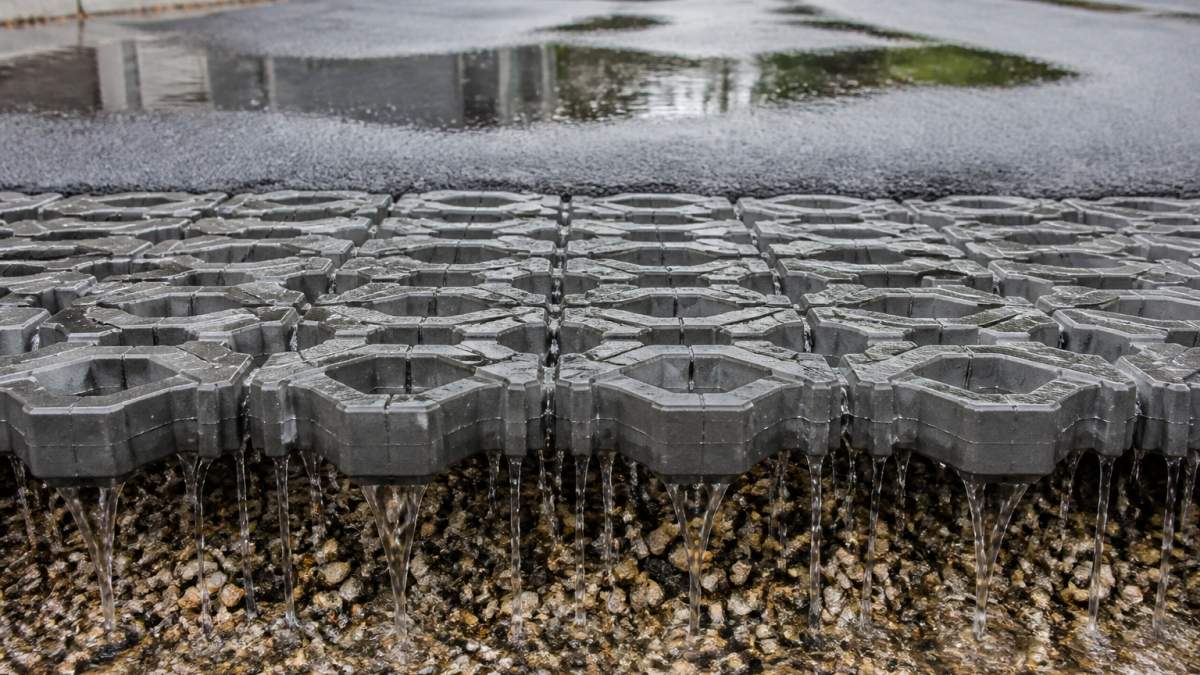
Permeable pavers are modular plastic grids filled with gravel or recycled materials. Water passes through immediately, eliminating standing water and the freeze-thaw cycles that crack asphalt. Traditional asphalt relies on separate storm drains, which often fail or clog. When drainage fails, water sits on the surface, seeps into the base layer, and weakens the foundation from underneath.
The performance difference shows up in freeze-thaw resistance. In cold climates, water trapped under asphalt expands when it freezes, pushing the pavement upward and creating the potholes that plague parking lots every spring. Permeable systems drain so quickly that this cycle rarely starts. The pavement stays stable year-round.
Load-bearing capacity matters for commercial lots. A common misconception is that permeable pavers can't handle heavy vehicles. That's false. High-quality permeable paver systems support the same weight as asphalt, the plastic grid confines the aggregate, preventing migration under load. The difference is that permeable systems do it while managing stormwater simultaneously.
Aesthetically, traditional asphalt looks uniform and finished. Permeable pavers show gravel, which some owners view as less polished. This is changing as geocell systems and newer designs improve appearance while maintaining permeability.
| Characteristic | Permeable Pavers | Traditional Asphalt |
|---|---|---|
| Water drainage | Immediate infiltration | Surface runoff to drains |
| Freeze-thaw damage | Minimal | Significant in cold climates |
| Load capacity | 40+ tons per axle | 40+ tons per axle |
| Maintenance | Low (gravel raking) | High (seal coating, patching) |
| Lifespan | 20-30 years | 15-20 years |
| Environmental benefit | Reduces runoff pollution | Contributes to runoff issues |
Permeable Paver Installation Costs and Long-Term Value
Installation cost is where most property owners get sticker shock. Permeable paver systems cost more upfront than traditional asphalt. The question isn't whether the initial price is higher, it is, but whether the long-term value justifies it.
A typical asphalt lot requires seal coating every 2-3 years, crack filling annually, and full replacement every 15-20 years. These costs compound. Permeable paver systems need occasional gravel raking and weed removal, but no seal coating, no crack filling, and no premature failure from water damage. Over 30 years, the maintenance difference becomes substantial.
The real cost advantage of permeable pavers emerges when you factor in stormwater management infrastructure. Traditional lots often need retention ponds, underground pipes, or expensive catch basins to handle runoff. Permeable systems eliminate these separate systems entirely. The parking lot itself becomes the stormwater management infrastructure. For large commercial properties, this single factor can justify the higher paving cost.
Installation complexity varies. Permeable paver grids snap together with minimal machinery. The sub-base preparation is critical, proper compaction and drainage layer setup determine long-term performance. Rushing this step leads to settling and failure. Professional installation, while more expensive initially, prevents costly corrections later.
Recycled Asphalt Pavement (RAP) offers a middle ground. It costs significantly less than virgin asphalt or permeable systems, uses existing materials to reduce landfill waste, and retains binding properties from the original bitumen. For low-traffic areas or budget-constrained projects, RAP provides environmental benefit without premium pricing. The tradeoff is less aesthetic uniformity and potentially shorter lifespan in heavy-traffic zones.
Benefits of Permeable Pavement for Stormwater Management
Stormwater management is where sustainable asphalt alternatives deliver their biggest environmental impact. Traditional parking lots act like roofs, they shed water as fast as possible into storm drains that lead directly to rivers and streams. This sudden influx of water erodes channels, carries pollutants, and causes flooding downstream.
Permeable pavement systems reverse this dynamic. Water infiltrates through the surface, filters through aggregate layers, and recharges groundwater. This process naturally removes sediment and reduces pollutant concentration. The result is cleaner water reaching aquifers and streams.
The drainage efficiency of permeable systems is remarkable. A typical pervious concrete surface infiltrates 4-8 inches of water per hour. That's faster than most rainfall rates. Standing water becomes nearly impossible. For property owners dealing with drainage issues, flooding basements, soggy landscaping, or water pooling, permeable alternatives solve the problem at the source rather than managing it downstream.
Stormwater runoff carries another hidden cost: pollution. Oil, tire particles, heavy metals, and sediment wash off asphalt lots and contaminate waterways. Permeable systems filter these pollutants through the aggregate base, reducing what reaches groundwater. This benefit alone qualifies many projects for environmental certifications and tax incentives.
Call now to schedule your free estimate →
The urban heat island effect, where dark pavement absorbs sunlight and radiates heat, is another concern permeable systems address. Lighter-colored permeable surfaces and pervious concrete reflect more sunlight, keeping parking areas cooler. This reduces surrounding air temperature and decreases the cooling load for nearby buildings.
Recycled Asphalt Pavement and Other Eco-Friendly Options
Recycled Asphalt Pavement (RAP) is asphalt that's been milled from existing surfaces and reprocessed into usable aggregate. It retains the binding properties of the original bitumen, meaning it can be compacted and used as a base layer or surface material. For sustainability-focused projects with budget constraints, RAP is compelling.
The environmental case for RAP is straightforward: it diverts material from landfills and reduces the energy required to produce virgin asphalt. Manufacturing new asphalt requires heating aggregate to 300+ degrees and blending it with bitumen. RAP skips this energy-intensive step. The carbon footprint is substantially lower.
RAP works best as a base layer or in low-traffic areas. High-traffic parking lots may experience rutting or raveling over time because RAP lacks the structural consistency of new asphalt. However, for secondary parking areas, overflow lots, or budget-conscious municipalities, RAP delivers real environmental benefit at a fraction of the cost of premium alternatives.
Pervious concrete is another strong option for commercial properties. It's a specialized concrete mix with reduced fine aggregates, creating a porous structure that allows water to pass through while maintaining structural integrity. Pervious concrete reduces the urban heat island effect through its lighter color.
Geocell systems represent a different approach. These honeycomb-like confinement structures stabilize aggregate or soil without requiring deep excavation or heavy sub-base layers. They're permeable, support heavy loads, and reduce site preparation costs. For properties with unstable soil or limited budget for deep excavation, geocells offer a practical middle path between traditional asphalt and premium permeable systems.
Eco-Friendly Parking Lot Design Best Practices
Sustainable parking lot design goes beyond material selection. The layout, drainage approach, and integration with landscaping all influence long-term performance and environmental impact.
Start with site assessment. Understand your soil type, water table depth, and local rainfall patterns. Permeable systems work best in areas with adequate drainage. In regions with poor soil infiltration or high water tables, you may need hybrid approaches, permeable surfaces over engineered drainage layers that direct water to managed outlets.
Grade and slope matter significantly. Parking lots need positive drainage to prevent water from pooling in low spots. With permeable systems, you can use gentler slopes because water infiltrates rather than running across the surface. This flexibility allows more creative lot layouts and reduces grading costs.
Stormwater management planning is critical. Calculate your site's impervious surface area and rainfall volume. Permeable systems should handle the typical rainfall event for your region. For extreme storms, plan overflow routes to prevent flooding. This planning determines whether you can eliminate traditional retention ponds entirely or need them as backup.
Landscaping integration enhances both performance and aesthetics. Bioswales, shallow vegetated channels, can direct water from impervious areas to permeable zones. Native plantings stabilize soil and reduce maintenance. Trees provide shade, reducing the heat island effect. The combination of permeable paving, strategic landscaping, and proper grading creates a resilient system that handles water intelligently.
Maintenance planning prevents long-term failure. Permeable systems need occasional gravel raking to prevent clogging from sediment. Seal coating isn't necessary, which eliminates a major maintenance cost. Document your maintenance schedule and stick to it.
Choosing the Right Sustainable Alternative for Your Property
The decision between sustainable asphalt alternatives depends on five factors: budget, site conditions, traffic volume, climate, and long-term goals.
Frequently Asked Questions
What are the most durable sustainable alternatives to asphalt for commercial parking lots?
Permeable concrete and permeable pavers rank highest for durability. Permeable concrete offers superior structural integrity and resists freeze-thaw damage common in variable climates. The choice depends on your soil conditions, traffic volume, and budget. Recycled asphalt pavement works well for lower-traffic areas but requires more frequent maintenance than concrete alternatives.
How do permeable pavers compare to traditional asphalt in terms of drainage?
Permeable pavers eliminate standing water entirely by allowing 100% of rainfall to drain directly into the ground, while standard asphalt sheds water as runoff. This difference prevents flooding, reduces stormwater infrastructure costs, and allows groundwater recharge. Traditional asphalt requires separate storm drains and retention systems, making permeable alternatives more efficient for stormwater management and compliance with local drainage regulations.
What is the most cost-effective eco-friendly paving material?
Recycled asphalt pavement (RAP) has the lowest upfront cost. The most cost-effective choice depends on your timeline, traffic load, and whether you prioritize upfront savings or lifetime ownership costs.
Do sustainable parking lot materials meet ADA accessibility standards?
Yes, permeable pavers and permeable concrete meet ADA requirements when properly installed with appropriate surface texture and slip resistance. All sustainable alternatives must maintain proper slope for drainage while ensuring wheelchair accessibility. Installation complexity varies, so working with contractors experienced in ADA compliance ensures your eco-friendly lot meets both accessibility and environmental standards.