 Comparison
Resin-Bound Gravel vs Asphalt Driveways for Houston Homes
Last Updated: November 9, 2026
Quick Summary
Resin-bound gravel offers strong drainage, a natural stone look, no loose stones, and good slip resistance, but it costs the most upfront and absorbs oil and fuel stains more readily than sealed concrete. Its performance depends on a sound, free-draining sub-base and proper edge restraint.
- Resin-bound gravel is the highest upfront cost, above asphalt and most concrete work.
- Rainwater drains through the porous surface instead of running off toward your garage.
- Oil and fuel stains absorb more readily than on sealed concrete, so fix leaks and wipe spills promptly.
- Skipping a proper sub-base or laying resin over a cracked surface wastes money.
- Professional installation is cost-effective because resin ratio and base compaction decide lifespan.
Table of Contents
- Resin-Bound Gravel vs Asphalt and Concrete: A Side-by-Side Comparison
- Advantages of Resin-Bound Gravel Driveways
- Resin-Bound Driveway Problems You Should Know Before You Buy
- Resin-Bound Gravel Driveway Cost and Lifecycle Value
- Resin-Bound Driveway Drainage and Permeability
- Resin Gravel Driveway DIY vs Professional Installation
- Choosing the Right Driveway Surface for Your Property
- Get a Free Estimate for Resin-Bound or Asphalt Paving
- Frequently Asked Questions
Resin-Bound Gravel vs Asphalt and Concrete: A Side-by-Side Comparison
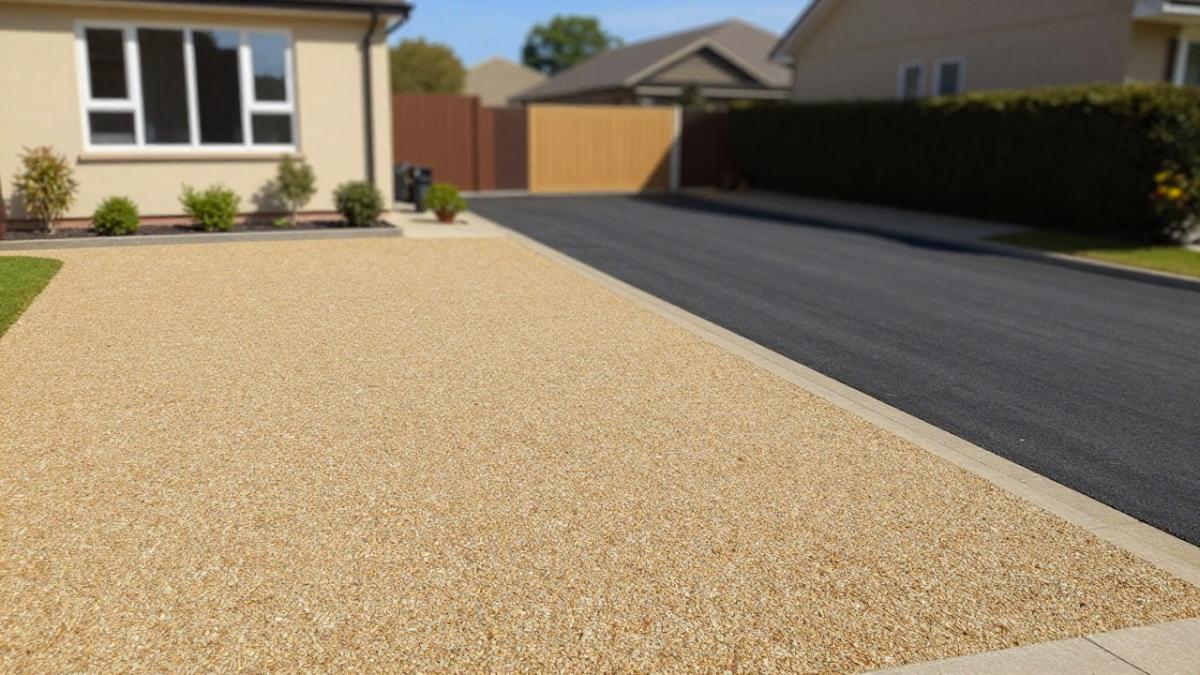
The pros and cons of resin-bound gravel driveways come down to one trade-off: you pay more upfront for a surface that looks better, drains better, and needs less patching than asphalt or concrete. Resin-bound gravel is a paving system where natural stone aggregate is mixed with polyurethane resin and troweled over a prepared base, creating a smooth, permeable finish. Here is how the three surfaces actually compare.
| Feature | Resin-Bound Gravel | Asphalt | Concrete |
|---|---|---|---|
| Surface look | Natural stone, seamless | Plain black, uniform | Flat gray, jointed |
| Permeability | High, water passes through | Low, sheds water | Low, cracks and ponds |
| Upfront cost | Highest | Lowest | Middle |
| Lifespan | Long with good base | Moderate, needs sealing | Long but cracks |
| Weed growth | Very low | None | None |
| Repair ease | Patchable by section | Patchable | Patchable, joints show |
| Slip resistance | High texture | Moderate when dry | Slippery when wet |
Asphalt wins on price and speed. Concrete wins on rigidity. Resin-bound wins on appearance, drainage, and traction, which matters on sloped driveways and in heavy rain.
Advantages of Resin-Bound Gravel Driveways
A key characteristic of resin-bound surfaces is permeability. Rainwater drains straight through the porous surface instead of running off toward your garage or foundation. The finish is smooth and consistent, with no loose gravel to kick into the lawn or track indoors.
You also get real choice in appearance. Aggregate comes in natural stone colors and blends, so the driveway can match brick, siding, or landscaping.
- Strong surface water drainage
- No loose stones to rake or sweep
- Wide color and aggregate choice
- Good slip resistance
- Low weed growth
Resin-Bound Driveway Problems You Should Know Before You Buy
A pre-installation checklist
Before you sign, walk the site with the installer and confirm:
- The existing base is sound, or the quote includes rebuilding it.
- The sub-base is graded to drain and compacted in lifts.
- Edge restraint is specified in the quote.
- The resin-to-aggregate mix ratio and curing plan are described.
- The installer will not lay resin over a cracked or settled existing surface.
Watch out: skipping a proper sub-base or laying resin over a cracked existing driveway is the fastest way to waste the money, because the surface mirrors whatever movement happens underneath.
Staining and chemical exposure
Oil and fuel stains are the second issue. Resin-bound gravel absorbs stains more readily than sealed concrete, so drips from a leaking car or a fuel can leave marks that are hard to lift. Prevention beats cleaning: fix leaks, use a drip tray, and wipe spills promptly. Some stains lift with a suitable cleaner; deep oil that has cured into the resin may not come out fully.
Site-specific performance
Weather resistance is good, but shade and poor drainage still shorten lifespan. Heavy rain tests the base; frost and freeze-thaw cycles stress edges; tree cover encourages algae and moss on any surface that stays damp. Slopes improve drainage but increase the load on edge restraint. None of these are deal-breakers, they are reasons to get the base and detailing right.
The page on how to protect your driveway from Houston weather damage covers the local failure patterns in more detail.
Resin-Bound Gravel Driveway Cost and Lifecycle Value
Visit the Houston Pavement Repair LLC website for current prices or a quote. The installed price is not one number, it is the sum of several line items, and understanding them is the difference between a fair quote and an expensive surprise.
What drives the installed price
- Base preparation. Excavation, grading, and compaction of a free-draining sub-base are the largest variable. A site that already has a sound, well-draining base costs far less than one that needs a full rebuild.
- Edge restraint. Concrete or timber edging is not optional; it is what keeps the surface from spreading at the perimeter. Quotes that skip it are quoting an incomplete job.
- Resin and aggregate. The polyurethane resin system and the natural stone aggregate are priced by area and by aggregate choice. Premium blends and specialty colors cost more than standard buff or gray.
- Labor and access. Skilled troweling, mixing, and curing control are labor-intensive. Tight access, slopes, and complex shapes add time.
- Removal and disposal. Tearing out an old surface and hauling it away is a separate line item that some quotes bury or omit.
Because these variables swing widely, most installers quote per job rather than publish a flat rate. As a planning rule, expect resin-bound to sit at the top of the residential paving range, above asphalt and above most concrete work, with the spread between a basic job and a premium one driven mostly by base condition and aggregate choice.
Lifecycle math
The upfront premium only makes sense against what you spend later. Asphalt is cheapest to lay but needs periodic sealing and patching, and it softens and rutts in heat. Concrete lasts but cracks, and joint and crack repair recurs.
If you are weighing resurfacing against a full rebuild, our driveway resurfacing vs full replacement cost comparison breaks down the economics for an existing driveway.
Resin-Bound Driveway Drainage and Permeability
Resin-bound driveway drainage is one of the features often cited for this surface type. The porous surface lets surface water pass through the resin and aggregate into the base below, reducing puddling and runoff. That permeability helps on lots where rainwater would otherwise pool at the garage door or wash across a sidewalk.
Permeability only works if the base drains too. A resin surface laid over a sealed or poorly graded sub-base traps water and defeats the purpose. SUDS-style design, meaning Sustainable Drainage Systems principles, calls for a permeable sub-base and correct grading so water moves away from the structure. If heavy rainfall is your recurring headache, read our guide on managing heavy rainfall on residential driveways for practical fixes.
Resin Gravel Driveway DIY vs Professional Installation
Resin gravel driveway DIY looks simple in videos and rarely holds up. Mixing resin and aggregate correctly, troweling an even surface, and building a compacted, free-draining base are skills that show in the finished job. Get the resin ratio wrong and the surface stays tacky or turns brittle. Skip base compaction and you get cracking within a season.
A skilled installer controls curing time, edge restraint, and drainage grading, which are the three things that decide how long the driveway lasts. For most homeowners, professional installation is the cost-effective choice once you factor in material waste and rework. We handle asphalt and concrete installation and repair. Because material choice affects both installation decisions and long-term upkeep, the concrete versus asphalt driveway guide can help frame the trade-offs before work begins.
Choosing the Right Driveway Surface for Your Property
The right surface depends on your ground, your drainage, and how you use the driveway. Clay soil holds water and shifts with wet and dry cycles, which stresses any rigid surface. If your ground is heavy clay, our guide on the best driveway material for clay soil explains which surfaces handle movement best.
Use this decision checklist:
- Does water currently pool on or near the driveway?
- Is the existing surface cracked or settled?
- Is the driveway on a slope?
- Do you park vehicles that drip oil or fuel?
- How much shade does the surface get?
- What is your upfront budget versus long-term repair tolerance?
If drainage and appearance top your list, resin-bound is worth the premium. If budget and speed matter most, asphalt is hard to beat. Concrete suits sites that need a rigid, low-maintenance slab.
Get a Free Estimate for Resin-Bound or Asphalt Paving
Choosing a surface is easier once someone looks at your actual site. Contact Houston Pavement Repair LLC to schedule your free estimate. To see how the process works before you commit, read what to expect from a free pavement repair quote.
A driveway that floods or cracks in the same spot every year is a sign the base and drainage were never solved. Houston Pavement Repair LLC provides expert asphalt and concrete paving and repair for homes and businesses, with a free estimate so you know the scope before you spend. We specialize in pavement repairs and serve the local area with reliable, durable results. Get started with Houston Pavement Repair LLC and get a surface built to handle the weather.
Frequently Asked Questions
What are the most common resin-bound driveway problems?
The most frequent issues are edge cracking where the surface meets the base, weed growth along borders, oil and fuel stains that are difficult to remove, and cracking caused by a weak or poorly compacted sub-base.
How much does a resin-bound gravel driveway cost compared with asphalt or concrete?
Pricing depends on quantity, dates, and delivery. Visit the Houston Pavement Repair LLC website for current prices or a quote.
Does a resin-bound driveway need a permeable base for drainage?
Yes. Resin-bound gravel is designed as a permeable surface, but it only drains effectively when installed over a properly graded permeable sub-base. If the base is compacted or non-porous, rainwater will pool and eventually damage the surface.
Can you install a resin gravel driveway yourself?
Resin gravel driveway DIY kits are sold, but the process is demanding. You need to mix resin and aggregate in precise ratios, lay it within a short working time, and compact it evenly to avoid loose stones and soft spots. Mistakes are difficult and expensive to fix.