 How-to
How to Protect Your Driveway From Houston Weather Damage
Last Updated: October 30, 2026
Quick Summary
Houston heat softens asphalt, while heavy rain and standing water seep into cracks and weaken the base, so both shorten driveway lifespan. Protecting your driveway means watching for ruts and cracks, improving drainage, and scheduling sealing for mild weather.
- Asphalt binder softens in summer heat, causing rutting and dents where cars park.
- Plan sealcoating for mild weather, since sealing a hot, softened driveway can trap moisture.
- Standing water that lingers for hours signals drainage problems that need fixing.
- Surface cracks that keep reopening often point to base movement below the surface.
- Inspect your driveway after major storms and keep a seasonal log to spot patterns.
Table of Contents
- How Houston Heat Affects Asphalt Driveways
- Why Heavy Rain and Standing Water Shorten Driveway Life
- How Humidity and Soil Movement Affect the Base Layers
- Asphalt Versus Concrete: Which Holds Up Better in Houston Weather
- Houston Driveway Maintenance Calendar and Inspection Checklist
- Best Time to Pave a Driveway in Houston and Booking Your Next Step
- Frequently Asked Questions
How Houston Heat Affects Asphalt Driveways
Houston summers punish asphalt. Heat is one of the main reasons a driveway that should last decades starts failing in half that time, which is why understanding your driveway lifespan starts with how heat works on the surface. Knowing this helps homeowners in Houston and Katy spot trouble before it becomes expensive.
Asphalt is a mix of petroleum binder and aggregate (Application Descriptions - User Guidelines for Waste and Byproduct Materials in Pavement...). Under high temperatures, that binder softens. The pavement loses some of its firmness, and it becomes easier to mark, dent, and deform under weight.
The effects of heat on pavement show up in a few clear ways:
- Softening: The surface gets soft and tacky in the hottest hours.
- Rutting: Tires and heavy vehicles press grooves into the softened surface.
- Oxidation: Sun exposure slowly dries out the binder over time.
- Surface wear: Softened asphalt scuffs and loses its fine texture faster.
Softening, Rutting and Thermal Expansion in Summer Heat
Asphalt also expands when it heats up and contracts when it cools down. This movement is normal, but repeated cycles add stress to the pavement.
Watch for rutting along the wheel paths of your driveway. Rutting is a sign that the surface has lost stability. If you see it, FHWA guidance on pavement distress and performance offers useful background on how pavements respond to temperature and load.
Watch out: Sealing a hot, softened driveway can trap moisture and make later repairs harder. Plan sealing for mild weather.
Here is what to check after a hot stretch:
- Dents or marks where cars park
- Soft spots that give slightly underfoot
- Wavy or raised areas along the surface
- Fine cracks that widen during the day
For a closer look at heat damage and how to tell it apart from other cracking, read What Causes Driveway Cracks in Houston. For practical steps to keep the surface healthy through the hottest months, see How to Maintain Asphalt Driveway in Summer: 2026 Guide.
Brittleness and Cracking After Cool Spells
Houston does not stay hot all year. These thermal contractions often create micro-cracks that leave the surface vulnerable to heavy loads, making preventing dumpster damage a critical step in preserving the structural integrity of your driveway throughout the year.
Freeze-thaw cycles, while less common in Houston than in northern states, still matter. Water that gets into small cracks can expand when it freezes and widen them.
Pattern cracking is a common result. Asphalt Institute guidance on pavement cracking describes the main crack types and what causes them, which can help you match what you see to its likely cause.
For a detailed explanation of this crack pattern, see What Causes Alligator Cracking in Asphalt.
Why Heavy Rain and Standing Water Shorten Driveway Life
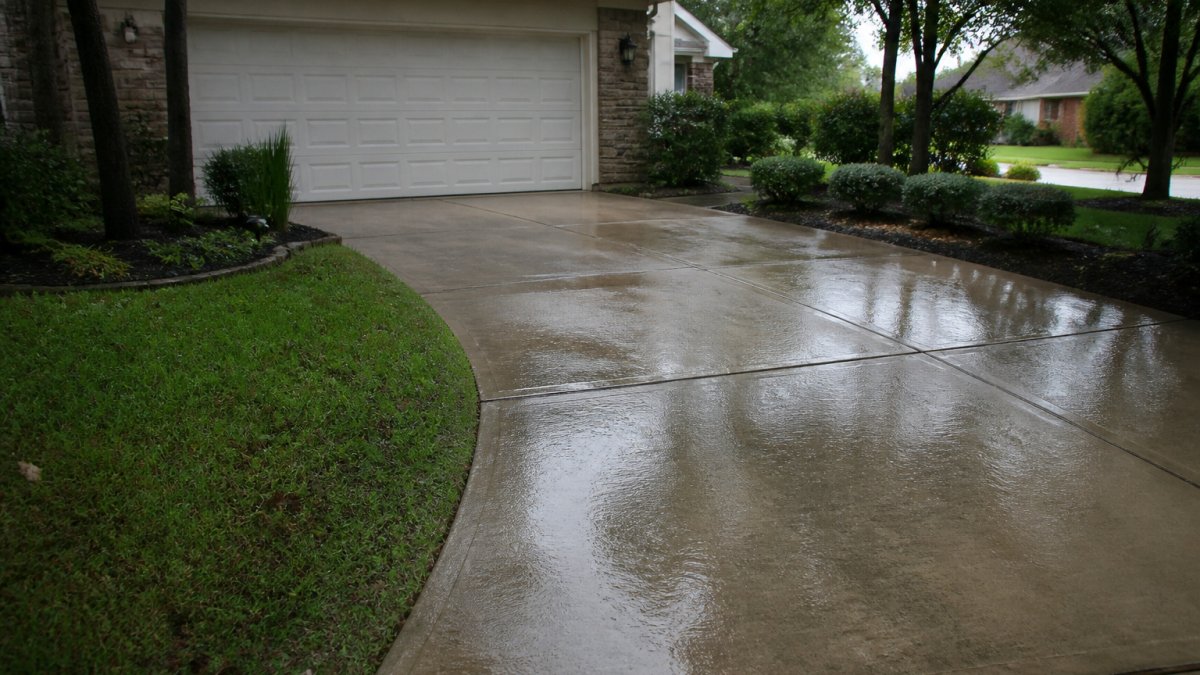
Water is the quiet enemy of pavement. Houston gets heavy rain, often in short, intense bursts, and the water has to go somewhere.
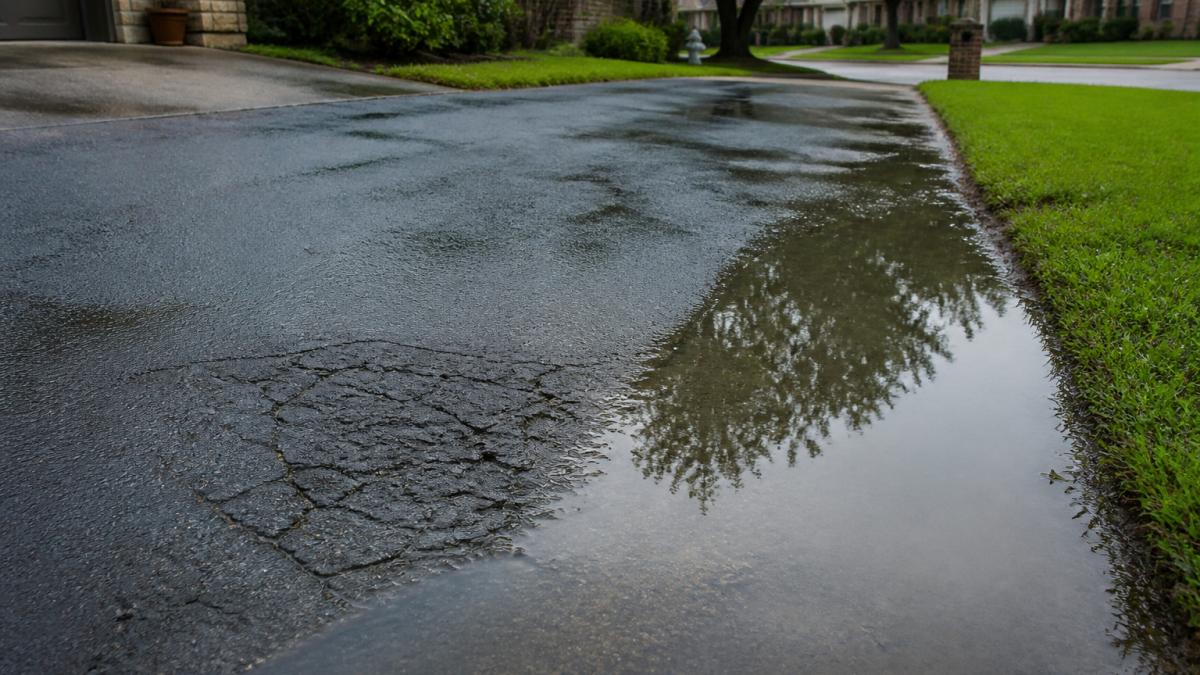
Standing water causes problems in several ways:
- It seeps through small cracks and reaches the base layer.
- It weakens the bond between the surface and the foundation.
- It speeds up erosion of the material underneath.
- It creates soft spots that crack under the weight of vehicles.
A driveway that looks fine from the street can be failing from below because water has been sitting in one spot for years.
Drainage matters as much as the surface itself.
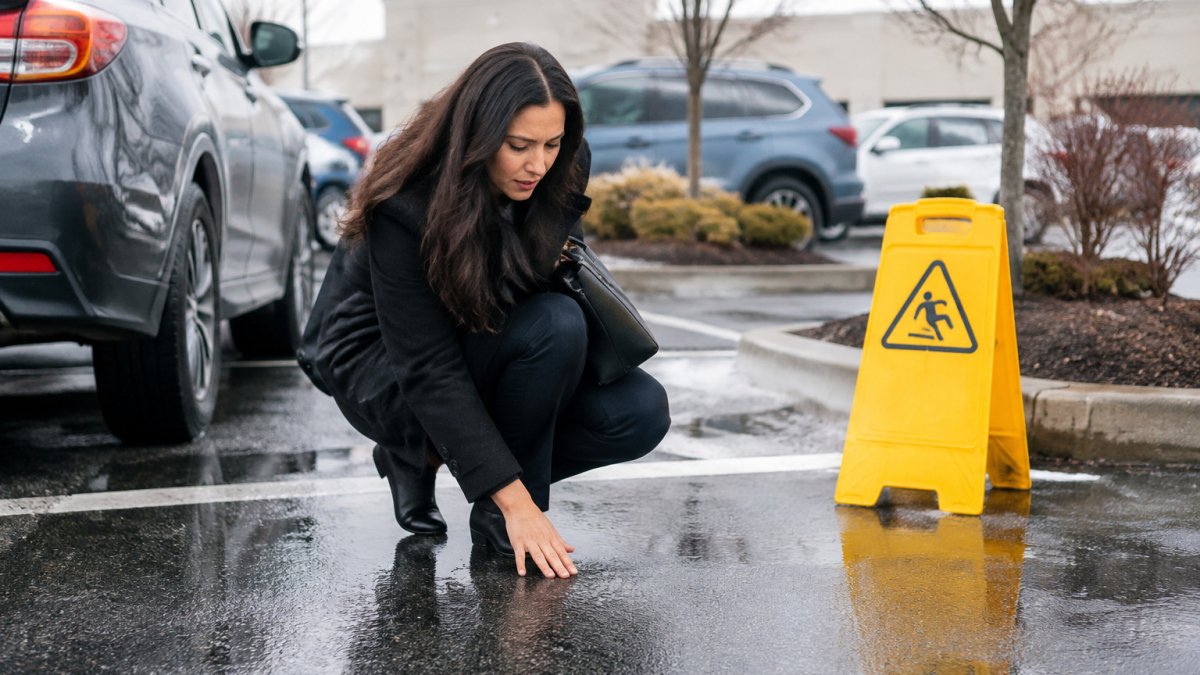
Watch out: Ignoring a small puddle that lingers for hours is a common mistake.
Look for these warning signs after storms:
- Puddles that last more than a few hours
- Dark, damp patches that never dry fully
- Cracks that collect water along their edges
- Edges that look crumbly or washed out
For practical steps to direct water away from your driveway, see How to Improve Concrete Drainage Around Your House.
How Humidity and Soil Movement Affect the Base Layers
The layers beneath your driveway matter as much as the surface. A typical asphalt driveway rests on a compacted aggregate base and a sub-base that spreads load into the native soil.
Humidity is the quiet driver here.
A common pattern is a driveway that drains poorly at one edge, holds water after storms, and then shows a dip or crack line years later.
What base movement looks like from the surface:
Call now to schedule your free estimate →
- Localized dips or birdbaths where water stands after rain
- Cracks that radiate from a single low point rather than spreading evenly
- Edge separation where the driveway pulls away from the curb, gutter, or garage apron
- Step-offs or lipping at joints and at the transition to the street
- Recurring cracks that reopen after patching in the same location
Drainage and base preparation are the two levers that matter most. Grading the driveway so water sheds away from the house and garage, keeping gutters and downspouts from dumping onto the pavement, and making sure downspouts discharge well past the driveway edge all reduce how much water reaches the base. On new construction, proper excavation, moisture conditioning of the clay, and compaction in lifts are what keep the base from moving later.
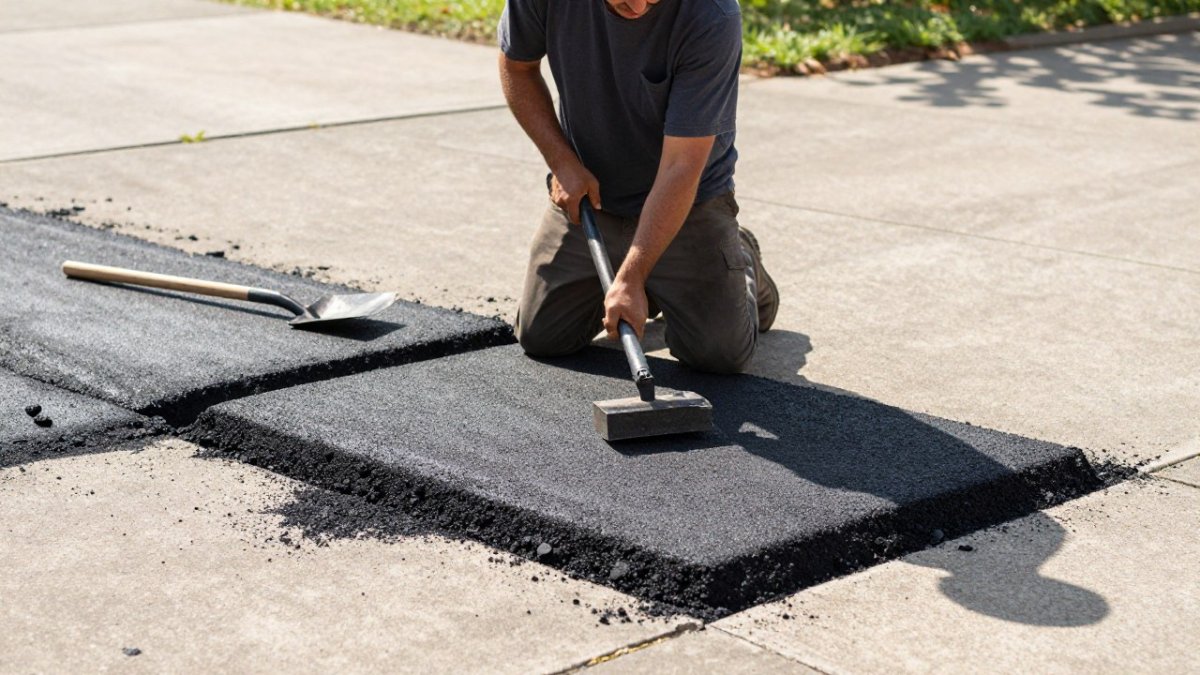
If you suspect base movement, a professional inspection can help distinguish surface wear from structural failure.
For how these base problems show up as specific crack patterns, see What Causes Alligator Cracking in Asphalt.
Asphalt Versus Concrete: Which Holds Up Better in Houston Weather
Homeowners often ask whether asphalt or concrete is the better choice for a driveway here. The honest answer depends on your site, your budget, and how you use the space.
Asphalt is flexible. It tolerates minor ground movement better than rigid materials, and it is generally the lower-cost option at installation.
Concrete is rigid. It resists heat-related softening and holds its shape in hot weather.
How the two compare on the conditions that matter most here:
- Heat: Concrete resists softening and rutting. Asphalt softens in peak summer and can rut under heavy loads or prolonged parking.
- Rain and standing water: Both depend on grading and drainage. Cracks in either material let water into the base, so crack maintenance matters for both.
- Soil movement: Asphalt flexes with minor movement. Concrete is more likely to crack when the base shifts.
- Maintenance cadence: Asphalt typically needs sealcoating every few years and crack sealing as cracks appear. Concrete needs joint sealing and crack repair, with less frequent surface treatment.
- Repairs: Asphalt patches blend in more easily. Concrete repairs are more visible and can be more involved.
- Realistic lifespan: With good base preparation, drainage, and maintenance, asphalt and concrete driveways can last many years, and lifespan varies with site conditions and upkeep. Poor drainage, heavy loads, or neglected cracks can shorten either range significantly.
Many homeowners find the right choice comes down to their specific site. A shaded driveway with good drainage performs differently from one in full sun that collects water at the garage apron. Weigh local conditions, not just the material's reputation.
For a deeper look at pricing so you can compare options realistically, see Residential Driveway Paving Pricing Guide for 2026. Pricing depends on quantity, thickness, site conditions, and access.
Houston Driveway Maintenance Calendar and Inspection Checklist
Consistent maintenance is the simplest way to stretch your driveway's life. Timing matters, because the right task at the wrong time can do more harm than good. A seasonal calendar keeps you on track.
Spring (March to May):
- Walk the driveway and note any new cracks or soft spots.
- Clear debris and check that drains and gutters flow freely.
- Schedule crack sealing for small cracks before summer heat widens them.
Summer (June to August):
- Avoid sealing during the hottest stretches.
- Check for rutting and dents where cars park.
- Rinse off oil and chemical spills quickly.
Fall (September to November):
- Clear leaves that hold moisture against the surface.
- Inspect for water-collecting spots after the rainy season.
- Plan any sealing or repairs for mild weather.
Winter (December to February):
- Look for new cracks after cool spells.
- Watch for water pooling that could freeze during cold snaps.
- Make a list of repairs for spring.
Use this inspection checklist after every major storm:
- Any new cracks, including fine hairline cracks
- Puddles that last more than a few hours
- Soft spots or dips in the surface
- Crumbling or washed-out edges
- Gutters and downspouts directing water away from the driveway
- Drains free of debris and working properly
We recommend keeping a simple log of what you find each season. Patterns over time reveal problems that one inspection can miss.
Keeping a seasonal schedule makes it easier to catch and fix driveway problems before they grow.
| Season | Key task | Timing note |
|---|---|---|
| Spring (March to May) | Walk the driveway and seal small cracks | Seal before summer heat widens them |
| Summer (June to August) | Check for rutting and rinse off spills | Avoid sealing during the hottest stretches |
| Fall (September to November) | Clear leaves and inspect for water-collecting spots | Plan sealing or repairs for mild weather |
| Winter (December to February) | Look for new cracks and water that could freeze | Make a list of repairs for spring |
Best Time to Pave a Driveway in Houston and Booking Your Next Step
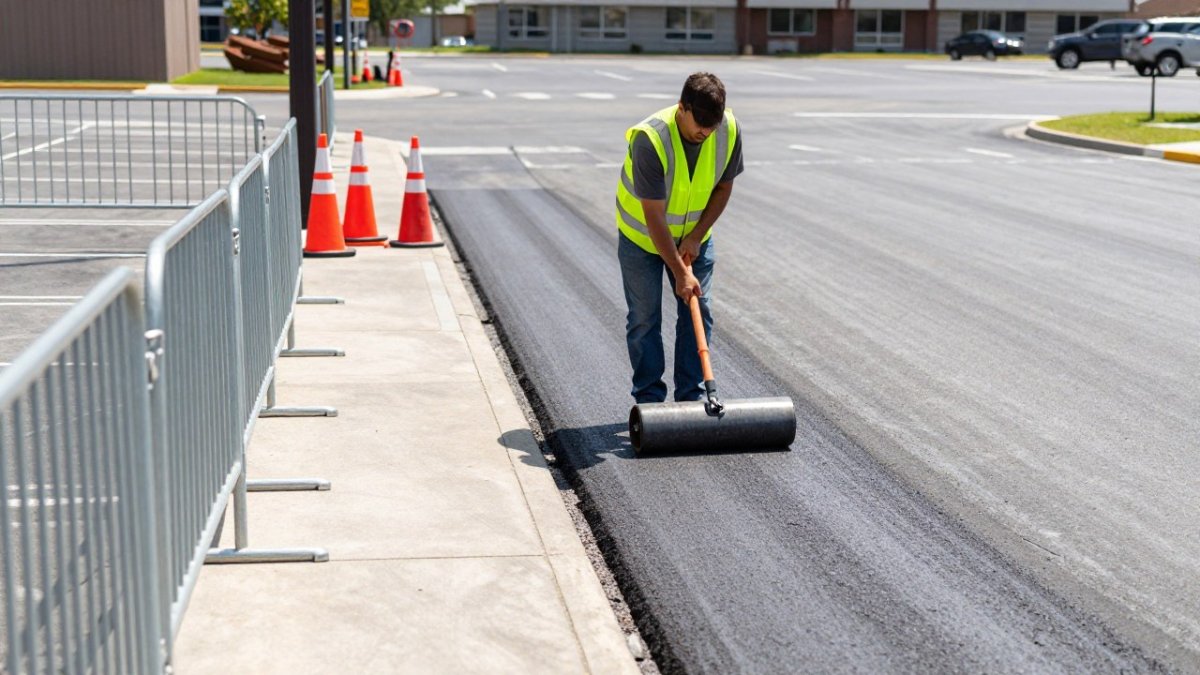
Timing affects the quality of new paving. Asphalt needs the right conditions to cure properly. Very hot weather can make it hard to compact and finish, while cold or wet conditions can prevent it from bonding well.
Plan paving outside the hottest months when you can. Avoid days with heavy rain in the forecast, since moisture can interfere with installation.
If your driveway is already showing weather damage, do not wait for it to get worse. Early repairs cost less than full replacement, and a timely fix can stop water and heat from doing more harm.
Frequently Asked Questions
How does hot weather affect an asphalt driveway?
Heat softens asphalt binder, which can cause rutting under parked vehicles and surface softening in direct sun. Houston summers keep surface temperatures high for long stretches, and repeated expansion and contraction gradually weakens the pavement. Parking off the same spot, keeping oil and fuel spills cleaned up, and sealing the surface on a regular schedule slow this damage. Driveways that are sealed and kept draining well tend to hold their shape longer through the summer.
Does heavy rain shorten a driveway's lifespan?
Yes. Heavy rain drives water into small cracks and the base layers beneath the surface. When that water sits, it weakens the base and can lead to potholes and edge failure. Driveways that flood after storms are usually showing a drainage problem as well as a surface problem. Clearing gutters and downspouts, keeping soil graded away from the edges, and filling cracks before the rainy season all help limit water intrusion.
Is asphalt or concrete better for Houston weather?
Both materials can perform well in Houston when they are installed on a properly prepared base with good drainage. Asphalt is more flexible and handles ground movement well, but it softens in extreme heat and needs regular sealing. Concrete resists heat softening but can crack if the soil shifts. The better choice depends on your site, your budget and how much maintenance you want to schedule. Contact Houston Pavement Repair LLC for a free estimate to compare options for your property.
When is the best time to pave a driveway in Houston?
Many Houston contractors prefer to pave in the cooler, drier months, typically fall through early spring, because asphalt needs suitable temperatures to set properly and rain can delay curing. Avoid paving during peak summer heat or during wet stretches. Timing depends on current weather and project scope, so pricing and scheduling should be confirmed with Houston Pavement Repair LLC directly.