 blog
blog
Best Driveway Material for Clay Soil
Table of Contents
- Why Clay Soil Demands a Different Approach to Driveway Material
- Driveway Base for Clay Soil: The Foundation That Stops Heaving
- Asphalt vs Concrete Driveway: Performance on Moving Clay
- Gravel Driveway on Clay Soil: Pros, Cons, and Realistic Expectations
- Crushed Concrete Driveway Pros and Cons for Clay Substrates
- Drainage and Water Management: The Hidden Factor in Material Failure
- Choosing Your Material: Durability, Cost, and Long-Term Performance
- Frequently Asked Questions
Last Updated: October 12, 2026
Why Clay Soil Demands a Different Approach to Driveway Material
Expansive clay soil swells when wet and shrinks when dry, creating constant movement beneath your driveway, which is why selecting the right driveway material clay soil demands is critical.
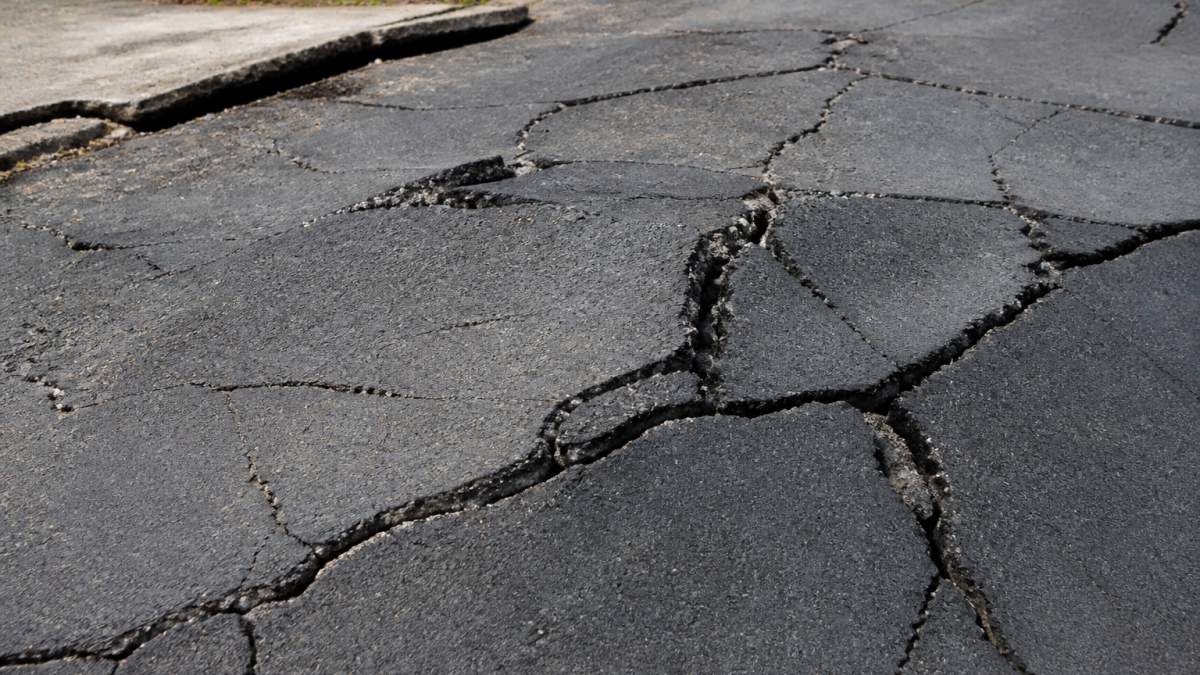
We've seen countless driveways fail because contractors treated clay soil like any other substrate, skipping soil testing, undersizing the base, and ignoring drainage.
Driveway Base for Clay Soil: The Foundation That Stops Heaving
The driveway base for clay soil is the most critical decision you'll make. Get this wrong, and no surface material will save you.
Subgrade Assessment and Soil Stabilization
Before you pour a single cubic yard of aggregate, test your soil. Expansive clay requires a stabilization strategy, and skipping this step costs thousands later.
The choice depends on your soil's clay content and moisture conditions. Professional soil testing identifies clay type and moisture content, determining the best stabilization approach, a few hundred dollars upfront that prevents tens of thousands in repairs later.
Base Layer Thickness and Material Selection
The driveway base for clay soil should be thicker than standard: where normal driveways use 4-6 inches of aggregate, clay soil driveways need 8-12 inches minimum.
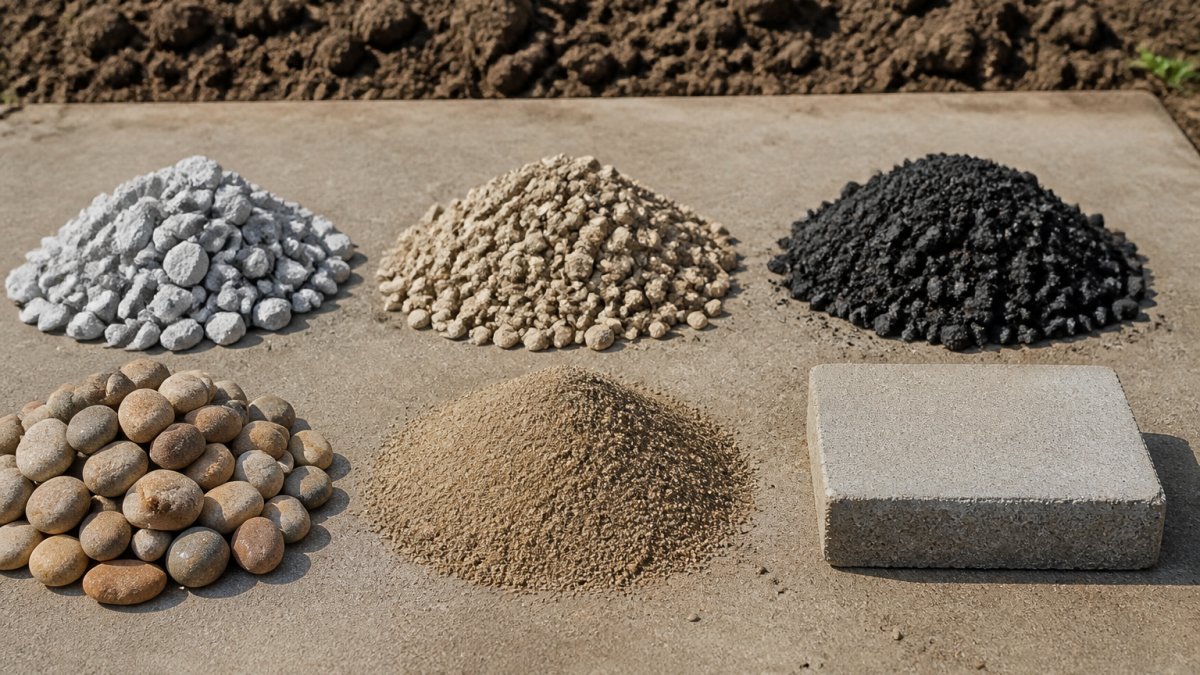
Use crushed limestone or crushed concrete, both compact well and bear loads. Avoid pea gravel, which is too round to compact.
Compaction is everything: each 2-inch lift must reach at least 95% of maximum density. Underdensified base fails under load and allows water infiltration.
A geotextile fabric layer between the clay and the base prevents clay from working into the base while allowing water to drain, extending driveway life.
Asphalt vs Concrete Driveway: Performance on Moving Clay
The asphalt vs concrete driveway debate changes completely on clay soil. The failure modes differ enough that the choice should follow your soil and drainage conditions, not your surface preference.
How Expansive Clay Actually Moves a Driveway
Expansive clay swells when it absorbs water and shrinks as it dries, repeating every wet and dry season.
Differential movement, not total swelling, is what breaks driveways. A surface that bends slightly and recovers tolerates it; one that cannot bend concentrates stress until it cracks.
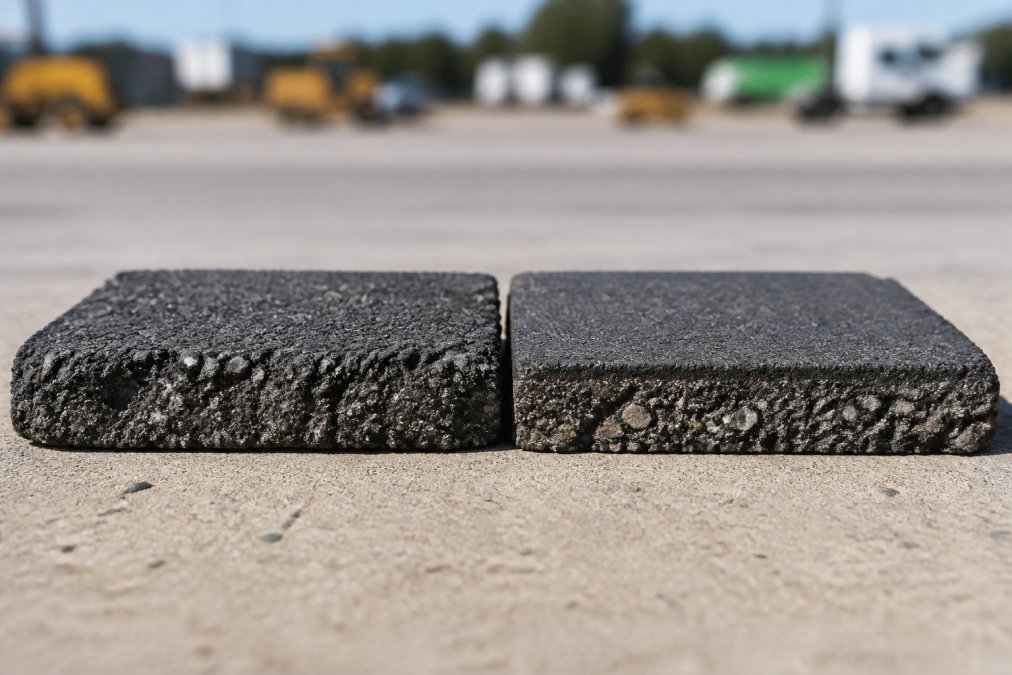
Asphalt is a flexible pavement, a bound layer of aggregate and asphalt binder over a granular base. When the clay below heaves or settles, asphalt deflects and partially recovers.
Concrete is a rigid pavement, a slab that carries load through its own stiffness, which is why it needs a stable, uniform base and control joints.
What Changes the Outcome on Clay
Three things separate a driveway that survives clay movement from one that fails:
- Base thickness and compaction. A thicker, well-compacted granular base spreads load and buffers some movement. Under-built or under-compacted base is the most common cause of both asphalt and concrete failure on clay.
- Drainage. Water drives the swelling. If water reaches the clay under the driveway, movement increases regardless of surface material.
- Jointing and reinforcement (concrete). Control joints give the slab a planned place to crack. Reinforcement holds cracks tight but does not stop movement from a bad base.
A Practical Way to Choose
If drainage is adequate but not perfect and your budget is moderate, asphalt is the more forgiving choice, it tolerates minor movement and is easier to repair. If you commit to an engineered base, positive drainage, and proper jointing, concrete delivers longer service life and lower long-term maintenance. The deciding factor is rarely the surface itself, but whether the base and drainage are designed for the clay underneath.
Gravel Driveway on Clay Soil: Pros, Cons, and Realistic Expectations
A gravel driveway on clay soil is the lowest-cost option but demands the most maintenance.
Pros:
- Lowest upfront cost
- No heavy equipment needed for installation
- Easy to repair, just add more gravel
- Provides some drainage if properly graded
- Can be installed quickly
Cons:
- Requires raking and re-grading every 1-2 years
- Gravel migrates and spreads, requiring constant replenishment
- Clay soil beneath gravel becomes muddy in heavy rain
- Vehicles sink into soft spots where clay is exposed
- Not suitable for areas with heavy rainfall or poor drainage
- Creates dust in dry conditions
- Aesthetically inferior to paved surfaces
A gravel driveway on clay soil works only in dry climates with good drainage. With regular rainfall, the clay beneath stays wet, becomes soft, and creates ruts; vehicles sink and gravel spreads. Within a few years you're spending hundreds annually on maintenance.
If you choose gravel, use crushed stone rather than pea gravel. Crushed stone locks together better and resists spreading. Grade the driveway so water runs off rather than pooling. Even then, expect significant maintenance. Most homeowners regret gravel on clay soil within 3-5 years.
Call now to schedule your free estimate →
| Material | Initial Cost | Annual Maintenance | Lifespan | Best For |
|---|---|---|---|---|
| Gravel | Low | High | 3-5 years | Temporary or very dry areas |
| Asphalt | Medium | Medium | 10-15 years | Good drainage, budget-conscious |
| Concrete | High | Low | 10-15 years | Stable base, engineered drainage |
| Crushed Concrete | Medium | Low | 12-18 years | Recycled material, good compaction |
Crushed Concrete Driveway Pros and Cons for Clay Substrates
Crushed concrete driveway material is recycled asphalt or concrete broken into aggregate. It's an economical alternative that performs surprisingly well on clay soil.
Pros:
- Lower cost than new asphalt or concrete
- Compacts extremely well, creating a dense, stable surface
- Excellent load-bearing capacity when properly compacted
- Good drainage, water passes through easily
- Environmentally friendly recycled material
- Can be resurfaced with asphalt or concrete later
- Lasts 12-18 years with proper base preparation
Cons:
- Dustier than asphalt in dry conditions
- Requires periodic re-compaction as it settles
- Not as finished-looking as asphalt or concrete
- Can track dust onto adjacent surfaces
- Less forgiving of poor drainage than asphalt
A crushed concrete driveway on clay soil performs well because it compacts densely and drains effectively: the angular pieces lock into a stable platform, and water drains through rather than pooling.
The main drawback is aesthetics and dust. If appearance matters, crushed concrete isn't ideal; if durability and cost-effectiveness matter, it's a solid choice. Many contractors in clay soil regions recommend it as the best value option.
Drainage and Water Management: The Hidden Factor in Material Failure
Water is the enemy of clay soil driveways. Proper drainage prevents the clay from swelling, which prevents heaving and cracking, the most important design decision on a clay site, and the one most homeowners and contractors get wrong.
Why Drainage Matters More Than Material on Clay
Expansive clay changes volume with moisture. Keep the moisture content stable and the clay stays relatively still; let it cycle between saturated and dry and that movement transfers to whatever surface sits on top. Poor drainage is why most driveways fail on clay soil, the material itself is rarely the problem. A well-drained asphalt driveway outlasts a poorly drained concrete one every time.
Grading: The First Line of Defense
A driveway should shed water, not hold it. A minimum slope of about 2% (roughly 1/4 inch per foot) directs surface water toward a drainage area; on flatter lots, build slope into the base rather than relying on existing grade. Pooled water finds cracks, infiltrates the base, and reaches the clay below.
Watch where water goes when it leaves the driveway. If it runs onto the clay beside it, you've simply moved the problem. Route it to a swale, ditch, or storm inlet, and keep the outlet lower than the driveway so water keeps moving.
Surface Drainage vs Subsurface Drainage
Surface drainage handles water that lands on the driveway. Subsurface drainage handles water that reaches the base and the clay. On clay sites you usually need both.
- Surface: positive slope, a crowned or cross-sloped surface, and a defined outlet. Keep gutters and downspouts from discharging onto the driveway or the clay beside it.
- Subsurface: a perforated drain pipe (French drain) along the low edge of the driveway, set in washed stone and wrapped in filter fabric, collects water before it reaches the clay. On sites with a high water table or persistent seepage, a deeper underdrain may be needed.
- Under the driveway: a perforated pipe embedded in the base layer can collect water that gets through the surface and direct it away, keeping the base and clay drier.
How Each Material Handles Water
- Gravel and crushed concrete are permeable. Water passes through the surface, so the base and clay below stay wetter unless the site is graded to shed water and the subgrade is stabilized. Permeability is not the same as drainage.
- Asphalt is nearly impermeable. Water runs off the surface, which is good, but cracks and failed seal coat let water into the base. Seal coating every 2-3 years is a drainage maintenance task, not just cosmetic.
- Concrete is impermeable and rigid. Water runs off, but joints and cracks are entry points. Proper joint sealing and positive slope matter.
- Pavers are permeable at the joints. They need an edge restraint and a compacted base that drains, or the joints become a path for water into the clay.
Local Rainfall Reality
The Gulf Coast climate delivers intense, short-duration storms and high annual rainfall, so the drainage system must handle large volumes quickly. Design the outlet and pipe size for peak flow, not typical flow, and ensure discharge is lower than the driveway.
Choosing Your Material: Durability, Cost, and Long-Term Performance
The best driveway material for clay soil depends on three factors: budget, maintenance tolerance, and drainage conditions.
Choose asphalt if: You have a moderate budget, adequate but imperfect drainage, and will seal coat every few years.
Choose concrete if: You're investing in professional base engineering, your drainage is excellent, and you want maximum durability.
Choose crushed concrete if: You want excellent value, you need good drainage, and appearance is secondary.
Lifecycle cost matters more than upfront price.
Choosing the right driveway material for clay soil requires understanding what's happening beneath the surface.
Frequently Asked Questions
What is the best driveway material for clay soil?
There is no single best material, it depends on your budget, climate tolerance, and drainage capacity. Concrete and asphalt both perform adequately on clay if the base is properly designed with 4-6 inches of compacted aggregate and adequate drainage. Gravel and crushed concrete are budget options but require annual maintenance. The key factor is not the surface material but the base preparation and water management underneath.
How do you prepare clay soil for a new driveway?
Start with soil testing to assess clay type and moisture content. Excavate 8-12 inches and remove organic material. If clay is highly expansive, consider lime treatment or soil cement stabilization to reduce heaving risk. Install a geotextile fabric to separate subgrade from base layer. Add 4-6 inches of compacted select fill or limestone aggregate, then 2-3 inches of asphalt or concrete base. Slope the surface 2-3% for drainage and install edge restraint to prevent lateral movement.
Is gravel or crushed concrete better for a driveway on clay soil?
Crushed concrete typically outperforms gravel on clay because it compacts more densely and resists rutting longer. Gravel settles quickly into clay, creating a muddy surface after heavy rain. Crushed concrete holds its shape for 3-5 years with maintenance, while gravel may need raking and topping every 1-2 years. Both are temporary solutions; neither addresses the underlying clay movement that causes long-term failure.
Does asphalt or concrete hold up better on expansive clay?
Concrete is generally more durable on expansive clay because it can bridge small settlements without cracking, whereas asphalt cracks and rutts as the clay shifts. However, concrete can still fail if the base is inadequate or drainage is poor. Both require proper subgrade preparation and compaction. Asphalt is more flexible and tolerates minor movement better than rigid concrete.