 blog
blog
LDC Paving vs Alpha Paving: How to Choose
Table of Contents
- LDC Paving vs Alpha Paving: What Property Managers Need to Know
- Head-to-Head Service and Capability Comparison
- Commercial Asphalt Repair Services and Project Scope
- Paving Contractor Vetting Checklist: Verify Before You Sign
- Key Questions to Ask a Paving Contractor
- Which Paving Company Is Best for Your Project?
- Conclusion: Make an Informed Choice for Lasting Pavement
- Frequently Asked Questions
Last Updated: September 5, 2026
LDC Paving vs Alpha Paving: What Property Managers Need to Know
Choosing between LDC Paving vs Alpha Paving comes down to how each company structures its services around your specific pavement condition. Most property managers discover the real differentiator is not raw capability, but how each contractor approaches project scoping, communication, and long-term maintenance planning. At Houston Pavement Repair LLC, we have watched property owners struggle with this decision, often after a failed repair job that wasted thousands of dollars.
Both LDC Paving and Alpha Paving have established reputations for large-scale projects, but the critical question is whether their operational model fits your property's needs. A single-location retail center with light traffic has different requirements than a distribution facility handling heavy truck traffic daily. Understanding these distinctions before requesting bids will save you significant time and frustration.
Below, we break down the service capabilities, project scope, and vetting criteria that matter when comparing these two contractors, and show you how to verify claims, ask the right questions, and select the partner best positioned to protect your pavement investment.
Head-to-Head Service and Capability Comparison
Both companies maintain broad capabilities, but their execution models differ meaningfully. The core services that dominate commercial work are asphalt paving, concrete construction, and preventative maintenance programs.
Asphalt Paving and Resurfacing
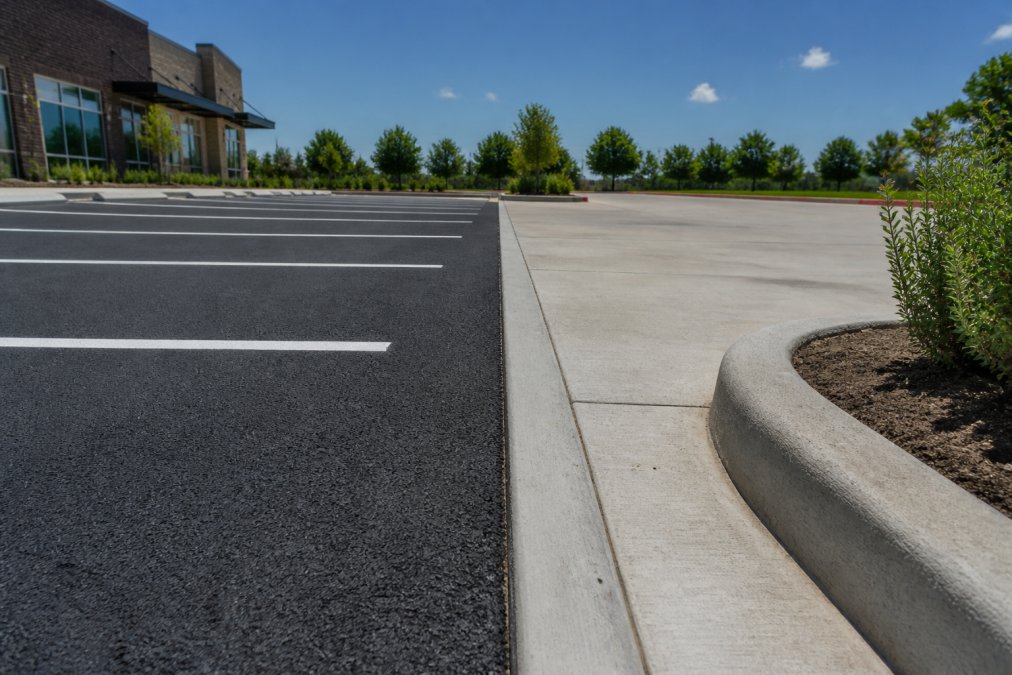
Both handle full-depth asphalt paving, pavement overlay, and resurfacing. The key difference emerges in site preparation and sub-base installation. A proper installation requires correct grading, drainage planning, and a compacted base that supports the surface for decades. Ask specifically about their process for addressing soft spots or poor drainage before laying new asphalt, base preparation quality determines pavement longevity more than the surface material itself.
Concrete Construction and Curbing
Concrete work requires a different skill set than asphalt, and this is where contractor specialization becomes visible. Both offer concrete finishing services, but verify their experience with ADA compliance for curb ramps and accessibility features. Poorly executed concrete leads to trip hazards, water pooling, and premature cracking. Ask for examples of recent commercial curbing projects and confirm they understand local code requirements for your property type.
Sealcoating, Striping, and Maintenance
Sealcoating and striping protect your asphalt investment and extend its service life. A proactive program includes crack sealing, pothole repair, and regular sealcoating to prevent water intrusion and oxidation damage. Both contractors offer these services, but frequency and quality of application matter. Best practice suggests sealcoating every two to three years depending on traffic volume and climate exposure (transportation.org).
Neutral Side-by-Side Comparison Matrix
Most online comparisons stop at listing services. This one gives you a decision matrix to use during bid review, scoring each contractor on factors that drive long-term pavement performance, not just the initial bid price.
| Evaluation Factor | LDC Paving | Alpha Paving | Why This Matters |
|---|---|---|---|
| Sub-base documentation | Ask for written base thickness and compaction specs on every bid | Confirm they include grading corrections in proposals | A 6-inch compacted base on proper subgrade outlasts a 4-inch base on unprepared soil by years (extension.iastate.edu) |
| Drainage analysis | Typically includes drainage review on large road jobs; verify for small lots | Offers drainage assessment as part of maintenance planning | Water pooling under asphalt is the #1 cause of premature failure |
| Preventative maintenance program | Project-focused; less emphasis on scheduled lifecycle care | Offers structured sealcoating and crack-sealing schedules | Sealcoating every 2-3 years can extend asphalt life from 15 to 20+ years (pavementinteractive.org) |
| ADA compliance experience | Handles municipal curb ramp projects | Experienced with retail parking lot accessibility retrofits | Non-compliance exposes you to federal civil rights liability |
| Response time for small properties | May prioritize large infrastructure contracts | Generally responsive to single-location retail and multifamily | A 2-week delay on pothole repair becomes a liability claim |
| Warranty structure | Typically 1-2 years on materials and workmanship | Offers extended warranties on full-depth paving | A warranty that covers labor for crack sealing is worth more than one covering materials only |
How to Use This Matrix for Your Property Type
For light-duty lots (passenger cars only), the deciding factors are drainage and sealcoating frequency. For heavy-duty lots (delivery trucks, garbage trucks), sub-base thickness and concrete apron installation at loading docks become the critical differentiators. Match the matrix rows to your traffic profile before weighing the results.
Commercial Asphalt Repair Services and Project Scope
Commercial asphalt repair covers everything from minor crack sealing to full parking lot installation and industrial paving. The scope of work dictates which contractor is better suited. A property needing extensive milling and overlay requires significant equipment capacity and project management experience. A smaller complex dealing with recurring pothole repair may benefit more from a contractor specializing in targeted, root-cause repairs rather than surface patching.
A common frustration is hiring a contractor who applies temporary fixes instead of addressing underlying drainage or base failures. If your lot floods during heavy rain or cracks repeatedly in the same locations, the problem is rarely the asphalt itself, it is usually a sub-base issue or inadequate grading. When comparing LDC Paving vs Alpha Paving, ask each how they diagnose recurring failures and whether their proposal includes sub-base repair or grading corrections.
Maintenance Lifecycle Analysis: What Your Pavement Actually Costs Over Time
Most property managers compare bids on first-year cost. That approach misses 80% of the expense. A proper maintenance lifecycle analysis projects your total cost of ownership over a 20-year pavement life. Here is how the numbers typically break down for a 10,000-square-foot commercial lot: paver and concrete costs.
| Pavement Age | Required Action | Cumulative Cost per Square Foot |
|---|---|---|
| Year 0 | Full-depth asphalt installation (2-3 inch surface on 6-inch base) | $3.50-$5.50 |
| Year 2-3 | First sealcoat and crack sealing | $3.65-$5.75 |
| Year 5 | Second sealcoat; spot repair any alligator cracking | $3.85-$6.05 |
| Year 7-8 | Third sealcoat; mill and overlay high-traffic zones if needed | $4.10-$6.40 |
| Year 10-12 | Full mill and overlay (2-inch new surface) | $6.10-$9.40 |
| Year 15 | Sealcoat and crack sealing | $6.25-$9.65 |
| Year 20 | Full reconstruction | $9.75-$15.15 |
The Deferred Maintenance Trap
Skipping the Year 2-3 sealcoat saves roughly $2,000 on a 10,000-square-foot lot but shortens pavement life from 20 years to 12-14 years. The result: you pay for a full mill and overlay at Year 12 instead of Year 20, adding $20,000-$30,000 in unplanned capital expense. That is the single most expensive mistake a property manager can make with asphalt.
How to Apply This Analysis to LDC Paving vs Alpha Paving
When you receive bids from LDC Paving or Alpha Paving, ask each to provide a 10-year maintenance schedule with projected costs. A contractor who can produce this document is demonstrating lifecycle thinking; one who only quotes the immediate repair wants your current job, not your long-term partnership. The right choice is the contractor whose maintenance plan aligns with the lifecycle table above, not the one with the lowest initial number.
Paving Contractor Vetting Checklist: Verify Before You Sign
Your vetting checklist should go beyond verifying a license and insurance certificate. Start with these five checks before committing to any bid:
Call now to schedule your free estimate →
- Verify licensing and insurance directly. Call the issuing agency to confirm the policy is active and covers the crew size they plan to deploy.
- Request references you can actually call. Recent commercial clients who had work completed in the last six months are more valuable than a portfolio of photos.
- Inspect active job sites. A contractor who welcomes site visits demonstrates confidence in their crew and safety practices.
- Confirm sub-base and grading approach in writing. The proposal should specify base thickness, compaction requirements, and drainage corrections.
- Review the maintenance plan. A contractor who offers a structured pavement management schedule is thinking about your long-term costs, not just the initial invoice.
Contractor licensing is a baseline, not a differentiator, both companies should hold appropriate state licenses for commercial work. What separates reliable contractors is their willingness to document their process, provide verifiable references, and explain their approach to preventing future failures rather than simply bidding the lowest price for surface work.
Key Questions to Ask a Paving Contractor
Before signing any contract, ask these questions to expose how each contractor approaches your project:
How do you diagnose the root cause of recurring pavement failures? A contractor who immediately proposes another overlay without investigating drainage or base conditions will likely repeat your past problems. The correct answer involves evaluating the sub-base, checking for water pooling, and possibly recommending grading corrections before resurfacing.
Can you provide a written project timeline with milestones? Commercial properties cannot afford extended downtime. A detailed schedule shows the contractor respects your operations and has the crew capacity to finish on time. Vague answers about availability are a warning sign.
What does your warranty cover, and how are claims handled? Warranty language varies significantly. Understand whether it covers materials only or includes labor for future crack sealing and pothole repair, and confirm who to call if issues appear after the project closes.
Do you have experience with properties of our size and traffic volume? A contractor accustomed to large industrial jobs may not prioritize a smaller retail lot, while one focused on residential driveways may lack the equipment for commercial-scale work.
Which Paving Company Is Best for Your Project?
The direct answer depends on your project profile, and a side-by-side comparison helps clarify the fit.
| Consideration | LDC Paving | Alpha Paving |
|---|---|---|
| Best for | Large-scale roadwork and infrastructure repair | Established commercial parking lot installation |
| Core strength | Heavy equipment capacity for industrial paving | Consistent track record with retail properties |
| Maintenance approach | Project-focused, less emphasis on lifecycle planning | Offers preventative maintenance programs |
| Ideal client | General contractors needing reliable subcontractors | Property managers with ongoing lot upkeep needs |
| Watch out for | Verify sub-base documentation on smaller lots | Confirm responsiveness for single-location properties |
For property managers overseeing a single retail center or smaller apartment complex, the deciding factor is often communication and responsiveness rather than raw capacity. A contractor who returns calls, visits the site personally, and explains their maintenance lifecycle analysis will serve you better than one who treats your project as a small line item in a busy schedule. Houston Pavement Repair LLC specializes in this exact segment, offering expert asphalt and concrete paving and repair services for residential and commercial clients across Houston and Katy.
Conclusion: Make an Informed Choice for Lasting Pavement
The choice between LDC Paving vs Alpha Paving ultimately comes down to matching their operational strengths against your property's specific pavement condition and your tolerance for ongoing maintenance. Both can deliver a quality parking lot installation, but the property manager who asks tough questions about root-cause analysis, sub-base preparation, and preventative maintenance will secure a better long-term outcome.
At Houston Pavement Repair LLC, we believe the best paving partner treats your pavement as a long-term asset rather than a one-time job. Call now to schedule your free estimate and experience our commitment to excellence.
Choosing a paving contractor is a significant decision with lasting financial implications. The wrong choice leads to recurring pothole repair, premature pavement overlay, and frustrated tenants. Houston Pavement Repair LLC provides expert asphalt and concrete paving services designed to address the root cause of your pavement issues, not just the surface symptoms. Get started with Houston Pavement Repair LLC and schedule your free estimate today.
Frequently Asked Questions
What should I look for when comparing paving contractors?
Focus on verifiable credentials, not just price. Ask for proof of licensing and insurance, check references from recent commercial projects, and confirm their experience with your specific scope, whether that is asphalt paving, concrete curbing, or sealcoating. A detailed written estimate that outlines the full process, from site preparation to final cleanup, is a strong sign of a professional operation. Compare their proposed materials and methods, and avoid contractors who give vague timelines or cannot clearly answer your questions.
How does project scope affect the choice between paving companies?
Project scope is the deciding factor. A small parking lot repair requires a different skill set than a full new construction site with sub-base installation and grading. Some contractors specialize in large-scale roadwork, while others focus on commercial and residential properties. Confirm the company regularly handles projects of your size and complexity. Ask about their equipment and crew capacity to ensure they can meet your timeline without sacrificing quality or communication.
What is the difference between asphalt paving and sealcoating services?
Asphalt paving involves installing a new surface or an overlay, which includes site preparation, grading, and compacting the sub-base before laying fresh asphalt. Sealcoating is a preventative maintenance treatment applied to an existing, sound pavement. It protects against weather damage and traffic wear, extending the life of the asphalt. Both services are part of a complete pavement management plan, but they address different stages of the pavement lifecycle.
How can I get an accurate estimate for commercial paving repairs?
An accurate estimate starts with a site visit. Contractors must assess the existing pavement's structural integrity, drainage issues, and the extent of damage like cracking or potholes. A written estimate should detail the scope of work, materials to be used, and a clear timeline. Be wary of quotes provided without an inspection. For a reliable assessment of your commercial paving needs, contact Houston Pavement Repair LLC for a free estimate.
Frequently Asked Questions
Q: What should I look for when comparing paving contractors?
A: Focus on verifiable credentials, not just price. Ask for proof of licensing and insurance, check references from recent commercial projects, and confirm their experience with your specific scope, whether that is asphalt paving, concrete curbing, or sealcoating. A detailed written estimate that outlines the full process, from site preparation to final cleanup, is a strong sign of a professional operation. Compare their proposed materials and methods, and avoid contractors who give vague timelines or cannot clearly answer your questions.
Q: How does project scope affect the choice between paving companies?
A: Project scope is the deciding factor. A small parking lot repair requires a different skill set than a full new construction site with sub-base installation and grading. Some contractors specialize in large-scale roadwork, while others focus on commercial and residential properties. Confirm the company regularly handles projects of your size and complexity. Ask about their equipment and crew capacity to ensure they can meet your timeline without sacrificing quality or communication.
Q: What is the difference between asphalt paving and sealcoating services?
A: Asphalt paving involves installing a new surface or an overlay, which includes site preparation, grading, and compacting the sub-base before laying fresh asphalt. Sealcoating is a preventative maintenance treatment applied to an existing, sound pavement. It protects against weather damage and traffic wear, extending the life of the asphalt. Both services are part of a complete pavement management plan, but they address different stages of the pavement lifecycle.
Q: How can I get an accurate estimate for commercial paving repairs?
A: An accurate estimate starts with a site visit. Contractors must assess the existing pavement's structural integrity, drainage issues, and the extent of damage like cracking or potholes. A written estimate should detail the scope of work, materials to be used, and a clear timeline. Be wary of quotes provided without an inspection. For a reliable assessment of your commercial paving needs, contact Houston Pavement Repair LLC for a free estimate.