 how-to
Asphalt Pothole Repair: Steps for Effective Fixes
Table of Contents
- Why Potholes Form and When to Repair Them
- How to Prepare a Pothole for Patching
- Assessing Pothole Size and Choosing Your Repair Method
- Cold Patch Asphalt Repair: The DIY-Friendly Option
- Hot-Mix Asphalt: When You Need a Permanent Fix
- How Long Asphalt Patch Takes to Cure and Why It Matters
- Understanding Asphalt Pothole Repair Cost and When to Call a Professional
- Common Mistakes That Cause Repairs to Fail
- Frequently Asked Questions
Last Updated: October 10, 2026
Why Potholes Form and When to Repair Them
Potholes develop when water seeps beneath the asphalt surface and weakens the base layer. Freeze-thaw cycles make this worse. When water freezes, it expands and pushes the pavement upward. When it thaws, the surface collapses inward, leaving a hole. This cycle repeats every winter in most climates, deepening the damage.
You should perform asphalt pothole repair as soon as you notice it. A small hole grows fast. Water continues to infiltrate the surrounding asphalt, expanding the damaged area. What starts as a 6-inch depression can become a 2-foot crater within weeks. Early intervention saves money and prevents safety hazards.
At Houston Pavement Repair LLC, we recommend treating potholes before they spread. Small repairs cost far less than replacing an entire section of pavement. Delaying repairs also risks damage to vehicles and creates liability if someone is injured.
How to Prepare a Pothole for Patching
Preparation determines whether your repair lasts or fails within months. Start by cleaning the pothole thoroughly. Remove all loose asphalt, dirt, and debris using a shovel, broom, and compressed air if available. The hole must be clean down to solid pavement.
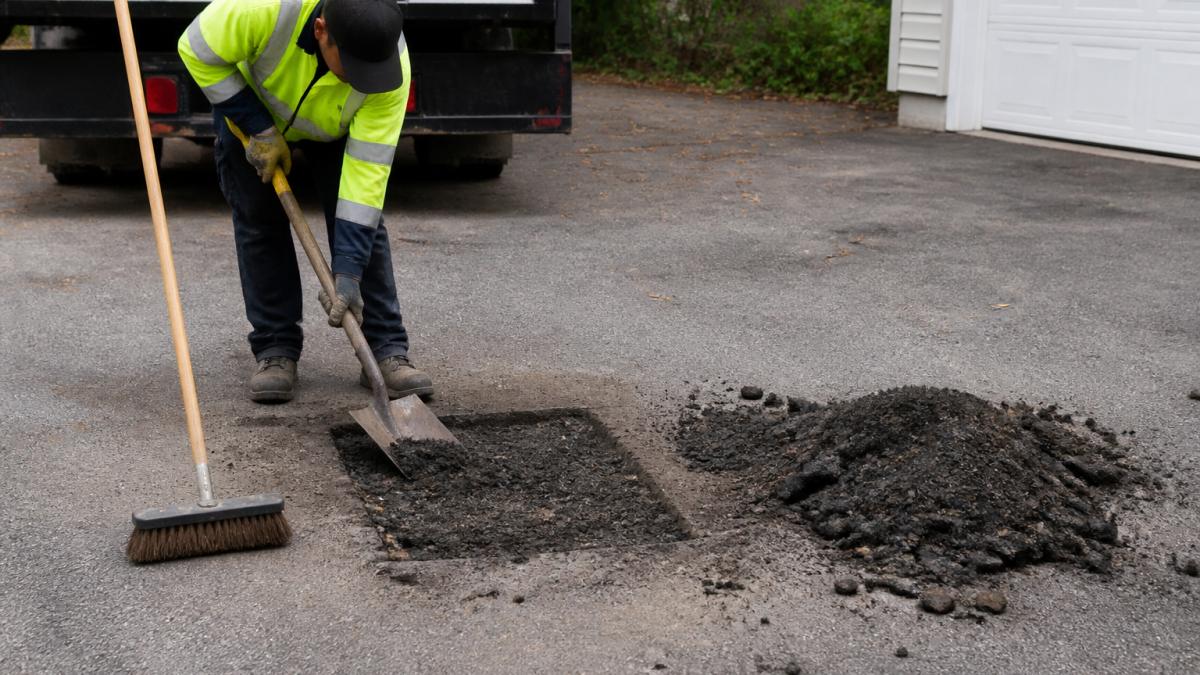
Next, dry the area completely. Water trapped under patch material prevents proper adhesion. Use a leaf blower or compressed air to remove moisture. If the pothole is very wet, allow it to air-dry for several hours or overnight if possible.
Finally, cut back the edges. Use a shovel or chisel to create clean, vertical sides rather than sloped edges. Squared-off edges help the patch material bond better to the existing asphalt. Remove any crumbling or fractured pavement around the hole's perimeter.
Assessing Pothole Size and Choosing Your Repair Method
Pothole size and depth determine which repair method works best, but material choice also depends on weather, temperature, traffic patterns, and how long you need the repair to last.
Size and traffic guidelines: Small potholes (under 6 inches across and 2 inches deep) respond well to cold patch asphalt, especially in residential driveways with light traffic.
High-traffic areas, parking lots, commercial driveways, and roads with frequent vehicle passage, demand more durable repairs.
Temperature and weather requirements: Cold patch works in wet, cold, and variable conditions because it contains solvents that allow application without heating. However, freezing temperatures below 32°F slow the curing process and reduce adhesion.
Hot-mix asphalt requires pavement temperature above 50°F and air temperature ideally above 55°F. Rain or high humidity within 24 hours of application compromises the bond.
Throw-and-roll repairs (a semi-permanent option) require similar conditions to hot-mix but are slightly more forgiving of marginal temperatures.
Seasonal considerations: Spring and fall are ideal for most repairs. Spring repairs address winter damage while pavement is still cool and stable. Fall repairs prevent water infiltration before winter freeze-thaw cycles.
Recurring potholes and underlying causes: If the same spot develops potholes repeatedly within weeks or months, the problem likely extends beyond the visible hole.
Cold Patch Asphalt Repair: The DIY-Friendly Option
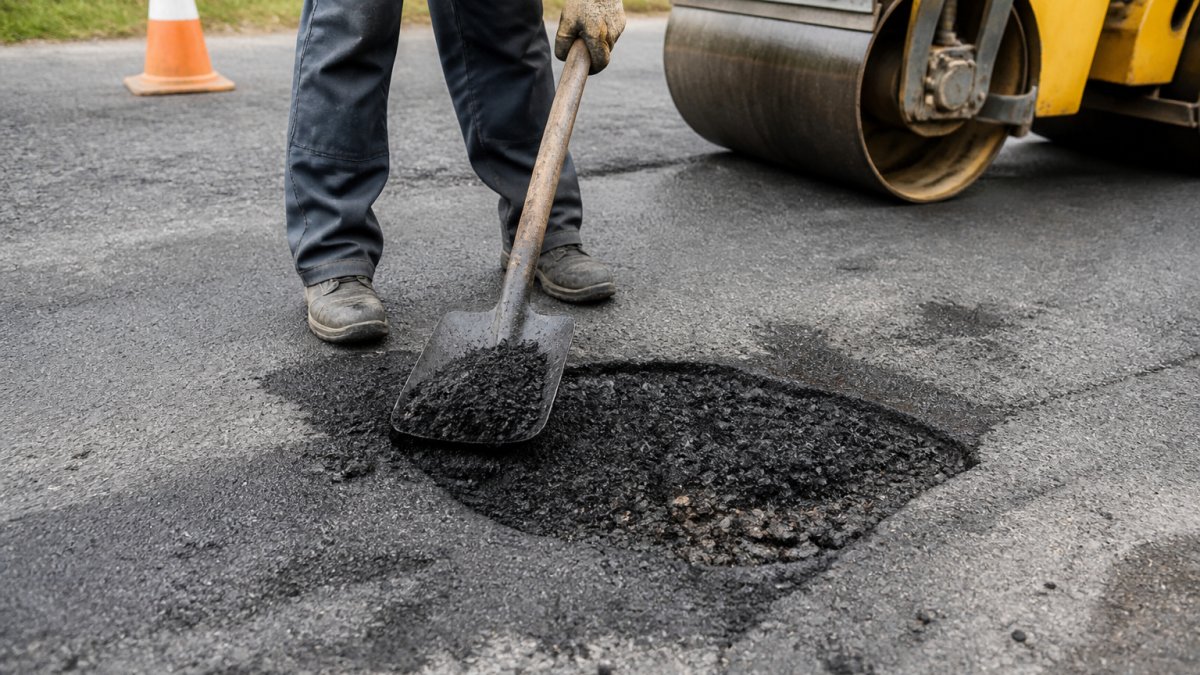
Cold patch asphalt is the easiest repair method for homeowners. It requires no special equipment and works in any weather. You can apply cold patch even in rain or cold temperatures. The material comes pre-mixed in bags and is ready to use straight from the package.
Fill the pothole slightly above the surrounding surface. Cold patch material compacts as vehicles drive over it. Overfilling by half an inch accounts for this settling. Use a hand tamper or the back of a shovel to compact the material firmly.
Cold patch asphalt typically sets within 24-48 hours, though you can drive on it immediately. The material hardens gradually as solvents evaporate. Don't expect the same durability as hot-mix asphalt. Cold patch repairs usually last 1-2 years in moderate traffic areas.
Hot-Mix Asphalt: When You Need a Permanent Fix
Hot-mix asphalt delivers superior durability compared to cold patch. It bonds tightly to surrounding pavement and withstands heavy traffic. Hot-mix repairs can last 5-10 years or longer if properly installed.
Hot-mix requires heating the asphalt to 300-350°F before application. This means you need specialized equipment and experience. Most homeowners hire professionals for hot-mix repairs. The material must be placed while hot and compacted immediately before it cools.
Hot-mix asphalt demands dry conditions and temperatures above 50°F. Rain or cold weather compromises the bond and causes premature failure. Plan hot-mix repairs for late spring through early fall when weather is stable.
The throw-and-roll method is a semi-permanent option between cold and hot-mix. Contractors heat the pothole's edges slightly, apply hot-mix asphalt, and compact it with a roller. This method costs more than cold patch but less than full hot-mix repair, and it lasts 3-5 years.
Call now to schedule your free estimate →
How Long Asphalt Patch Takes to Cure and Why It Matters
Curing time varies dramatically between repair methods. Cold patch sets in 24-48 hours but reaches full strength over several weeks. Avoid heavy traffic on fresh cold patch for at least 48 hours if possible.
Hot-mix asphalt cures faster. It's safe to drive on within 2-4 hours after installation, though full strength develops over several days. The material hardens as it cools and continues to gain strength as traffic compacts it.
Rejuvenator products can extend patch durability. These sealants restore flexibility to aging asphalt and help patches bond better to surrounding pavement. Apply rejuvenator 48 hours after cold patch installation or according to the product's instructions.
Temperature affects curing speed. Cold weather slows the process. Warm weather accelerates it. High humidity can extend curing time for some products.
Understanding Asphalt Pothole Repair Cost and When to Call a Professional
Repair costs depend on pothole size, location, and method chosen. Cold patch material costs $15-30 per bag and covers roughly 40-50 square feet. A single pothole repair typically uses one bag.
Hot-mix asphalt repairs cost significantly more because they require specialized equipment and skilled labor. Professional hot-mix repairs range from $150-500 per pothole depending on size and access. Large areas or multiple potholes cost more per unit.
Call a professional if the pothole is larger than 12 inches across, if it's in a high-traffic area, or if DIY repairs have failed repeatedly. Professional contractors have equipment to heat, apply, and compact asphalt properly. They can also diagnose underlying drainage issues causing pothole formation.
Professionals can also assess whether the damage extends beyond the visible hole. Sometimes potholes indicate deeper pavement failure. A professional inspection prevents costly repeat repairs.
Common Mistakes That Cause Repairs to Fail
Most patch failures stem from poor preparation, incorrect material choice, or inadequate compaction. Understanding why repairs fail, and how to spot problems early, prevents costly repeat work.
Preparation failures: The most common mistake is skipping proper cleaning and drying. Loose asphalt, dirt, and moisture trapped under the patch cause it to pop out within weeks.
Another preparation error is failing to cut back the edges. Sloped or crumbling edges don't bond well to patch material. Use a shovel or cold chisel to create clean, vertical sides.
Compaction and filling errors: Underfilling the pothole is a frequent mistake. Material settles under traffic, especially in the first few weeks.
Not compacting thoroughly leaves air voids in the patch. These pockets weaken the repair and allow water infiltration. Compact until the material is firm and resists further compression.
Material and weather mismatches: Applying cold patch in freezing temperatures (below 20°F) reduces effectiveness. The material doesn't bond properly in extreme cold. Wait for warmer conditions if possible.
Using the wrong repair method for the situation wastes money and guarantees failure. Cold patch on a heavily-trafficked parking lot fails within months.
Ignoring underlying drainage problems: If water consistently pools in the same area, the pothole will return repeatedly even after repair.
Quality checks during and after repair: Perform these checks to catch problems before the patch hardens:
- Surface level: After compaction, the patch should be level with or no more than 0.25 inches above surrounding pavement. If it's significantly higher, water will pool around the edges. If it's lower, water will pool in the patch itself.
- Edge adhesion: Press on the patch edges with your hand or a tool. They should not flex or separate from surrounding asphalt. Loose edges allow water infiltration and cause the patch to peel away.
- Compaction firmness: The patch should feel solid and resist further compression. If it's soft or spongy, compact more.
- Drainage: Observe the area during or after the next rain. Water should not pool on or around the patch. If it does, the drainage problem wasn't addressed.
Diagnosing patch failure after installation: If a patch fails within weeks or months, identify the cause to prevent repeat failure:
- Patch pops out or chunks are missing: Likely causes are moisture under the patch, inadequate edge preparation, or poor compaction. The next repair should emphasize drying and edge cutting.
- Patch sinks or becomes concave: The patch was underfilled or not compacted enough. Overfill by 0.5-1 inch and compact more firmly.
- Patch cracks or develops spider-web fractures: Cold patch may have been applied in freezing temperatures, or hot-mix was applied in wet conditions or cooled too quickly. Use hot-mix for high-traffic areas, or wait for better weather.
- Pothole returns in the same spot within weeks: The underlying drainage or base layer problem was not addressed. Professional assessment is needed to diagnose and fix the root cause.
- Patch tracks or deforms under tire pressure: Cold patch may have been applied in extreme heat, or the material is too soft for the traffic volume. Use hot-mix for high-traffic areas.
Frequently Asked Questions
How do you repair an asphalt pothole step by step?
Start by cleaning the pothole thoroughly, removing all loose asphalt and debris with a shovel and broom. Inspect the edges and widen them if needed so the patch material bonds properly. Dry the hole completely. Choose either cold patch or hot-mix asphalt based on size and permanence needed. Fill the pothole slightly overfilled, then compact firmly with a tamper until level with the surrounding pavement. For cold patch, let it cure per manufacturer instructions before driving on it.
When should you use cold patch instead of hot-mix asphalt?
Cold patch asphalt repair works best for small to medium potholes (under 6 inches deep) and is ideal for DIY repairs since it requires no heating equipment. It's convenient for emergency fixes and can be applied in wet conditions. However, cold patch is a semi-permanent solution that typically lasts 1-3 years. Use hot-mix asphalt for larger potholes or permanent repairs, especially in high-traffic areas where durability matters most.
How long does an asphalt pothole patch take to cure?
Cold patch typically cures in 24-48 hours depending on temperature and humidity, though some products set faster. Hot-mix asphalt cures more quickly, usually allowing light traffic within hours and full traffic within 24 hours. Cure time varies with weather conditions. Cooler temperatures and moisture slow curing. Always check your specific product instructions and avoid heavy traffic until fully cured to prevent the patch from shifting or breaking apart.
Why do pothole repairs fail or come loose?
Repairs fail most often because the pothole wasn't cleaned properly, leaving loose asphalt or debris that prevents the patch from bonding. Insufficient compaction is another common cause, the material must be packed firmly to achieve durability. Water infiltration underneath the patch or inadequate curing time before traffic also causes premature failure. Cold patch repairs are inherently temporary and may not hold in freeze-thaw cycles or under heavy traffic, making professional hot-mix repair necessary for permanent results.