 how-to
Get Free Pavement Repair Quote: What to Expect
Table of Contents
- How to Request a Free Pavement Repair Quote
- What Contractors Assess During Site Inspection
- Visual Damage Assessment Guide
- Questions to Ask Paving Contractors Before Committing
- Asphalt Patching vs Resurfacing: Which Repair Method Fits Your Quote
- How to Vet Paving Subcontractors and Verify Credentials
- DIY vs Professional Pavement Repair: Cost-Benefit Reality
- Understanding Your Pavement Repair Quote: What's Included
- Frequently Asked Questions
Last Updated: September 3, 2026
How to Request a Free Pavement Repair Quote
Getting a free pavement repair quote is straightforward: contact a licensed paving company, describe your issues, and request a no-obligation site inspection. Have your property address, surface type (asphalt or concrete), and damage description ready. Most contractors respond same-day, though scheduling the inspection may take a few days depending on demand.
Houston Pavement Repair LLC handles free estimates for residential driveways and commercial parking lots. Our team assesses structural integrity and identifies root causes, poor drainage, sub-base failure, or wear, ensuring your quote addresses the actual problem, not just surface symptoms.
What Contractors Assess During Site Inspection
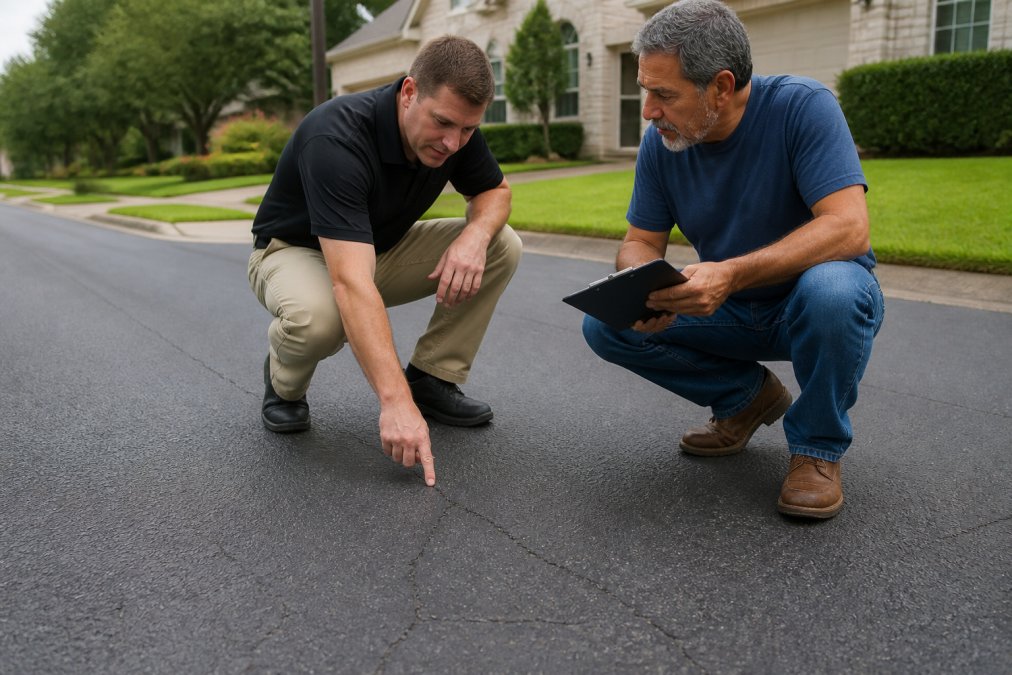
A professional site inspection determines what repairs you need and the project scope. Contractors evaluate the entire pavement system, from surface layer to aggregate base.
They examine damage extent and pattern. Linear cracks suggest surface wear, while alligator cracking (interconnected patterns) indicates sub-base problems. Potholes reveal whether damage is localized or widespread. Rutting, permanent tire-worn grooves, suggests the asphalt has lost binding strength and may need resurfacing rather than patching.
Drainage is critical. Contractors look for water pooling, which accelerates deterioration. Poor drainage is often the root cause of premature failure. They assess whether your driveway slopes properly toward storm drains or if water sits after rain.
The contractor evaluates pavement age and overall condition. A 15-year-old asphalt surface with widespread cracking suggests the material has reached the end of its useful life. They'll recommend whether preventative maintenance (sealcoating), targeted repair (patching), or full resurfacing makes sense for your budget and timeline.
Visual Damage Assessment Guide
Understanding damage types helps you communicate with contractors and spot incomplete quotes. Different damage requires different solutions.
Potholes are complete pavement failures that expand with traffic. Holes bigger than 3 inches across and 1 inch deep need professional repair (fhwa.dot.gov). Contractors must remove failed material, prepare the base, and install proper asphalt patching.
Alligator cracking looks like spider web or alligator skin, interconnected cracks breaking the surface into small pieces. This indicates the asphalt layer has lost structural integrity, usually from base settlement or failure. The entire affected section typically needs removal and resurfacing.
Linear cracks are single cracks running across the pavement, usually from thermal stress or minor settling. These can often be sealed or patched without major reconstruction.
Rutting appears as permanent grooves where vehicle tires have worn the asphalt. Shallow rutting (less than half an inch) can sometimes be sealed. Deep rutting indicates the asphalt binder has failed and requires resurfacing.
Edge deterioration occurs when pavement edges crumble or separate, indicating water infiltration and sub-base problems.
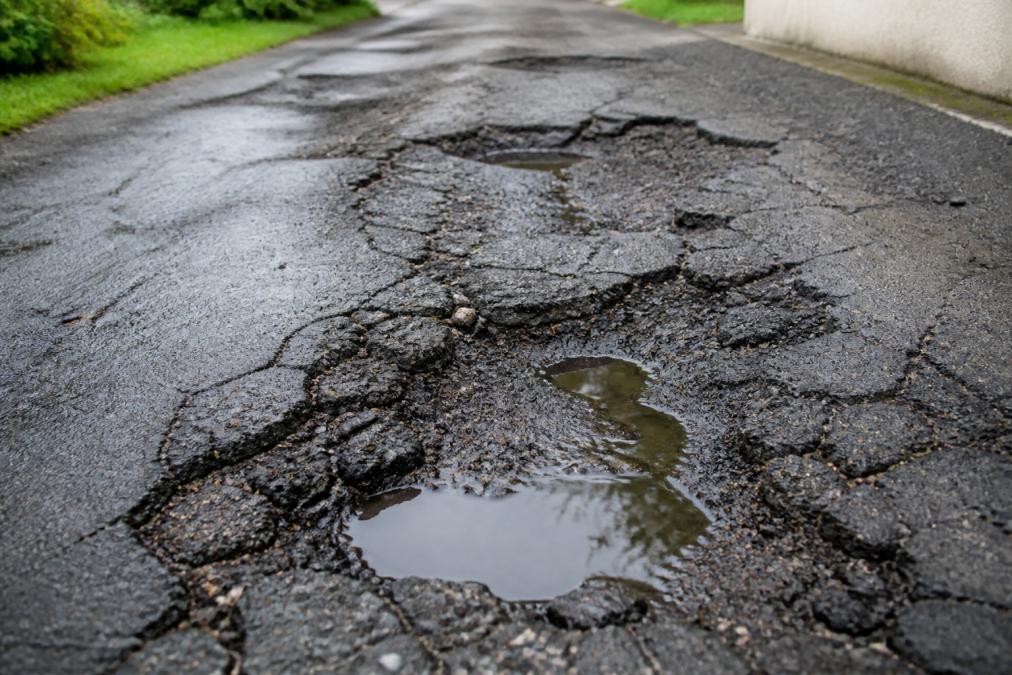
Look for patterns: Are cracks clustered in one area or spread across the surface? Does water pool in certain spots? Are edges crumbling? These observations help contractors determine whether you need targeted patching or comprehensive resurfacing.
Questions to Ask Paving Contractors Before Committing
Ask what caused the damage. A contractor who explains the drainage issue, sub-base failure, or other root cause is more likely to fix it properly.
Ask about material quality and thickness. Professional asphalt patching requires proper compaction and adequate thickness, typically at least 2-3 inches of compacted material (asphaltpavement.org).
Ask about surface preparation. Contractors should remove all loose material, clean the area, and prepare the sub-base before applying new asphalt. Detailed prep work separates quality contractors from those cutting corners.
Ask how long the repair should last. Realistic contractors give honest timeframes. A temporary patch might last 1-2 years; a proper repair should last 5-10 years. Promises of 20 years on a patch indicate overselling.
Ask for references from recent work and call previous customers. Ask specifically about durability and whether repairs held up.
Ask about warranty coverage. Understand what's covered and for how long.
Ask about project timeline. When can they start, how long will it take, and what happens if weather delays work?
Asphalt Patching vs Resurfacing: Which Repair Method Fits Your Quote
Your quote will likely recommend asphalt patching, sealcoating, or resurfacing.
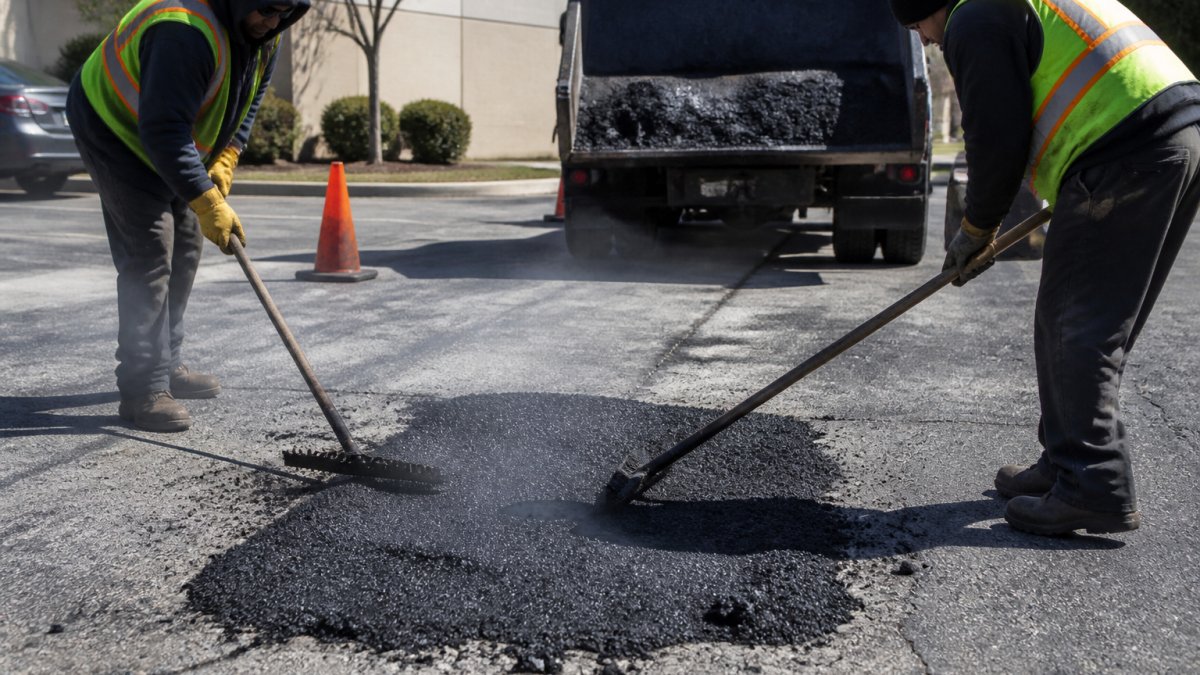
Asphalt patching addresses localized damage, potholes, cracked sections, or edge deterioration. The contractor removes damaged material, prepares the sub-base, and installs new asphalt. It works when damage is confined and surrounding pavement is structurally sound. However, patches are temporary if the underlying cause isn't fixed. If poor drainage caused the damage, the patch will fail again unless drainage improves.
Sealcoating is preventative maintenance extending pavement life. It's a thin protective layer sealing out water and UV damage. It works best on decent-condition pavement with no major cracks or potholes. It won't fix existing structural damage.
Resurfacing removes the top asphalt layer and installs a new one over the existing base. This works when the sub-base is solid but the surface has deteriorated. It addresses widespread cracking, rutting, and surface wear, extending pavement life by 10-15 years.
Complete removal and reconstruction is necessary when the sub-base has failed or pavement is too damaged to salvage. This is the most expensive option but the only solution for structural failure.
Your quote should clearly state which method is recommended and why. If the contractor recommends patching for pavement showing alligator cracking across 60% of the surface, that's a mismatch. Resurfacing would be more appropriate.
Call now to schedule your free estimate →
How to Vet Paving Subcontractors and Verify Credentials
Verify licensing through your state's licensing board. Check for current status and any disciplinary actions.
Ask for proof of general liability insurance and workers' compensation coverage. Call the insurance company to verify the policy is active.
Call at least three references and ask about reliability, quality, timeliness, and durability of repairs.
For large projects, verify bonding, which guarantees work completion.
Research online reviews on Google, Yelp, or industry sites. Look for patterns in feedback rather than isolated complaints.
Meet the actual crew that will do the work. The owner's professionalism matters less than the crew's quality and reliability.
Houston Pavement Repair LLC provides references from recent projects and carries full insurance and licensing for work throughout the region.
DIY vs Professional Pavement Repair: Cost-Benefit Reality
DIY patching requires renting equipment (compactor, possibly power saw) and purchasing materials (asphalt patch, tack coat). Cold-mix asphalt is easier but doesn't bond as well and fails faster.
Most homeowners underestimate the labor and skill involved. Proper compaction requires equipment and technique; hand-tamping rarely achieves necessary density. DIY patches typically fail within 1-2 years, while professional patches last 5-10 years (peer-reviewed research).
A DIY patch for a small pothole might cost $50-150 in materials and rental. A professional patch might cost $200-400. Over five years, repeated DIY attempts become more expensive than one professional repair.
For larger damage, multiple potholes, widespread cracking, or edge deterioration, DIY becomes impractical. Professional repair provides durability that DIY can't match and eliminates repeated failures and inconvenience.
Understanding Your Pavement Repair Quote: What's Included
A detailed quote should itemize what's included so you understand exactly what you're paying for.
The quote should specify the repair method and square footage or linear footage being addressed. This lets you calculate cost per square foot and compare contractors.
Material costs should be broken out separately from labor, identifying the asphalt mix type, thickness, and other materials (tack coat, sealant, aggregate base).
Labor costs should reflect complexity and duration. Equipment and mobilization costs are legitimate but shouldn't be excessive.
Site preparation and removal of old material should be listed separately.
The timeline should specify when work starts, how many days it takes, and when it's complete. Weather contingencies should be noted.
Warranty or guarantee terms should be stated. What's covered? For how long?
Compare quotes from multiple contractors, but don't choose solely on price. A significantly lower quote might indicate corner-cutting or inadequate material thickness. The lowest price isn't always the best value if the repair fails prematurely.
Getting a free pavement repair quote is the essential first step toward fixing your driveway or parking lot properly. The right contractor will diagnose the root cause of your pavement damage, explain which repair method makes sense for your situation, and provide a detailed, transparent quote. Houston Pavement Repair LLC offers free estimates that include comprehensive site inspection, honest assessment of your pavement's condition, and clear recommendations based on your specific needs. Contact us today to schedule your no-obligation consultation and get a detailed quote for your pavement repair project.
Frequently Asked Questions
What information do I need to provide to get an accurate free pavement repair quote?
Contractors need details about the damaged area, photos of the damage, drainage conditions, and information about previous repairs. Describe the type of damage: cracking, rutting, potholes, or surface deterioration. Provide access information and any structural concerns. The more detail you share, the more accurate your free pavement repair quote will be. Site conditions like soil type and weather exposure also affect pricing.
How do I know if I need asphalt patching vs resurfacing?
Asphalt patching addresses isolated damage like potholes or small cracks. Resurfacing replaces the top layer when damage is widespread or structural issues exist. A contractor's site inspection determines which approach solves your root problem.
Should I get multiple quotes for pavement repair?
Yes. Getting 2-3 free quotes helps you compare pricing, scope differences, and contractor approaches. Be wary of quotes that are significantly lower or higher than others, they may indicate corner-cutting or unnecessary work. Compare what each contractor recommends, their warranty coverage, timeline, and whether they address drainage or sub-base issues. Licensed and insured contractors should provide transparent pricing breakdowns in their estimates.
What red flags should I watch for in a paving repair estimate?
Avoid contractors who won't conduct a site inspection, provide vague pricing, or rush you into a decision. Red flags include no mention of surface preparation, missing warranty details, and refusal to address underlying drainage problems. Legitimate contractors explain why they recommend specific repairs and discuss preventative maintenance. If a quote seems unusually cheap, ask how they plan to ensure quality and longevity of the work.
How long is a pavement repair quote valid?
Most estimates remain valid for 30-60 days, though material costs and contractor availability can change. Ask your contractor when the quote expires and request it in writing. If you wait longer than the validity period, material prices may shift, especially for asphalt, aggregate base, and sealcoating supplies. Confirm pricing before scheduling work to avoid surprises.
This article was written using GrandRanker