 comparison
Driveway Resurfacing vs Full Replacement: Cost Comparison
Table of Contents
- Driveway Resurfacing vs. Full Replacement: The Cost Difference at a Glance
- Driveway Replacement Cost: Tear-Out, Base, and Installation
- When to Resurface or Replace a Driveway: A Condition-Based Decision Guide
- Driveway Resurfacing Lifespan vs. Replacement Lifecycle Cost
- How to Compare Contractor Quotes: Itemized Scope and Regional Price Variables
- Conclusion
- Frequently Asked Questions
Last Updated: October 17, 2026
Driveway Resurfacing vs. Full Replacement: The Cost Difference at a Glance
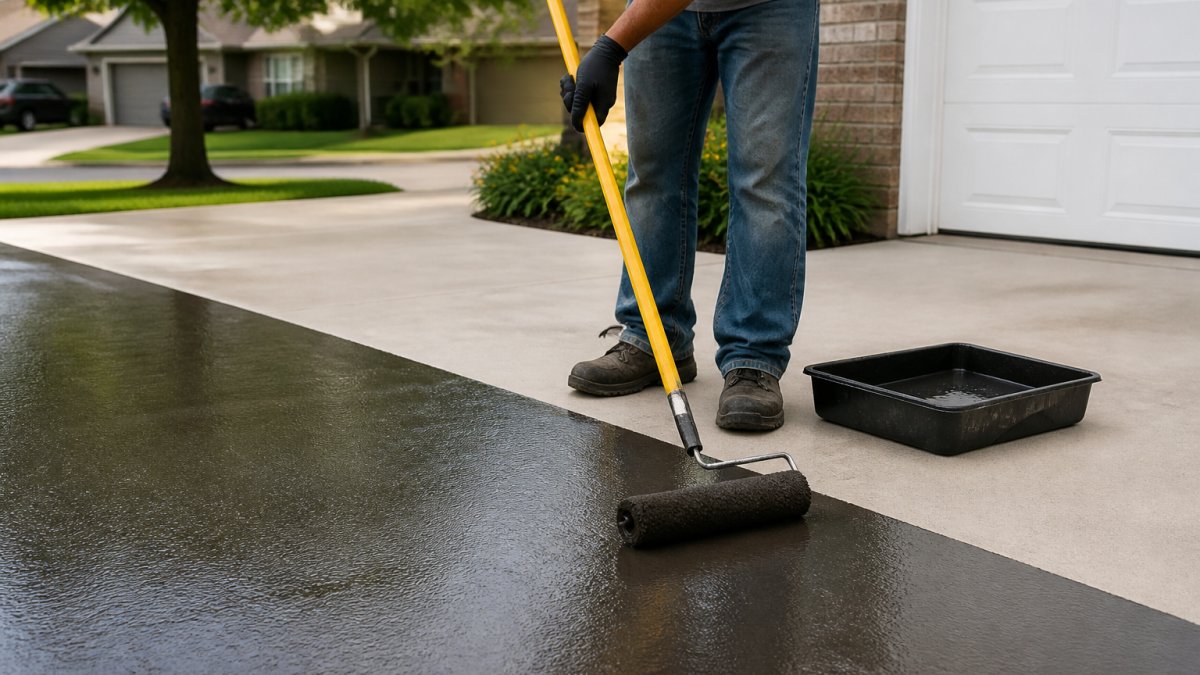
Driveway resurfacing is the process of applying a new wear layer over sound existing pavement, and it almost always costs less than tearing out and rebuilding a driveway.
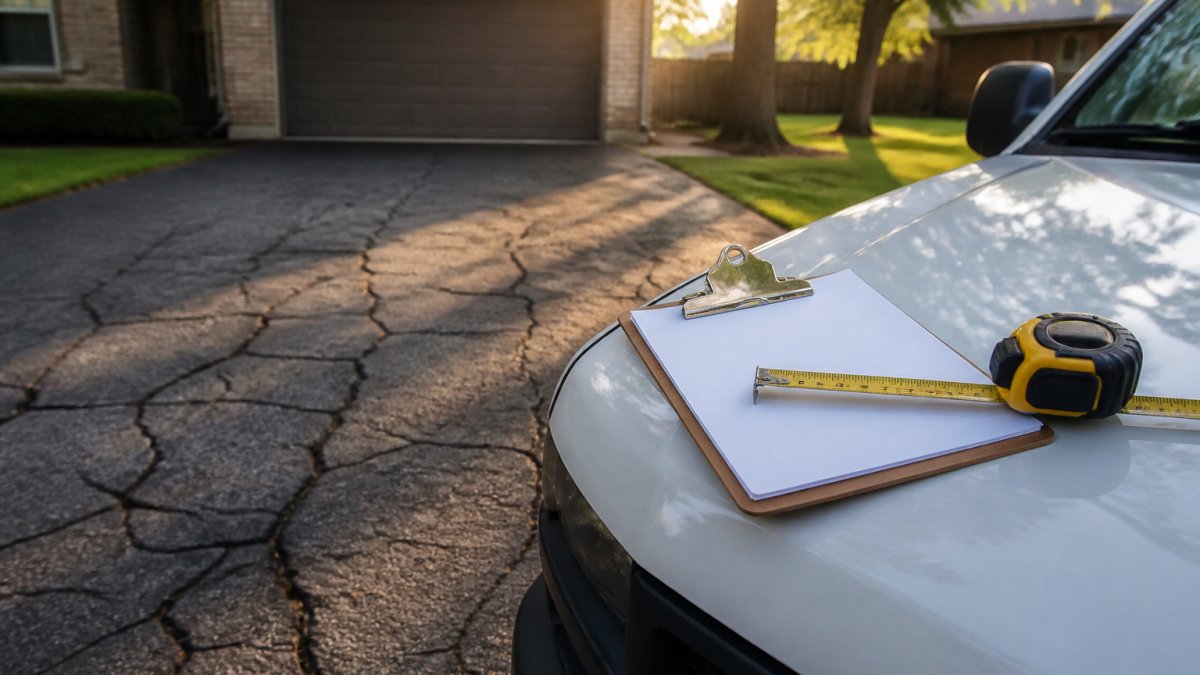
The short answer: resurfacing reuses the base and the lower pavement layers, so you pay mostly for surface material and labor. Full replacement pays for demolition, hauling, a rebuilt base, and new pavement top to bottom.
(https://www.angi.com/articles/driveway-resurfacing-cost.htm) breaks resurfacing down by square foot and notes that resurfacing stops making sense when repair costs approach half the price of replacement. That threshold is a useful gut check, though the base condition matters more than the math alone.Asphalt vs. Concrete Resurfacing: Material Cost Breakdown
Asphalt resurfacing is the cheaper of the two, mainly because the material is less expensive and the installation is faster. A hot-mix overlay bonds to a prepared asphalt surface and cures quickly, so crews finish and reopen the driveway in a short window.
Concrete resurfacing costs more. The overlay material itself is pricier, and bonding a new concrete layer to old concrete demands more surface preparation. Concrete also needs curing time before traffic, which extends the disruption.
Where asphalt wins: budget, speed, and simple overlays over sound asphalt. Where concrete wins: longevity in the original slab and a surface that handles heavier loads when poured thick enough.
Driveway Replacement Cost: Tear-Out, Base, and Installation
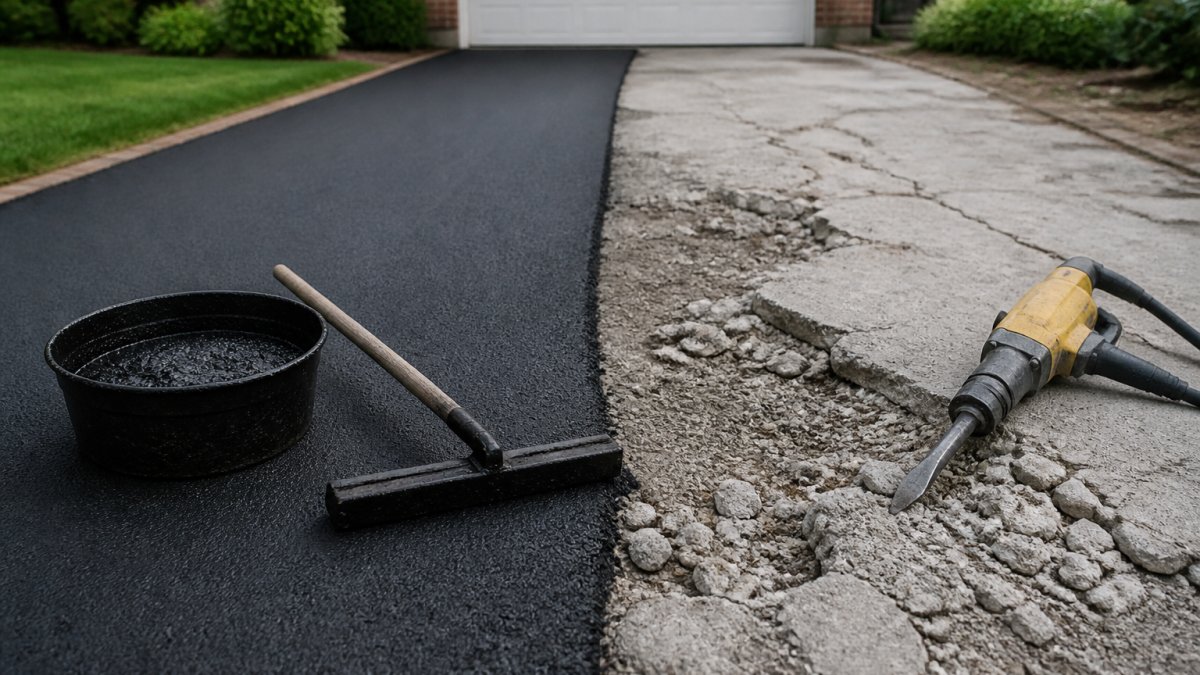
Full replacement costs more because every stage of the job starts from zero. The old pavement comes out, the base gets rebuilt or repaired, and new pavement goes down over a properly graded foundation. Each step adds labor, material, and disposal cost.
What the price includes:
- Demolition and tear-out. Breaking up and removing the existing asphalt or concrete.
- Hauling and disposal. Loading, transporting, and tipping fees at a disposal site.
- Base and subbase work. Grading, compacting, and adding aggregate where the foundation has failed.
- New installation. Paving or pouring the new surface at the correct thickness.
- Finishing and curing. Sealing asphalt or curing concrete before traffic.
Angi's asphalt driveway repair guide places asphalt resurfacing well below the cost of a full rebuild, which reflects the demolition and base work replacement requires. For a like-for-like comparison, ask each contractor to quote the same driveway size and the same pavement thickness.
Replacement also handles problems resurfacing cannot touch: a base that has settled, poor drainage that keeps water under the pavement, and widespread structural cracking. Paying for replacement once usually costs less than resurfacing a failing driveway twice.
When to Resurface or Replace a Driveway: A Condition-Based Decision Guide
Resurface when the damage is confined to the surface and the base is sound. Replace when the base, drainage, or structural integrity has failed. This is the single most important call in the whole decision, and it is a condition question, not a budget question.
Use this checklist to sort your driveway:
- Cracks: Hairline and surface cracks that stay closed → resurfacing candidate. Cracks that run the full depth and widen → structural.
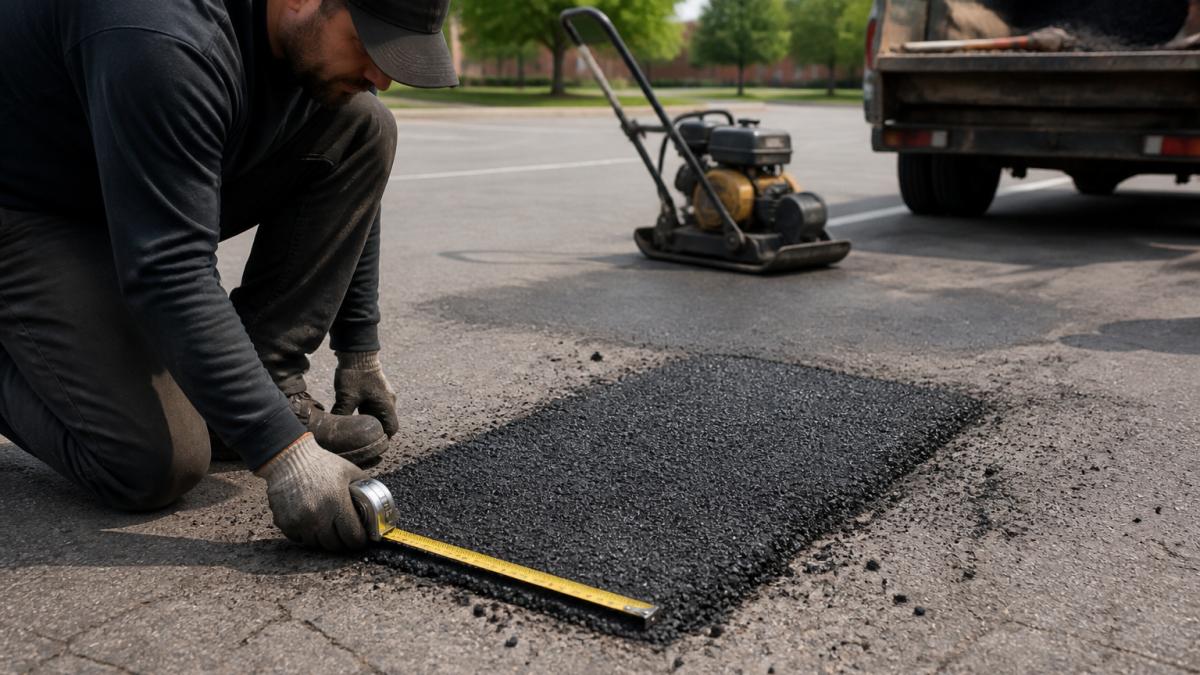
- Potholes: Isolated potholes from surface wear → patch and resurface. Potholes that keep returning in the same spot → base failure.
- Settling: Even, flat pavement → resurfacing. Dips, depressions, or a driveway that ponds water → base problem.
- Drainage: Water sheets off the surface → fine. Water pools against the garage or in low spots → grading or drainage correction before any new surface.
- Alligator cracking: A web of interconnected cracks signals a tired base. Overlays over alligator cracking fail quickly.
- Age and repair history: A driveway patched repeatedly in the same spots is telling you the base is the problem, not the surface.
That last point matters. If a driveway keeps cracking in the same place after repeated patches, the patch is treating a symptom. The base underneath is moving, and no surface layer will fix that.
Base and Foundation Problems That Rule Out Resurfacing
A failing base rules out resurfacing, full stop. An overlay is only as good as what it sits on. If the subbase has settled, lost compaction, or holds water, the new surface will crack along the same lines within a season or two.
Signs the base needs attention:
- Depressions where water collects after rain
- Cracks that mirror each other across the driveway
- Pavement edges that have dropped away from the garage or street
- Soft or spongy spots underfoot in warm weather
- Repeated failures in the same location despite prior repairs
Drainage and grading belong in this conversation. Water that sits against the pavement or runs under it erodes the base from below. Correcting the slope and drainage is part of a proper replacement, and skipping it is how a new driveway fails early.
Call now to schedule your free estimate →
Driveway Resurfacing Lifespan vs. Replacement Lifecycle Cost
Resurfacing has a shorter lifespan than full replacement, so the cheaper upfront option is not always cheaper over time. An overlay buys you a defined number of years on top of whatever life the existing pavement has left. Replacement resets the clock on the entire structure.
The lifecycle math works like this:
- Resurfacing costs less now and lasts a shorter period. It makes sense when the existing pavement has substantial life left underneath.
- Replacement costs more now and lasts much longer, because the base and full pavement depth are new.
- Repeated resurfacing on a failing driveway stacks cost without solving the underlying problem.
Angi's resurfacing cost breakdown notes that resurfacing is worth reconsidering when repair costs approach half the replacement price, which is a reasonable signal that you are pouring money into a surface that will not hold.
To compare fairly, divide each option's total cost by the years of service it delivers. That cost-per-year figure is what actually belongs in your budget, not the sticker price.
How to Compare Contractor Quotes: Itemized Scope and Regional Price Variables
Compare contractor quotes line by line, not by the bottom number. The cheapest bid is often cheap because it leaves out prep, base work, or disposal, and those gaps show up as early failures.
Ask every contractor to break the bid into these lines:
| Quote Line | What to Check |
|---|---|
| Square footage | Same measured area on every bid |
| Removal and disposal | Included or excluded, and where debris goes |
| Base repair | How much base work is priced, and the unit rate |
| Surface prep | Cleaning, crack filling, milling |
| Material and thickness | Pavement type and depth in inches |
| Drainage and grading | Corrections included or extra |
| Timeline and cleanup | Start date, duration, site restoration |
Regional and seasonal variables move prices too. Material costs vary by market, hauling distance affects disposal fees, and paving season affects scheduling.
Contractors who itemize are easier to trust because nothing hides in a lump sum.
One more quote tip: ask what happens if the crew finds base damage after tear-out. A contractor who has thought about that scenario and priced a contingency is a contractor who has done this before.
Conclusion
The real challenge is not picking the cheaper number on a quote. It is knowing whether your driveway's base can carry a new surface or needs to be rebuilt, because that answer decides the cost of driveway resurfacing versus full replacement more than any other factor.
Houston Pavement Repair LLC can settle that question with a free estimate. We inspect the base and drainage, explain whether an overlay will hold, and give you an itemized scope for either path, backed by our asphalt and concrete paving and repair work for residential and commercial properties. Call now to schedule your free estimate and get a straight answer on which option your driveway actually needs.
Frequently Asked Questions
Is asphalt resurfacing worth it compared with full replacement?
Asphalt resurfacing is worth it when the driveway base is solid and the damage is limited to the surface layer. However, if repair costs approach 50% of replacement costs, it is worth reconsidering resurfacing. A contractor should confirm the base condition before you commit, because a failing subbase makes any overlay a short-term fix.
How much does driveway resurfacing cost per square foot?
Your actual driveway resurfacing cost depends on square footage, existing surface condition, and local labor rates, so request a written estimate.
How do I know whether my driveway needs resurfacing or full replacement?
Start with the base. If the driveway has widespread settling, standing water, or cracks that run through the slab, the foundation is failing and resurfacing will not last. Surface-only problems like oxidation, minor hairline cracks, and raveling are candidates for an overlay. When resurfacing or patching approaches 50% of a full replacement quote, replacement usually delivers better long-term value. A contractor estimate that includes a base inspection gives you the clearest answer.
How long does driveway resurfacing last compared with a full replacement?
A properly applied asphalt overlay typically lasts several years before it needs sealing or another surface treatment, while a full replacement resets the clock on the entire pavement structure and lasts considerably longer. The gap depends on base condition, drainage, and maintenance. Resurfacing over a sound base with good grading gets closer to the upper end of its lifespan; resurfacing over a failing subbase can crack within a season. Sealing every few years extends the life of both options.
Does repaving a driveway increase home value?
A clean, functional driveway improves curb appeal, which matters to buyers and appraisers, but the return varies by market and by how bad the old surface looked. A full replacement that fixes drainage and structural problems is easier to justify in a sale than a cosmetic overlay on a failing base. If you plan to sell soon, get a contractor estimate that separates necessary structural work from cosmetic resurfacing so you can decide where the money is best spent.