 comparison
Commercial Asphalt Patching Cost: Pricing Breakdown
Table of Contents
- What Drives Commercial Asphalt Patching Costs
- Asphalt Patching Cost Per Square Foot
- Asphalt Patching vs. Resurfacing: Cost Comparison
- Getting an Accurate Asphalt Repair Estimate
- Commercial Asphalt Maintenance Planning
- Operational Impact and Scheduling Considerations
- Conclusion
- Frequently Asked Questions
Last Updated: October 6, 2026
What Drives Commercial Asphalt Patching Costs
Commercial asphalt patching cost depends on several factors contractors evaluate before quoting. Understanding them helps property managers budget accurately and spot a reasonable estimate.
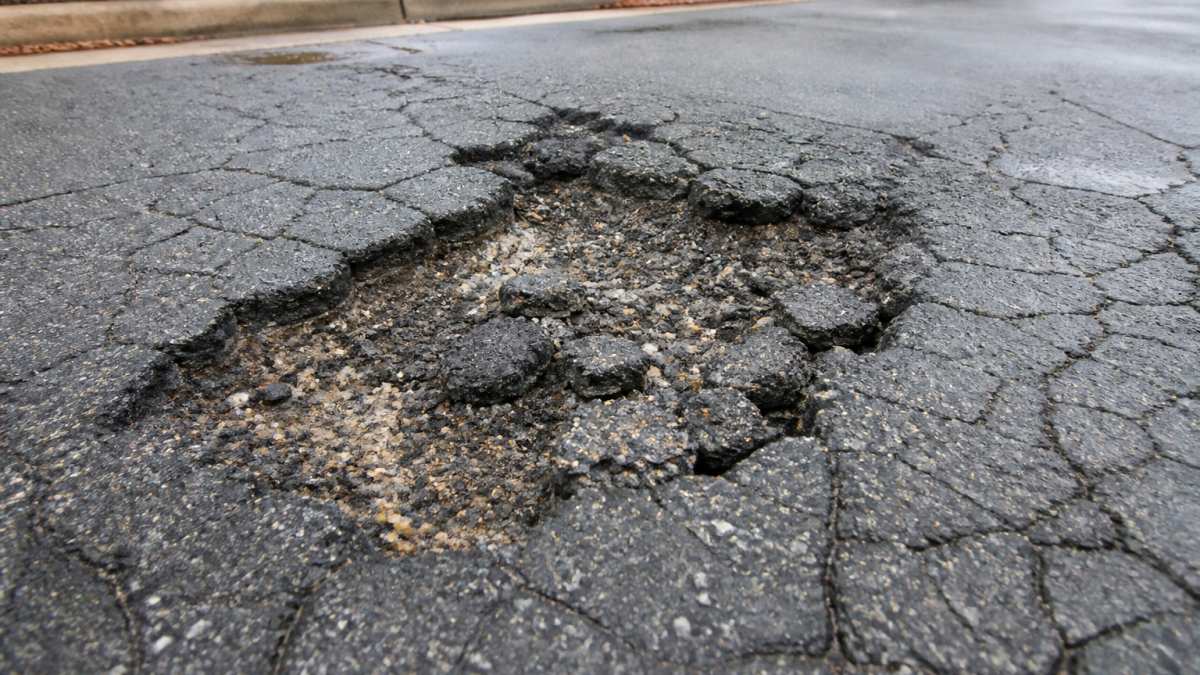
At Houston Pavement Repair LLC, we analyze four primary cost drivers.
Third, repair method: temporary patching costs less than permanent patching with preparation, tack coat, and compaction, while infrared patching is premium.
Patch size and depth
Larger patches require more material and labor: a 10-by-10-foot patch is far more work than a 2-by-2-foot repair. Depth matters equally, shallow cracks need different treatment than potholes 3 or 4 inches deep.
Base condition and preparation
A stable base allows direct patching. A soft, displaced, or eroded base requires excavation and base repair first, adding time and expense. If water pools or undermines the base, the contractor may need to grade the lot or install drainage before patching.
Repair method and materials
Cold-mix temporary patching is often used for short-term fixes. Hot-mix patching with proper compaction offers a more durable solution. Infrared patching heats existing asphalt and blends in new material for a stronger bond, but equipment and expertise push costs higher.
Asphalt Patching Cost Per Square Foot
Per-square-foot pricing is how most property managers compare bids, but it only works when scope is defined the same way. A cold-patch fill on a 4-square-foot pothole is not comparable to a full-depth hot-mix patch with saw-cut edges and base repair. The table below frames the range by method and patch size.
| Method | Typical commercial patch size | Relative cost per sq ft | Expected service life |
|---|---|---|---|
| Cold-patch (temporary) | 1-10 sq ft potholes | Lowest | 6-12 months |
| Hot-mix full-depth patch | 10-200 sq ft | Mid | 3-5 years |
| Hot-mix patch with base repair | 10-200 sq ft, failed base | Mid-to-high | 5-10 years |
| Infrared (thermal bonding) | 25-300 sq ft, sound base | Highest | 5-10+ years |
| Saw-cut and remove-and-replace | 50-500+ sq ft | High | 7-15 years |
Two mechanics drive the spread. Material and prep scale with area, but mobilization, traffic control, and equipment setup do not, so small patches carry a much higher effective cost per square foot.
Commercial unit pricing by patch size
Commercial bids often use a tiered price structure rather than a flat per-square-foot rate. Contractors frequently quote:
- Small patches (under ~25 sq ft): priced as a flat minimum job, not by area, because the crew, truck, and equipment cost is fixed regardless of patch size.
- Mid-size patches (~25-200 sq ft): priced per square foot, with the rate dropping as area increases because mobilization is amortized.
- Large patches (200+ sq ft): priced closer to a small mill-and-overlay, and often quoted per ton of hot-mix plus labor rather than per square foot.
The figure reflects job size, not a uniform market rate.
Temporary patching versus permanent repair
Temporary cold-patch is a stopgap for small damage, low-traffic areas, or properties waiting on a capital budget cycle. It is applied without heating, tamped by hand or plate compactor, and typically deteriorates within 6-12 months.
Permanent hot-mix patching requires clean vertical edges, removal of loose material to sound asphalt or stable base, tack coat on the vertical faces, hot-mix at the correct lift thickness, and compaction with a vibratory roller. That scope, not a markup, is why it costs more per square foot.
Infrared patching and specialized methods
Infrared patching heats existing asphalt to roughly 300-350°F, scarifies it, adds new hot-mix, then rakes and compacts the blend. The new material fuses with the heated asphalt, eliminating the perimeter cold joint that is the most common failure point on conventional patches.
Infrared suits surface-level distress on a sound base: raveling, shallow potholes, isolated alligator cracking. It is not a fix for base failure and is not cost-effective on very small potholes where setup time dominates.
What the per-square-foot number does not include
A per-square-foot rate rarely captures the full invoice. Watch for these line items that are often quoted separately:
- Mobilization and equipment transport
- Traffic control (cones, signage, flaggers) for active lots
- Saw-cutting and hauling of removed material
- Base repair, aggregate, and compaction
- Tack coat and joint sealant
- Cleanup and striping restoration
When you compare two bids, confirm that both are quoting the same scope. A lower per-square-foot rate that excludes base repair or traffic control is not a lower price, it is a smaller scope.
Asphalt Patching vs. Resurfacing: Cost Comparison
The choice between patching and resurfacing hinges on damage extent, pavement age, and budget.
Patching works best when damage covers less than 20-30 percent of the lot or driveway. Beyond that, the cost of multiple patches approaches resurfacing, and the longevity advantage shifts toward resurfacing.
Timelines differ: patching often finishes in a day or less, while resurfacing takes several days and may require temporary closures, a scheduling difference that matters for continuously operating properties.
Getting an Accurate Asphalt Repair Estimate
An accurate estimate requires the contractor to measure the damage, assess the base condition, and understand the property's constraints. Most contractors visit the site in person rather than quoting over the phone.
What contractors measure and calculate
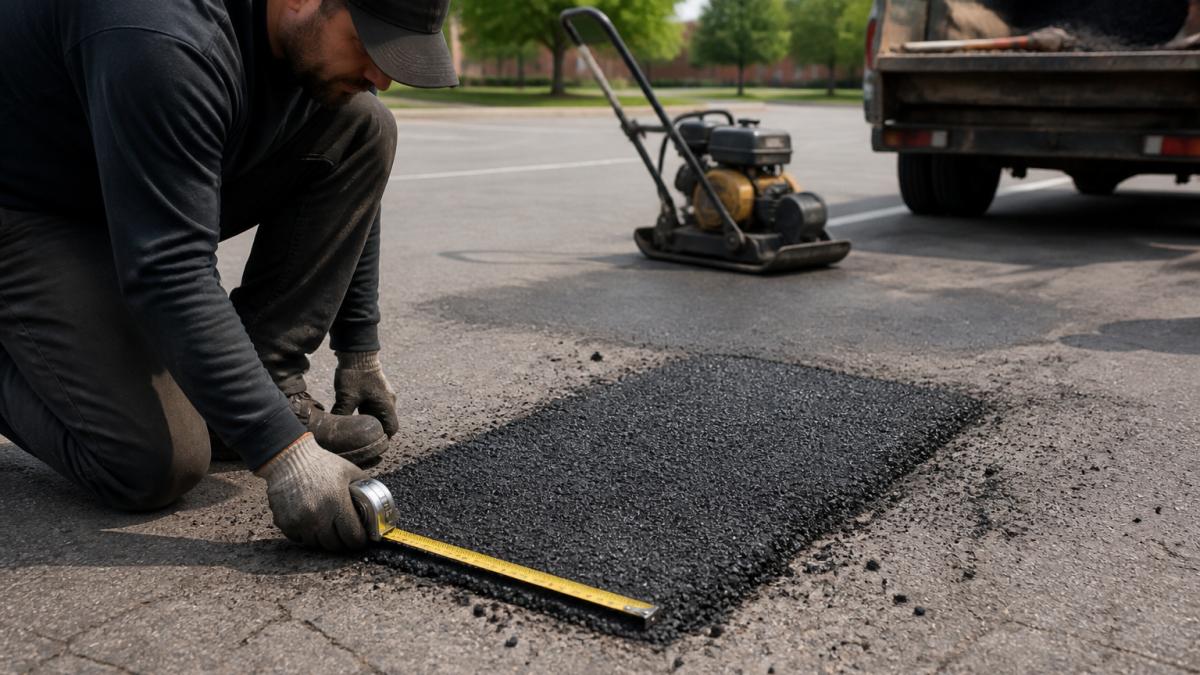
Contractors measure patch length, width, and depth, assess whether edges need cutting, probe the base for stability, and note drainage, traffic patterns, site access, and surrounding deterioration.
From there they calculate material quantities, labor hours, and equipment needs, factoring in site-specific challenges, tight access, heavy traffic, weather. A straightforward patch on an accessible lot costs less than the same patch on a congested site with limited work hours.
Minimum service charges and mobilization fees
Nearly every commercial asphalt contractor charges a minimum service or mobilization fee covering crew dispatch, equipment transport, and setup. These typically run a few hundred dollars, reflecting fixed overhead that does not scale down for small jobs.
Call now to schedule your free estimate →
A single small patch may not justify the trip cost alone, so some property managers batch multiple small repairs into one service call, while others wait until enough damage accumulates to warrant the fee.
Commercial Asphalt Maintenance Planning
The usual rule of thumb, patch small damage, resurface widespread damage, does not explain why a patch fails in 8 months, what a warranty covers, or how to choose between a $2,000 patch program and a $60,000 overlay. This section covers the diagnostic and lifecycle framing that turns a repair budget into a pavement management plan.
When patching makes sense versus replacement
Patching is the right call when distress is isolated and surrounding pavement is structurally sound. Practical thresholds most pavement managers use:
- Patching: damage confined to roughly 10-20% of the surface, pavement under ~15 years old, no widespread alligator cracking, no rutting, no base failure.
- Targeted patching plus crack sealing: damage in the 20-30% range with sound base, patch the worst areas and seal cracks to slow deterioration.
- Resurfacing or mill-and-overlay: damage exceeding ~30-40% of the surface, or pavement 20+ years old, or widespread fatigue cracking.
- Full-depth reconstruction: base failure, subgrade problems, or structural section that no longer carries the traffic load.
These thresholds are guides, not rules: 15% damage concentrated at one high-traffic entrance is a different problem than 15% scattered evenly, and the concentrated case usually needs base investigation first.
Drainage, base failure, and when patching is unsuitable
Recurring potholes in the same spot are the clearest signal patching is the wrong tool. If a pothole returns within one or two seasons, the cause is almost always below the surface: a failed base, soft subgrade pocket, or water that is not draining away.
Diagnostic signs to watch for:
- Water ponding near the patch after rain, grading or drainage correction is needed before patching will hold.
- Pumping or spongy pavement under traffic, the base is saturated and losing support.
- Alligator cracking radiating from the patch, the surrounding pavement is failing, and the patch will be undermined.
- Settlement or a dip at the patch, the base was not compacted or has since consolidated.
When any are present, the correct scope includes base repair, subgrade stabilization, or drainage work, not just asphalt. Patching over these conditions sells a repair that will fail, and the property manager pays twice.
Durability, warranties, and lifecycle cost
The lowest upfront cost repair is rarely the lowest-cost repair over a 5-year horizon:
Lifecycle math flips the ranking: a patch costing three times as much but lasting five times as long is cheaper, provided the base supports it.
What to ask about warranties
Warranty terms vary widely and are worth reading before signing. Common structures:
- Workmanship-only warranties covering the patch installation but excluding base failure, drainage, or damage from other trades.
- Material-plus-labor warranties on hot-mix and infrared work, often 1-3 years.
- Full-scope warranties that include base repair, typically reserved for larger mill-and-overlay projects.
Ask specifically: Does it cover the perimeter joint? Does it exclude repairs where base failure was noted in the estimate? Is it prorated? A one-year workmanship warranty on a patch over a failed base is worth little, because the failure mode is excluded.
Building a multi-year pavement plan
The most cost-effective commercial programs combine three activities on a schedule:
- Annual crack sealing to keep water out of the pavement section, the cheapest dollar spent on pavement.
- Targeted patching of isolated failures before they spread and undermine adjacent pavement.
- Planned mill-and-overlay or reconstruction on a 10-20 year cycle, budgeted in advance rather than triggered by emergency.
A pavement condition assessment, even a simple walk-through with a contractor who maps distress by type and severity, gives you the data to phase work across budget years instead of reacting to the worst pothole each spring.
Operational Impact and Scheduling Considerations
Commercial patching affects business operations, and depending on damage extent and repair method, the lot may need partial or full closure.
Small pothole patches often take 2-4 hours with minimal disruption; larger patches or infrared work may take 4-8 hours; resurfacing typically takes several days. Contractors should give realistic timelines and schedule during low-traffic periods, early mornings, evenings, weekends, or slower seasons.
For retail, office, or industrial properties, disruption carries real cost: a peak-hours closure loses customer access and revenue.
Conclusion
Commercial asphalt patching cost depends on damage extent, repair method, base condition, and site-specific factors. Small, isolated patches cost less than widespread damage requiring resurfacing. Understanding what drives pricing, patch size, base stability, repair method, and minimum service charges, helps property managers budget accurately.
When you're ready to assess your property's needs, Houston Pavement Repair LLC offers a free estimate to evaluate damage, recommend the right repair approach, and provide transparent pricing.
Frequently Asked Questions
How much does commercial asphalt patching typically cost?
Costs vary widely based on patch size, depth, repair method, and base condition. Always request a site-specific estimate, as pricing depends on your exact project scope and local labor and material rates.
What factors affect asphalt patching cost per square foot?
The primary factors are repair method (temporary versus permanent), patch depth, base preparation needed, and material quality. Infrared patching, which bonds new asphalt to existing pavement without full removal, costs more than cold-patch temporary solutions but delivers superior durability. Base failure, where the foundation beneath the asphalt has deteriorated, increases costs because the contractor must remove, repair, and re-compact the base before patching. Site accessibility, equipment required, and regional labor rates also influence the final per-square-foot price.
Is asphalt patching cheaper than resurfacing?
Yes, patching is cheaper upfront for localized damage. Patching addresses specific problem areas and costs significantly less per square foot than resurfacing an entire lot. However, if your pavement shows widespread cracking, multiple sunken areas, or extensive surface damage across 30% or more of the lot, resurfacing may be more cost-effective long-term because it addresses the entire surface and provides longer-lasting protection. A contractor can assess your pavement condition and recommend whether patching or resurfacing offers better value for your specific situation.
What should I expect when requesting an asphalt repair estimate?
A professional estimate will include measurements of patch dimensions (length, width, and depth), assessment of base condition, identification of the repair method recommended, labor and material costs itemized separately, and any minimum service charges or mobilization fees. Many contractors offer free on-site estimates. Bring photos of problem areas and note drainage issues or recurring damage patterns. Compare estimates from multiple contractors, but prioritize those who explain their methodology and warranty terms rather than selecting solely on price.