 How-to
7 Drainage Problems That Destroy Commercial Pavement
Last Updated: October 25, 2026
Quick Summary
Commercial paving drainage is essential for protecting your investment because water seeping into foundation layers weakens the granular base and subgrade, causing pavement structure to collapse from underneath. Proper drainage keeps water moving away from your pavement rather than pooling on top, determining whether your parking lot lasts 10 years or 20.
- Water infiltration is the primary cause of asphalt deterioration, weakening structural integrity once it reaches layers below the surface.
- Most parking lots require a minimum slope of 1 to 2 percent to move water consistently without creating hazardous conditions.
- Catch basins should be inspected at least twice per year to prevent sediment accumulation from reducing drainage capacity.
- Freeze-thaw cycles compound water damage as trapped water expands when frozen, pushing upward against asphalt and creating potholes.
- Drainage planning must happen before construction starts, when design decisions determine whether pavement performs well or fails prematurely.
Table of Contents
- Why Proper Drainage Matters for Commercial Paving
- How Water Damage Affects Asphalt Pavement Structure
- Commercial Parking Lot Drainage: Common Design Failures
- Parking Lot Grading and Slope: Getting the Angle Right
- Parking Lot Catch Basin Maintenance and Inspection
- Commercial Pavement Drainage Solutions That Work
- Planning Your Drainage System Before Paving Begins
- Frequently Asked Questions
Why Proper Drainage Matters for Commercial Paving
Water is the silent killer of asphalt pavement, making commercial paving drainage essential for protecting your investment. Most property managers don't think about drainage until puddles appear after every rain, by then, damage is already spreading beneath the surface.
When water seeps into the foundation layers below your asphalt, moisture weakens the granular base and subgrade, causing the pavement structure to collapse from underneath. A small puddle today becomes a pothole next month, and repair costs multiply.
Proper drainage keeps water moving away from your pavement, not pooling on top of it. This single factor determines whether your parking lot lasts 10 years or 20.
How Water Damage Affects Asphalt Pavement Structure
Water infiltration is the primary cause of asphalt deterioration, weakening the structural integrity of your entire pavement system once it reaches the layers below the surface.
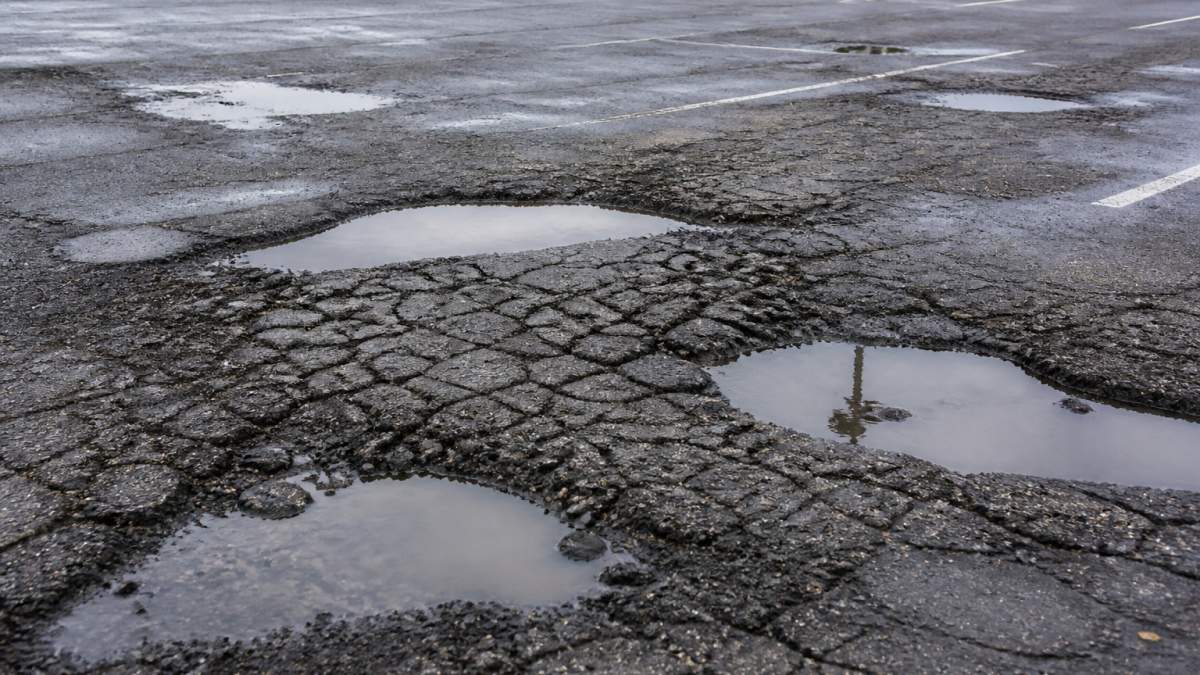
The asphalt pavement structure consists of multiple layers: the surface course you drive on, the binder course and base layers below it, and the subgrade, the natural soil foundation. Each layer depends on the ones below it.
When water reaches the granular base, it loses strength, the pavement above flexes more under traffic, and repeated flexing causes cracks to form and spread, a hairline fracture becomes a network of interconnected cracks within months.
Freeze-thaw cycles make this worse. Learn how water damage compounds in humid climates where moisture and temperature swings accelerate pavement deterioration. Water trapped in the base expands when it freezes, pushing upward against the asphalt. When it thaws, gaps form. The pavement settles unevenly. Potholes develop.
A small area of water infiltration can compromise an entire section of pavement if left untreated, so addressing drainage issues early prevents expensive repairs later.
Commercial Parking Lot Drainage: Common Design Failures
Most commercial parking lot drainage problems stem from poor initial design. The slope is too flat. Catch basins are positioned wrong. Runoff flows toward buildings instead of away from them. These mistakes compound over time.
A common failure is insufficient slope. The surface grade must direct water toward drainage outlets; if it's too gradual, water pools instead of flowing. Many contractors use the minimum slope allowed by code, which works in dry climates but fails in humid regions with heavy rainfall.
Another mistake is placing catch basins in low spots without considering how water actually flows across the lot, installed for convenience rather than hydraulic analysis. They fill with sediment and debris, and within a few years they're not draining properly.
Improper grading around building foundations creates another serious problem. If the lot slopes toward the building instead of away, water runs directly into foundation drains and basements, causing flooding and structural damage that costs far more to fix than proper drainage would have cost to install.
Undersizing your drainage system during design creates problems that intensify with every rain. A system that handles typical rainfall might fail during a heavy storm, leaving water pooling across your lot and accelerating pavement failure.
Parking Lot Grading and Slope: Getting the Angle Right
Surface grade determines how water moves across your parking lot: steep enough to drain effectively, but not so steep that it creates erosion or unsafe driving conditions.
Most parking lots require a minimum slope of 1 to 2 percent, for every 100 feet of distance, the elevation drops 1 to 2 feet. This gentle slope moves water consistently without creating hazardous conditions for vehicles.
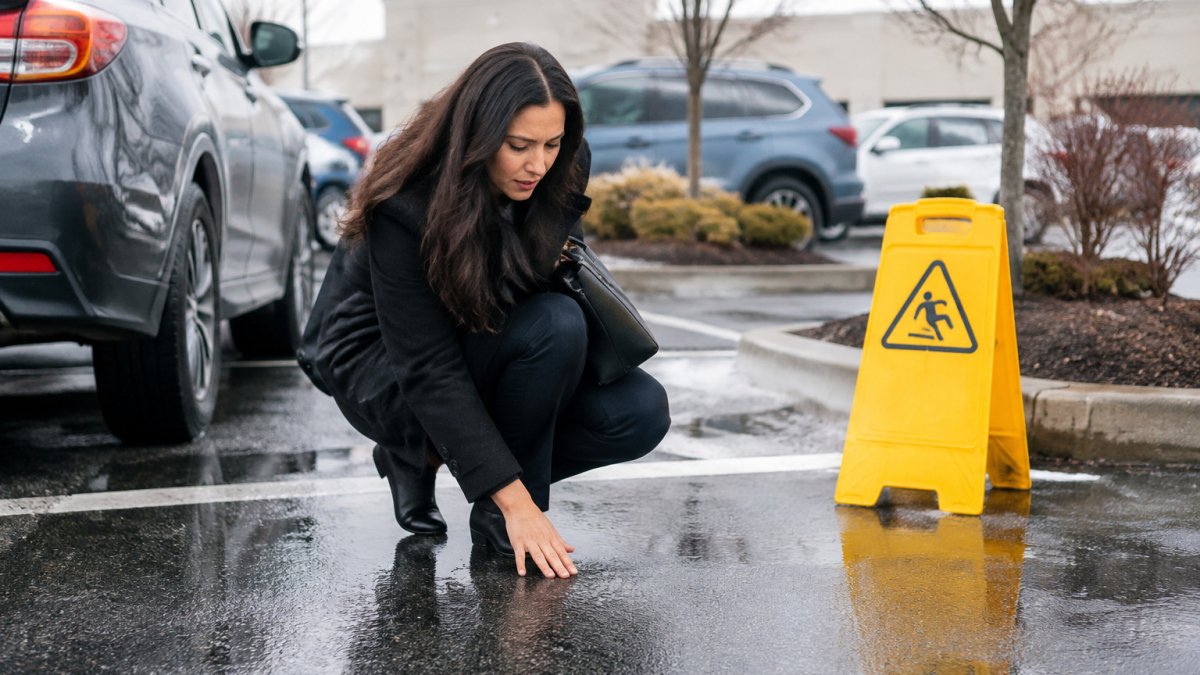
Proper grading also affects pedestrian safety: a flat surface creates standing water and slip hazards, while a properly graded one drains quickly.
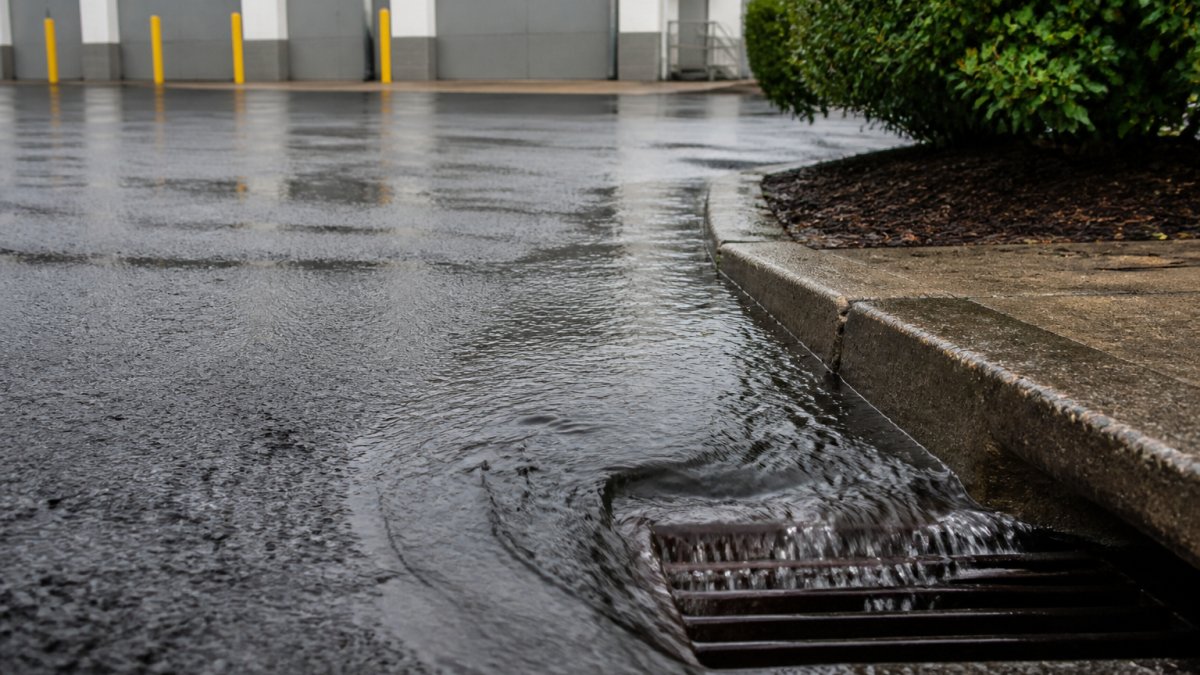
The slope should direct water toward catch basins at low points, which channel it into underground stormwater systems or drainage outlets. Outlet positioning determines whether water stays on your property or flows into municipal stormwater systems.
Parking Lot Catch Basin Maintenance and Inspection
Catch basins are your first line of defense against water pooling on pavement, collecting debris, sediment, and runoff.
Use this commercial-site drainage assessment checklist to inspect your lot systematically.
1. Ponding and low spots. Look for water that remains more than 24 to 48 hours after rain. Note the location, approximate size, and depth.
2. Catch basin condition. Remove the grate and check sediment depth. If sediment fills more than about one-third of the basin sump, schedule cleaning.
3. Trench drains and channel grates. Verify grates are seated, free of debris, and not deformed by vehicle loads. Flush the channel to confirm flow toward the outlet.
4. Swales and ditches. Check for erosion, sediment buildup, and vegetation blocking flow.
5. Pavement surface clues. Map cracks, rutting, and potholes relative to drainage features.
6. Runoff direction around buildings. Confirm water flows away from foundations and loading docks. Look for staining, efflorescence, or erosion at downspout discharge points.
7. Inlet and outlet obstructions. Check trash racks, headwalls, and discharge points for debris, root intrusion, or sediment deltas that restrict flow.
Call now to schedule your free estimate →
8. Pavement-to-drain transitions. Inspect the joint where asphalt meets basin frames and grates. Separation or cracking here lets water infiltrate the base at the most vulnerable point.
Seasonal inspection schedule. Inspect catch basins and trench drains at least twice per year: once in spring before heavy rain season and once in fall after leaves drop. In regions with frequent summer storms or freeze-thaw cycles, add inspections before and after the wet season. After any major storm, do a quick walk-through for damage and debris.
Sediment accumulation is the biggest issue.
Cleaning catch basins involves removing accumulated material and flushing the outlet pipe.
Before heavy rain periods, ensure all basins are clear and functioning; after storms, check them again for damage or excessive debris. This simple routine extends the life of your drainage system and protects your pavement investment.
Commercial Pavement Drainage Solutions That Work
Several proven commercial paving drainage components work together to manage water effectively.
Catch basins. These are point drains set at low spots to intercept surface flow and route it into an underground storm system.
Trench drains. Linear drains along pavement edges, drive lanes, or building perimeters capture sheet flow across a broad front. They work well where a single low point can't collect runoff from a wide area.
Swales and ditches. Vegetated or lined channels convey runoff across a site and can provide some infiltration and treatment.
Culverts and storm pipe. These convey water under driveways, aisles, or embankments to an outlet.
Permeable surfaces. Porous asphalt, permeable concrete, and permeable pavers allow water to pass through the surface into a storage or infiltration layer below.
Subsurface drainage. Underdrains, edge drains, and permeable base layers remove water that infiltrates below the pavement. They protect the base and subgrade from moisture that surface drainage can't reach.
Stormwater retention and detention. These systems temporarily hold runoff during heavy rain and release it gradually, reducing peak flows and flooding.
How do you choose among them? Match the component to the problem.
A large commercial lot in a humid climate needs comprehensive drainage combining surface and subsurface systems, while a smaller lot in a drier area might function well with proper grading and strategically placed catch basins. Permeable surfaces can fit low-traffic areas with suitable soils, but demand a maintenance commitment.
A qualified paving professional can assess your site and recommend the drainage solutions that work best for your property, evaluating soil conditions, rainfall patterns, and existing pavement structure to design a system that keeps water moving and pavement lasting. Learn about parking lot drainage solutions for commercial properties to see specific approaches in practice.
Each drainage component has distinct strengths and trade-offs for managing water on commercial pavement.
| Component | Best For | Key Trade-off |
|---|---|---|
| Catch basins | Point drains at low spots | Requires correct grading and regular sediment removal |
| Trench drains | Sheet flow across broad areas | Higher installation cost and grate maintenance |
| Swales and ditches | Open-area runoff conveyance | Consumes land and requires vegetation maintenance |
| Culverts and storm pipe | Crossing barriers underground | Blockages go unnoticed until water backs up |
| Permeable surfaces | Low-traffic areas with suitable soils | Requires vacuum sweeping and careful design |
| Subsurface drainage | Protecting base from infiltration | Adds cost and needs filter materials |
| Stormwater retention | Heavy rain and discharge limits | Adds footprint and maintenance obligations |
Planning Your Drainage System Before Paving Begins
Drainage planning happens before construction starts, when design decisions determine whether your pavement performs well or fails prematurely.
Start with a site assessment. Evaluate your property's natural slope, soil conditions, and existing drainage patterns. Understand where water naturally wants to flow. Work with this, not against it.
Next, determine your stormwater management requirements. Local regulations often specify how much runoff you must handle and where it can discharge. Some municipalities require retention systems. Others limit discharge into storm drains. Understanding these requirements early prevents costly redesigns later.
Learn how to create a commercial pavement maintenance plan that protects your drainage investment long-term. Maintenance prevents small issues from becoming expensive failures.
Before construction begins, verify that your contractor understands the drainage design, poor execution can ruin an excellent design. Ensure they compact base layers properly, install drainage pipes correctly, and maintain the specified slopes throughout construction.
For commercial sites, drainage planning also considers accessibility and safety. Guidance on choosing commercial asphalt contractors helps you select professionals who understand these requirements and execute them correctly. The right contractor builds drainage systems that function reliably for decades.
Water management separates parking lots that last from those that deteriorate rapidly. Proper drainage keeps your pavement intact, maintains safety, and protects your property investment.
Frequently Asked Questions
Why is proper drainage important for commercial paving?
Proper drainage prevents water from infiltrating the asphalt surface and weakening its foundation. When water sits on pavement or seeps into the subgrade, it causes the base layer to fail, leading to cracks, potholes, and surface deterioration. Without effective drainage, pavement lifespan drops dramatically, and repair costs multiply. Commercial property owners who invest in proper drainage systems protect their investment and reduce long-term maintenance expenses.
How can you tell if a commercial parking lot has a drainage problem?
Signs include standing water or puddles that remain hours after rain, visible cracks spreading from low spots, potholes forming in the same areas, dark staining indicating water saturation, and soft or spongy sections when you walk on the surface. If water pools in your lot instead of flowing toward outlets, your grading or drainage system is not working. Schedule a professional assessment if you notice any of these issues, early detection prevents costly repairs.
What slope is recommended for parking lot drainage?
The slope directs surface water toward catch basins, drainage outlets, and landscaping areas instead of letting it pool. Proper grading is one of the most cost-effective ways to protect your pavement.
How often should commercial pavement drains be inspected?
Inspect parking lot catch basins and drainage outlets at least twice per year, once before the rainy season and once after. Check for debris, sediment buildup, cracks, and proper water flow. Clear any blockages immediately to prevent standing water. In areas with heavy rainfall or seasonal flooding, quarterly inspections are wise. Regular parking lot catch basin maintenance catches problems early and keeps your drainage system performing at its best.