 ultimate-guide
Parking Lot Drainage Solutions for Commercial Properties
Table of Contents
- Why Parking Lot Drainage Fails and What It Costs
- Types of Commercial Drainage Systems
- Asphalt Repair for Standing Water
- Parking Lot Catch Basin Repair and Maintenance
- Stormwater Management for Parking Lots and Regulatory Compliance
- Installation Process and Site Preparation
- Long-Term Maintenance and Prevention
- Retrofitting vs. New Construction
- Frequently Asked Questions
Last Updated: September 29, 2026
Why Parking Lot Drainage Fails and What It Costs
Parking lot drainage solutions prevent failures that aren't inevitable. They're the result of poor initial design, inadequate maintenance, or both. When water pools on asphalt, it doesn't just sit there, it penetrates the surface, weakens the subbase, and accelerates deterioration. Within months, small puddles become potholes. Within years, entire sections need replacement.
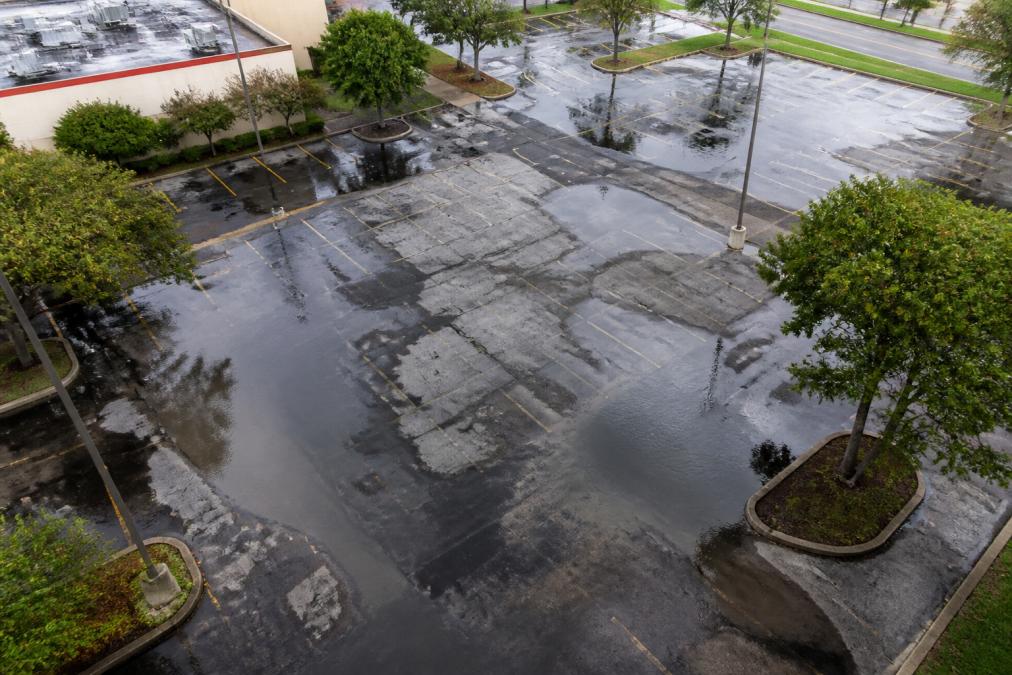
The cost of ignoring drainage problems compounds quickly. A small repair today costs hundreds. A parking lot catch basin repair that gets delayed costs thousands. A complete parking lot resurfacing costs tens of thousands. The difference between these outcomes often comes down to whether you addressed the underlying drainage issue or just patched the symptom.
At Houston Pavement Repair LLC, we understand this pattern across commercial properties. Most owners don't realize their drainage system is failing until the pavement itself starts failing. By then, the damage runs deeper than surface cracks.
Standing water is the enemy. It indicates that stormwater management for parking lots isn't working as designed. Whether the slope is wrong, the catch basin is clogged, or the subsurface drainage has failed, water sitting on asphalt is a red flag that demands immediate attention.
Types of Commercial Drainage Systems
Commercial properties need parking lot drainage solutions matched to their specific conditions. No single system works for every parking lot. The right choice depends on site topography, soil composition, local rainfall patterns, and budget constraints.
Trench Drain Systems
A trench drain is a linear drainage system that runs along problem areas, typically around the perimeter of parking lots, at building foundations, or in low-lying zones where water naturally collects. These systems use a continuous channel with a heavy-duty grate on top to capture surface runoff before it pools.
Trench drains excel at handling high-volume water flow. The continuous channel design means no single point of failure like you'd have with discrete catch basins. Water flows directly into the trench and down to the subsurface piping system.
Installation requires careful grading. The trench must slope slightly toward the drainage outlet, and the grate must sit flush with the surrounding pavement to avoid creating a trip hazard. Load-bearing capacity matters, commercial-grade grates need to support heavy vehicle traffic without deflecting or breaking.
Catch Basin and Surface Inlet Systems
Catch basins are discrete collection points scattered across a parking lot. Water flows to them through surface grading, enters through the grate, and travels underground to the storm drain system. These systems are more flexible for retrofitting existing lots because you can add basins without regrading the entire surface.
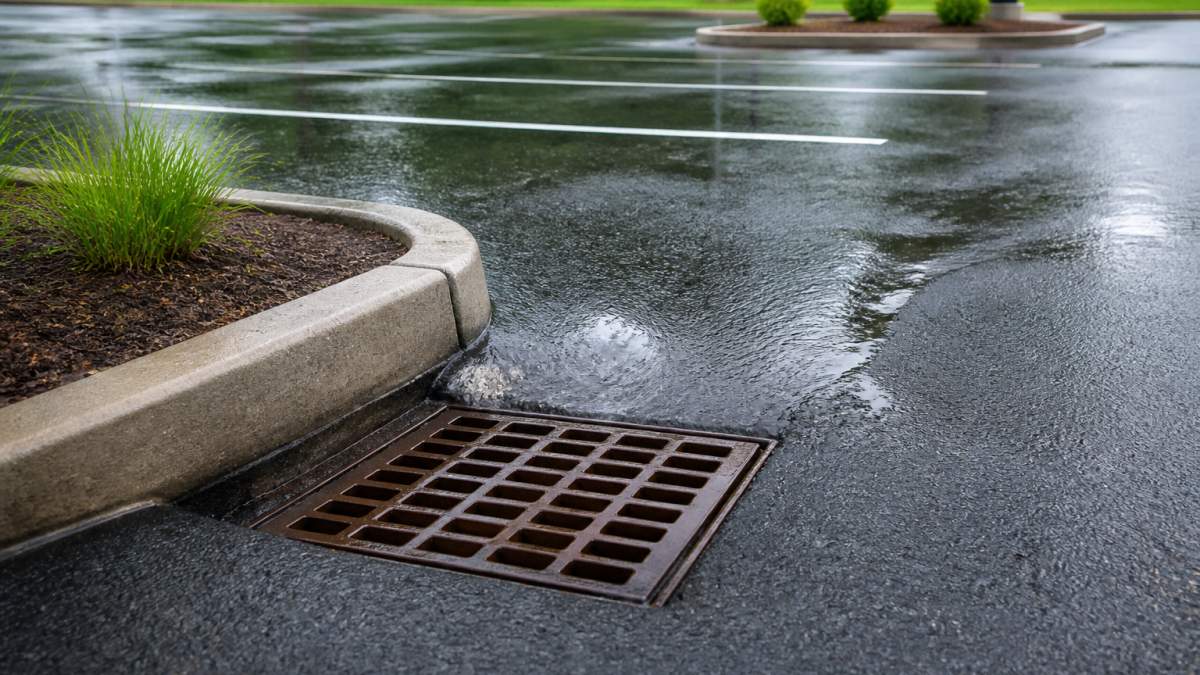
The tradeoff is maintenance. Each catch basin needs regular cleaning. Sediment, debris, and dirt accumulate in the basin, reducing its capacity. A clogged catch basin becomes useless, water flows around it instead of into it. A parking lot catch basin repair might involve clearing sediment, replacing a damaged grate, or adjusting the basin depth if grading has shifted.
Surface inlets work similarly but are often used in combination with catch basins. They're smaller collection points that feed into larger basins or directly into underground piping. The key is spacing, basins spaced too far apart leave low spots where water pools between them.
Subsurface and Permeable Pavement Options
Below the surface, water travels through underground piping to an outlet, either a storm drain system, a retention pond, or a discharge point. The pipe network must be sized correctly for the expected flow rate. Undersized pipes back up and cause pooling. Oversized pipes cost more than necessary.
Permeable pavement is a newer approach that lets water drain directly through the surface layer into a stone reservoir below. Porous asphalt or pervious concrete replaces traditional impermeable surfaces. This reduces the need for extensive catch basins and underground piping by allowing the pavement itself to be part of the drainage system.
Permeable options work well for new construction or complete resurfacing projects. They require different maintenance, occasional sweeping to keep pores clear, but no catch basin cleaning. The tradeoff is upfront cost and the need for proper subbase preparation.
Asphalt Repair for Standing Water
Standing water on asphalt is a symptom of a drainage problem, not a separate issue. Fixing the pavement without fixing the drainage just delays the inevitable failure. That said, once the drainage is corrected, the damaged asphalt needs repair. Establishing a long-term maintenance strategy often begins with a professional drainage report to identify the precise subsurface conditions that dictate the necessary scope of these pavement restorations.
Small cracks and surface deterioration from water damage can be sealed or patched. Larger areas need removal and replacement. The key is addressing the root cause, the water, before doing the asphalt repair. Otherwise, water will find its way back under the new patch and fail it again.
Proper grading ensures water flows away from low spots. If your parking lot has areas where water sits after every rain, the slope is wrong. Correcting the grade might mean raising one section or lowering another, which requires removing the top layer of asphalt, adjusting the base, and repaving. It's more expensive than a simple patch, but it solves the problem permanently.
Parking Lot Catch Basin Repair and Maintenance
Catch basins fail for specific, predictable reasons. Sediment buildup is the most common. Leaves, dirt, and fine particles wash into the basin with stormwater runoff. Over time, the basin fills with sediment and can no longer accept water. A parking lot catch basin repair involves removing the grate, excavating the sediment, and replacing the grate.
Regular maintenance prevents this. Cleaning basins twice a year, once in spring and once in fall, keeps them functioning. If your area experiences heavy rains or is surrounded by trees, more frequent cleaning is necessary.
Damaged grates also need replacement. Heavy vehicles can crack or bend a grate. A damaged grate creates a hazard and reduces the basin's ability to capture water. Replacement is straightforward if you catch the damage early.
The basin itself can deteriorate if it's old or if the surrounding concrete has settled unevenly. Cracks in the basin allow water to escape into the soil instead of flowing to the storm drain system.
Stormwater Management for Parking Lots and Regulatory Compliance
Stormwater management for parking lots isn't just about preventing puddles. Federal and state regulations govern how water is handled. The goal is to prevent pollutants from entering local waterways.
Installation Process and Site Preparation
Installing or retrofitting a parking lot drainage system requires careful planning. The process begins with a site assessment, understanding the current topography, soil conditions, and water flow patterns. From there, the design phase determines what type of system will work best.
Long-Term Maintenance and Prevention
A drainage system installed correctly still needs regular maintenance. Sediment accumulates. Debris clogs grates. Soil shifts slightly, affecting slopes. Catching these issues early prevents failures.
A maintenance schedule should include:
- Quarterly inspections of catch basins and surface inlets
- Semi-annual cleaning of sediment and debris
- Annual testing of drainage flow during heavy rain
- Documentation of all maintenance work
- Repairs of any damaged grates, pipes, or basins within 30 days
Retrofitting vs. New Construction
Retrofitting an existing parking lot with improved drainage is harder and more expensive than building drainage into a new lot from the start. Retrofit work requires excavation, which means disrupting the existing pavement and potentially affecting adjacent properties.
| Approach | Best For | Complexity | Timeline | Long-Term Cost |
|---|---|---|---|---|
| Retrofit existing lot | Functional pavement with drainage issues | High | 3-6 weeks | Lower upfront, prevents future repairs |
| Partial reconstruction | Some areas failing, others acceptable | Medium | 2-4 weeks | Moderate, targets problem zones |
| Full reconstruction | Widespread pavement failure | High | 4-8 weeks | Higher upfront, lowest long-term cost |
| New construction | Building new property | Low | 2-3 weeks | Optimized design, lowest maintenance |
Frequently Asked Questions
What are the most common signs that a parking lot drainage system is failing?
Standing water that remains hours after rain, visible cracks spreading from low spots, surface deterioration in pooling areas, and algae growth around catch basins all indicate drainage failure. Hydrostatic pressure from water buildup weakens the pavement base, causing asphalt to break apart. If water pools in the same spots after every storm, your grading and slope are likely inadequate or your drainage pipes are clogged with sediment buildup.
How does asphalt repair for standing water differ from standard patching?
Standard patching fills surface cracks without addressing root causes like poor slope or subsurface water accumulation. Asphalt repair for standing water involves regrading the surface to improve flow, installing or upgrading drainage infrastructure, and sometimes removing and replacing the asphalt base to eliminate future pooling. This approach prevents the same cracks from reappearing in the same spots.
What does stormwater management for parking lots require under federal regulations?
The EPA's NPDES (National Pollutant Discharge Elimination System) program requires commercial properties to manage surface runoff to prevent sediment, oil, and chemical pollutants from entering storm drains and waterways. Your parking lot drainage system must include sediment filtration, proper flow rates, and catch basins designed to trap debris. Many states and municipalities add stricter local requirements, so verify your area's stormwater ordinances.
How often should parking lot catch basins be cleaned and maintained?
Catch basins should be inspected every 6 months and cleaned annually or after heavy storms. Sediment buildup reduces flow capacity and forces water onto the pavement surface. Professional hydro-jetting removes compacted debris from drainage pipes. Regular maintenance prevents blockages that lead to standing water, which accelerates asphalt degradation and creates safety hazards for vehicles and pedestrians.