 ultimate-guide
Commercial Parking Lot Paving Services: 2026 Guide
Table of Contents
- What Commercial Parking Lot Paving Services Include
- New Asphalt Installation vs. Resurfacing vs. Replacement
- Commercial Asphalt Repair Cost: What Drives Your Estimate
- ADA Parking Lot Compliance Requirements You Must Meet
- The Commercial Paving Maintenance Schedule That Extends Pavement Life
- How to Choose a Commercial Paving Contractor
- Conclusion: Plan Your Parking Lot Paving Project
- Frequently Asked Questions
Last Updated: September 7, 2026
A parking lot is often the first thing customers see and the last thing they touch, yet most property managers treat it as an afterthought until potholes start appearing. Commercial parking lot paving services go far beyond laying down fresh asphalt; they encompass site assessment, drainage solutions, structural repair, and ongoing preventative maintenance. This guide breaks down what professional parking lot paving actually involves, what drives your estimate, and how to build a maintenance schedule that protects your investment.
Most pavement failures trace back to what happens below the surface, not the asphalt itself. Below, we'll walk through the full scope of commercial parking lot paving services, compare installation options, and give you the exact checklist to evaluate contractors before you sign.
What Commercial Parking Lot Paving Services Include
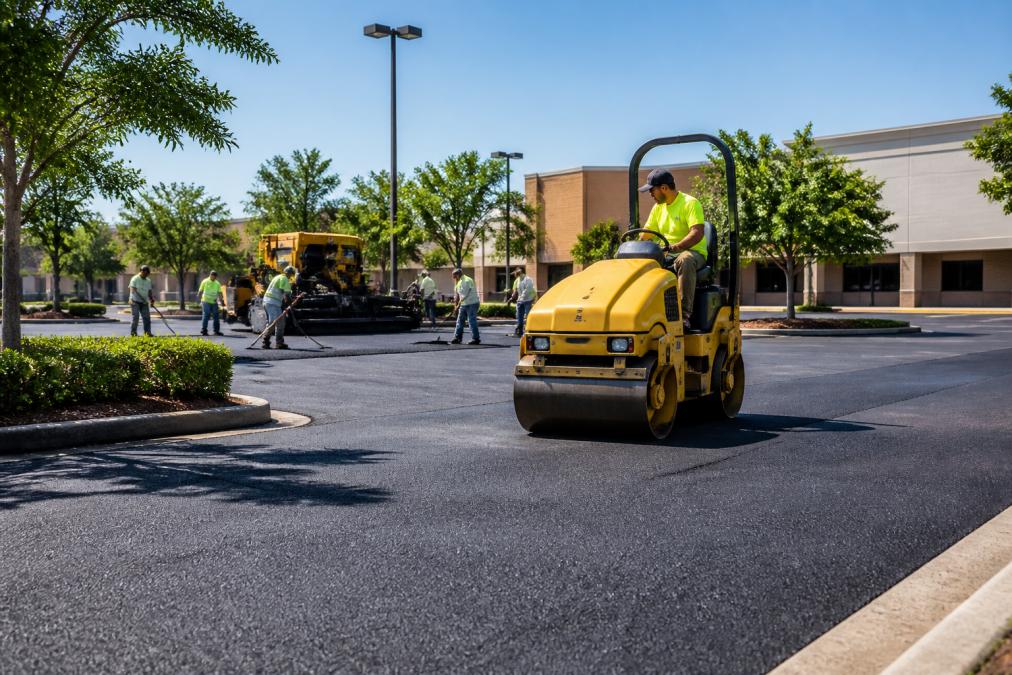
Commercial parking lot paving services cover the full lifecycle of your pavement, from initial site assessment and subgrade preparation to final striping and traffic markings. A professional contractor evaluates soil conditions, drainage patterns, and load-bearing capacity before a single ton of asphalt arrives.
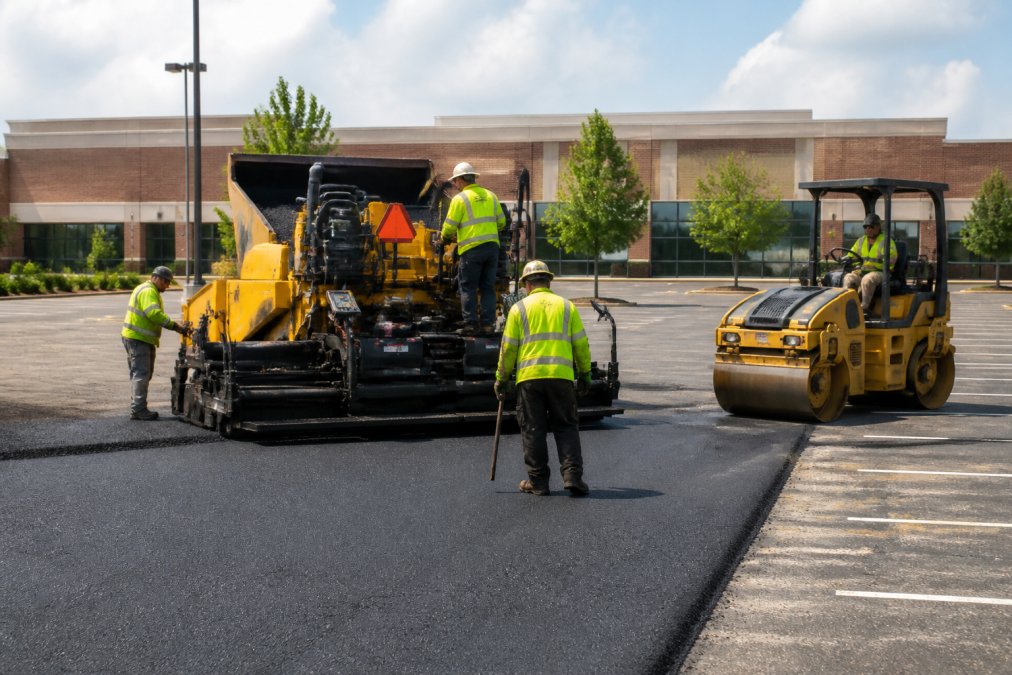
The scope typically breaks down into several distinct phases:
- Site assessment: Soil testing, drainage evaluation, and pavement condition analysis
- Subgrade and aggregate base preparation: Compaction and grading to create a stable foundation
- Asphalt installation or repair: New paving, resurfacing, patching, or full replacement
- Protective treatments: Seal coating, crack sealing, and asphalt rejuvenation
- Finishing touches: Striping, traffic markings, curb and gutter work, and signage
Each phase requires different equipment and expertise. A contractor who only does patching will not have the knowledge to fix a failing subgrade.
New Asphalt Installation vs. Resurfacing vs. Replacement
Understanding the difference between parking lot resurfacing vs replacement can save you thousands of dollars, but choosing the wrong option costs even more. New asphalt installation applies when you're paving a bare site or expanding an existing lot. Resurfacing, also called an asphalt overlay, places a new layer over a structurally sound base. Full replacement involves removing the old pavement entirely, often through asphalt milling, and rebuilding the subgrade.
The decision hinges on the condition of your existing base:
| Option | Best When | Typical Lifespan | Cost Direction |
|---|---|---|---|
| New Installation | Bare ground, new construction | 20-30 years with maintenance | Highest upfront |
| Resurfacing | Base is sound, surface is worn | 10-15 years | Moderate |
| Full Replacement | Subgrade failure, widespread cracking | 20-30 years | Highest overall |
A common mistake is choosing resurfacing to save money when the subgrade is actually failing. The new layer will mirror the cracks below within a season, and you'll pay for the overlay plus the replacement you needed anyway. Have a contractor perform a core sample analysis before committing to any option.
Commercial Asphalt Repair Cost: What Drives Your Estimate
Commercial asphalt repair cost varies widely because every project is unique, but the pricing structure follows predictable patterns. No reputable contractor can give you an accurate number without a site visit, and anyone who quotes over the phone is guessing at your expense. Most commercial paving contractors provide a free estimate because they know the variables are too numerous to price blindly.
Think in terms of lifecycle cost analysis. The initial bid price is only one line item in a 20-year financial picture. Compare the total cost of ownership between a low-bid reactive approach and a higher-bid preventative approach. The first might save $15,000 upfront but lead to a full replacement in year 10. The second, which includes proper subgrade repair and a scheduled maintenance program, often delays major capital expenditure to year 20 or beyond. When you evaluate bids, ask for a projected maintenance schedule and its associated costs over a 10-year horizon.
Base Condition and Subgrade Preparation
The single largest cost driver is almost always what's happening beneath the surface. If your subgrade has shifted, your aggregate base has washed out, or drainage issues have softened the soil, the contractor must excavate, recompact, and rebuild before any asphalt touches the ground. This preparation work often exceeds the cost of the asphalt itself.
A contractor who skips this step to offer a lower bid is not saving you money; they're deferring the problem until after the warranty expires. When you receive estimates, ask each bidder to specify exactly what subgrade work they included. If one bid is dramatically lower, that's usually the reason.
Site Access and Project Size
Larger projects benefit from economies of scale, but they also require more equipment mobilization and longer crew hours. Site access matters too: a lot with tight clearance, overhead obstacles, or limited staging areas slows production and increases cost. Projects that require night or weekend work to avoid disrupting tenants also carry a premium.
A Framework for Comparing Bids
A low bid is only a good deal if the scope of work matches the higher bids. Use this checklist to normalize bids:
- Mobilization: Does the bid include equipment delivery and setup, or is it a separate line item?
- Subgrade repair: How many tons of aggregate base are included, and what compaction method is specified?
- Asphalt thickness: Is the bid based on a 2-inch, 3-inch, or 4-inch compacted lift? Thicker is not always better, but it costs more.
- Drainage corrections: Does the bid include regrading to fix standing water, or is that a change order later?
- Traffic control: Are cones, barriers, and flaggers included, or will you need to rent them separately?
- Warranty terms: What exactly does the warranty cover, just the asphalt surface, or also the base and subgrade?
A bid that is 20% lower but omits subgrade repair and traffic control is not a bargain. A bid that is 10% higher but includes a 5-year warranty on both materials and workmanship may be the most cost-effective choice.
ADA Parking Lot Compliance Requirements You Must Meet
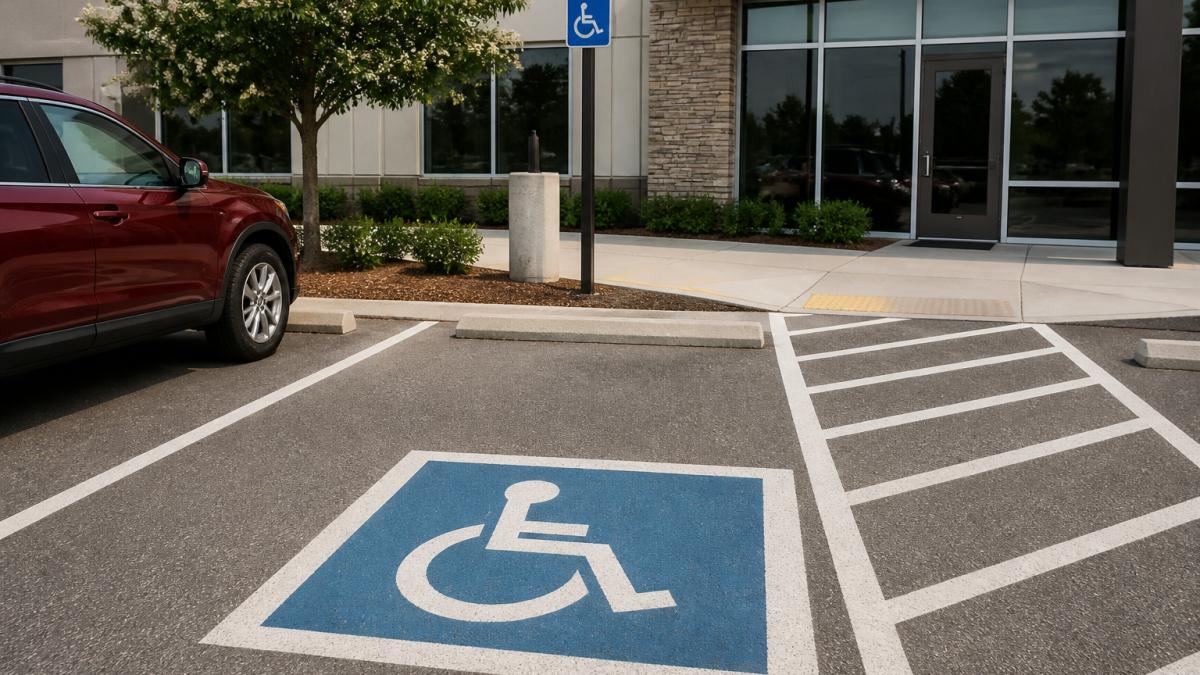
ADA parking lot compliance requirements are not optional, and failing them exposes you to liability that far exceeds any paving cost. The Americans with Disabilities Act sets specific standards for accessible parking spaces, including the number required based on total lot capacity, minimum dimensions for van-accessible spaces, and proper signage at the correct mounting height (ada.gov).
Your paving contractor should handle more than asphalt, because striping and traffic markings determine compliance. Key elements include:
- Accessible routes: Level pathways from accessible spaces to building entrances
- Van-accessible spaces: Wider access aisles with specific signage requirements
- Proper slope: Maximum 1:50 slope in all directions on accessible spaces and aisles
- Signage: Mounted at least 60 inches above the ground, featuring the International Symbol of Accessibility
The ADA Standards for Accessible Design provide the technical requirements, while the Department of Justice guidance on ADA compliance explains enforcement. When your lot is restriped, verify that the contractor adjusts the space count and layout to meet current standards rather than simply repainting the old pattern. Many older lots were striped before van-accessible requirements expanded, and repainting the same layout keeps you out of compliance.
The Commercial Paving Maintenance Schedule That Extends Pavement Life
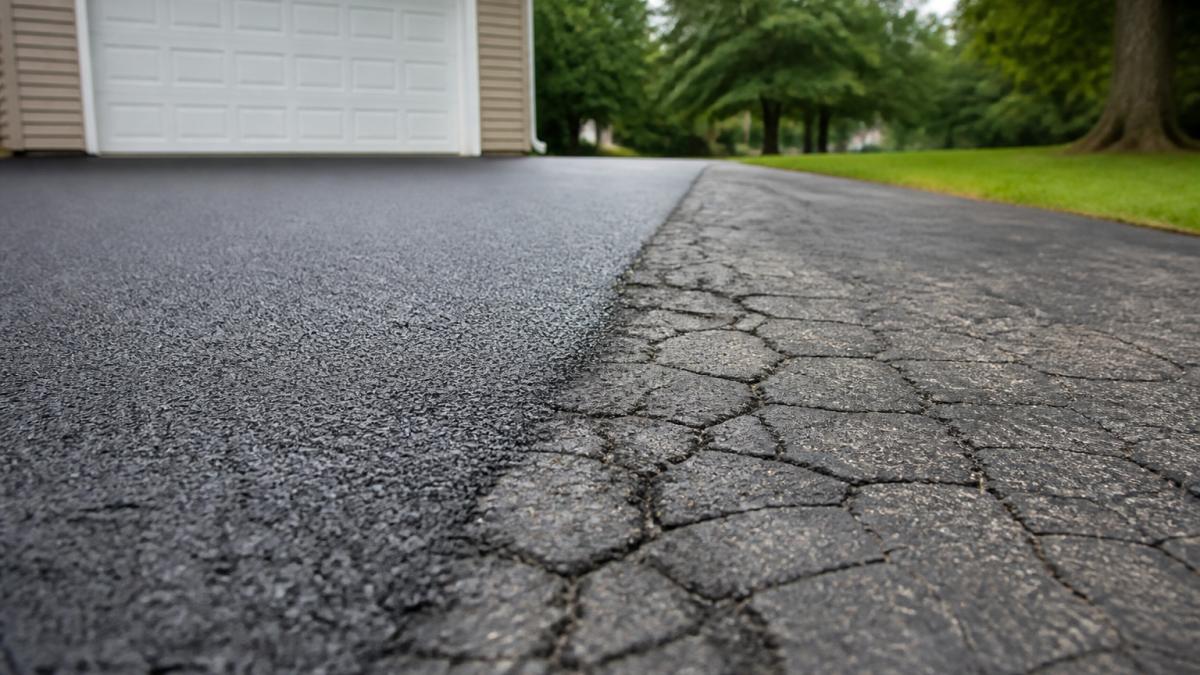
A commercial paving maintenance schedule is the difference between a lot that lasts 25 years and one that fails in 10. Asphalt is a flexible material that oxidizes and becomes brittle as it ages, and water is its primary enemy. Once moisture penetrates the surface, it attacks the aggregate base and subgrade, causing the structural failures that lead to potholes and full reconstruction. parking lot maintenance.
The most cost-effective strategy is preventative maintenance: small, regular investments that protect the pavement and delay major expenditures. Property managers who skip maintenance in year three often face replacement costs in year ten that are several times what the maintenance would have cost.
Here is a month-by-month maintenance calendar for a typical commercial lot in a four-season climate. Adjust timing for your region's freeze-thaw cycles and rainfall patterns.
Call now to schedule your free estimate →
Year-Round Maintenance Calendar
January - March (Winter)
- Monthly visual inspections: Walk the lot after each significant snowfall or freeze-thaw event. Look for new cracks, spalling at edges, or areas where snowplows have scraped the surface.
- Immediate crack sealing: Any crack wider than 1/4 inch should be sealed as soon as temperatures allow (above 40°F). Do not wait for spring.
- Pothole patching: Use cold-mix asphalt for temporary patches to prevent water intrusion until hot-mix crews can do a permanent repair.
April - May (Spring)
- Full condition assessment: Conduct a detailed survey of the entire lot. Document all cracking, raveling, and drainage issues. This is the baseline for your annual budget.
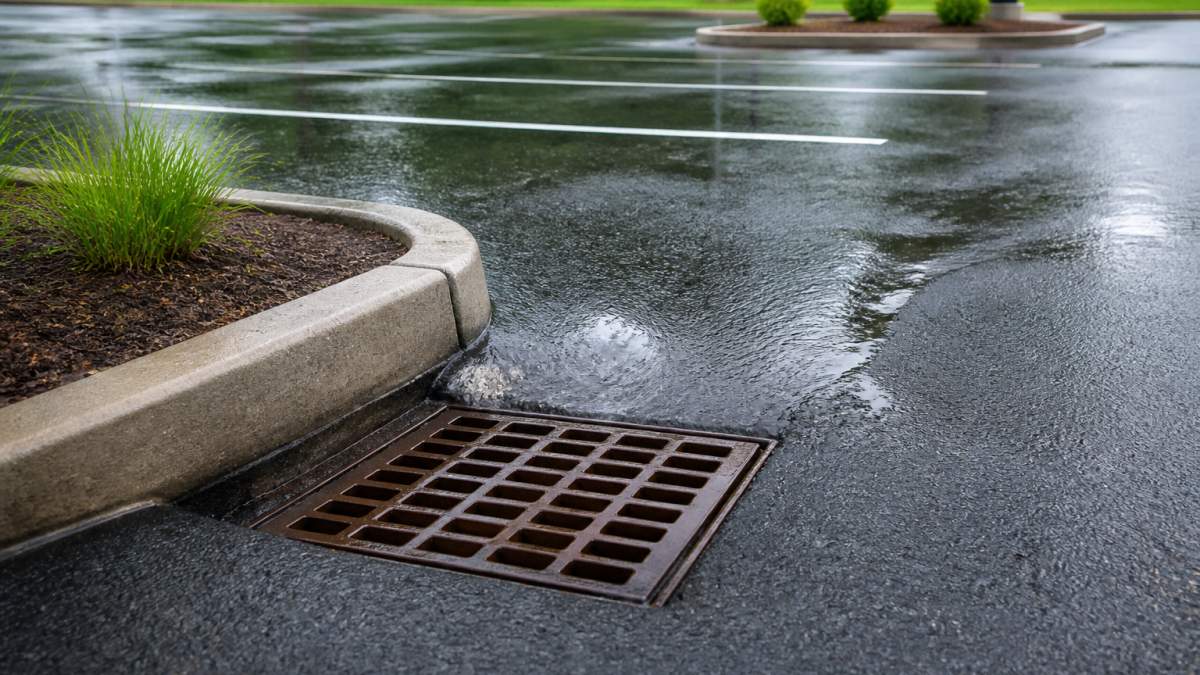
- Drainage check: Clear catch basins and ensure that water flows away from the pavement surface. Standing water for more than 48 hours after a rain indicates a problem.
- Crack sealing campaign: Seal all working cracks with a rubberized material. This is the single most cost-effective maintenance action you can take.
June - August (Summer)
- Seal coating window: Apply the first seal coat or a scheduled reapplication. Ideal temperatures are between 70°F and 85°F with no rain in the forecast for 24 hours.
- Striping refresh: Schedule line painting after seal coating is fully cured. This is also the time to verify ADA compliance and adjust space counts if needed.
- Inspect signage: Check that all accessible parking signs are present, upright, and mounted at the correct height (at least 60 inches above the ground).
September - November (Fall)
- Pre-winter repairs: Fill any new cracks and patch any damaged areas before the first freeze. Water that enters cracks in November will expand when it freezes, widening the damage.
- Fuel spill cleanup: Treat oil and fuel spills with a degreaser and seal the affected area to prevent softening of the asphalt binder.
- Plan next year's budget: Use this year's maintenance log to project next year's costs. A typical preventative maintenance budget is 1-2% of the replacement value of the lot per year.
December
- Year-end review: Compare your maintenance log against the previous year. Did you stay on schedule? Are there areas that need more frequent attention? Adjust your calendar accordingly.
Crack Sealing and Seal Coating Timelines
Crack sealing should happen as soon as cracks appear, because every open crack is a channel for water to reach your base. Seal coating, which protects the surface from oxidation and fuel spills, should follow a regular cycle based on your climate and traffic levels.
A typical schedule looks like this:
- Year 1-2: Allow new asphalt to cure and oxidize before sealing
- Year 2-3: Apply the first seal coat
- Every 2-3 years thereafter: Reapply seal coating
- Ongoing: Inspect quarterly and seal any new cracks immediately
Striping and Traffic Markings Refresh
Striping is not just cosmetic. Clear traffic markings direct drivers safely, maximize parking capacity, and keep your lot ADA compliant. Faded lines lead to inefficient parking and potential liability.
Most lots need a striping refresh every 12 to 24 months, depending on traffic volume and climate. Schedule this work alongside seal coating to minimize disruption and reduce mobilization costs.
How to Choose a Commercial Paving Contractor
Choosing a commercial paving contractor requires more diligence than comparing prices, because the lowest bid often produces the shortest lifespan. Verify that the contractor carries proper licensing and insurance, then request references from projects completed within the last year. A contractor who cannot produce recent, verifiable references should be eliminated immediately.
Ask direct questions about their process:
- Do they perform a site assessment and soil evaluation before quoting?
- What subgrade preparation is included in their bid?
- How do they handle drainage issues discovered during the work?
- What does their warranty cover, and for how long?
- Will they provide a written timeline with milestones?
A professional contractor will welcome these questions. One who resists or gives vague answers is signaling that they lack experience or plan to cut corners.
Conclusion: Plan Your Parking Lot Paving Project
Your parking lot is a significant capital asset, and the decisions you make today determine its lifespan and your total cost of ownership. Whether you need new asphalt installation, parking lot resurfacing vs replacement, or ongoing maintenance, work with a contractor who understands the structural side of pavement.
At Houston Pavement Repair LLC, we provide expert asphalt and concrete paving and repair services for commercial properties, specializing in pavement repairs. We are dedicated to delivering reliable, high-quality surface solutions that keep your property in tiptop shape. Call now to schedule your free estimate and get a detailed plan for your parking lot paving project.
Frequently Asked Questions
How much does it cost to pave a commercial parking lot?
Commercial asphalt repair cost depends on the scope of work, base condition, square footage, and whether you need patching, resurfacing, or full replacement. Site access and local material prices also affect the quote. Because every property is different, contractors provide project-based estimates. Contact Houston Pavement Repair LLC for a free estimate tailored to your lot's specific needs.
What is the difference between resurfacing and replacing a parking lot?
Resurfacing, or overlay, places a new asphalt layer on top of the existing pavement when the base is still sound. Replacement requires removing the old asphalt and repairing or rebuilding the subgrade and aggregate base before installing new pavement. Replacement is the right choice when widespread structural failure, drainage issues, or deep alligator cracking affects the load-bearing capacity of the lot.
How often should a commercial parking lot be resurfaced?
Most commercial lots need resurfacing every 15 to 20 years, depending on traffic volume, climate, and how consistently you follow a commercial paving maintenance schedule. Regular seal coating every 2 to 3 years and crack sealing as needed can extend the time between resurfacing projects. A professional site assessment will tell you whether an overlay is sufficient or if replacement is the better investment.
What are the ADA parking lot compliance requirements?
ADA parking lot compliance requirements include a minimum number of accessible spaces based on total capacity, correct dimensions for van-accessible spaces, and proper access aisles. Spaces must be marked with the International Symbol of Accessibility, and routes must connect to an accessible path of travel. Signage at the correct height and compliant curb ramps are also required. A paving contractor experienced with ADA rules will ensure your striping and layout meet federal standards.
How long does a commercial parking lot last before needing replacement?
A properly installed commercial asphalt lot typically lasts 20 to 30 years with regular maintenance. The lifespan depends on the quality of the subgrade and aggregate base, asphalt binder used, drainage, and traffic loads. Preventative maintenance like crack sealing and seal coating protects the pavement from water intrusion. Without it, pavement failure can occur much sooner, leading to pothole repair and premature replacement.
What is the most affordable way to maintain a commercial parking lot?
The most cost-effective approach is a preventative maintenance schedule. Crack sealing prevents water from reaching the base, and seal coating protects the surface from oxidation and chemical damage. Routine inspections after heavy rain or winter weather catch small issues before they become expensive repairs. This strategy costs a fraction of what you would pay for full-depth patching or an early replacement.