 how-to
Get Free Asphalt Paving Estimate: Step-by-Step Guide
Table of Contents
- Why Get a Free Asphalt Paving Estimate Before You Start
- How to Measure Your Project for an Accurate Estimate
- Key Factors That Influence Asphalt Paving Cost Per Square Foot
- Questions to Ask Paving Contractors Before Requesting an Estimate
- How to Compare Paving Estimates and Spot Red Flags
- What to Expect: Asphalt Driveway Installation Timeline
- Getting Your Free Estimate: Next Steps
- Frequently Asked Questions
Last Updated: August 26, 2026
Why Get a Free Asphalt Paving Estimate Before You Start
A professional asphalt paving estimate reveals whether a contractor understands your specific situation, how they approach problem-solving, and whether they're worth trusting with your property. A thorough estimate includes site assessment, base layer requirements, drainage considerations, and realistic timelines, details that separate contractors who take your project seriously from those who cut corners.
At Houston Pavement Repair LLC, we understand the importance of a thorough estimate. The estimate phase filters out contractors who don't match your needs.
A useful estimate addresses your site's unique conditions: soil type, existing damage, drainage patterns, local weather impact, and the thickness of asphalt and base materials your project requires. It includes clear answers about timeline, material quality, and how weather delays are handled.
How to Measure Your Project for an Accurate Estimate
Accurate measurements are essential before requesting a free asphalt paving estimate. Contractors rely on this data to calculate material volume, labor requirements, and realistic costs.
Measuring Square Footage for Driveways and Parking Lots
Measure the length and width of your paving area in feet. For rectangular driveways, multiply length × width. For irregular shapes, break the space into smaller rectangles, calculate each separately, then add them together.
Use a measuring tape, not your eye. Walk the entire perimeter and record measurements at multiple points, driveways aren't always perfectly rectangular. If your driveway is 25 feet wide at one end and 23 feet at the other, use the average (24 feet).
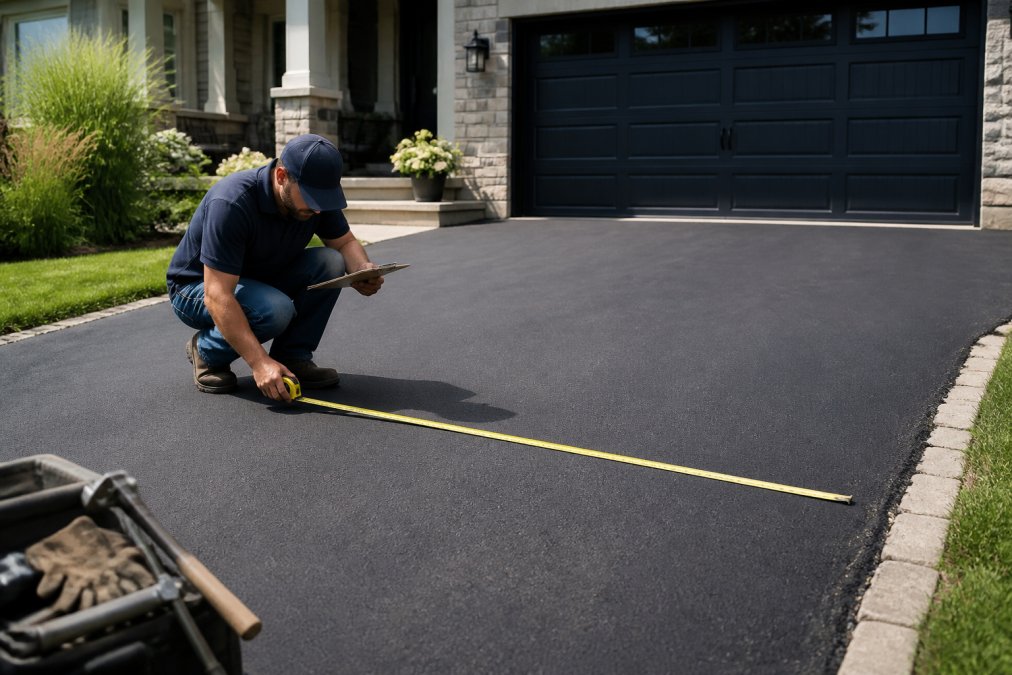
Document total square footage clearly. When you contact contractors with this information ready, it shows you're organized and serious about the project.
Accounting for Base Layer and Asphalt Depth
Square footage alone doesn't tell the full story. Most paving projects require a base layer of crushed stone or recycled asphalt beneath the finished surface, critical for drainage, stability, and longevity.
A residential driveway typically needs 4-6 inches of base material, while commercial parking lots often require 6-8 inches or more depending on traffic load (asphaltpavement.org). Asphalt depth also varies: residential driveways usually get 2-3 inches of finished asphalt, while parking lots handling daily truck traffic might need 3-4 inches or thicker (asphaltpavement.org).
If you're replacing existing pavement, note its current condition. Cracks, potholes, and soft spots indicate inadequate previous base preparation. A contractor who simply paves over these problems is setting you up for failure. Your estimate should include discussion of whether old material gets removed, recycled, or stabilized.
Key Factors That Influence Asphalt Paving Cost Per Square Foot
Understanding the variables affecting your project helps you evaluate whether an estimate is reasonable.
Site preparation is often the largest cost variable. Significant grading, drainage work, or removal of old pavement increases costs. A flat, well-drained site with no existing material costs less than one with poor drainage, soft soil, or old asphalt requiring milling and removal.
Material quality matters significantly. Not all asphalt mixes are equal. A standard mix performs differently than a premium mix designed for heavy traffic or extreme weather. In freeze-thaw climates, you need a mix with the right binder properties to resist cracking.
Project size affects per-square-foot pricing. A 500-square-foot driveway has higher per-unit costs than a 2,000-square-foot parking lot because equipment setup and labor overhead spread across fewer square feet. Larger projects typically have lower per-square-foot rates.
Accessibility impacts labor time. Easy truck access and equipment staging space keep costs lower. Tight residential lots or projects near structures requiring careful maneuvering increase labor costs.
Timing and season influence pricing. Peak season (spring and summer) often costs more than fall or winter work.
Ask contractors to break down costs by category: site prep, base material, asphalt material, labor, and equipment. This transparency helps you understand where your money goes and compare estimates fairly.
Questions to Ask Paving Contractors Before Requesting an Estimate
The conversation you have with a contractor before they visit your site shapes the quality of the estimate you'll receive.
Start with experience and credentials. How long has the contractor been in business? Do they specialize in residential, commercial, or both? Are they licensed and insured?
Ask about their approach to drainage. If your property has water pooling or flooding issues, the contractor should ask about it unprompted. If they don't, that's a warning sign. Proper drainage design prevents pavement failure.
Inquire about what happens if weather delays the work. A contractor with a clear answer is organized. One who gets vague about it might disappear mid-project.
Ask whether they remove and properly dispose of old material or mill it into the base. Both approaches work, but they have different costs and environmental impacts.
Request references from recent projects similar to yours. Call them and ask whether the contractor finished on time, communicated clearly, and whether the pavement is holding up.
Call now to schedule your free estimate →
Ask about their warranty or guarantee. What's covered? For how long? A contractor confident in their work backs it with a real warranty.
How to Compare Paving Estimates and Spot Red Flags
Once you have multiple free asphalt paving estimates, comparison becomes critical. Don't just look at the bottom-line number.
Start by verifying they're estimating the same scope. One contractor might include site prep and base layer work; another might assume the base is already there. One might specify a premium asphalt mix; another a standard one. A legitimate estimate clearly states what's included and what's not.
Red flag: An estimate with almost no detail. If it's just "Paving: $X," you don't know what you're getting. A real estimate breaks down materials, labor, equipment, site prep, and timeline.
Red flag: A price significantly lower than others. Contractors who underbid usually make up the difference by using cheaper materials, skipping proper base preparation, or cutting corners on compaction.
Red flag: Vague language about timeline. "We'll get to it sometime in June" is not a commitment. A professional contractor gives you a start date and estimated completion date.
Red flag: Pressure to decide immediately. A contractor who pushes you to sign before you've compared options is prioritizing speed over your confidence.
Create a simple table comparing contractor name, total cost, included services, asphalt depth, base layer thickness, timeline, warranty, and reference availability. The cheapest option isn't always the worst, and the most expensive isn't always the best. You're looking for the contractor who clearly understands your project, explains their approach, provides detailed estimates, offers solid references, and charges a fair price.
What to Expect: Asphalt Driveway Installation Timeline
Most residential driveways take 2-5 days from start to finish, depending on size and site conditions (asphaltpavement.org). A 500-square-foot driveway might take 2-3 days; a 2,000-square-foot driveway could take 4-5 days.
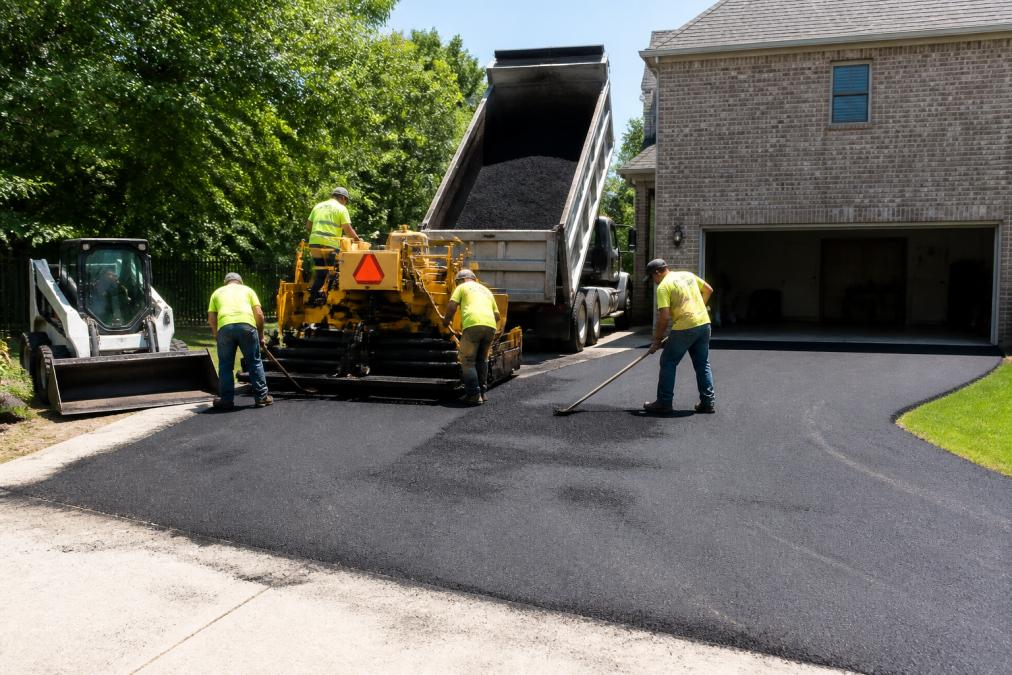
The first day typically involves site prep: removing old pavement if necessary, grading the surface, and preparing the base. Day two or three is usually base layer installation, the crew spreads crushed stone or recycled asphalt, then compacts it with heavy rollers. Proper compaction is critical and prevents settling and base failure later.
The final day is asphalt application. The contractor delivers hot asphalt mix, spreads it across the surface, and compacts it again. After paving, the surface needs to cure before you drive on it. Most contractors allow light traffic after 24 hours, but full curing takes 30-90 days depending on weather and asphalt mix type.
Weather significantly impacts timeline. Rain stops work, and extreme heat or cold can prevent paving entirely. When you get your free asphalt paving estimate, ask how weather delays are handled and whether timeline estimates account for seasonal conditions.
Getting Your Free Estimate: Next Steps
Requesting a free asphalt paving estimate is straightforward when done strategically. Gather your measurements, square footage, existing pavement condition, drainage issues, and any site access limitations.
Contact at least 3-4 contractors to get a realistic range. When you call, describe your project briefly: location, size, current condition, and what you want done. Most contractors schedule site visits within a few days.
During the site visit, walk the contractor through your property and point out drainage concerns, existing damage, and areas you're worried about. A good contractor asks questions and takes notes.
After the visit, expect the estimate within a few days. Review it carefully and call back with any questions before deciding. Once you've chosen a contractor, confirm the timeline in writing with a contract specifying start and completion dates, scope of work, materials, and warranty terms. Never pay the full amount upfront; typical payment is 50% before work starts and 50% upon completion.
At Houston Pavement Repair LLC, we provide free estimates that include site assessment, detailed material specifications, realistic timelines, and clear pricing. We understand that a free asphalt paving estimate is your first step toward a decision, and we make sure that step is thorough and transparent. Contact us today to schedule your free estimate and get started on the right path.
A free asphalt paving estimate is your tool for choosing the right paving contractor confidently. Take time with the process, ask the hard questions, and compare carefully. The contractor who provides the clearest estimate, best references, and most transparent communication is usually your best choice. Houston Pavement Repair LLC delivers estimates that give you the information you need to decide with confidence. Get in touch to schedule yours today.
Frequently Asked Questions
What information do I need to provide for a free asphalt paving estimate?
Have your project dimensions ready, including length and width in feet to calculate square footage. Note the current condition of the surface, whether you need base preparation, and any drainage issues. Take photos of the area if possible. Know whether you're paving a driveway, parking lot, or other surface type. Mention any specific timeline requirements. This information helps contractors provide an accurate estimate quickly.
How long does it typically take to receive a professional paving quote?
Most paving contractors can provide a free estimate within 1-3 business days of your initial contact and site measurements. If the contractor needs to visit your property in person, factor in scheduling time. Simple estimates based on photos and measurements may be faster. Always ask the contractor for their typical turnaround time when you request your free asphalt paving estimate to manage expectations.
What factors most affect asphalt paving cost per square foot?
Surface area is the primary driver, but asphalt depth, base layer quality, site preparation requirements, and local material density all impact pricing. Drainage improvements, removal of old pavement, and grading work add costs. Regional climate considerations matter too, areas with freeze-thaw cycles may require thicker asphalt or better sub-base preparation. Weather timing and contractor availability can also influence the final quote.
Is a free paving estimate a binding contract?
No. A free estimate is a non-binding proposal showing the contractor's assessment of your project scope and costs. It helps you compare options and make an informed decision. Before work begins, you'll sign a formal contract that includes the final scope, timeline, materials, and price. Always review the estimate carefully and ask questions about any line items before committing.
This article was written using GrandRanker