 how-to
How to Hire a Commercial Paving Contractor
Table of Contents
- What a Commercial Paving Contractor Does
- Evaluate Credentials and Insurance Before You Hire
- How to Get a Commercial Paving Estimate
- Understanding Commercial Asphalt Repair Cost
- ADA Compliance Requirements for Parking Lots
- Verify Past Work and References
- Common Mistakes When Hiring a Paving Contractor
- Frequently Asked Questions
What a Commercial Paving Contractor Does
A commercial paving contractor designs, installs, repairs, and maintains asphalt and concrete surfaces for business properties, parking facilities, and industrial sites. They handle site preparation, grading, striping, and seal coating while ensuring compliance with regulatory standards and safety requirements.
The work involves understanding drainage systems, soil stabilization, ADA compliance, and climate challenges affecting pavement longevity. A qualified contractor assesses your property's unique conditions, recommends tailored solutions, and executes work that withstands heavy traffic and weather stress.
Houston Pavement Repair LLC specializes in asphalt paving, concrete installation and repair, parking lot maintenance and striping, seal coating, and crack filling. Beyond visible surfaces, contractors manage subgrade preparation, coordinate drainage, and verify compliance with local building codes and accessibility standards. This comprehensive approach ensures durable, long-lasting installations rather than temporary fixes.
Evaluate Credentials and Insurance Before You Hire
Before signing any contract, verify that your potential contractor holds proper credentials and insurance coverage. This protects your property, business operations, and liability exposure.
Request proof of general liability insurance with minimum $1 million coverage and workers' compensation insurance. Verify both policies are current by contacting the insurance provider directly, don't rely solely on certificates provided. Check whether the contractor holds relevant licenses or certifications required in your jurisdiction.
A common mistake is accepting a contractor's word about insurance without verification. Insurance lapses happen, and a simple phone call to the insurance company takes five minutes but could save you tens of thousands in liability exposure.
Ask about experience with projects similar in size and scope to yours. Contractors with established track records have invested in equipment, trained crews, and developed supplier relationships. They're better equipped to handle unexpected complications that often arise during commercial projects.
How to Get a Commercial Paving Estimate
Getting an accurate estimate requires providing contractors with detailed information about your project scope. Vague requests lead to vague quotes that often don't reflect actual final costs.
Document your property's current condition with photographs of problem areas, drainage issues, and visible damage. Measure total square footage and note the existing surface type. Identify special requirements like markings, curbing, or drainage modifications.
Be clear about what work you need: complete overlay, full reconstruction, targeted repairs, or seal coating and striping. Provide information about traffic patterns and whether work must happen during off-hours. Mention any utility lines or underground infrastructure contractors need to know about.
Request itemized estimates breaking down costs by service category: site preparation, material removal, subgrade work, asphalt or concrete installation, seal coating, and striping. Ask how contractors handle unforeseen conditions discovered during excavation and whether they charge extra or build contingency into estimates.
Understanding Commercial Asphalt Repair Cost
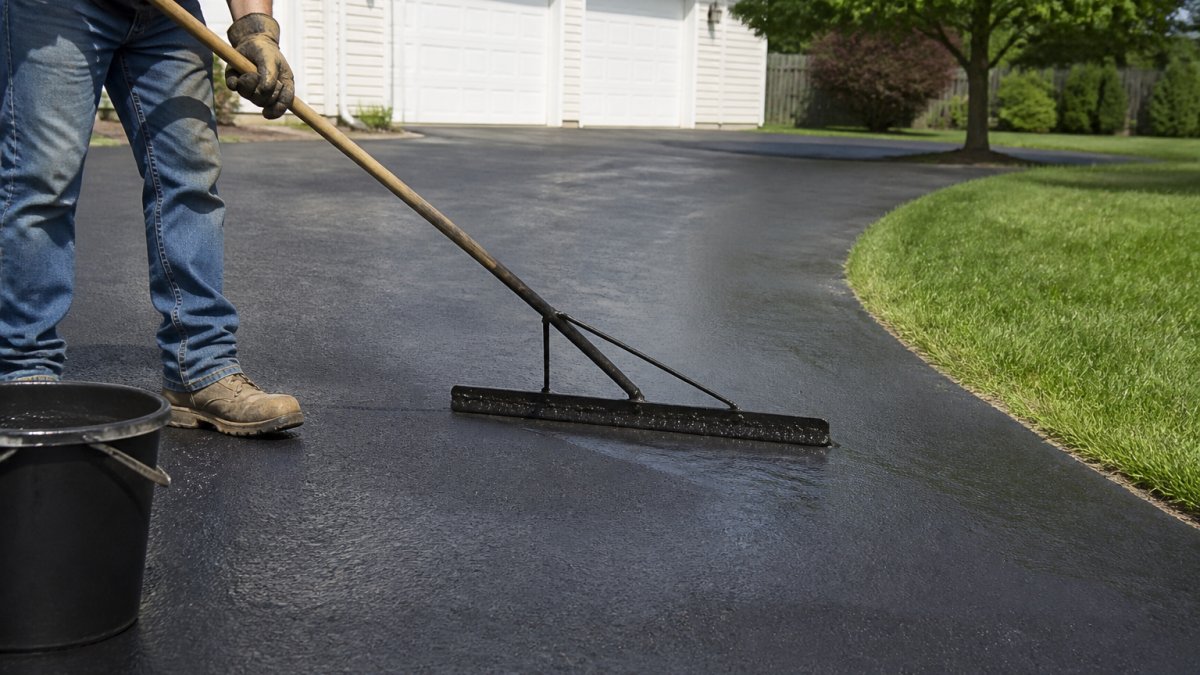
Asphalt repair costs vary based on damage extent, repair method, and property conditions. Simple crack filling is the least expensive option and prevents water infiltration. Seal coating extends pavement life at relatively low cost.
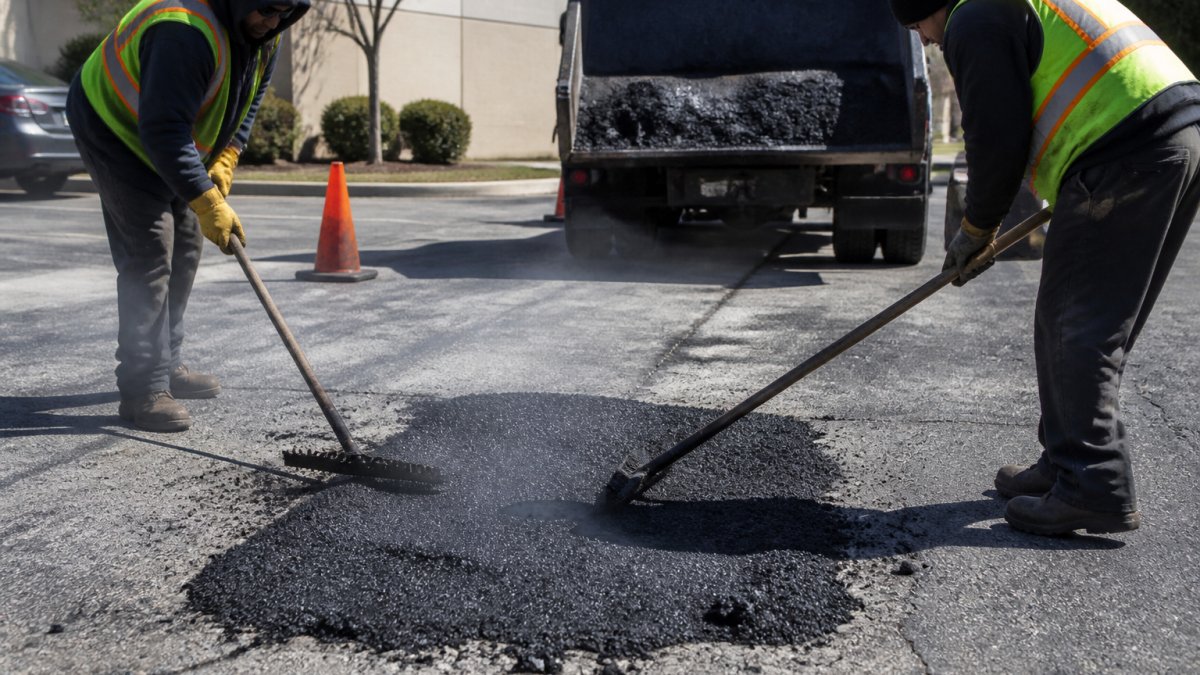
Pothole repair costs depend on size and depth. Small isolated potholes are inexpensive; numerous scattered potholes require more extensive work. Asphalt overlay costs more than simple repairs but less than full reconstruction, working well when the existing base is structurally sound.
Full pavement reconstruction, where old material is removed and new asphalt is installed after proper subgrade preparation, represents the highest cost but solves root problems and provides long-lasting solutions. Soil and drainage conditions significantly affect repair costs, properties with poor drainage or unstable soil require more extensive subgrade work.
ADA Compliance Requirements for Parking Lots
Commercial parking lots must meet accessibility standards established by the Americans with Disabilities Act. These requirements ensure people with disabilities can access and use parking facilities safely and are both a legal obligation and practical necessity.
The ADA requires a minimum number of accessible parking spaces based on total spaces: 1 to 25 spaces requires 1 accessible space; 26 to 50 requires 2; 51 to 75 requires 3. These spaces must be located on the shortest accessible route to the building entrance.
Accessible parking spaces must be at least 8 feet wide with a 5-foot access aisle. The surface must be firm, stable, and slip-resistant without cracks, potholes, or uneven surfaces. The access aisle must have a maximum slope of 1:20 (5 percent), and water cannot pool in accessible spaces or aisles.
Call now to schedule your free estimate →
Accessible parking spaces must be clearly marked with the International Symbol of Accessibility (wheelchair symbol) at minimum 36 inches wide and tall. These markings must be maintained in good, visible condition.
When resurfacing a parking lot, evaluate and improve ADA compliance. If your current lot doesn't meet requirements, the paving project is an ideal time to make corrections. A qualified contractor can design your layout to meet all ADA requirements while optimizing functionality.
Verify Past Work and References
Before hiring any contractor, request references and examples of past work. Request at least three references from recent commercial projects similar to yours. When calling references, ask whether the contractor completed work on schedule, stayed within budget, maintained a clean job site, and whether the pavement has held up well.
Ask for a portfolio of past projects. Look for work matching your property type and specific services needed. Visit past projects in person if possible, photographs show immediate results, but you want to know how work holds up over time.
Check online reviews on Google, the Better Business Bureau, and industry-specific platforms. While no contractor has exclusively perfect reviews, patterns emerge. Consistent complaints about missed deadlines or quality issues are red flags.
Ask whether the contractor guarantees their work. A contractor confident in their quality will stand behind their installation. Common guarantees cover workmanship for one to three years and material defects.
Common Mistakes When Hiring a Paving Contractor
Property managers often make predictable mistakes when hiring contractors. The first is choosing primarily based on price. The lowest bid often reflects cutting corners on materials, labor, or site preparation. A slightly higher price from a reputable contractor is far cheaper than replacing failed work.
Another common error is failing to get everything in writing. Verbal agreements about scope, timeline, and pricing lead to disputes. A detailed written contract specifies exactly what work will be done, what's included, what costs extra, and timelines.
Many property managers don't verify that contractors will properly handle drainage. A parking lot with poor drainage fails faster than one with excellent drainage, regardless of asphalt quality.
Failing to verify insurance and licensing is serious. An uninsured or unlicensed contractor can leave you liable for injuries or property damage.
Some property managers don't establish clear communication expectations or plan for proper maintenance after installation. A new parking lot requires seal coating, crack filling, and regular inspection to extend its lifespan. Contractors who discuss post-installation maintenance demonstrate commitment to long-term results.
Hiring the right commercial paving contractor requires diligence and verification at each step. Houston Pavement Repair LLC brings expert asphalt and concrete paving services with commitment to delivering reliable, high-quality surface solutions. Our team handles everything from site preparation and grading to seal coating and striping, with expertise to address your property's specific challenges. Call now to schedule your free estimate and experience our commitment to excellence.
Frequently Asked Questions
What should I look for when hiring a commercial paving contractor?
Look for proper licensing, current insurance coverage, and verifiable references from recent commercial projects. Ask about their experience with asphalt paving, concrete installation, and site preparation. A reliable commercial paving contractor should provide a detailed written estimate, explain their process for addressing root causes (not just patching), and offer references you can contact directly.
How do I verify a paving contractor's insurance and licensing?
Request a copy of their current general liability and workers' compensation insurance certificates. Verify their state contractor license through your state's licensing board. Ask for their OSHA certifications if they handle heavy equipment or site work. Never hire a contractor who cannot provide proof of current insurance or refuses to show licensing documentation.
How long does commercial asphalt typically last before needing repair or resurfacing?
Well-maintained commercial asphalt pavement typically lasts 15-20 years. However, lifespan depends on climate, traffic volume, and maintenance frequency. Regular seal coating and crack filling can extend pavement life significantly. In areas with freeze-thaw cycles or heavy rainfall, deterioration may accelerate, requiring earlier intervention than typical timelines.
What are common signs that a parking lot needs professional repair?
Watch for alligator cracking (interconnected cracks resembling alligator skin), potholes, rutting (depressions from heavy traffic), surface raveling (loose aggregate), and standing water or drainage issues. If patches keep failing in the same spots or the surface is becoming unstable, the root cause, often subgrade or drainage problems, needs professional assessment, not just surface patching.
This article was written using GrandRanker