 how-to
Why Asphalt Patches Fail Quickly: 7 Causes and Fixes
Table of Contents
- Why Asphalt Patches Fail Quickly: The Root Causes
- Asphalt Cold Patch vs Hot Mix: Which Material Lasts Longer
- Proper Asphalt Sub-Base Preparation: The Foundation of Lasting Patches
- How to Repair Asphalt Driveway Potholes: Step-by-Step Process
- DIY vs. Professional Equipment: Why Temporary Fixes Don't Last
- Post-Patch Maintenance Schedule to Prevent Failure
- Common Asphalt Patching Myths That Lead to Failure
- Frequently Asked Questions
Last Updated: August 21, 2026
Why Asphalt Patches Fail Quickly: The Root Causes
Asphalt patches fail because the foundation work was skipped, moisture infiltrates the repair, or the wrong material was selected for the job. Most property owners and even some contractors treat patching as a quick fix rather than a structural repair, skipping preparation steps, ignoring drainage problems, or using cold patch material when the job demands hot mix asphalt. The result is predictable: the patch bonds poorly, water infiltrates, and the damage spreads.
Improper Base Preparation and Compaction
The most common reason asphalt patches fail is inadequate base preparation. A patch is only as durable as what sits beneath it. If you're patching over loose, uncompacted material or debris, the patch has nothing solid to anchor to. It shifts under traffic load, cracks form, and water infiltrates through those cracks.
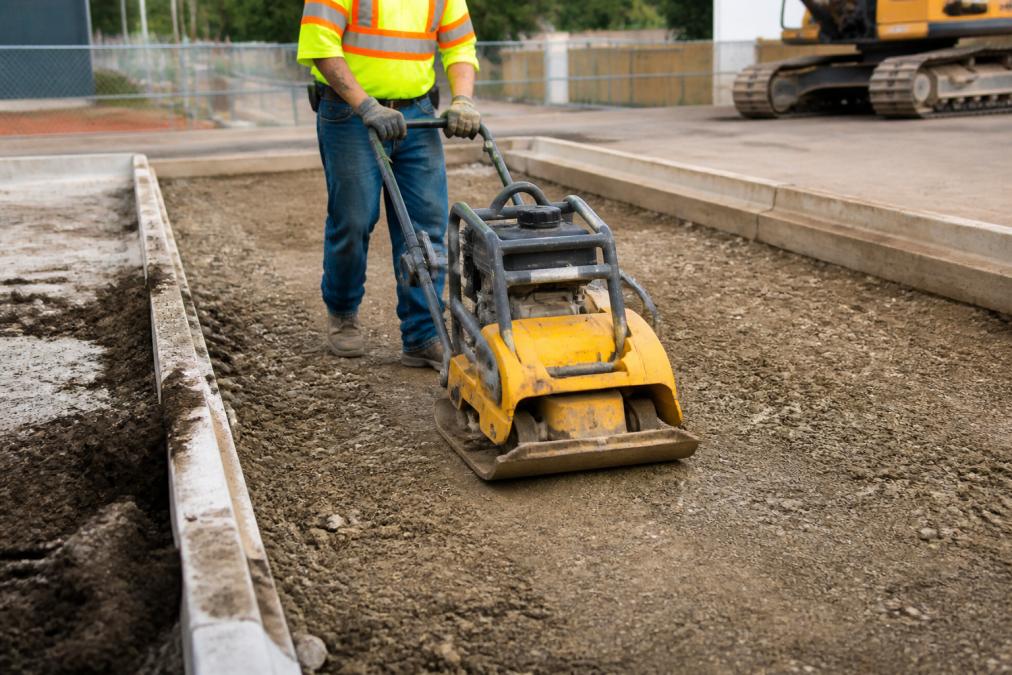
Proper preparation means removing all damaged asphalt down to solid subgrade and mechanically compacting the base course to achieve proper density. Without a plate compactor or vibratory roller, you're relying on traffic to compact the material, which may never happen if the patch is in a lightly-traveled area. Inadequate compaction creates voids that trap water and cause settlement under load.
Moisture Infiltration and Water Damage
Water is the enemy of asphalt longevity. Moisture infiltration beneath a patch causes the subgrade to weaken, the bond between layers to fail, and freeze-thaw damage to accelerate. Many failed patches sit in areas with poor drainage where water pools around the patch edges, seeps under the repair, and saturates the base course.
The tack coat, a thin adhesive layer applied to the cavity before filling, is designed to create a waterproof seal. When this step is skipped or applied improperly, water moves freely between the old asphalt and the new patch. This is where many DIY and budget repairs fail.
Extreme Temperature Fluctuations
Thermal expansion and contraction create stress on asphalt patches, especially in areas with large temperature swings. Asphalt expands when hot and contracts when cold. If the patch material differs in composition from the surrounding pavement, the expansion rates don't match, and stress concentrates at the patch edges.
Cold patch material has lower bonding strength and different thermal properties than hot mix asphalt. As temperatures cycle, the cold patch expands and contracts at a different rate than the surrounding asphalt, creating stress at the edges. Hot mix asphalt patches handle thermal cycling better because they bond chemically to the existing pavement and match the thermal properties of the surrounding asphalt.
Traffic Load and Volume
The load-bearing capacity of a patch depends on the thickness and compaction of the repair and the quality of the base course beneath it. Patches in high-traffic areas experience more stress than those in lightly-traveled zones. Heavy trucks concentrate stress on a smaller contact area than passenger vehicles. Many patches fail because they're placed in areas where the underlying problem, poor drainage, traffic concentration, or base course deterioration, was never addressed.
Material Quality and Aging
The quality of the asphalt binder and aggregate in the patch material directly affects longevity. Lower-quality binders oxidize and become brittle faster than premium binders. Cold patch material contains a cutback or emulsion binder that cures slowly and never achieves the bond strength of hot mix asphalt. Cold patch is appropriate for emergency repairs in winter, but it should be replaced with hot mix during the next warm season.
Asphalt Cold Patch vs Hot Mix: Which Material Lasts Longer
The choice between cold patch and hot mix asphalt is one of the most important decisions in patch longevity. Cold patch is convenient and can be applied in any weather, but hot mix asphalt delivers dramatically better results.
Cold Patch Characteristics and Limitations
Cold patch is a pre-packaged asphalt material that requires no heating and can be applied immediately. For homeowners or contractors working in winter, cold patch seems like the obvious choice. However, cold patch never bonds as strongly as hot mix asphalt. The binder cures by evaporation and oxidation rather than cooling, resulting in a patch with lower tensile strength and higher susceptibility to deformation under traffic load.
Cold patch also has higher void content than properly compacted hot mix. Voids trap water, which weakens the patch and accelerates deterioration. In freeze-thaw climates, water in those voids expands when frozen, pushing the patch upward and breaking the bond. Many property owners use cold patch for temporary repairs and never follow up with hot mix, resulting in failure within one to three seasons.
Hot Mix Asphalt and Superior Bonding
Hot mix asphalt is heated to 300-350°F during production and placement, allowing the asphalt binder to flow and bond intimately with the aggregate and tack coat (asphaltinstitute.org). As the hot mix cools, it hardens and develops full bond strength. This chemical bond is far superior to the mechanical interlocking achieved by cold patch.
Hot mix asphalt also achieves higher density when compacted while hot, resulting in minimal void content and superior load-bearing capacity. The lower void ratio means less water infiltration and better durability. Hot mix patches typically last 5-10 years or longer, depending on traffic, drainage, and maintenance, while cold patch patches typically fail within 1-3 years (fhwa.dot.gov).
Proper Asphalt Sub-Base Preparation: The Foundation of Lasting Patches
The foundation of a lasting patch is the preparation work that happens before any new asphalt is placed. This is where most repairs fail. The sub-base preparation determines whether the patch will last five years or five months. concrete sealer issues.
Step 1: Remove Damaged Material and Clean the Cavity
Start by removing all damaged asphalt and underlying material using a chisel or air hammer. The cavity should have clean, solid edges and a clean bottom. If the subgrade beneath the asphalt is soft or muddy, it must be removed and replaced with compacted aggregate base. Any water pooling in the cavity must be pumped or bailed out. The cavity must be completely dry before the next step.
Step 2: Compact the Subgrade and Base Course
Once the cavity is clean, compact the subgrade with a plate compactor or vibratory roller. If the subgrade is soft, place a four-inch layer of compacted aggregate base instead. Proper compaction achieves 95% or higher of maximum density, which is the standard for pavement base courses (astm.org).
Step 3: Apply Tack Coat for Adhesion
The tack coat is a thin layer of asphalt emulsion or sticky asphalt binder applied to the cavity before hot mix is placed. Apply the tack coat uniformly across the entire cavity, including the vertical edges. The tack coat should be thin, about 1/8 inch, and sticky to the touch but not running or pooling. The tack coat must cure before hot mix is placed, typically 30 minutes to two hours, depending on temperature and humidity.
How to Repair Asphalt Driveway Potholes: Step-by-Step Process
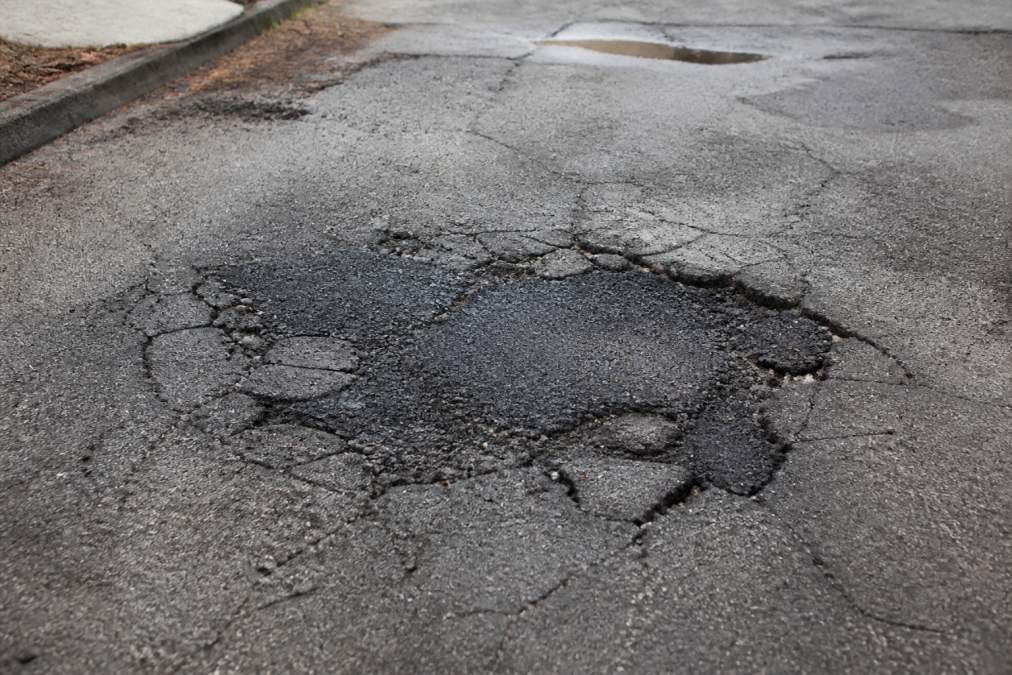
Pothole repair follows the same principles as general patch repair but with specific attention to the depth and edges of the hole.
Assess the Pothole Depth and Damage Extent
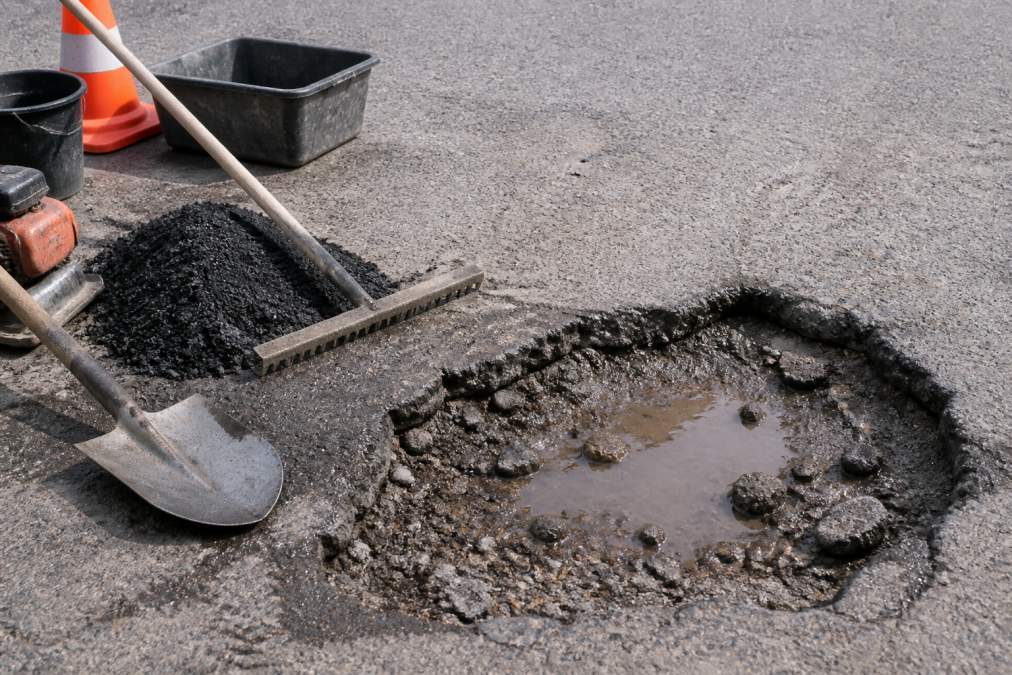
Measure the depth of the pothole and the extent of damage around it. If the pothole is deeper than four inches, or if damage extends more than a foot beyond the visible hole, the repair area must be enlarged. Check whether the damage is isolated or part of a larger pattern. Look for signs of water infiltration: soft subgrade, mud, or water pooling in the pothole. If the subgrade is saturated, it must dry before repair.
Call now to schedule your free estimate →
Prepare the Edges and Remove Loose Material
Use a chisel or air hammer to square up the edges, creating a clean perimeter with vertical or slightly inward-sloping sides. Remove all loose and crumbling asphalt from the bottom and sides of the pothole. Blow out all dust and debris with compressed air. The pothole must be completely clean and dry before patching.
Fill with Hot Mix and Compact Thoroughly
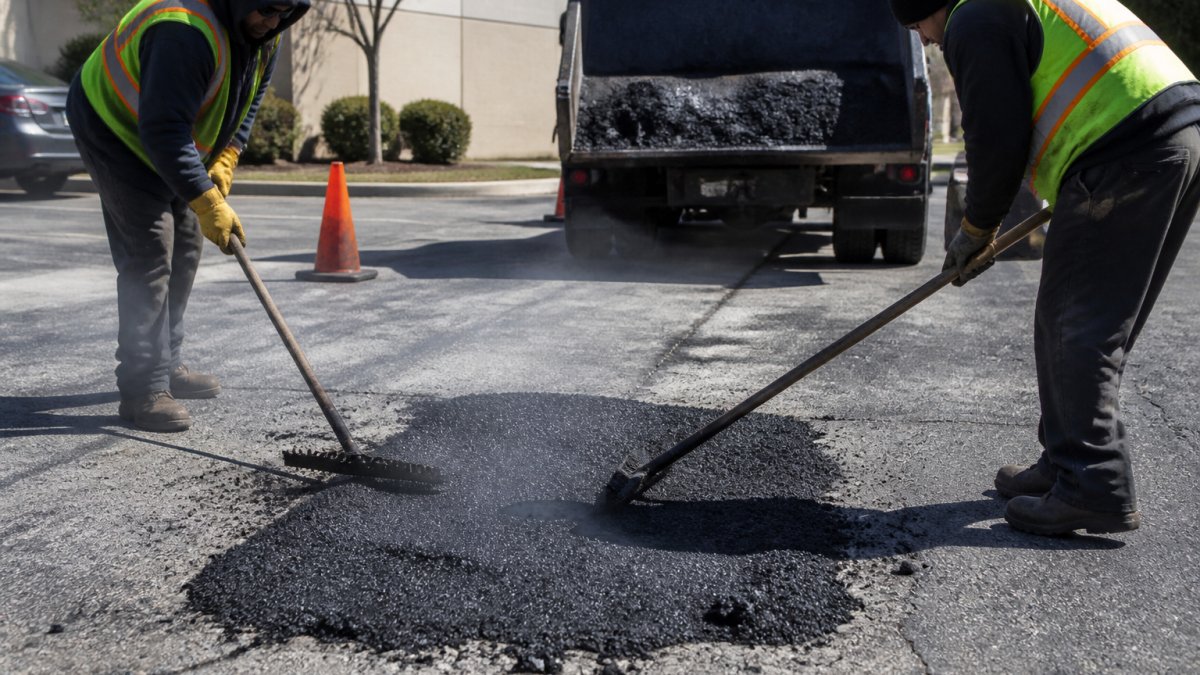
Place hot mix asphalt into the prepared cavity. For potholes deeper than two inches, place the hot mix in layers, compacting each layer before adding the next. Use a plate compactor or vibratory roller to compact the hot mix until the patch is level with the surrounding asphalt and no longer yields to the compactor. The patch should be flush or slightly crowned above the surrounding asphalt to shed water better.
Allow the hot mix to cool and harden before opening to traffic. In warm weather, this typically takes two to four hours.
DIY vs. Professional Equipment: Why Temporary Fixes Don't Last
The difference between a repair that lasts and one that fails often comes down to equipment. Proper asphalt repair requires mechanical compaction equipment, tack coat application equipment, and hot mix asphalt delivery. DIY repairs with hand tools and cold patch material are temporary at best.
Most homeowners don't have access to a plate compactor, vibratory roller, or hot mix asphalt. Professional contractors have this equipment and understand compaction standards, material specifications, and drainage principles. A professional repair costs more upfront but delivers a repair that lasts 5-10 years instead of 1-3 years. Over a ten-year period, the professional repair is far cheaper per year of service.
Post-Patch Maintenance Schedule to Prevent Failure
A patch is not a permanent solution. To maximize patch longevity, a maintenance schedule is essential.
First 30 Days: Curing and Initial Inspection
During the first 30 days after repair, avoid heavy traffic and parking directly on the patch if possible. Inspect the patch weekly for signs of distress: edge cracking, settlement, or water pooling around the patch. After 30 days, the patch should be fully cured and capable of handling normal traffic.
Ongoing Sealcoating and Drainage Management
Sealcoat the entire pavement, including the patch, every 2-3 years to protect the asphalt binder and extend pavement life. Manage drainage around the patch to ensure water slopes away and doesn't pond or infiltrate. Inspect the patch annually for signs of distress and seal small cracks before they become large failures.
| Maintenance Task | Frequency | Purpose | Impact |
|---|---|---|---|
| Visual inspection | Monthly (first 3 months), then quarterly | Catch early failures | Prevents expansion |
| Sealcoating | Every 2-3 years | Protect binder and aggregate | Extends patch life 2-4 years |
| Crack sealing | As needed (spring and fall) | Prevent water infiltration | Stops edge raveling |
| Drainage improvement | Once, if needed | Prevent water pooling | Eliminates freeze-thaw damage |
| Pothole patching | As needed | Repair new failures | Prevents pavement collapse |
Common Asphalt Patching Myths That Lead to Failure
Myth 1: Cold patch is good enough for permanent repairs. Reality: Cold patch is appropriate only for temporary emergency repairs in winter and should be replaced with hot mix asphalt within one season.
Myth 2: You don't need to remove all the old asphalt. Reality: Damaged asphalt must be completely removed. The patch is only as durable as what sits beneath it.
Myth 3: Compaction isn't that important. Reality: Mechanical compaction is critical and non-negotiable. Without it, voids remain in the repair, water infiltrates, and the patch fails.
Myth 4: Tack coat is optional. Reality: The tack coat is the adhesive layer that bonds the patch to the cavity. Without it, the patch sits on top and fails under traffic.
Myth 5: Patching solves the problem permanently. Reality: Patching is a repair that extends pavement life but eventually fails if the underlying problem is not addressed. Patches require maintenance and eventual replacement.
Myth 6: All asphalt patches are the same. Reality: The quality of the binder, the grading of the aggregate, and the compaction process all affect patch longevity. Premium hot mix asphalt patches last longer than budget cold patch repairs.
Failed asphalt patches are almost always the result of skipped preparation steps, inadequate compaction, or material choices that prioritize convenience over durability. Understanding these failure mechanisms helps you make better decisions.
Houston Pavement Repair LLC provides expert asphalt and concrete paving and repair services. We remove damaged material completely, compact the subgrade and base course to specification, apply tack coat for proper bonding, and place hot mix asphalt with full mechanical compaction. This approach delivers durable results. Call now to schedule your free estimate and learn how professional repair prevents the cycle of repeated failures.
Frequently Asked Questions
Q: How long should a professional asphalt patch last?
A: A properly installed asphalt patch using hot mix and correct sub-base preparation typically lasts for several years, depending on traffic volume and climate exposure. Cold patch repairs often fail within months because they lack the bonding strength of hot mix asphalt. The difference comes down to material quality, compaction density, and whether a tack coat was applied to ensure structural integrity between layers.
Q: What is the difference between cold patch and hot mix asphalt?
A: Cold patch is a pre-mixed, ready-to-use material that doesn't require heating, making it convenient for temporary repairs. However, it shrinks as it cures and bonds poorly to existing asphalt, leading to early failure. Hot mix asphalt is heated to 300-350°F during application, allowing proper bonding with the base course and surrounding pavement. Hot mix compacts to higher density and creates a stronger structural bond, which is why professional repairs use hot mix for lasting results.
Q: Does moisture cause asphalt patches to fail?
A: Yes. Water infiltration is one of the primary reasons asphalt patches fail quickly. Moisture penetrates improperly sealed edges, seeps into the sub-base, and causes freeze-thaw cycles that expand and contract the material. Poor drainage around the patch area accelerates this damage. Proper sub-base compaction, tack coat application, and sealcoating help block moisture and extend patch longevity significantly.
Q: Can you patch asphalt in cold weather?
A: Hot mix asphalt requires warm temperatures to compact and cure properly. Patching in cold weather with hot mix is difficult because the material cools too quickly and won't bond effectively. Cold patch can be applied year-round but fails faster. Most professionals avoid major patching when temperatures drop below 50°F. If emergency repairs are needed in winter, cold patch is used temporarily until proper hot mix repairs can be made in warmer months.
This article was written using GrandRanker