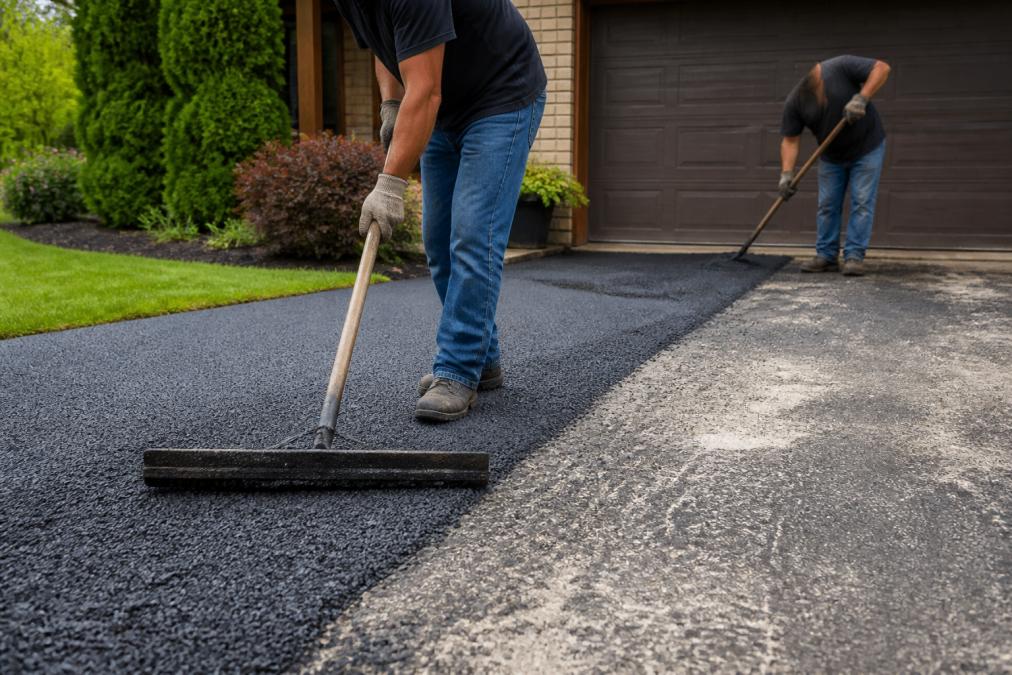
 listicle
Alternatives to Asphalt Patching for Driveways: 2026 Guide
Table of Contents
- Why Patching Fails and What to Use Instead
- Concrete Slab Replacement vs. Interlocking Pavers
- Gravel, Crushed Stone, and Tar and Chip Paving
- Permeable Pavement and Geocell Systems for Drainage
- Asphalt Driveway Repair Cost and Long-Term ROI
- When to Replace an Asphalt Driveway Instead of Patching
- DIY Driveway Resurfacing Methods and Permitting Rules
- Conclusion
- Frequently Asked Questions
Last Updated: September 15, 2026
Why Patching Fails and What to Use Instead
Alternatives to asphalt patching for driveways exist because patching treats the symptom, not the cause. A patch fills a hole; it does not fix the failing sub-base, the drainage washing out the base layer, or the freeze-thaw cycling that reopens the same crack every season. A pothole patched in spring often returns by the next spring within inches (A Better Fix for Potholes - January 2000 - FHWA-RD-00-055 - Focus).
The reason is structural: a patch bonds to the surface, but the failure started underneath. Water enters the base layer, the aggregate shifts, and the surface loses load-bearing capacity. No cold mix or crack filler can restore that.
What actually works depends on how far the damage has spread. If the asphalt is sound and only the top layer is worn, resurfacing or sealcoating can buy years. If the base has failed, you need one of the alternatives below. The FHWA pavement preservation guidance makes the same distinction: preservation maintains a sound pavement, while rehabilitation addresses structural failure.
Concrete Slab Replacement vs. Interlocking Pavers
Concrete slab replacement and interlocking pavers are the two most durable paved alternatives to asphalt patching for driveways. A slab spreads load across a continuous surface; pavers distribute it through units that flex with ground movement.
Concrete slab replacement removes the asphalt entirely and pours a new reinforced surface. It handles heat well, which matters where summer temperatures soften asphalt, and lasts decades at a higher upfront cost than patching. The trade-off is joint maintenance: control joints need crack filler over time, and a slab that settles unevenly is expensive to correct.
Interlocking pavers cost more in labor because every unit is laid by hand on a compacted base. The payoff is repairability: if a section settles or a paver cracks, you lift it, re-level the base, and relay it, no sawing, pouring, or curing. Permeable options also drain runoff between joints instead of pooling.
| Option | Relative Upfront Cost | Lifespan | Best For |
|---|---|---|---|
| Concrete slab | High | Decades | Low-maintenance, hot climates |
| Interlocking pavers | High (labor-heavy) | Decades | Aesthetics, spot repairs |
| Gravel or crushed stone | Low | Years, with replenishment | Budget, rural, drainage |
| Tar and chip | Moderate | Years | Rustic look, low sealing needs |
| Permeable pavement with geocell | Moderate to high | Long | Drainage and erosion control |
Gravel, Crushed Stone, and Tar and Chip Paving
Gravel, crushed stone, and tar and chip are the lowest-cost alternatives to asphalt patching for driveways. Crushed limestone drains freely, tar and chip seals a stone surface with hot asphalt, and both avoid the cost of a poured slab.
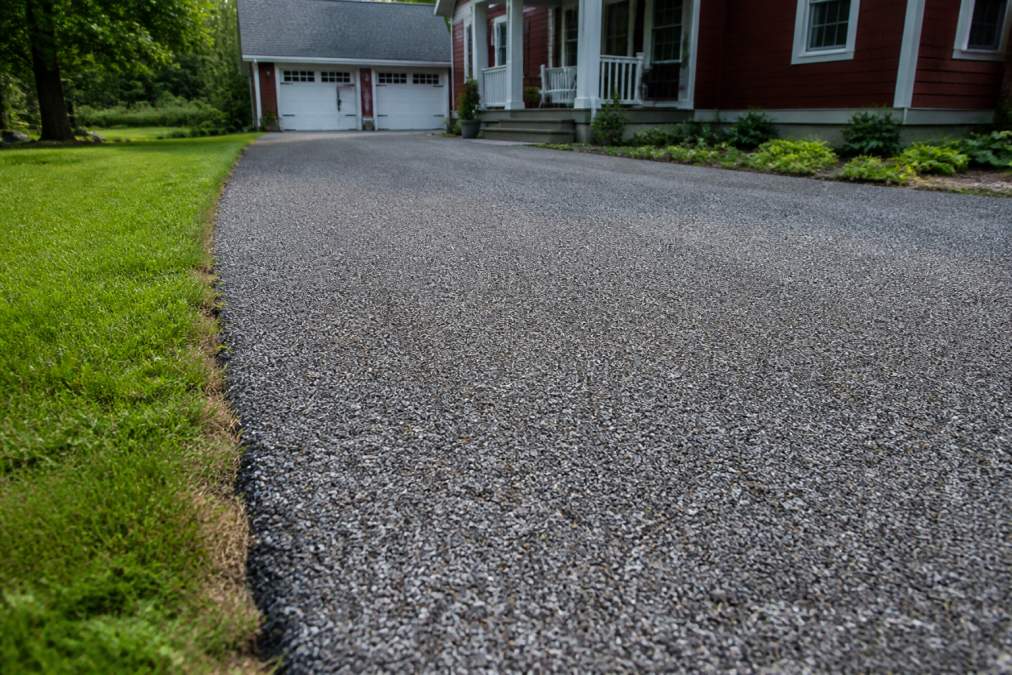
Gravel works best with a proper base layer: a geotextile fabric stops stone migrating into the soil, and regular compaction keeps the surface firm. The catch is replenishment, loose gravel spreads and ruts form, so you add material periodically, still cheaper than paving for a long rural drive.
Tar and chip, or chip seal, sprays hot liquid asphalt and covers it with crushed stone. The surface is textured, non-slip, and needs no sealcoating the way smooth asphalt does. New installations shed loose stones for the first weeks, so keep vehicles off the edge until it settles.
Crushed stone and gravel are also the most forgiving DIY surfaces: repair a rut by raking and adding aggregate, with no curing time or specialist tools.
Permeable Pavement and Geocell Systems for Drainage
Permeable pavement and geocell systems are the best alternatives to asphalt patching for driveways when water is the root cause of failure. A geocell is a honeycomb grid that holds aggregate in place and spreads vehicle weight across a wider area.
The drainage problem is worth taking seriously. When a driveway floods every time it rains, water is the mechanism destroying the surface: saturated base layers lose load-bearing capacity, wet-dry and freeze-thaw cycles open cracks, and runoff carries sediment that erodes the edges.
Geocell systems address this directly. The grid confines the aggregate, so the base stays compacted and stable, and water percolates through instead of pooling. Products like BaseCore Geocell are built for exactly this: minimal maintenance and strong erosion control. The trade-off is upfront work, installation requires significant site preparation and excavation, so it is not a weekend patch job.
Call now to schedule your free estimate →
Permeable pavement, whether paver-based or pervious concrete, does the same job at the surface: stormwater infiltrates rather than runs off, reducing pooling and taking pressure off the base layer, fixing the cause rather than the symptom.
Asphalt Driveway Repair Cost and Long-Term ROI
Asphalt driveway repair cost depends on whether you are preserving a sound surface or replacing a failed one, and the cheapest quote is rarely the lowest cost over time. Patching is cheap per repair, but repeating it on the same spot adds up without solving anything.
The honest way to compare is cost per year of service. A low-cost patch repeated for five years often costs more than a single durable repair. Concrete, pavers, and geocell-stabilized surfaces cost more upfront but spread that cost across a much longer lifespan with far less recurring maintenance.
Pricing depends on square footage, site preparation, drainage work, and material choice.
| Approach | Typical Installed Cost / sq ft | Expected Service Life | Recurring Cost | Cost Per Year of Service |
|---|---|---|---|---|
| Cold patch (spot repairs) | $2-$5 per repair, not per sq ft | 1-2 seasons per patch | High (repeat repairs) | High over time |
| Sealcoating | $0.15-$0.30 | 2-4 years per coat | Reseal every few years | Moderate |
| Asphalt resurfacing (overlay) | $2-$4 | 8-15 years | Periodic resealing | Moderate |
| Concrete slab | $6-$12 | 30+ years | Joint crack filler | Low over decades |
| Interlocking pavers | $10-$20 | 25-50 years | Occasional spot relay | Low over decades |
| Gravel / crushed stone | $1-$3 | 5-10 years, with replenishment | Annual top-dressing | Low to moderate |
| Tar and chip (chip seal) | $2-$4 | 5-10 years | Periodic reseal | Moderate |
| Geocell + aggregate | $4-$8 | 20+ years | Low | Low over decades |
Running the 20-year math
Where ROI shows up beyond the surface
When to Replace an Asphalt Driveway Instead of Patching
Use this checklist to decide:
DIY Driveway Resurfacing Methods and Permitting Rules
A few methods are genuinely DIY-friendly:
Permitting: what triggers a review
Common triggers for a permit or review include:
HOA and covenant restrictions
Conclusion
Frequently Asked Questions
What is a good substitute for asphalt patching on a driveway?
Concrete slab replacement, interlocking pavers, gravel, tar and chip, and permeable pavement are all viable substitutes for asphalt patching. Each offers different trade-offs between upfront cost, lifespan, and maintenance. Concrete lasts 30 or more years and handles heat well. Pavers allow spot repairs without replacing the whole surface. Gravel costs the least upfront but needs periodic replenishment. The right choice depends on your budget, climate, and how much maintenance you want to take on.
What is the most cost-effective alternative to asphalt repair?
Cold patch products like Sakrete Cold Patch are the cheapest immediate fix, but they are temporary. For a permanent solution, gravel driveways have the lowest initial installation cost. Tar and chip paving costs more than gravel but less than full asphalt replacement and requires no sealcoating. If you plan to stay in your home long term, concrete or interlocking pavers deliver better long-term ROI because they last decades with minimal upkeep.
Can gravel or pavers be used to cover damaged asphalt?
Gravel can be spread over damaged asphalt if the base is still structurally sound, but the surface must be leveled and compacted first. Interlocking pavers typically require removing the old asphalt and installing a proper sub-base of compacted aggregate. Covering asphalt with pavers without fixing the base leads to uneven settling and premature failure. A professional assessment confirms whether your existing base can support the new surface.
How do permeable pavers compare to traditional asphalt for drainage?
Permeable pavers allow water to pass through gaps between units and into the base layer, reducing surface runoff and erosion. Traditional asphalt sheds water entirely, which can overwhelm gutters and cause pooling. In areas with heavy rain, permeable systems paired with geocell reinforcement manage stormwater more effectively. They also reduce long-term drainage problems that cause asphalt to crack and sink.
When should you replace a driveway instead of patching it?
Replace when cracks exceed a quarter inch wide, potholes return in the same spots within a year, or more than 30 percent of the surface shows alligator cracking. These signs mean the base layer has failed, and patching only addresses the symptom. If your driveway floods regularly or has settled unevenly, replacement with a properly graded sub-base solves the root cause. A professional evaluation confirms whether repair or full replacement makes more sense.