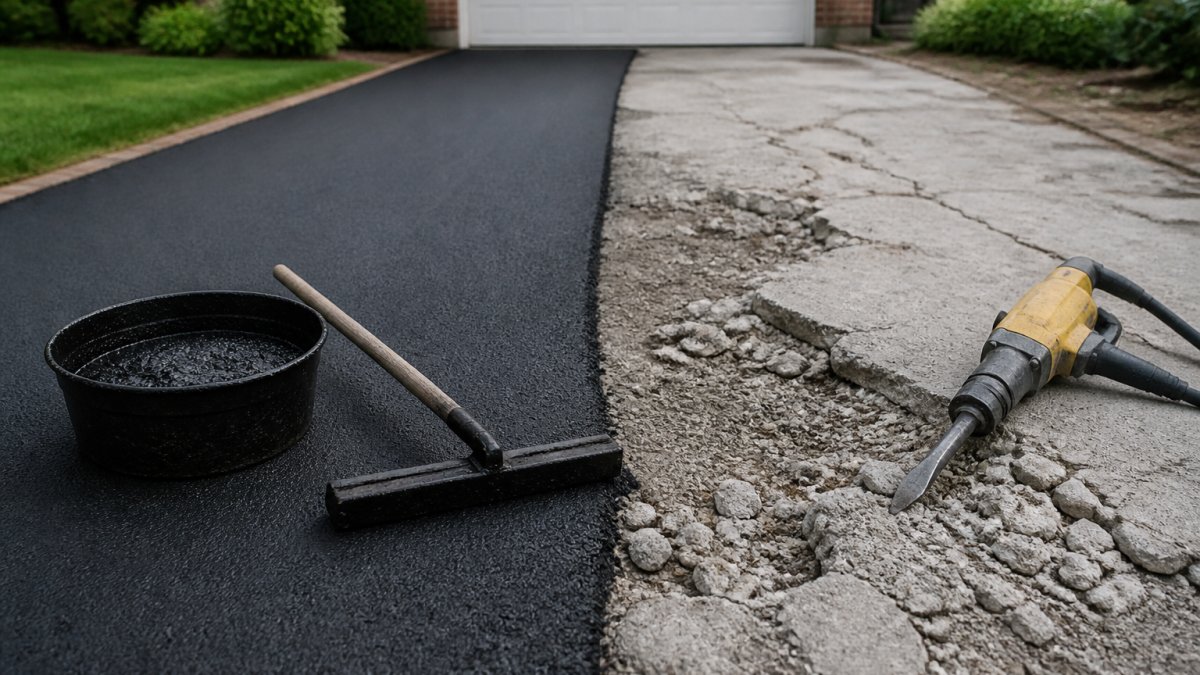
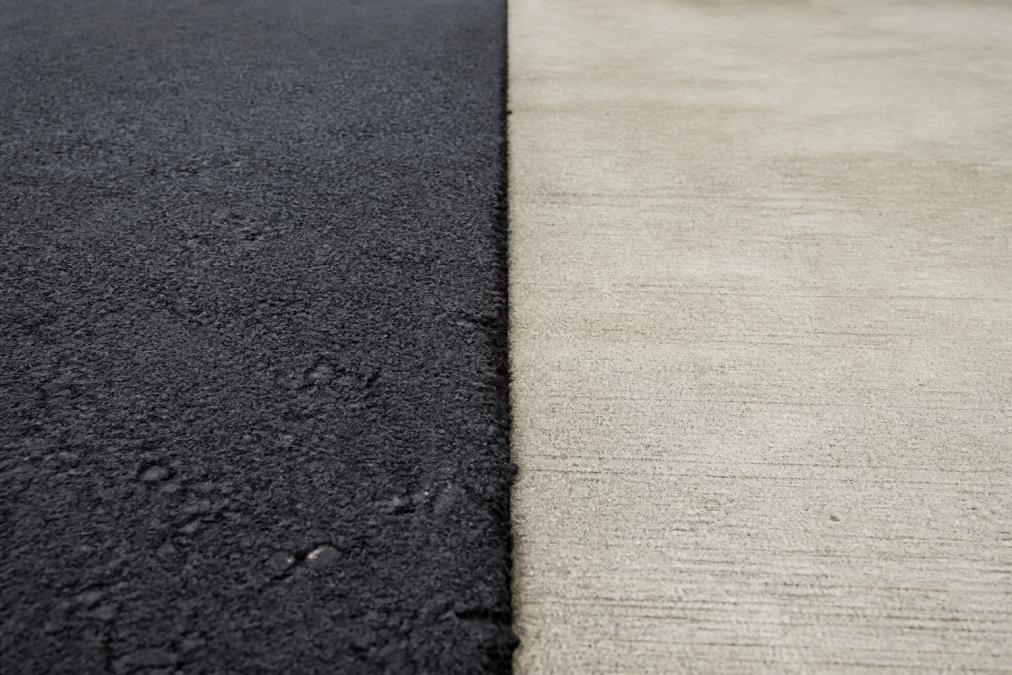
 comparison
Asphalt vs Concrete Driveways: A 2026 Buyer's Guide
Table of Contents
- Asphalt vs Concrete: The Bottom Line
- Cost Comparison: Average Cost of Asphalt Driveway Per Square Foot
- Durability and Lifespan in Hot Climates
- Maintenance Requirements: Asphalt vs Concrete
- Aesthetics, Installation, and Site Preparation
- When to Repair vs Replace a Driveway
- Which Driveway Material Is Right for Your Home?
- Frequently Asked Questions
Last Updated: September 6, 2026
Asphalt vs Concrete: The Bottom Line
The choice between asphalt vs concrete for residential driveways comes down to a trade-off between upfront cost and long-term maintenance. Asphalt is typically cheaper to install and performs better in freeze-thaw cycles, while concrete lasts longer and requires less routine care but costs more initially. The right material for your home depends on your local climate, soil conditions, and how much maintenance you're willing to take on.
A common mistake is choosing based on price alone, only to face premature cracking or drainage failures within a few years. This guide breaks down the real costs, durability differences, and maintenance schedules so you can make a confident decision.
Cost Comparison: Average Cost of Asphalt Driveway Per Square Foot
The average cost of asphalt driveway per square foot is generally lower than concrete, but the gap narrows when you factor in the full lifecycle. Asphalt installation involves site preparation, a compacted sub-base, and multiple layers of hot mix. Concrete requires formwork, reinforcement, and proper curing time, which drives up labor costs.
Pricing varies significantly by region, soil conditions, and site accessibility. HomeGuide's driveway cost estimator tracks regional pricing data that shows asphalt typically running 30 to 50 percent less than concrete for comparable installations. However, that upfront savings can evaporate if you neglect sealcoating every few years.
| Material | Relative Cost | Lifespan | Maintenance Frequency |
|---|---|---|---|
| Asphalt | Lower upfront | 15-20 years | Sealcoat every 2-3 years |
| Concrete | Higher upfront | 25-30 years | Minimal, occasional cleaning |
| Asphalt (hot climate) | Lower upfront | 10-15 years | More frequent sealcoating |
| Concrete (hot climate) | Higher upfront | 20-25 years | Watch for UV degradation |
Durability and Lifespan in Hot Climates
Hot climates test both materials differently. Asphalt softens under extreme heat, making it prone to deformation under heavy loads, while concrete handles heat well but suffers from thermal expansion issues if expansion joints aren't installed correctly.
In intense sun, asphalt experiences UV degradation that oxidizes the surface and makes it brittle, accelerating cracking and requiring more frequent sealcoating. Concrete reflects more sunlight and maintains lower surface temperatures, which also helps keep your home cooler.
The bigger enemy in many climates is the freeze-thaw cycle. When water seeps into small cracks and freezes, it expands and forces the crack wider. Portland Cement Association's technical guidance explains that concrete's tensile strength makes it more resistant to this kind of damage, provided the sub-base drains properly. Asphalt's flexibility allows it to absorb some movement, but repeated cycles eventually cause fatigue cracking.
For Houston and Katy homeowners, the combination of heat, heavy rain, and expansive clay soils creates unique challenges. Proper site preparation and drainage are critical regardless of which material you choose.
Maintenance Requirements: Asphalt vs Concrete
Asphalt demands more routine maintenance but repairs are simpler and less expensive. Concrete lasts longer with minimal care, but when it does fail, the repairs are more involved.
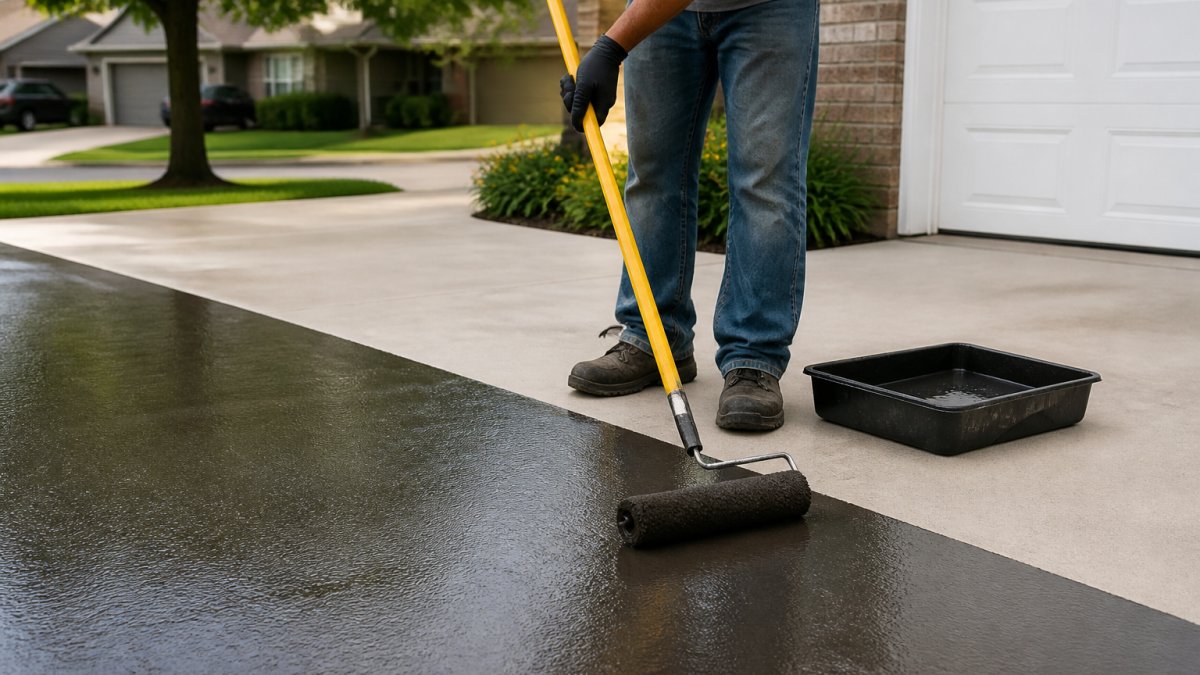
Asphalt maintenance centers on sealcoating, which protects against UV damage, oil stains, and water penetration. Most contractors recommend it every two to three years. Crack filling should happen as soon as cracks appear. The most common failure is homeowners skipping sealcoating for five or more years, then needing a full resurfacing.
Concrete maintenance is mostly about drainage and joint care. Keeping the surface clean and ensuring water flows away prevents most problems. Oil stains are more visible and harder to remove than on asphalt, requiring immediate attention with a degreaser.
Concrete Driveway Maintenance Tips
- Seal the surface every few years to resist oil stains and moisture penetration
- Keep expansion joints clear of debris and re-caulk when the sealant dries out
- Fix drainage issues promptly; standing water is the leading cause of concrete failure
- Avoid deicing salts that can corrode the surface over repeated winter use
Aesthetics, Installation, and Site Preparation
Aesthetic Options
Concrete wins decisively on design flexibility. Stamped patterns can mimic cobblestone, slate, or brick, and integral color or acid staining produces a range of earth tones and custom hues. Contractors can also create decorative borders, exposed aggregate finishes, or saw-cut geometric patterns. Asphalt is essentially limited to a dark gray or black surface, though you can add a contrasting aggregate topcoat or use a decorative stamping technique that imprints a brick or stone pattern into the surface. That stamped asphalt is less common and typically costs more than standard hot mix.
Installation Timeline: What to Expect
A concrete driveway is a multi-day process. Day one involves excavation, sub-base compaction, and forming. Day two is pouring, finishing, and cutting control joints. The concrete then cures, five to seven days before light traffic and up to 28 days before full strength develops. Parking on it during that window risks scaling or cracking.
Asphalt installation is faster. The sub-base is prepared the same way, but the hot mix is laid and compacted in a single day for most residential driveways. You can usually drive on it within 24 to 48 hours, though sharp turns at full lock can mar the fresh surface during the first week.
DIY vs. Professional Installation: A Realistic Breakdown
Most homeowners cannot install either material themselves. Both require heavy equipment, a mini excavator, a plate compactor, and either a concrete mixer truck or an asphalt paver. Renting this equipment costs $200 to $500 per day, and operating it without experience leads to an uneven sub-base, the leading cause of premature failure.
What you can do yourself is the preparation work. Clearing the site, removing an old driveway, and installing a French drain are feasible weekend projects that save $500 to $1,500 in labor. If you hire a professional, ask whether site prep is included in the quote or charged separately, many contractors list it as a line item adding 15 to 25 percent to the total.
The Sub-Base: The Part You Never See
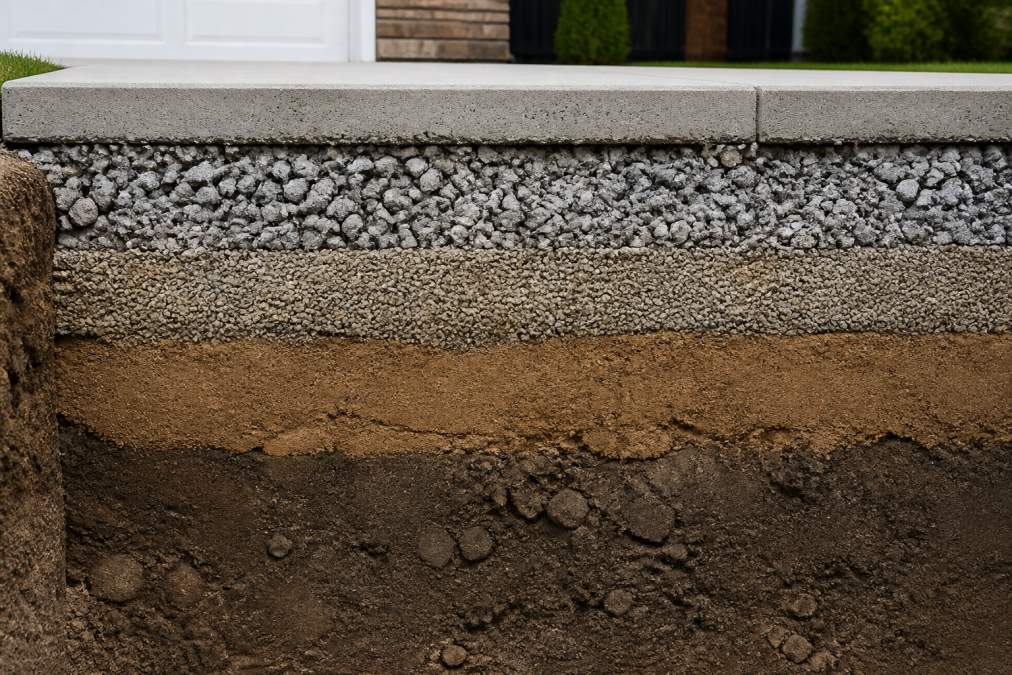
The sub-base is the foundation of the entire driveway. For both asphalt and concrete, contractors typically excavate 8 to 12 inches of soil, lay down a geotextile fabric to prevent soil mixing, and then compact 6 to 10 inches of crushed stone or recycled concrete aggregate in lifts. Each lift is compacted to at least 95 percent of its maximum density, which is verified with a nuclear density gauge.
Regional Soil Compatibility: The Angle Most Guides Miss
Your local soil type is a major factor most online comparisons ignore. Expansive clay soils, common across the Gulf Coast and parts of the Midwest, swell when wet and shrink when dry, exerting enormous pressure on a rigid concrete slab and causing it to heave and crack. Asphalt's flexibility absorbs some of that movement, which is why many contractors in clay-heavy regions recommend it over concrete unless the sub-base is engineered with lime or cement stabilization.
Sandy or well-draining soils are more forgiving for both materials. In these conditions, concrete's rigidity is less of a liability, and its longer lifespan makes it more cost-effective over a 30-year horizon. If unsure of your soil type, check the USDA Web Soil Survey or ask your local county extension office, it is free and takes five minutes.
Call now to schedule your free estimate →
When to Repair vs Replace a Driveway
Deciding between a repair and a full replacement comes down to the extent of the damage and the condition of the sub-base. A good rule of thumb: if damage covers more than 25 to 30 percent of the surface, or if the sub-base has failed, replacement is the more cost-effective option. Patching a failing base is like putting a bandage on a broken bone, it will not hold.
Signs You Need Replacement
For asphalt, replacement is necessary when you see alligator cracking (a pattern of interconnected cracks resembling reptile skin), large sunken areas, or water pooling across the surface. These indicate the sub-base has shifted or washed out. For concrete, replacement is warranted when sections have settled or heaved vertically by more than half an inch, or when cracks run completely through the slab and are wider than a quarter inch.
Repair Techniques: What Actually Works
Asphalt Crack Filling
For hairline cracks up to a quarter inch wide, use a cold-pour asphalt crack filler. Clean the crack with a wire brush and compressed air, then fill it flush with the surface. For wider cracks, use a hot-pour rubberized filler, which requires a melting kettle you can rent for about $75 per day. This material bonds better and flexes with temperature changes.
Asphalt Pothole Patching
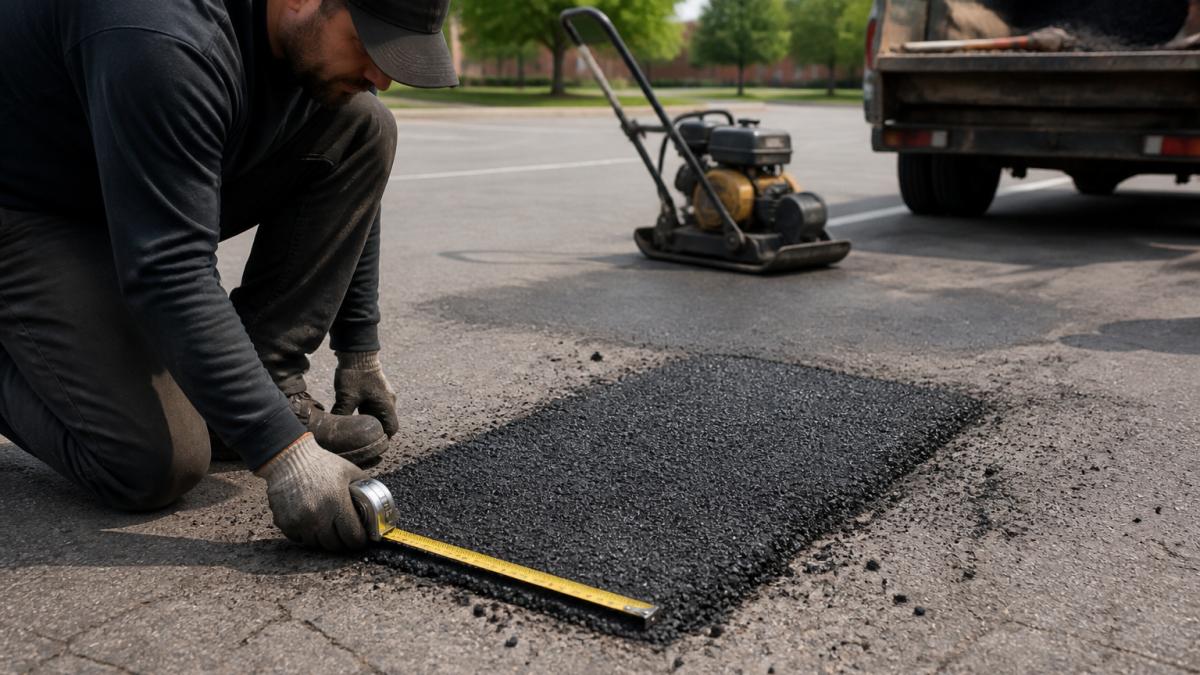
A pothole means the base beneath the asphalt has failed. A permanent patch requires removing the loose material, compacting the exposed sub-base, and filling the hole with cold-mix asphalt in 2-inch lifts, compacting each with a hand tamper. This is a doable weekend project for a single pothole. If you have more than three or four, the base is likely failing across the driveway, and replacement is the better investment.
Concrete Crack Repair
For hairline cracks in concrete, a polyurea or polyurethane crack injection is the most durable fix. These products are self-leveling and expand to fill the crack completely. For wider cracks, use a concrete patching compound with polymers for flexibility. Clean the crack, dampen it, trowel the patch in, and keep it moist for 24 hours to allow proper curing.
Concrete Spalling Repair
Spalling, the flaking or chipping of the concrete surface, is often caused by deicing salts or freeze-thaw cycles. For minor spalling, apply a resurfacer mixed with a bonding agent and troweled on at a quarter-inch thickness. This cosmetic fix can extend the driveway's life by five to seven years. If spalling exposes the aggregate beneath, the damage is structural, and replacement is the only reliable option.
:::tip A common frustration is a contractor who patches the same crack repeatedly. That happens when the repair addresses the symptom, not the cause. If your driveway floods when it rains and keeps cracking in the same spots, the problem is drainage and sub-base failure, not the surface material. Fix the drainage first, then repair the surface.
The Cost of Ignoring Repairs
A quarter-inch crack in asphalt can allow water to reach the sub-base. Over one winter, that water freezes and thaws, expanding the crack to a half inch. By the second year, you are looking at a pothole. The cost of a $15 tube of crack filler is trivial compared to the $500 to $1,500 cost of a pothole repair or the $5,000 to $15,000 cost of a full replacement.
For concrete, a hairline crack left unsealed will widen with every freeze-thaw cycle and allow water to erode the sub-base. Once the slab settles, the repair cost jumps from $50 for crack injection to $3,000 or more for slab jacking or replacement.
Which Driveway Material Is Right for Your Home?
Choose asphalt if you want the lower upfront cost and don't mind a maintenance schedule that includes sealcoating every few years. Choose concrete if you prefer a longer lifespan, more design options, and minimal routine care, and you're willing to pay more initially.
For homes in hot, humid climates with clay soils, drainage and sub-base preparation are the deciding factors. A properly installed driveway with good drainage will outperform a cheaper installation regardless of material. Federal Highway Administration's pavement preservation guidance emphasizes that timely maintenance and proper base preparation extend pavement life far more than the choice of surface material.
Houston Pavement Repair LLC provides expert asphalt and concrete paving and repair services for residential and commercial clients. We are dedicated to delivering reliable, high-quality surface solutions that keep your property in tiptop shape. Whether you need professional paving or essential repairs, our team is ready to help you achieve durable results. Contact us today to schedule your free estimate and experience our commitment to excellence.
Choosing between asphalt and concrete is a long-term investment in your property. The right decision depends on your climate, soil, budget, and how much maintenance you're prepared to handle. Houston Pavement Repair LLC offers expert installation and repair for both materials, backed by a professional site assessment that addresses the root cause of pavement failure. Contact us today to schedule your free estimate.
Frequently Asked Questions
Is asphalt or concrete more cost-effective for residential properties?
Asphalt generally has a lower upfront installation cost, which is why the average cost of an asphalt driveway per square foot is often less than concrete. However, concrete driveways typically last longer with less frequent maintenance. The most cost-effective choice depends on your timeline: asphalt offers immediate savings, while concrete can be more economical over its longer lifespan despite the higher initial investment.
Why does Texas use concrete instead of asphalt?
While both materials are used, concrete is a popular choice in hot climates like Texas because it reflects sunlight and doesn't soften in extreme heat. Asphalt absorbs heat, which can make it feel hotter and more prone to softening. Concrete's durability and resistance to the heat and freeze-thaw cycles common in some parts of the state also contribute to its widespread use for residential driveways.
Is 2 inches of asphalt enough for a driveway?
A 2-inch layer is generally not enough for a residential driveway that supports vehicles. Proper installation requires a compacted sub-base, typically 4 to 8 inches of gravel, topped with at least 2 to 3 inches of asphalt mix. The base layer is critical for structural integrity and load-bearing capacity. Skipping on the sub-base or the top layer leads to cracking and premature failure.
What are the primary maintenance differences between asphalt and concrete?
Asphalt requires more regular maintenance, including sealcoating every few years to protect against UV degradation and oil stains, plus filling cracks. Concrete driveway maintenance is less frequent but can be more involved when issues arise. Concrete needs cleaning and occasional sealing to prevent stains, and cracks may require specialized patching. Asphalt is prone to softening in heat, while concrete can crack from ground movement.