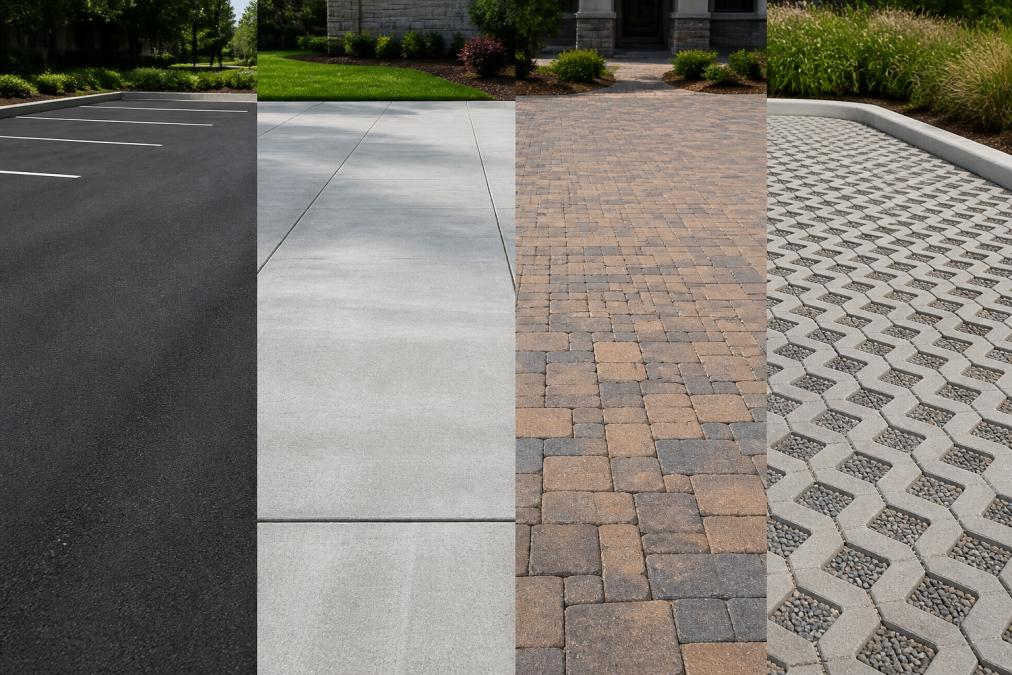
 comparison
Commercial Paving Alternatives: A 2026 Buyer's Guide
Table of Contents
- Why Commercial Paving Alternatives Matter
- Cost Comparison of Asphalt vs. Concrete Paving
- Permeable Paver Benefits for Commercial Lots
- Recycled Asphalt and Resin-Bound Surfaces
- Durability, Maintenance, and Lifecycle Costs
- How to Choose a Commercial Paving Contractor
- Climate-Specific and Regulatory Considerations
- Conclusion
- Frequently Asked Questions
Last Updated: August 29, 2026
Why Commercial Paving Alternatives Matter
When your parking lot breaks down, you face a choice: replace it with traditional asphalt or concrete, or evaluate whether alternatives better solve your specific problem. Commercial paving alternatives have evolved significantly. Permeable surfaces manage stormwater. Recycled materials cut environmental impact. Resin-bound systems offer durability without maintenance headaches. For facilities managers dealing with drainage issues, environmental regulations, or long-term budget constraints, these alternatives deserve serious consideration.
Houston Pavement Repair LLC works with commercial properties across the region and has seen how the right paving choice transforms a property's functionality and lifespan. The problem isn't that asphalt and concrete are unreliable; it's that they're not always the best fit for your situation.
This guide breaks down the alternatives available, how they compare on cost and durability, and how to choose the right contractor to install them properly.
Cost Comparison of Asphalt vs. Concrete Paving
Asphalt typically costs less to install than concrete, but the catch is deterioration. You'll seal it every 2-3 years, patch cracks, and plan for complete resurfacing within 15-20 years (asphaltpavement.org). Concrete carries higher installation costs but lasts 25-40 years with minimal maintenance, often winning on lifecycle cost for long-term properties (cement.org).
Neither material addresses underlying problems like poor drainage or heavy stormwater runoff. If your lot floods during rain, both deteriorate faster because water pools on the surface and works underneath. You're not just paying for paving; you're paying to repeat the cycle.
Commercial paving alternatives become cost-effective when you factor in total cost of ownership over 20-30 years. A permeable system costs more upfront but eliminates standing water, reduces drainage infrastructure costs, and extends pavement life. Recycled asphalt cuts material costs while delivering comparable durability. Resin-bound surfaces require less maintenance than either traditional option.
The question isn't "which is cheapest to install" but "which costs least to own and operate over the life of the property."
Permeable Paver Benefits for Commercial Lots
Permeable pavers solve a problem traditional paving creates: water has nowhere to go. When rain hits asphalt or concrete, it pools on the surface and erodes the base layer underneath. Permeable systems let water drain through the surface into a stone base below, where it filters naturally and recharges groundwater.
For commercial properties, this changes everything. Parking lots with permeable pavers experience less standing water, safer conditions for vehicles and pedestrians, and less deterioration because water isn't constantly working at the base. You're managing stormwater on-site instead of overwhelming municipal systems.
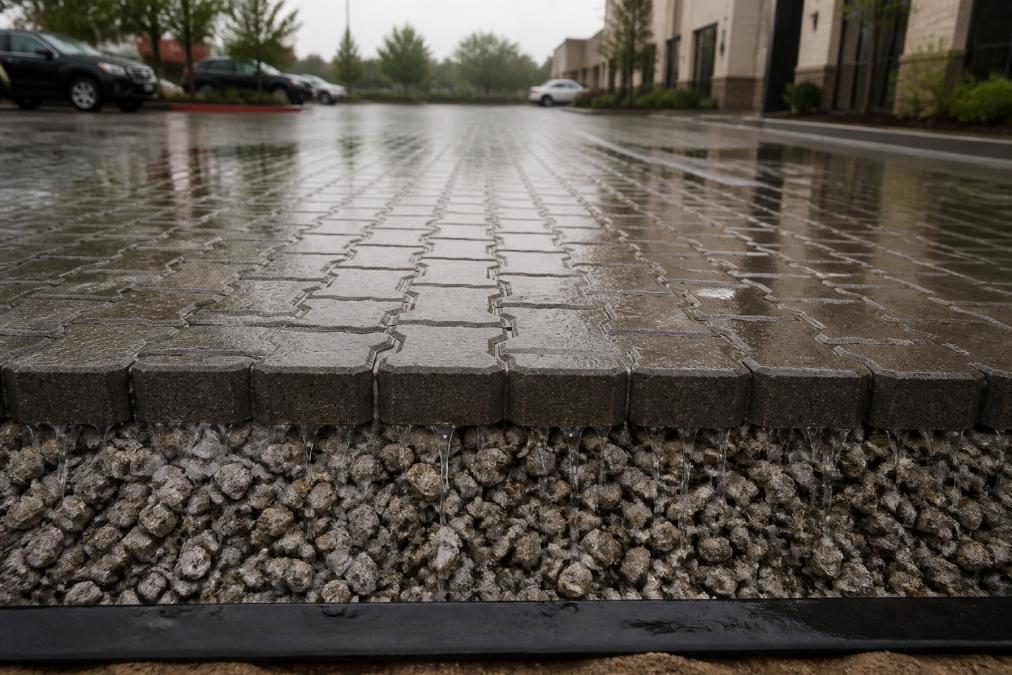
Permeable pavers come in concrete, stone, and plastic options, each with different aesthetics and performance characteristics. Concrete pavers offer durability and design flexibility. Stone provides a more upscale appearance. Plastic grids work well for overflow parking areas.
Many municipalities now require permeable surfaces for new commercial construction or significant renovations (the EPA). What started as an environmental preference has become a regulatory requirement in many areas. Check your local zoning and environmental regulations; permeable systems may not be optional.
Installation requires proper sub-base preparation: a layer of gravel or crushed stone underneath allows water to filter and store. This adds cost and complexity compared to standard paving, but it's essential for system success. Poor base preparation leads to pavement failure, which is why contractor expertise matters.
Maintenance is straightforward. Permeable surfaces don't require seal coating like asphalt. Occasional cleaning prevents the pores from clogging with sediment, but that's minor compared to traditional paving maintenance cycles.
Recycled Asphalt and Resin-Bound Surfaces
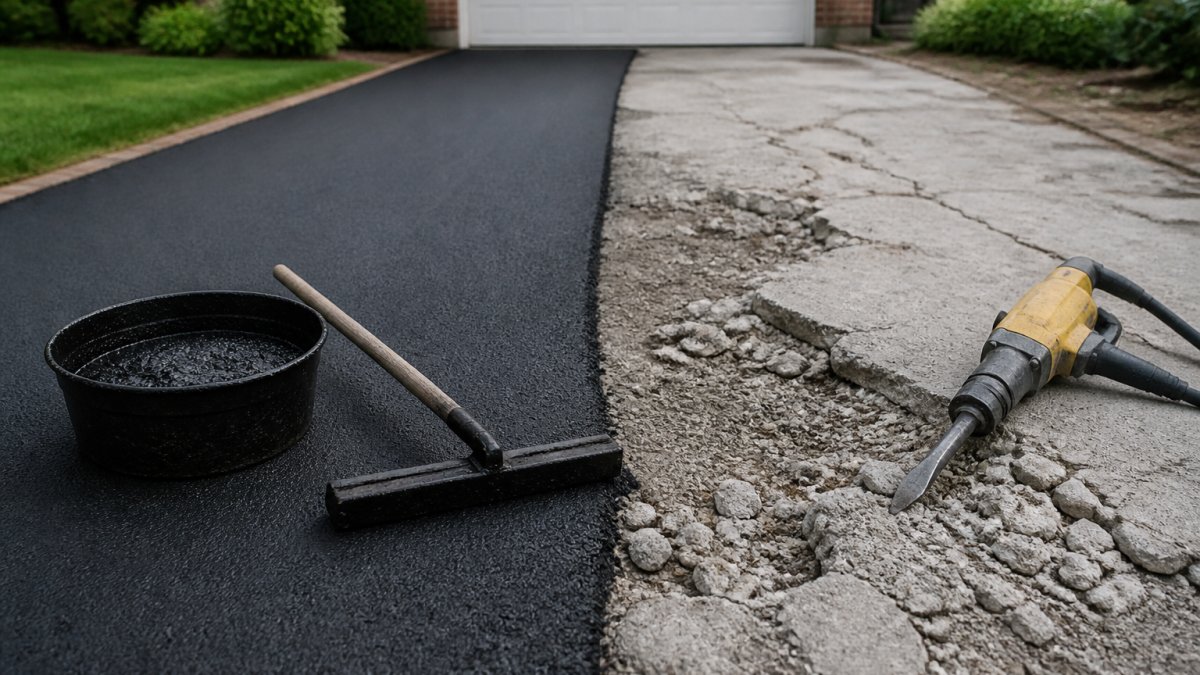
Recycled asphalt paving uses milled material from old pavements, shredded asphalt that's been reclaimed and reprocessed. It's environmentally sensible and cost-effective. The material is ready to use within 24 hours of milling, enabling faster installation and less disruption to your operation.
Durability is comparable to virgin asphalt. Recycled material binds together just as effectively, creating a smooth, stable surface. For commercial parking lots and driveways, it performs well under normal traffic loads. The real advantage is material cost: recycled asphalt costs significantly less than new material, and you divert waste from landfills.
The limitation is that recycled asphalt isn't permeable. You get the cost benefit and environmental advantage, but you don't solve drainage problems.
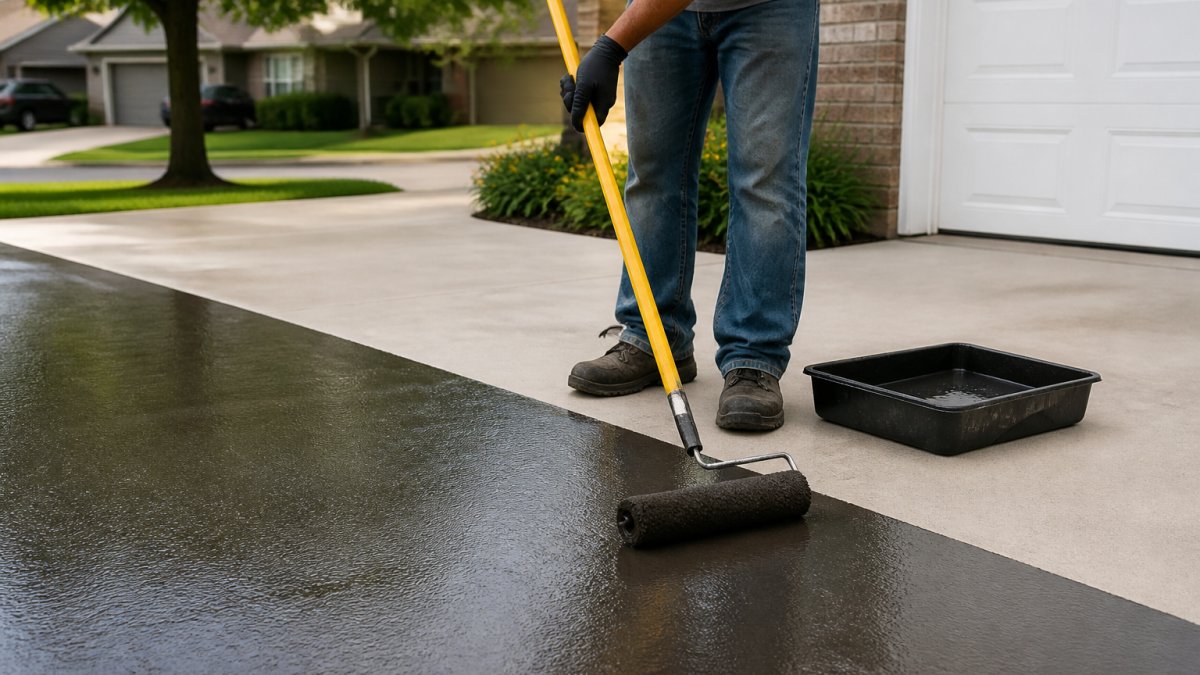
Resin-bound surfacing mixes decorative stone aggregate with a resin binder, creating a smooth, permeable surface that looks more refined than standard asphalt. The stones are locked in place and don't shift like loose gravel. The surface is slip-resistant, UV-stable, and crack-resistant.
Resin-bound systems excel in high-visibility commercial applications: retail parking areas, office building entrances, and upscale facilities where appearance matters. Over 30 color blends are available, appealing to properties that want their paving to reflect brand identity.
Installation requires a structurally sound base; any movement underneath will cause cracking. Once installed correctly, maintenance is minimal: occasional cleaning and no seal coating required.
The trade-off is upfront cost and installation precision. Resin-bound surfaces cost more than asphalt but less than some concrete options, delivering durability and aesthetic appeal that justify the investment for the right application.
Durability, Maintenance, and Lifecycle Costs
Every paving material has a maintenance cycle. Understanding that cycle and its actual cost separates smart facility managers from those who get surprised by bills.
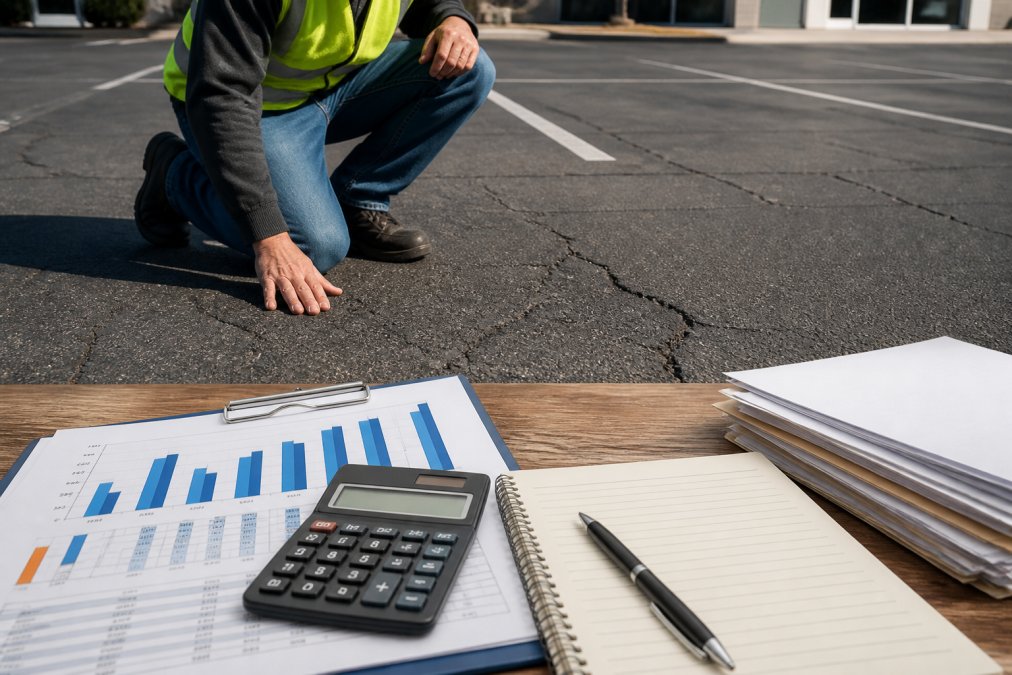
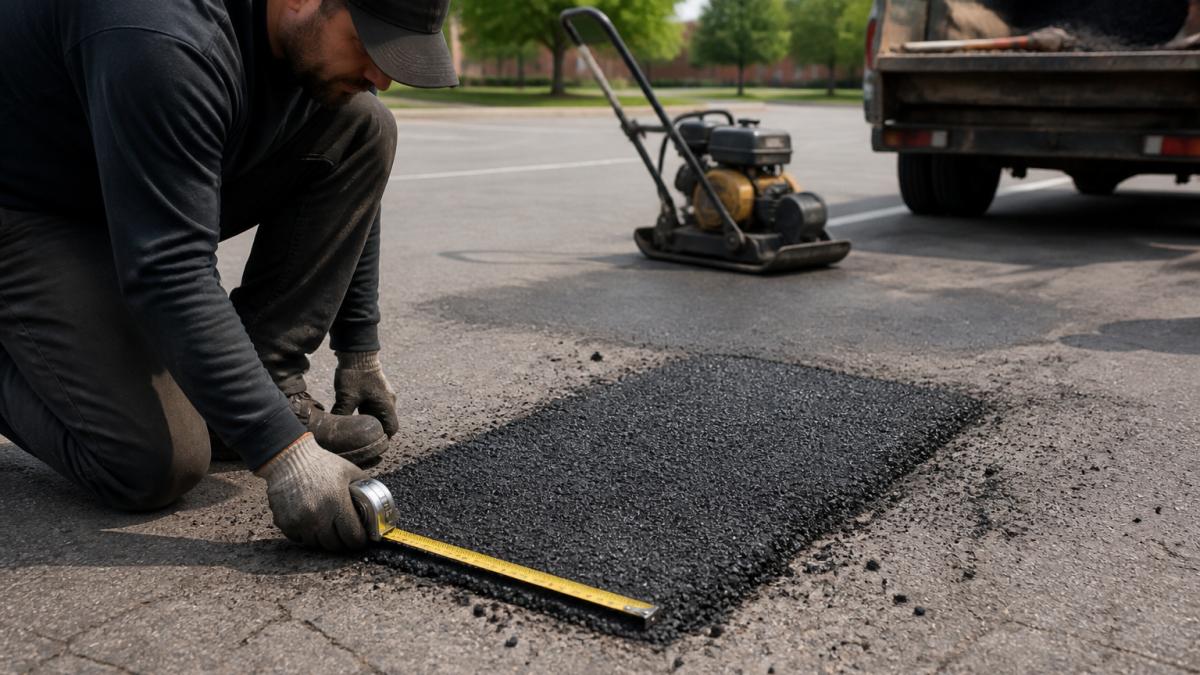
Asphalt requires seal coating every 2-3 years and patching as cracks appear. Full resurfacing happens around year 15-20. Over 30 years, you're looking at multiple seal coats, dozens of patch repairs, and at least one complete resurfacing.
Concrete lasts longer but isn't maintenance-free. Joint sealing prevents water from working into cracks. Occasional patching addresses deterioration. Full replacement typically happens around year 30-40. Maintenance is less frequent than asphalt, but initial installation cost is higher.
Permeable pavers require base inspection to ensure the stone layer isn't clogging with sediment. Occasional power washing keeps the surface clean. Lifecycle is 20-25 years with lower maintenance costs because you're not seal coating or patching cracks.
Call now to schedule your free estimate →
Recycled asphalt follows the same maintenance pattern as virgin asphalt. The lifecycle cost advantage is in the initial material expense, not reduced maintenance.
Resin-bound surfaces require the least maintenance. No seal coating, no patching. Occasional cleaning keeps it looking new. Lifecycle is 15-20 years with lower maintenance cost over that period.
Lifecycle cost analysis (LCCA) calculates total cost of ownership: installation plus all maintenance and eventual replacement, spread across the expected life of the surface. A material that costs more upfront but requires minimal maintenance often wins on LCCA.
How to Choose a Commercial Paving Contractor
Choosing the right contractor matters more than choosing the material. Poor installation ruins even the best paving option. A skilled contractor working with a solid material delivers decades of reliable service.
Start by verifying experience with the specific material you're considering. Ask directly: "How many commercial permeable paver projects have you completed in the last three years?" Specific numbers matter. Generic answers are red flags.
Check references from recent projects, ideally completed within the last 18-24 months. Call those references yourself and ask about timeline adherence, quality of work, and how the contractor addressed issues that came up.
Verify licensing and insurance. A legitimate commercial contractor carries liability insurance and maintains required licenses.
Get detailed written proposals from at least two contractors. The proposal should specify materials, installation methods, timeline, warranty terms, and total cost. Vague proposals indicate a contractor who isn't thinking carefully about your project.
Ask about warranty coverage. What's covered? For how long? What happens if the surface fails prematurely? A contractor confident in their work stands behind it with a real warranty.
Houston Pavement Repair LLC provides free estimates and detailed assessments of your property's specific needs. We identify underlying issues, drainage problems, and base deterioration that affect material selection. Our experience with commercial properties across the region means we understand local soil conditions, climate factors, and regulatory requirements that impact paving performance.
Climate-Specific and Regulatory Considerations
Your location affects which materials perform best. Freeze-thaw cycles, extreme heat, high rainfall, and soil conditions all influence paving durability.
In regions with harsh freeze-thaw cycles, water penetration is the enemy. Permeable systems reduce this risk because water drains through rather than pooling underneath. Concrete handles freeze-thaw better than asphalt in these climates.
High-rainfall areas benefit from permeable surfaces that manage stormwater on-site. Resin-bound and permeable paver systems excel here. Traditional asphalt and concrete require proper grading and drainage infrastructure to prevent water accumulation.
Heat island effect, where dark paving absorbs solar radiation and raises ambient temperature, is a concern in hot climates. Permeable pavers, resin-bound surfaces, and lighter-colored concrete reflect more heat than dark asphalt, reducing cooling costs.
Many municipalities now mandate permeable surfaces for new commercial construction or significant renovations. Environmental regulations may require stormwater management on-site. ADA compliance affects surface texture, slope, and drainage to ensure accessibility.
Check with your local planning and zoning department before committing to a material. A contractor familiar with local requirements saves you from discovering compliance issues after installation begins.
Conclusion
Choosing a commercial paving alternative isn't just about picking a different material; it's about solving the actual problems your property faces. Traditional asphalt and concrete work well for straightforward applications, but drainage issues, environmental regulations, and long-term maintenance costs often make alternatives more sensible.
Permeable pavers manage stormwater while meeting regulatory requirements. Recycled asphalt cuts costs and environmental impact. Resin-bound surfaces deliver durability with minimal maintenance. Each option has legitimate advantages depending on your situation.
The real difference comes down to contractor expertise and proper installation. Houston Pavement Repair LLC has the experience to assess your property, identify underlying issues, and recommend the right solution. Contact us today to schedule your free estimate and learn which commercial paving alternative fits your needs.
| Material | Best For | Maintenance | Lifespan |
|---|---|---|---|
| Asphalt | Budget-conscious projects, quick installation | Seal every 2-3 years, frequent patching | 15-20 years |
| Concrete | Long-term durability, high-traffic areas | Joint sealing, occasional patching | 25-40 years |
| Permeable Pavers | Stormwater management, regulatory compliance | Surface cleaning, base inspection | 20-25 years |
| Recycled Asphalt | Cost reduction, environmental goals | Same as asphalt | 15-20 years |
| Resin-Bound | High-visibility areas, minimal maintenance | Occasional cleaning only | 15-20 years |
Frequently Asked Questions
Q: What is a good substitute for asphalt in commercial applications?
Concrete, permeable pavers, recycled asphalt, and resin-bound surfacing all serve as viable commercial paving alternatives. Your choice depends on traffic volume, drainage needs, and long-term maintenance preferences. Permeable pavers excel at stormwater management and reduce heat island effect. Concrete offers durability for high-traffic areas. Recycled asphalt provides cost savings and environmental benefits. Resin-bound surfaces combine aesthetics with permeability. Evaluate each option's lifecycle cost, not just installation price.
Q: How do permeable pavers compare to traditional asphalt in commercial settings?
Permeable pavers allow water to drain through the surface, reducing stormwater runoff and improving groundwater recharge, while traditional asphalt is impermeable and contributes to surface runoff. Pavers also reduce the heat island effect and offer better environmental sustainability. However, permeable systems require proper sub-base preparation with gravel or crushed stone for filtration. Asphalt typically costs less upfront but may incur higher long-term drainage management expenses. Pavers work best where stormwater compliance is a priority.
Q: What are the most durable alternatives to asphalt for commercial parking lots?
Concrete and permeable pavers rank highest for durability in commercial parking lots. Concrete withstands heavy traffic and freeze-thaw cycles well, lasting 30+ years with proper maintenance. Permeable pavers, when installed over a solid aggregate base, provide excellent load-bearing capacity and structural integrity for frequent use. Recycled asphalt offers durability comparable to new asphalt at lower cost. Resin-bound surfaces are highly durable and crack-resistant. Your climate, traffic volume, and maintenance budget should guide your selection.
Q: What is the lowest-maintenance commercial paving material?
Resin-bound surfacing requires the least maintenance among commercial paving alternatives. Its seamless, permeable design resists cracking and staining, and it doesn't require regular sealing or patching. Permeable pavers also demand minimal upkeep once properly installed, though the sub-base may need occasional raking. Concrete requires periodic sealing and can develop cracks over time. Asphalt demands the most maintenance, including regular seal coating, patching, and resurfacing. Factor maintenance cycles into your lifecycle cost analysis when selecting materials.
Q: How does climate impact the choice of commercial paving materials?
In areas with heavy rainfall, permeable pavers and resin-bound surfaces excel at managing stormwater and preventing flooding. Freeze-thaw climates favor concrete and recycled asphalt for their freeze-thaw resistance and structural stability. Hot, humid climates benefit from permeable options that reduce heat island effect and allow drainage. Coastal or high-moisture regions require materials resistant to water infiltration and deterioration. Before selecting a paving material, assess your local weather patterns, annual rainfall, temperature extremes, and any stormwater management regulations your municipality enforces.
This article was written using GrandRanker