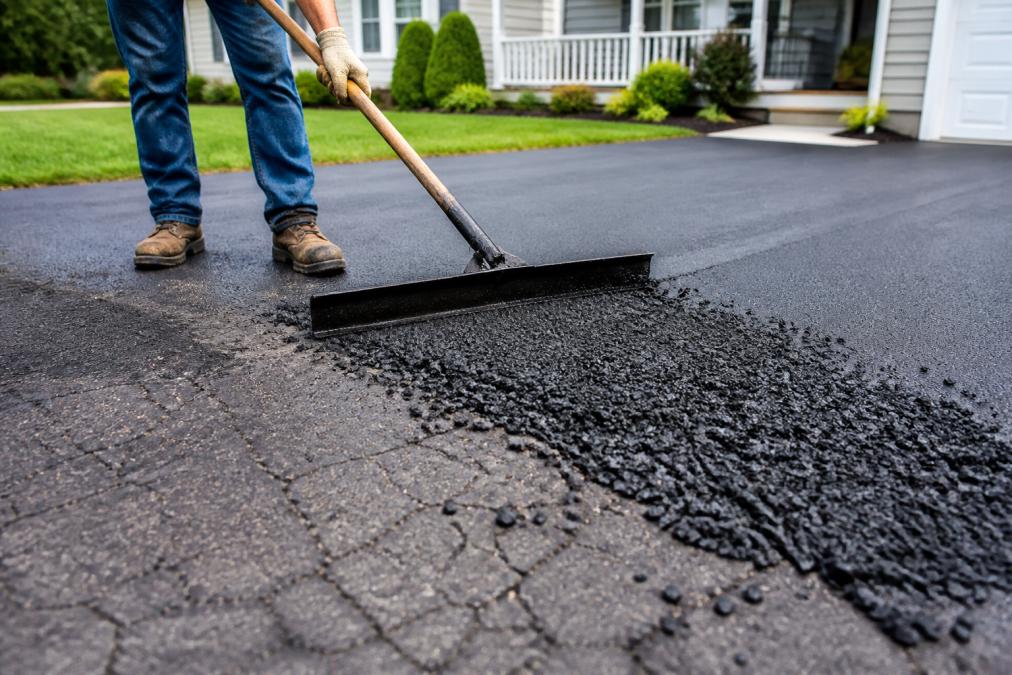
 comparison
Is Asphalt Driveway Repair Worth the Cost? A 2026 Guide
Table of Contents
- How to Tell If Asphalt Driveway Repair Is Worth the Cost
- Signs an Asphalt Driveway Needs Replacement
- Asphalt Resurfacing vs Replacement: Which One Fits Your Damage
- How Long Does Asphalt Driveway Repair Last?
- The Real Cost Breakdown: What Drives Your Estimate
- Repair ROI: How Asphalt Driveway Repair Affects Resale Value
- Conclusion: Making the Call on Repair vs Replacement
- Frequently Asked Questions
Last Updated: September 10, 2026
How to Tell If Asphalt Driveway Repair Is Worth the Cost
Asphalt driveway repair is worth the cost when the damage is surface-level and the base beneath it is still sound. In that case, you're paying to restore the top layer, not to rebuild the foundation.
That distinction matters because it decides whether you spend hundreds or thousands. Below, we'll show you exactly how to grade your own damage, compare resurfacing against full replacement, and run the math on what repair actually returns at resale.
Signs an Asphalt Driveway Needs Replacement
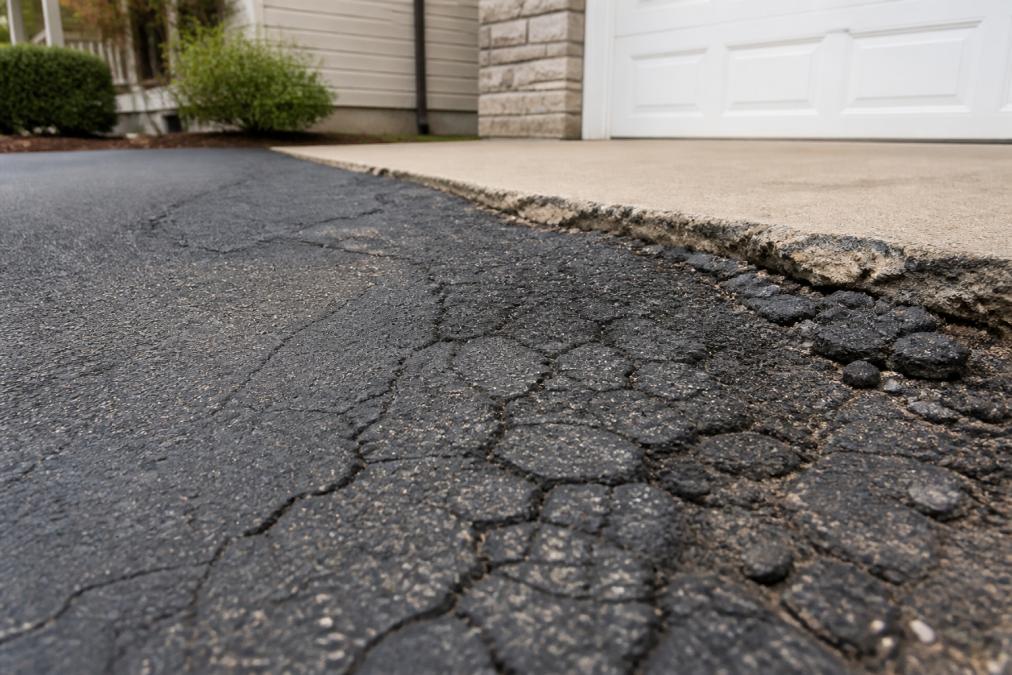
An asphalt driveway needs replacement when the damage reaches the sub-base, not just the surface. Patching over a failing base is the most common mistake we see, and it's why so many homeowners end up calling a second or third contractor within two years.
Watch for these signals:
- Alligator cracking: interconnected cracks forming a web pattern, a sign the sub-base has lost structural integrity
- Potholes that return: repeated patching in the same spot means water is getting under the surface
- Edge crumbling: the driveway no longer holds its shape at the borders
- Sinking or rutting: depressions where tires track, often from a compacted or drained-away subgrade
- Drainage issues: standing water after rain, which accelerates oxidation and surface damage
One or two isolated cracks are a repair job. A driveway showing several of these at once is usually a replacement candidate.
Asphalt Resurfacing vs Replacement: Which One Fits Your Damage
Asphalt resurfacing is the right call when the existing base is stable and the damage is confined to the top layer. Resurfacing, also called an overlay, adds a new layer of asphalt over the existing surface. It costs less than a full tear-out and restores curb appeal quickly.
Full replacement is the right call when the base has failed. This means tearing out the old asphalt, repairing or rebuilding the sub-base, re-compacting the aggregate, and laying fresh asphalt from the ground up.
| Factor | Resurfacing (Overlay) | Full Replacement |
|---|---|---|
| Best for | Surface cracks, oxidation, minor wear | Alligator cracking, potholes, sinking |
| Base condition required | Sound and stable | Rebuilt during the job |
| Lifespan added | Roughly 8-15 years | 20+ years with maintenance |
| Disruption | Minimal, often one to two days | Several days, heavy equipment |
| Long-term value | Delays replacement, doesn't prevent it | Resets the driveway's life |
A common mistake is choosing resurfacing purely on upfront cost. If the sub-base is compromised, the new overlay will crack along the same lines within a season or two.
How Long Does Asphalt Driveway Repair Last?
Asphalt driveway repair typically lasts 8 to 15 years when the underlying base is stable and the repair is done properly (asphaltpavement.org). How long it actually holds depends on three things: the quality of the sub-base, how well water drains away from the surface, and whether you keep up with sealcoating.
A patch on a sound driveway can outlast the surrounding asphalt. A patch on a failing base may not survive a single freeze-thaw cycle. This is why a professional estimate should always include an assessment of base stability, not just a look at the cracks.
Maintenance extends the number. Sealcoating every two to three years, filling cracks as they appear, and keeping gutters and drainage paths clear all slow the oxidation and weathering that break asphalt down (asphaltpavement.org).
The Real Cost Breakdown: What Drives Your Estimate
Your estimate is driven by square footage, damage depth, base condition, and site access. Two driveways of identical size can land thousands apart because one needs base repair and the other doesn't. To make the numbers useful, break the quote into the four buckets every contractor prices: surface area, materials, labor, and site work.
Surface area. Asphalt work is priced by the square foot, and most residential driveways run 400 to 1,200 square feet. A single-car driveway is often in the 400-600 square foot range; a two-car driveway with an apron typically lands between 600 and 1,000 square feet. Because material and labor scale with area, a 900-square-foot driveway can cost roughly 50% more than a 600-square-foot one for the same scope of work.
Materials. Hot-mix asphalt, aggregate base, tack coat, and sealant are the main line items. Material cost tracks the price of liquid asphalt binder, which moves with crude oil markets, so quotes can shift season to season. A thin overlay uses far less mix than a full-depth rebuild, which is why resurfacing and replacement land in different price tiers even on the same footprint.
Labor. Tear-out, grading, compaction, and finishing are labor-heavy. A patch crew might finish in half a day; a full tear-out and rebuild can take several days with heavy equipment and a larger crew. Labor is also where scheduling matters: peak paving season (late spring through early fall in most markets) commands higher rates than off-season work.
Site preparation and hidden costs. This is where estimates diverge most. Common add-ons include:
- Hauling and disposal fees for removed asphalt
- Sub-base repair or replacement where the aggregate has failed
- Regrading or adding drainage to correct ponding
- Saw-cutting and removing failed sections before patching
- Permits, if the work touches a right-of-way or curb
- Mobilization fees for small jobs that don't fill a crew's day
A useful rule of thumb: if a quote is dramatically lower than the others, ask what's excluded. The missing line is usually base repair or disposal.
How the buckets map to repair vs. replacement.
| Cost bucket | Patch / crack fill | Resurfacing (overlay) | Full replacement |
|---|---|---|---|
| Surface area priced | Small, localized | Entire surface | Entire surface |
| Materials | Sealant, patch mix | New asphalt layer | New asphalt + base aggregate |
| Labor | Hours | 1-2 days | Several days, heavy equipment |
| Site prep | Minimal | Cleaning, tack coat | Tear-out, hauling, re-compaction |
| Hidden costs | Rare | Occasional base repair | Drainage, permits, disposal |
Pricing depends on your specific driveway, so we quote every job after an on-site look. Call now to schedule a free estimate and get a number based on your actual damage, not a phone guess.
Repair ROI: How Asphalt Driveway Repair Affects Resale Value
Most articles on this topic stop at cost-to-fix. The real question behind "is it worth the cost" is what the money returns, and for most homeowners that return shows up in two places: how the driveway reads to a buyer, and how much longer you can defer the bigger bill.
Why curb appeal carries weight at resale. The driveway is one of the first surfaces a buyer sees, and it's one of the few exterior features they can evaluate without expertise. A cracked, crumbling, or stained driveway reads as deferred maintenance, and buyers tend to price that in as a negotiating point. A clean, sealed, evenly toned surface signals a well-kept property. Real estate professionals commonly describe curb appeal as a driver of first impressions and perceived condition, which is why exterior maintenance tends to show up on pre-listing checklists.
The mechanism, not just the claim. Repair protects value in three concrete ways:
- It removes a visible defect. A buyer touring the home sees a finished surface instead of a project. That shifts the conversation from "how much will this cost to fix?" to "this one's already handled."
- It prevents the damage from spreading. Water entering a crack softens the sub-base, and a soft sub-base turns a patch into a tear-out. Repair now keeps the problem in the cheap category.
- It buys time on the replacement decision. A sound overlay or patch can add years of service before the driveway needs a full rebuild, spreading the eventual cost across more years of ownership.
How to run the math yourself. You don't need a formula, just three numbers:
- Repair cost, the quote in front of you.
- Replacement cost, what a full tear-out and rebuild would run on the same footprint.
- Years of service the repair adds, how long the repair is expected to hold before replacement becomes necessary.
If the repair costs a fraction of replacement and adds several years of service, the annualized cost is low and the decision is usually easy. If the repair costs most of what replacement would, on a driveway that's already near the end of its life, the money is better spent on the rebuild.
Timing matters. Repairs done well before a sale tend to read as routine maintenance. Repairs done in the weeks before listing can read as a rushed patch job, especially if the new asphalt doesn't match the surrounding surface. If a sale is on the horizon, plan the work far enough ahead that the surface has time to cure and weather in.
Commercial and multi-unit properties. The same logic scales. Keeping parking surfaces patched and sealed prevents potholes and trip hazards, protects the property's appearance for tenants and customers, and spreads the cost of eventual replacement across more years. For property managers, the ROI case is often about liability and tenant satisfaction as much as resale.
A note on climate. How long a repair holds, and therefore how the ROI math works out, depends heavily on local conditions. In regions with repeated freeze-thaw cycles, water expands and contracts inside cracks and can shorten a patch's life dramatically (fhwa.dot.gov). In hot, sun-heavy climates, oxidation and UV aging break down the surface faster, which makes sealcoating intervals more important. Ask your contractor how the repair is expected to perform in your specific climate before you commit.
Conclusion: Making the Call on Repair vs Replacement
The honest answer to whether asphalt driveway repair is worth the cost comes down to your base. Sound base, surface damage: repair. Failing base, widespread cracking: replacement. Everything in between needs a professional look, because guessing wrong costs you the repair and the replacement.
Houston Pavement Repair LLC handles both sides of that decision. We assess base stability before recommending anything, offer asphalt and concrete paving and repair for residential and commercial properties, and back every job with a free estimate. Call now to schedule yours and get a straight answer on repair versus replacement.
Frequently Asked Questions
What is the average cost to repair an asphalt driveway?
Repair pricing depends on damage type, square footage, and site conditions. Small crack filling and patching sit at the low end; larger resurfacing jobs push higher. Houston Pavement Repair LLC provides a free estimate so you get a number tied to your actual driveway, not a generic range.
How long will an asphalt patch last?
A properly installed patch on a stable base typically lasts several years, but lifespan depends on drainage, traffic, and whether the underlying sub-base was fixed. Patching over a failing subgrade is the most common reason patches crack again in the same spot within a year or two. If your driveway floods every time it rains, the water is likely the root cause, and a patch alone will not solve it.
Is resurfacing an asphalt driveway a good idea?
Resurfacing works well when the base is still solid and damage is surface-level, such as oxidation, minor cracks, or weathering. It costs less than a full tear-out and adds years of life. It is a poor fit when you see alligator cracking, potholes, or sinking areas, because those signal sub-base failure that an overlay cannot fix. A professional assessment of structural integrity tells you which side you are on.
Does repairing an asphalt driveway increase home value?
A driveway in good condition supports curb appeal, and curb appeal influences how buyers and appraisers view a property. A cracked, crumbling driveway raises questions about deferred maintenance elsewhere. Repair or replacement is best treated as protecting resale value rather than a guaranteed dollar-for-dollar return. Preventative maintenance like sealcoating on a schedule is the cheaper way to hold that value over time.
What are the signs that an asphalt driveway needs replacement?
Watch for alligator cracking across a wide area, potholes that return after patching, sinking or uneven sections, crumbling edges, and damage covering roughly a quarter or more of the surface. These point to sub-base failure, which repair cannot correct. Surface damage like isolated cracks and oxidation is a repair candidate. When in doubt, get a professional estimate before spending on another patch.
Most homeowners delay the decision because they've been burned by patch jobs that failed. The difference is diagnosing the base first, and that's exactly where Houston Pavement Repair LLC starts. Get your free estimate and a plan built on your driveway's actual condition, not a guess.