 how-to
Asphalt Sealcoating vs Patching: How to Choose
Table of Contents
- Start With the Symptom, Not the Treatment
- Sealcoating vs Patching: What Each One Actually Does
- Asphalt Crack Sealing vs. Patching: Different Jobs, Different Damage
- Asphalt Pothole Repair: When Patching Is the Only Option
- Asphalt Sealcoating Cost per Square Foot and What Drives It
- How Long Does Asphalt Sealcoating Last, and When Do You Reapply?
- Combining Patching and Sealcoating: Order, Timing, and Climate
- DIY vs. Professional Repair: Safety and Durability
- Frequently Asked Questions
Last Updated: October 20, 2026
Start With the Symptom, Not the Treatment
Most homeowners and property managers ask whether to sealcoat or patch before checking what the pavement is telling them.
Sealcoating vs patching is a matter of diagnosis, not preference. A faded, chalky surface with fine hairline cracks needs a sealcoat barrier, while a sunken, crumbling hole needs a patch.
Start with your eyes, not a sales pitch. Walk the surface and note what you see:
- Fading color and a dry, sandy texture: surface wear, not structural damage
- Hairline cracks under 1/4 inch wide: early oxidation
- Cracks wider than 1/4 inch, or cracks that branch like a spider web: water is already getting in
That list is your decision tree. The Asphalt Institute pavement maintenance guidance makes the same point: maintenance decisions should follow condition assessment, not a calendar.
Sealcoating vs Patching: What Each One Actually Does
Sealcoating and patching solve two different problems. One protects a surface that is still sound. The other rebuilds a section that has already failed.
What sealcoating protects
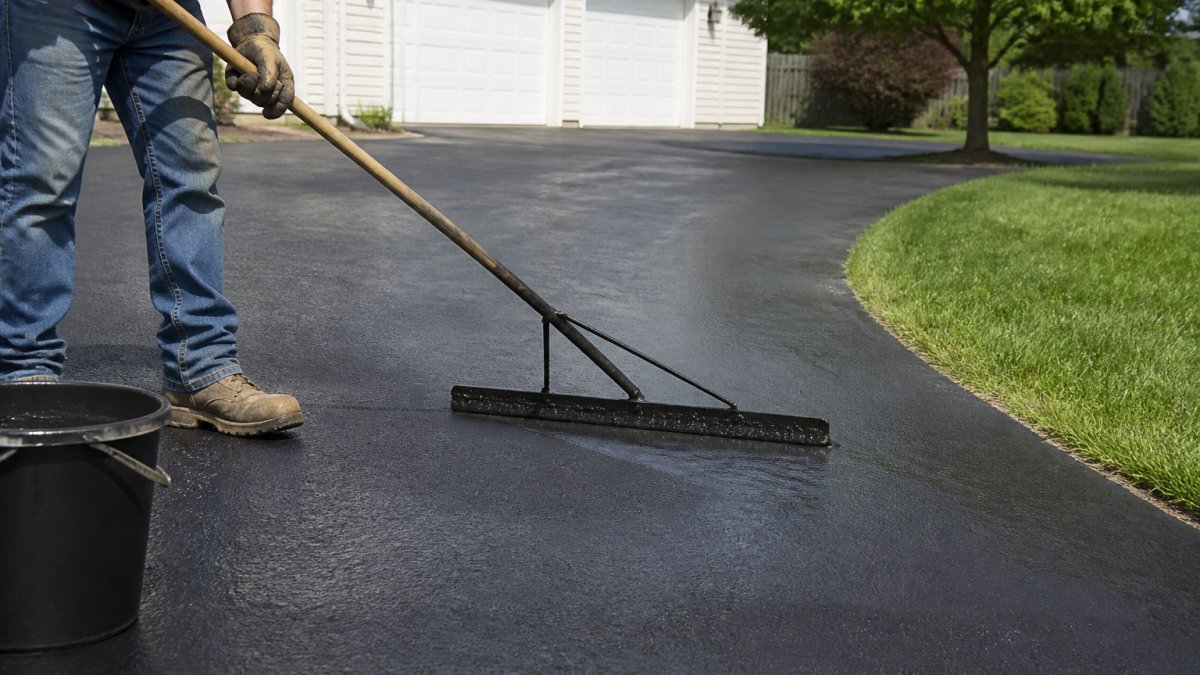
Sealcoating is a protective coating applied to the top of asphalt to block water, slow oxidation, and restore color. It dries into a dark, flexible skin that keeps rain out and sunlight from drying the binder holding the aggregate together.
It does not fix anything underneath. A sealcoat over a failing base is a coat of paint on a cracked wall.
What patching repairs
Asphalt patching is the removal and replacement of a damaged section of pavement with fresh asphalt mix. Crews cut out the failed area, clean it, fill it with compacted mix, and tamp it flush, restoring structural integrity.
Patching is a repair, not a preventive step. You do it because damage already exists.
| Feature | Sealcoating | Patching |
|---|---|---|
| Purpose | Protect sound pavement | Repair failed pavement |
| Best for | Fading, hairline cracks, surface wear | Potholes, wide cracks, crumbling spots |
| Fixes structural damage | No | Yes |
| Typical timing | Every 3-5 years | As damage appears |
| DIY difficulty | Moderate | High |
Asphalt Crack Sealing vs. Patching: Different Jobs, Different Damage
Crack sealing sits between the two. It is not the same as sealcoating, and it is not the same as patching.
Asphalt crack sealing vs. patching comes down to crack size and depth: crack sealing fills narrow openings with rubberized sealant so water cannot enter, while patching replaces a section that has lost its structure.
Use crack sealing when:
- Cracks are 1/4 inch wide or less
- The pavement on both sides of the crack is still firm
- The cracks are isolated, not a dense web
Use patching when:
- The crack has widened into a trench
- Edges are crumbling or breaking away
- The area around the crack is soft or sunken
A common mistake is filling a wide, deep crack with sealant and calling it done; it flexes out within a season and water gets back in.
Asphalt Pothole Repair: When Patching Is the Only Option
Asphalt pothole repair is a patch job, full stop. There is no sealcoat product that fills a hole.
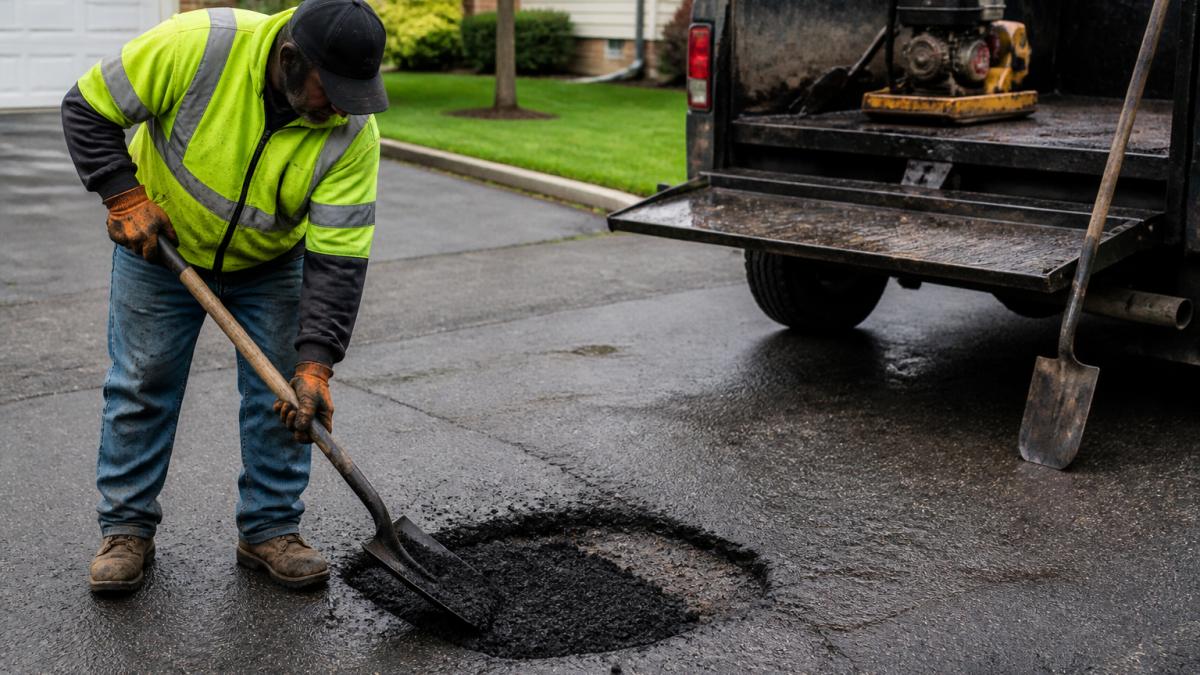
Potholes form when water enters a crack, freezes or expands, and pushes the pavement apart; traffic then breaks the loose pieces away. The hole grows from the bottom up, so a shallow-looking pothole often hides a much larger cavity.
Not all patches are the same
The right patch type depends on how deep the failure goes; choosing wrong is why so many repairs fail within a year.
- Surface patch (partial-depth): Used when the failure is confined to the top layer and the base is firm. The crew removes the broken surface, cleans the edges, and fills with compacted mix. Least expensive; works for shallow spalls and small surface breaks.
- Full-depth patch: Used when the base layer is soft, saturated, or broken. The crew removes pavement and failed base down to stable material, rebuilds the base, and compacts new asphalt in lifts. Correct for most true potholes, since the cavity almost always extends below the surface.
- Reconstruction: Used when failures are widespread or the subgrade itself is failing. A patch will not hold if the ground under it cannot support traffic; repeated patch failures in the same area signal that reconstruction, not another patch, is the answer.
A common pattern: a homeowner pays for a surface patch on a pothole that needed full-depth repair. It looks fine for a few months, then sinks or pops out after the first heavy rain because the base was never fixed.
Structural warning signs that sealcoating cannot solve
Sealcoating protects sound pavement but cannot restore structure. If you see any of these, the pavement needs patching or deeper repair before any coating goes down:
- Alligator cracking: the tight, interconnected web pattern that signals a failing base layer
- Depressions or birdbaths: low spots that hold water and indicate settlement underneath
- Soft, spongy spots after rain: moisture trapped in the base
Sealcoating over these signs wastes money; the coating cracks along the same lines within a season because the movement underneath never stopped.
Proper pothole repair sequence
- Cut the edges square so the patch has clean walls to bond to
- Remove all loose material and water from the hole
- Assess the base; excavate soft material if present
- Fill in lifts and compact each layer
- Seal the seams around the patch
Skipping compaction is the number one reason patches fail: loose fill settles under traffic and the patch sinks within months.
Asphalt Sealcoating Cost per Square Foot and What Drives It
Asphalt sealcoating cost per square foot depends on surface condition, square footage, and prep, and the price drops as the area grows because mobilization spreads across more pavement.
What moves the number up or down:
Call now to schedule your free estimate →
- Square footage: larger areas cost less per square foot because setup, travel, and equipment time are spread thinner
- Surface prep: crack filling, edge trimming, and power cleaning add labor and material
- Drainage and grading: standing water or poor slope may need correction before coating
For a fair quote, ask for a written scope listing square footage, number of coats, whether crack filling is included, and what product is applied. A low bid that skips prep is not a bargain; it is a coating that will peel within a season.
The real cost comparison is lifecycle, not one-time price
The Federal Highway Administration pavement preservation resources note that preventive treatments like sealcoating generally cost far less than reconstruction when applied on schedule. That is the comparison that matters.
Sealcoating is a recurring operating cost, patching an episodic repair cost, and repaving a capital cost. The cheapest long-term strategy is to sealcoat on schedule, patch damage as it appears, and avoid letting either slide into the capital column.
Patching cost drivers
Patching is priced differently from sealcoating because it is labor- and material-intensive per square foot. The main drivers are:
- Patch size and depth: a shallow surface patch costs less than a full-depth patch that removes and rebuilds the base
- Cutting and removal: saw-cutting square edges and hauling away failed material add cost
- Base repair: soft or saturated base must be excavated and replaced, which is the largest variable
Because patch pricing is so sensitive to what is under the surface, a contractor cannot give a firm number until the failed area is opened up. Expect a bid to state a unit price, a scope, and a contingency for base repair.
Pricing varies too much from lot to lot. Call Houston Pavement Repair LLC for a free estimate on your specific property.
How Long Does Asphalt Sealcoating Last, and When Do You Reapply?
How long does asphalt sealcoating last? Most jobs hold up about 3 to 5 years before another coat is needed. Traffic volume, sun exposure, and mix quality shift that window.
Signs it is time to reapply:
- The surface turns gray or chalky again
- Fine hairline cracks start to reappear
- Water stops beading and starts soaking in
Do not sealcoat every year. Over-sealing builds up a brittle layer that cracks under flex. Wait until the surface shows real wear, then recoat.
Combining Patching and Sealcoating: Order, Timing, and Climate
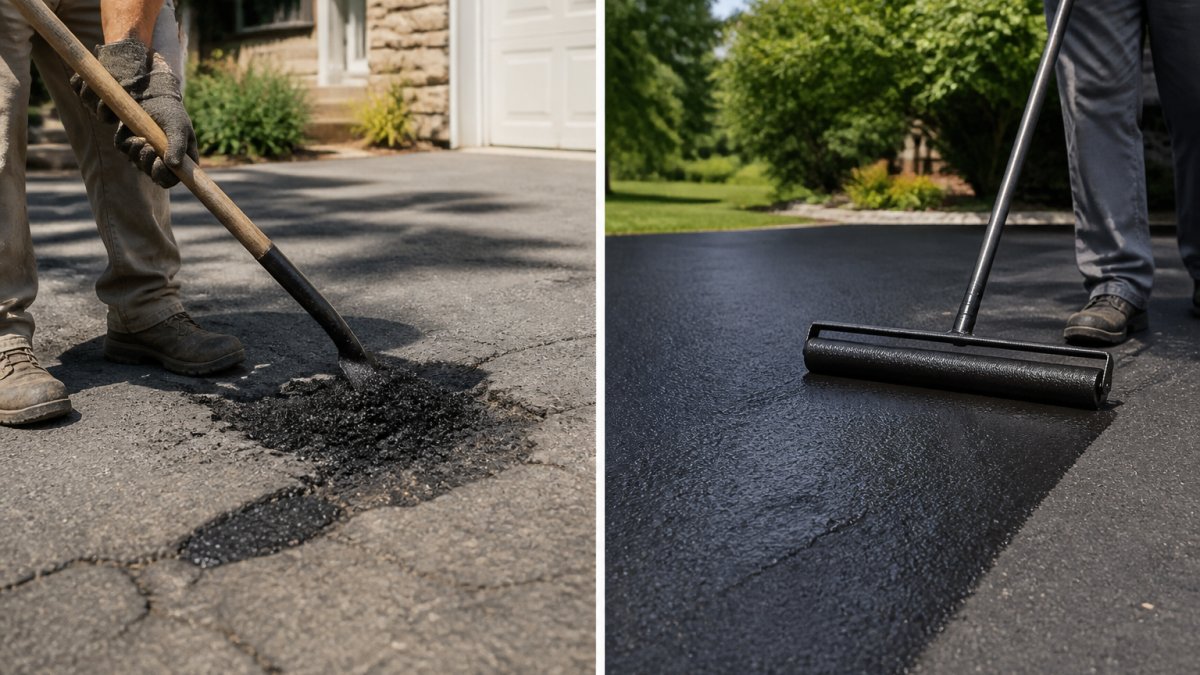
The two treatments work best together, but order matters. Patch first, then sealcoat.
Sealcoating over a fresh patch before the asphalt cures traps moisture and stops bonding.
Timing rules we follow:
- Patch structural damage first. Fill potholes, wide cracks, and soft spots.
- Let patches cure. Fresh asphalt needs time to set before coating.
- Sealcoat the full surface. This blends the patch into the surrounding pavement and protects the seams.
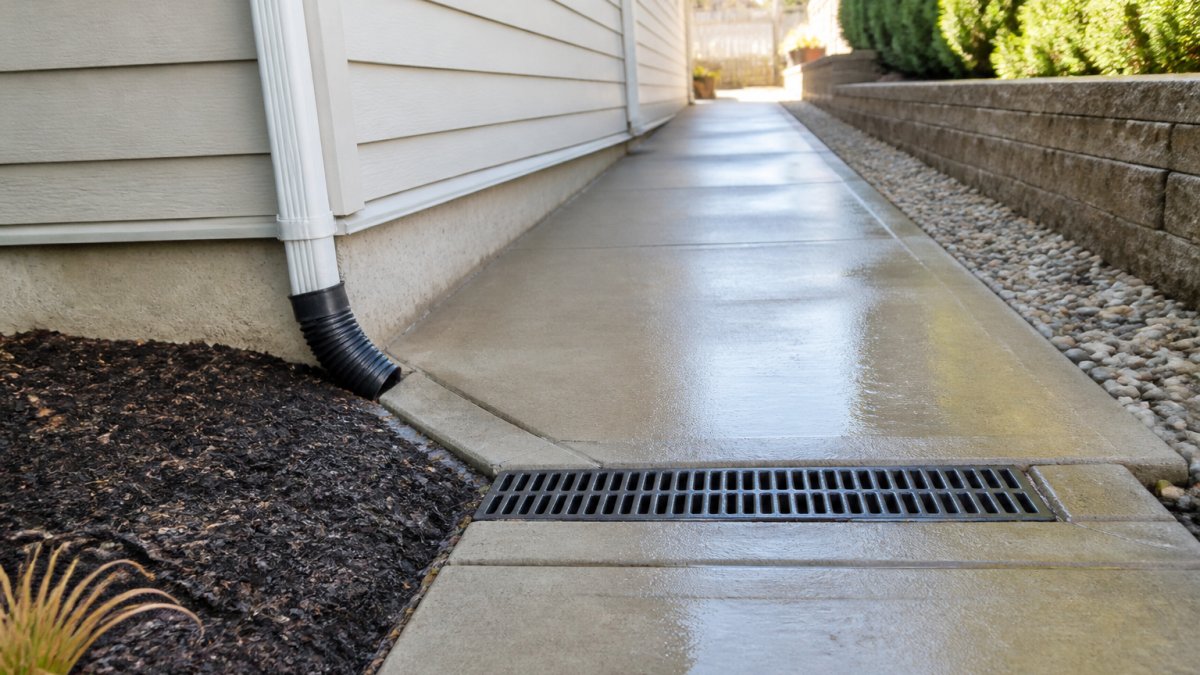
Climate and drainage matter as much as technique. In a hot, humid climate with heavy summer rain, water penetration is the main enemy, and poor drainage makes it worse.
That is the root problem most quick-fix contractors miss. If water pools on your surface, ask about drainage before you ask about sealcoat.
DIY vs. Professional Repair: Safety and Durability
Small sealcoat jobs are within reach for a handy homeowner. Patching is a different story.
DIY patching is where people get into trouble.
Safety is the other factor. Hot-mix asphalt and sealcoat products need proper handling. Cutting pavement requires power equipment.
A professional crew brings the right compaction tools and the right mix. For property and facilities managers, that reliability matters more than saving a few dollars on materials.
For homeowners and property managers weighing their options, the decision comes down to one question: is the pavement sound or failing?
Frequently Asked Questions
Can sealcoating fix cracks or potholes in asphalt?
No. Sealcoating is a protective coating applied to sound pavement, and it cannot fill potholes or bridge open cracks. Sealcoat applied over a pothole will crack and peel within weeks. Cracks need crack filling or sealing first, and potholes need asphalt patching before any sealcoat goes down. If you sealcoat over damage, you trap moisture and hide the problem while it gets worse underneath.
When should asphalt be patched instead of sealcoated?
Patch when the damage is structural: potholes, alligator cracking, crumbling edges, or depressions that hold water. These signal a failing base layer or surface layer that a coating cannot fix. Sealcoat when the pavement is intact but oxidized, faded, or showing only shallow surface wear. If you can see the aggregate and the surface feels rough but solid, sealcoating is the right call. If pieces move or break loose, patch first.
How much does it cost to sealcoat 1000 square feet?
Pricing depends on surface condition, prep work, number of coats, and site access, so there is no single figure that applies to every property. A 1,000 square foot driveway is a small job, and small jobs often carry a minimum charge. Request a free estimate with the square footage and current condition noted so the quote reflects the actual work. Cost per square foot drops as the area grows, so bundle repairs and sealcoating in one visit when possible.
Can you sealcoat asphalt after patching it?
Yes, but timing matters. Fresh patch material needs to cure before sealcoat is applied, and the patch should be compacted and level with the surrounding surface. In warm weather, most patches are ready within a few days to a couple of weeks. Sealcoating after patching gives the repair a uniform look and protects both the new patch and the older pavement around it. Skipping the sealcoat leaves the patch more exposed to oxidation and moisture.
If your driveway or parking lot is showing cracks, potholes, or drainage problems, guessing between a sealcoat and a patch can cost you. Houston Pavement Repair LLC offers expert asphalt and concrete paving and repair for residential and commercial clients, with specialized pavement repairs and a free estimate to start. Call now to schedule your free estimate and get a straight answer on what your pavement actually needs.