 How-to
7 Signs Asphalt Crack Sealing Is Worth the Investment
Last Updated: October 26, 2026
Quick Summary
Asphalt crack sealing is worth the investment because it blocks water from reaching the base layers and prevents cracks from spreading into costly structural damage. In a typical example, preventive sealing costs roughly 8% to 9% of an overlay and under 4% of a full replacement.
- Water seeping through cracks softens the base and lets traffic spread the damage.
- Sealing a 10,000-square-foot lot with 500 linear feet of cracks costs about $1,250.
- A 2-inch mill-and-overlay on that same lot would cost about $40,000.
- Hairline cracks under about 1/8 inch should be sealed now, before water gets in.
- Alligator cracking is a base failure, so sealing will not save it.
Table of Contents
- Why Water Intrusion Decides Whether Crack Sealing Pays Off
- What Asphalt Crack Sealing Cost Looks Like Against Replacement
- Does Asphalt Crack Filling Work, or Is It a Temporary Patch?
- Crack Sealing vs. Sealcoating: Two Different Jobs
- Asphalt Crack Filler Cure Time and What It Means for Scheduling
- A Decision Guide Based on Crack Type and Pavement Condition
- Climate, Traffic, and Water Exposure: What Drives the Timeline
- Scheduling a Free Crack Sealing Estimate
- Frequently Asked Questions
Why Water Intrusion Decides Whether Crack Sealing Pays Off
Water is the enemy, not the crack itself. That is the core of the question of whether asphalt crack sealing is worth the investment. A hairline crack is cosmetic. A crack that lets water in is structural.
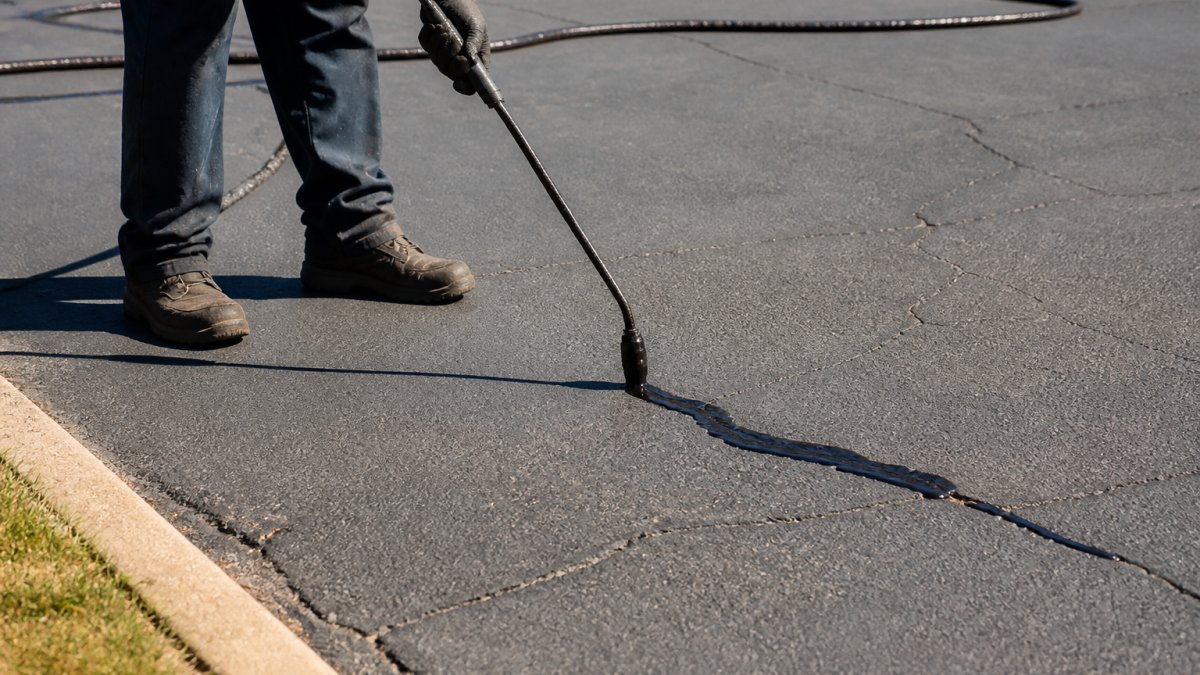
Asphalt crack sealing is the practice of cleaning and filling pavement cracks with a flexible sealant to block water from reaching the base layers below.
Here is the chain reaction that costs property owners money:
- Water seeps into the crack.
- It reaches the base material underneath.
- The base softens and loses support.
- Traffic loads the unsupported surface.
- The crack spreads, and new ones appear.
- Repair costs climb fast.
Stopping that chain early is the whole point. For a deeper look at the payoff, see our breakdown of the benefits of asphalt crack sealing for businesses.
What Asphalt Crack Sealing Cost Looks Like Against Replacement
This is the section every other article skips, and it is the one that actually answers the keyword. Instead of vague talk about "small expense versus large expense," here is the shape of the math with real U.S. pricing ranges and a break-even example you can apply to your own pavement.
Typical U.S. price ranges
Those ranges come from published contractor and industry cost guides; treat them as planning figures, not bids.
A break-even example
Assume a 10,000-square-foot commercial lot with 500 linear feet of working cracks and sound pavement around them.
- Crack sealing at $2.50 per linear foot: about $1,250.
- Sealcoating the same lot at $0.22 per square foot: about $2,200.
- Combined preventive maintenance: roughly $3,450.
Now compare the alternative. If water reaches the base and the lot needs a 2-inch mill-and-overlay at $4.00 per square foot, that is about $40,000. Full-depth replacement at $9.00 per square foot would be about $90,000.
The break-even is stark: the preventive spend is roughly 8% to 9% of an overlay and under 4% of a full replacement. In other words, sealing pays for itself if it delays a structural repair by even a fraction of a season. Most practitioners find that properly sealed cracks extend the interval before overlay by several years, though results depend on base condition, drainage, and traffic.
What moves the price up or down
For a side-by-side look at the middle option, read our driveway resurfacing vs full replacement cost comparison.
Does Asphalt Crack Filling Work, or Is It a Temporary Patch?
Our guide to 7 ways to fix small asphalt cracks walks through the options.
Crack Sealing vs. Sealcoating: Two Different Jobs
| Treatment | What It Does | Best For | Timing |
|---|---|---|---|
| Crack sealing | Fills and seals individual cracks | Active cracks that let water in | Whenever cracks appear |
| Sealcoating | Coats the whole surface | Sun and oxidation protection | After cracks are sealed |
If you are weighing the two, our asphalt sealcoating vs patching comparison explains how to choose.
Call now to schedule your free estimate →
Asphalt Crack Filler Cure Time and What It Means for Scheduling
We schedule crack sealing around your traffic, not the other way around. That means:
- Sealing sections in phases so part of the lot stays open.
- Choosing products suited to the season.
- Keeping vehicles and foot traffic off fresh sealant until it sets.
A Decision Guide Based on Crack Type and Pavement Condition
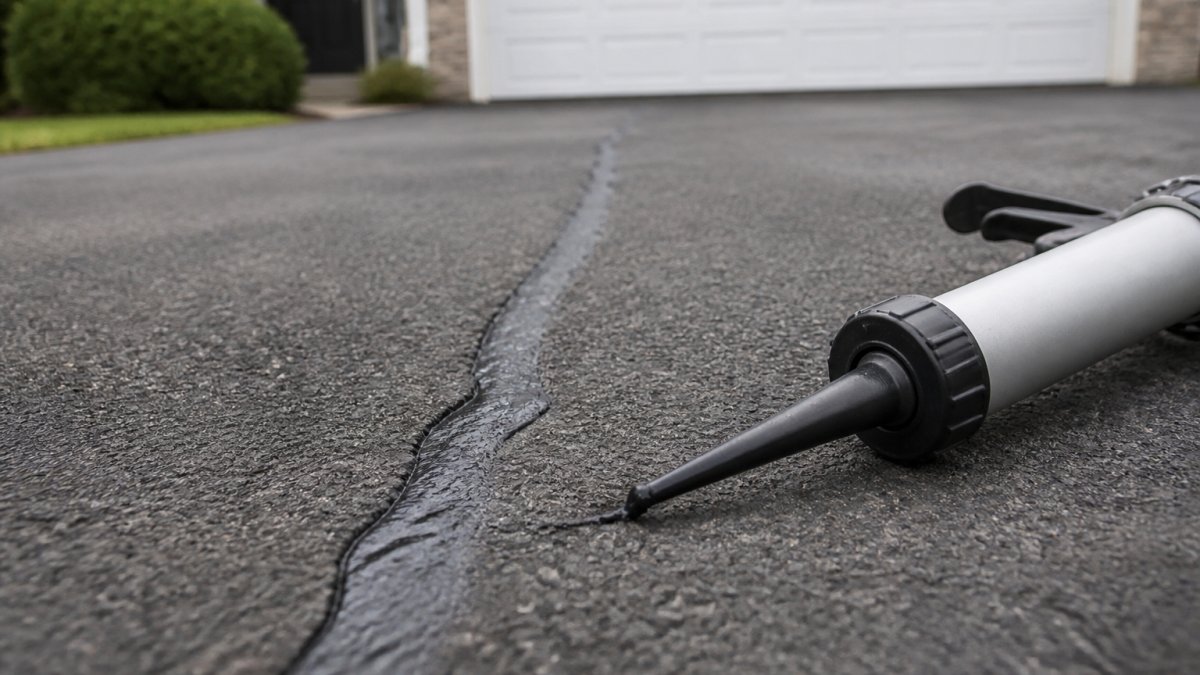
Match the treatment to the crack and to the condition of the pavement around it. That single rule saves more money than any product choice, because sealing the wrong crack is money spent twice, once on the sealant and again on the repair it failed to prevent.
Step 1: Identify the crack type
- Hairline cracks (under about 1/8 inch): Seal them now. They are cheap to treat and stop water before it reaches the base.
- Working cracks (roughly 1/8 to 1/2 inch, often transverse or longitudinal): These open and close with temperature. A flexible, routed sealant is the right call.
- Wide cracks (over about 1/2 inch) with sound edges: Crack sealing can still work, but the crack may need routing and a backer rod so the sealant has proper shape.
- Cracks that keep reopening after sealing: The base is likely moving or failing. Sealing alone will not fix it.
- Alligator cracking (the web-like pattern): This is a fatigue failure of the base, not a surface crack. Sealing will not save it. Learn what causes it in our guide to alligator cracking in asphalt.
- Potholes and crumbling edges: These need patching or replacement, not sealing.
Step 2: Test the pavement around the crack
Before you spend on sealant, check whether the surface is still sound.
- Sound pavement: The surface is firm, edges are crisp, and the crack is the only defect. Sealing is a good investment.
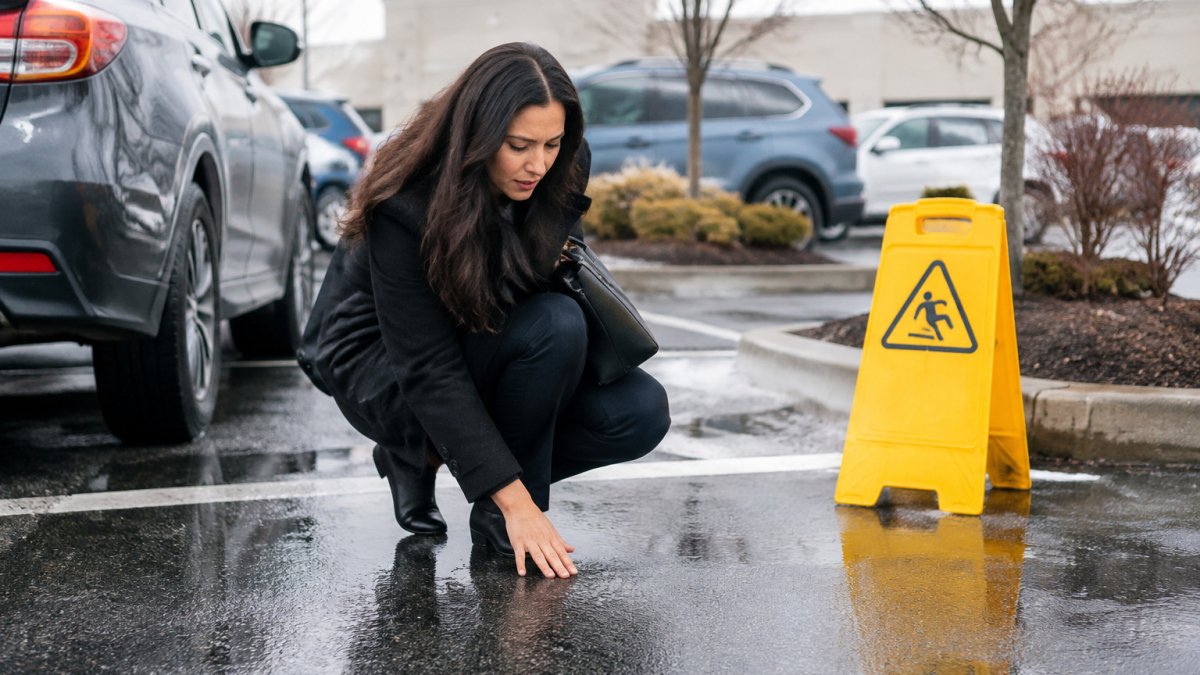
- Soft or spongy spots: Water has reached the base. Sealing will trap moisture and the repair will fail. Investigate the base first.
- Widespread cracking or multiple defects: When cracks cover a large share of the surface, sealing individual cracks is not cost-effective. Overlay or replacement is the better spend.
- Poor drainage or standing water: Fix the water source before or alongside sealing, or the same cracks will return.
Step 3: Decide
When in doubt, get an inspection. A short walkthrough tells you whether you are looking at a simple seal job or a bigger problem underneath.
Climate, Traffic, and Water Exposure: What Drives the Timeline
Your pavement ages at a different rate than your neighbor's. Three things speed it up: heat, heavy traffic, and standing water.
Heat bakes the asphalt and makes it brittle. Heavy loads flex it and widen cracks. Water does the most damage of all. A low spot that holds water after every rain will break down faster than a well-drained surface.
For property managers, this means the maintenance calendar is not one-size-fits-all. A busy retail lot needs attention sooner than a quiet driveway. A shaded, poorly drained area needs it sooner still. Watch the spots where water pools. They will show cracks first.
Scheduling a Free Crack Sealing Estimate
At Houston Pavement Repair LLC, we provide expert asphalt and concrete paving and repair for homes and businesses. We offer a free estimate so you know exactly what you are facing before you spend a dollar. Understanding the underlying causes of concrete coating failures helps property owners distinguish between temporary surface fixes and the long-term structural integrity provided by professional asphalt maintenance.
Call now to schedule your free estimate with Houston Pavement Repair LLC.
Frequently Asked Questions
Is asphalt crack sealing necessary if my driveway only has a few small cracks?
Small cracks are exactly when sealing is cheapest and most effective. Water seeps into hairline cracks, freezes or expands, and widens them into pavement deterioration that needs patching or replacement. Sealing those cracks early is preventive maintenance, and it costs far less than repairing the base and surface later. If the cracks are wider than about a quarter inch or the pavement is crumbling around them, get an inspection first, because that may call for crack filling or patching instead.
How long does asphalt crack filler need to cure before I can drive on it?
Asphalt crack filler cure time depends on the product. Hot-pour rubberized filler sets fast, often within 15 to 30 minutes, so driveways and parking lots can usually reopen the same day. Cold-pour liquid fillers can take several hours to a full day, and they need dry, warm conditions to set properly. Ask the crew which product they use and when traffic can return, and keep vehicles off the surface until then so the seal bonds cleanly.
What is the difference between crack sealing and sealcoating?
Crack sealing fills individual pavement cracks with a flexible filler that keeps water out and lets the pavement move. Sealcoating is a thin protective coating sprayed over the whole asphalt surface to block sun, oil, and moisture and restore color. Crack sealing vs. sealcoating is not either-or: cracks should be sealed first, then the surface sealcoated, because a coating will not bridge an open crack. Skipping the crack work and coating over it traps the problem underneath.
Can crack sealing prevent potholes and delay replacement?
Sealing keeps water out of the pavement structure, and water is the main driver behind potholes and base failure. When moisture gets under the asphalt and traffic flexes the surface, cracks spread and chunks break loose. Sealed cracks limit that cycle and extend pavement lifespan, but they cannot fix a base that has already failed. If you see depressions, alligator cracking, or loose aggregate, ask for an assessment rather than a seal alone.